

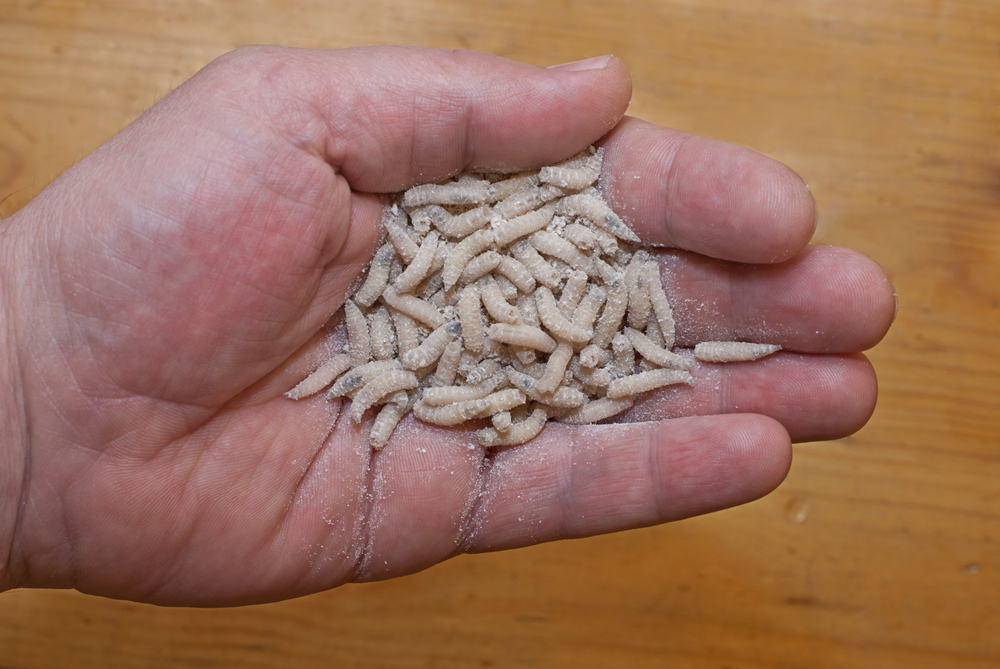
 World population is projected to reach 9 billion by 2050. Rising incomes in emerging economies lead to greater demand for meat-rich diets. As the world grows hungrier for animal protein, insects could be the new way to feed livestock, and us. Using insects to feed the animals providing tomorrow’s meat – does anything about this bug you?
It’s already happening, and it works like this. Start-ups in the nascent “nutrient-recycling” industry collect abattoir waste and process it into foodstock for flies. The flies breed inside special cages where newly hatched larvae are easily collected, then dried and compressed into flakes or powder used as a feed ingredient for larger meat-producing livestock.
Could this be a powerful contributor to a more sustainable food industry?
The Bill & Melinda Gates Foundation, World Wide Fund for Nature, and the United Nations Economic Commission for Africa all think it’s the most promising way forward to feed the planet. Just as a vegetarian meal uses less natural resources than a meat-based meal, feeding animals bug-based chow uses fewer resources than farming fish or vegetables for the same purpose.
Today nearly 30% of all wild-caught fish goes to feeding farmed fish, poultry, or pigs. About 95% of world soybean production – which depends on arable land and water – goes into animal feed. PROteINSECT, an EU-funded project investigating how flies can help meet future demands for protein, conducted breeding trials and found that one hectare of land could produce at least 150 tons of insect protein per year. By comparison, soy planted over the same area yields just under a ton of protein per year. Feeding trials also suggest that a bug-based diet will produce bigger, stronger livestock.
Insect-based feed prices fall between the soy meal and more expensive fish meal. And fly “ranching” has the smallest environmental footprint of the three.
Garbage in, protein out.
The United Nations Food and Agriculture Organization released a report (link here) promoting insects as a basic ingredient in animal feed and human diet. It asserts that insects are ideal as they can be sustainably reared on vegetable and domestic waste as well as slaughterhouse byproducts.
Look at AgriProtein. Co-founded in 2010 by brothers Jason and David Drew, the South African company is shaking up the supply chain, devising new ways to recycle meat industry waste (blood, guts, manure) into insect feed for animals who now consume meal made of fish and soybeans.
Jason Drew told the Guardian, “A third of all the fish we take out of our seas is ground up into fishmeal. The catches are unsustainable and the falling supply and increasing demand are leading to prices hitting new highs.” He added that the bug-based alternative, “means tonnes of fish we don’t need to take from the sea, and less waste to landfill.” Their first large-scale factory will be working this year, farming about 8.5 billion flies who will produce seven tonnes of their maggot-based feed, MagMeal, daily.
Vancouver’s Enterra Feed makes insect-based feed and fertilizer. Next month they will open a largely automated production facility where larvae are grown in sensor-rigged trays that track the time and content of automatic feedings, and ambient temperatures within the trays. That data allows technicians to decide best harvest times when insect protein and fat content is at its peak. The facility will accept 100 tons of pre-consumer food waste daily to feed its population of black soldier flies.
A Parisian start-up, Ynsect, claims to be building the world’s first fully automated large-scale insect production facility, capable of producing 10,000 tons of dried protein meal, liquid fat, and chitin-derived products from insects each year. Construction will begin next year.
Health experts press for more data.
Regulatory processes about insects differ widely across countries. Following a national outbreak of mad cow disease, the EU introduced legislation in 2001 that treats insects like livestock once they have been dried and converted into a flake or powder form: in this case, banning them – along with other processed animal proteins – from feed for animals reared for human consumption. There is also a law against farmed animals being raised on waste such as manure.
AgriProtein’s maggot feed has been approved in South Africa for fish and chickens, but not mammals. Dutch regulations restrict Amsterdam-based Protix Biosystems to producing its insect-based feeds for research purposes only. “The concept of the insect as a protein source is something nature already evolved to perfection,” says cofounder Kees Aarts. “We just need scalable technologies.”
Novelty insect-based foods like “Chirps” (tortilla chips made from ground crickets) and Chapul baked goods (made from cricket flour) are emerging online and on shop shelves, but the idea of eating insects is still a stretch for most.
Aarts suggests that the looming crises in food and water will prompt rapid changes in global legislation. “As a feed ingredient it’s common sense … nature’s principles apply,” he says.
Image of fly larvae from Shutterstock



Haven’t you noticed Nature’s response with the ongoing drought in California and the record snowfall in New England?
JTR – please elaborate. Interested in hearing your views connecting these subjects! Thanks for the comment –