Arab investors and land grabbers wanted by Egypt

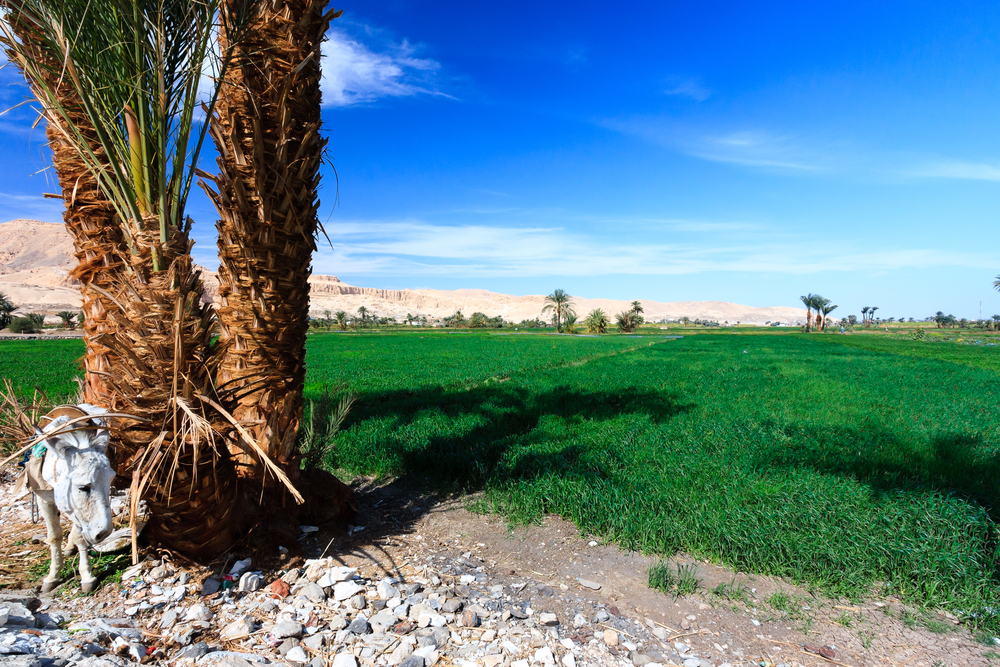
cultivated field near LuxorEgypt plans to lease 25,000 hectares of agricultural land to Arab investors. Agriculture minister Ayman Abu Hadid made the announcement in Tunis recently. Egypt is hoping that sustainable farmers will apply. 

The meeting was hosted by the Arab Authority for Agriculture Investment and Development (AAAID); it’s part of a plan to attract foreign investment in sustainably developing the country’s agriculture sector.

Egypt’s agricultural land base measures around 8.4 million feddans (an Egyptian unit of area equal to 1.038 acres) and, as of 2010, the water-starved nation imported 40% of its food.

For the past decade, Arabian Gulf nations have been exploring ways to secure tracts of agricultural land in water-rich countries in Africa and Asia.

Absent sufficient freshwater to grow crops to feed their increasing populations, nearly half a billion acres of land – eight times the area of Great Britain – were sold or leased in transnational deals – and the Middle East is among the busiest land-grabbers.

A 2012 report by the Land Matrix project, a coalition of research centers and civil societies, indicates:

  • Saudi Arabia purchased about 5.5 million acres, the largest being 675,000 acres in the Philippines by Eastern Renewable Fuels Corporation for agriculture.
  • Israel acquired about 5.9 million acres, 4.9 million of them in the Democratic Republic of Congo by an unknown investor for agriculture.

Now Egypt is jumping aboard, according to Mada Masr news, leasing land in nearby Sudan.

Attempts to buy or lease farmland have raised controversy in host countries, leading to accusations of neo-colonialism, demonstrations, and violence. At a minimum, the practice raises questions about fair pricing, implications to local labor and resultant environmental impacts.

Buying into established agricultural firms in food exporting countries such as Serbia, Nigeria and even China sidesteps most obstacles.

The AAAID is comprised of 20 Arab and African member states seeking food security for their populations.

Saudi Arabia is the largest shareholder, contributing over 22% of organizational capital, followed by Kuwait with 19.5%, and the United Emirates, Sudan and Iraq each with a 15% share.  Egypt contributes just 3%.

Hadid did not disclose where the land location or what crops would be grown, but he told Reuters Egypt that he hopes to give the land to a company partnered with AAAID.

Image of cultivated field near Luxor from Shutterstock

2 COMMENTS

Comments are closed.

TRENDING

Jujube, the sidr tree of medicine and magic

A magic holy sidr bath to deflect the evil eye? It needs 7 powdered sidr leaves stirred into a bucket of warm water. The hadith of the Prophet Muhammad allows to repeat healing prayers and verses from the Koran to increase the water’s potency. 5 grams, or 1 tablespoon of sidr powder equals 7 leaves.

Farm To Table Israel Connects People To The Land

Farm To Table Israel is transforming the traditional dining experience into a hands-on journey.

Ethiopians are Looking to Somaliland for Red Sea Access as Global Powers Move In

Somaliland, for its part, has operated as a de facto independent state since 1991. It has its own government, elections, currency, and security forces. It’s often described as one of the more stable and democratic political systems in the region, despite never being formally recognized internationally. 

Egypt building nuclear power

Egypt is building a nuclear energy plant, expected to go online in 2026 when countries like Germany have shut down all its domestic nuclear power. The El Dabaa Nuclear Power Plant is the first nuclear power plant planned for Egypt and will be located at El Dabaa, Matrouh Governorate, Egypt, about 320 kilometers northwest of Cairo. 

More investments of 1.2 GW in Benban solar, Egypt

Egypt’s Ministry of Electricity and Renewable Energy, the Egyptian Electricity Transmission Company, and a consortium comprising Infinity Power and Hassan Allam Utilities Energy Platform signed an agreement to jointly develop solar power projects at Benban Solar, one of the world's largest solar energy parks in Egypt.

Turning Your Energy Consultancy into an LLC: 4 Legal Steps for Founders in Texas

If you are starting a renewable energy business in Texas, learn how to start an LLC by the books.

Tracking the Impacts of a Hydroelectric Dam Along the Tigris River

For the next two months, I'll be taking a break from my usual Green Prophet posts to report on a transnational environmental issue: the Ilısu Dam currently under construction in Turkey, and the ways it will transform life along the Tigris River.

6 Payment Processors With the Fastest Onboarding for SMBs

Get your SMB up and running fast with these 6 payment processors. Compare the quickest onboarding options to start accepting customer payments without delay.

Qatar’s climate hypocrisy rides the London Underground

Qatar remains a master of doublethink—burning gas by the megaton while selling “sustainability” to a world desperate for clean air. Wake up from your slumber people.

How Quality of Hire Shapes Modern Recruitment

A 2024 survey by Deloitte found that 76% of talent leaders now consider long-term retention and workforce contribution among their most important hiring success metrics—far surpassing time-to-fill or cost-per-hire. As the expectations for new hires deepen, companies must also confront the inherent challenges in redefining and accurately measuring hiring quality.

8 Team-Building Exercises to Start the Week Off 

Team building to change the world! The best renewable energy companies are ones that function.

Thank you, LinkedIn — and what your Jobs on the Rise report means for sustainable careers

While “green jobs” aren’t always labeled as such, many of the fastest-growing roles are directly enabling the energy transition, climate resilience, and lower-carbon systems: Number one on their list is Artificial Intelligence engineers. But what does that mean? Vibe coding Claude? 

Somali pirates steal oil tankers

The pirates often stage their heists out of Somalia, a lawless country, with a weak central government that is grappling with a violent Islamist insurgency. Using speedboats that swarm the targets, the machine-gun-toting pirates take control of merchant ships and then hold the vessels, crew and cargo for ransom.

Related Articles

Popular Categories