

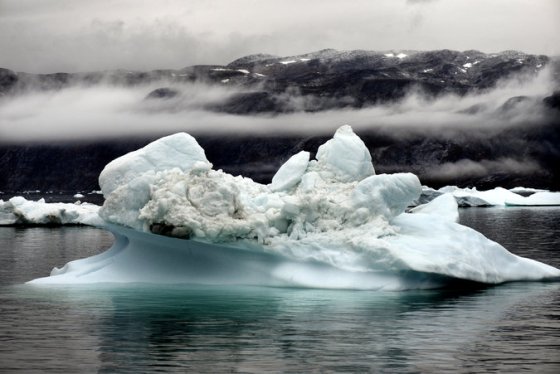
The United Nations has issued a five years in the making report on climate change, and our future. It does not look bright. Green Prophet obtained today’s Intergovernmental Panel on Climate Change report and the future looks bleak if we do not take action today.
The New York Times summed up the report nicely: “Ice caps are melting, sea ice in the Arctic is collapsing, water supplies are coming under stress, heat waves and heavy rains are intensifying, coral reefs are dying; and fish and many other creatures are migrating toward the poles or in some cases going extinct.”
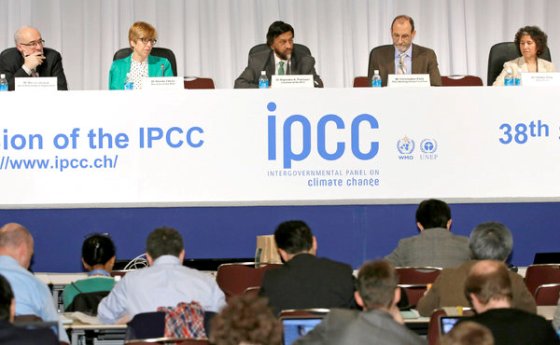
These words and those in the report expressed a dire warning that unless intense efforts are made to curb the increase in greenhouse gasses created by overuse of fossil fuels, the worst is yet to come, in regards to the effects of climate change on both animal and human populations on planet Earth.
Human suffering already attributed to climate change is being felt all over the world, the IPCC report says. World food supplies, especially in the world’s poorest countries, will be especially at risk, the report concludes. “Nobody on this planet is going to be untouched by the impacts of climate change,” said Mr. Rajendra K. Pachauri, chairman of the intergovernmental panel, during a news conference conducted at the session, during the presentation of the report.
The resulting human suffering caused by either extreme drought in some regions or destruction of homes and farmland by intense flooding in other areas may cause serious security problems, the report added.
“There is possibility of violent conflict over land, water or other resources, to which climate change might contribute indirectly by exacerbating well-established drivers of these conflicts such as poverty and economic shocks.”
In the past seven years since the intergovernmental panel issued its last big report in 2007, growing evidence shows that governments and businesses around the world are making extensive plans to adapt to climate disruptions. However, many of the poorest and most seriously affected countries, especially low lying ones like Bangladesh, are being affected the most by a combination of rising seas and severe storms; even though they are making the least “contributions” to overall greenhouse gas levels.
In an interview Monday on CNN, Christopher Field, founding Director of the Carnegie Institution’s Department of Global Ecology, Melvin and Joan Lane Professor for Interdisciplinary Environmental Studies at Stanford University; and a co-chairman of the working group that wrote the report, told CNN that if world temperatures increase between 2 and 4 degrees Celsius “every person on earth will be effected by rising food costs averaging $125 per person. Naturally, those in the poorest countries will be less likely to cope with this increase,” he added.
The report includes a World Bank estimate that “poor countries need as much as $100 billion a year to try to offset the effects of climate change; and that they are now only receiving a few billion dollars a year from rich countries for this purpose.”
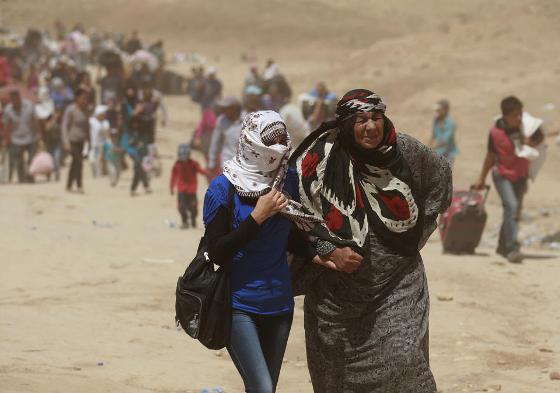
In the Middle East, civil unrest, at least partially caused by drought and other serious weather problems, is now being felt in many regional countries; including Egypt, Lebanon, Syria, Sudan, Mali and Algeria.
Although intense use of desalination is providing at least partial relief from severe water shortages in countries like the UAE and Saudi Arabia, other area countries like Yemen and Jordan have yet to build desalination plants due to either lack of suitable locations and available funds. The effects of these conflicts, especially the ongoing civil war in Syria, are being felt in many Middle Eastern countries; especially Lebanon and Jordan where large numbers of Syrian refugees are currently living in tent cities.
Related: Woven refugee shelters powered by the sun
The conclusion that the effects of climate change are going to get much worse matters little to countries already stretched beyond their limits due to environmental disasters and political unrest. Many of these countries are unfortunately situated in the Middle East.
Read more on effects of Climate Change in the Middle East:
Saudi Agriculture to be Hit Hard by Climate Change
Climate Change Contributing to Mali-Algeria Conflict
The Wrath of Global Warming and the Middle East
Photo of melting Greenland ice, by Kadr van Lohuizen and NY Times; Photo of 2014 IBCC Panel by NY Times; Photo of Syrian Refugees on the Move by Yahoo News.com

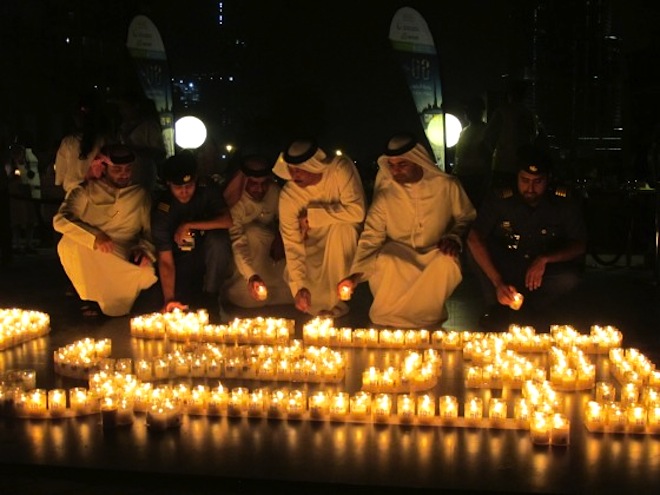


We must all do more to encourage business and political leaders to do more to develop renewable energy. Even if more people start driving electric cars, those cars have to get the power to recharge their batteries from power plants that run on fossil fuel. Solar energy is not being developed fast enough; especially in the Middle East. where oil is still relatively plentiful.
Those polar vortex “surges” in places like New York and Chicago will occur again this coming winter; and they may be even worse. This also applies to the mud slides like the ones on Washington State and severe storms in many parts of the world. What will it take for people to finally wake up to what is happening? I fear it will only be when it will become intolerable for them to continue living where they are now.
By then, it may be too late to significantly reverse climate change. Al Gore was laughed at by many when he made his Inconvenient Truth film.
Are people still laughing now?
The Basic Theme
to save life on Earth
gently shrink our population,
safely recycle all our waste
and grow the wilderness
to create an evergreen
civilization.
Well said.
Maurice, I think it’s so scary that people don’t know what to do or say.
Those who are activists for the environment has been working for decades to stem the coming climate change. Those of us who care have done everything we can do individually to live without wasting resources. We’ve sent messages via vote and funding to, hopefully, shake the foundation of the elite who built the world’s economy upon oil but refuse to give up their elite position in the world economy. Seemingly nothing has been accomplished in all this time to wake them from the dream of wealth and power. What do you suggest, Maurice?
I’m open to all suggestions as I’m sure anyone who has spent the long haul beating their head against this wall of shame.
I see no comments so far regarding the issue of global warming and climate change. Does this mean everyone is prepared to live with it?