Architects Embrace Iranian History at the Tabriz Bazaar

Tabriz Bazaar Iran

Head to the heart of any Middle Eastern city and find a vibrant commercial hub, usually in the shadow of a major mosque – the bazaar. An Iranian bazaar with incredible history (Marco Polo shopped there!) may now win the 2013 Aga Khan Award for Architecture.

Organically composed of interconnected structures, with a maze of corridors and vast interior, Tabriz Bazaar is both straightforward and complex.  For centuries, its nooks and crannies and open space set a public stage for retail therapy, social meetups, and politics.

Maybe you’ve seen the world’s biggest bazaars?  There’s Istanbul’s labyrinthine Grand Bazaar, Europe’s most-visited attraction with15 million annual shoppers; Cairo’s Khan el-Khalil, which put a stranglehold on the Medieval spice trade, inciting Columbus to go sailing; and Tehran’s Grand Bazaar, where conservative and pro-Khomeini bazaaris (shop owners) organized to help finance the Islamic Revolution.
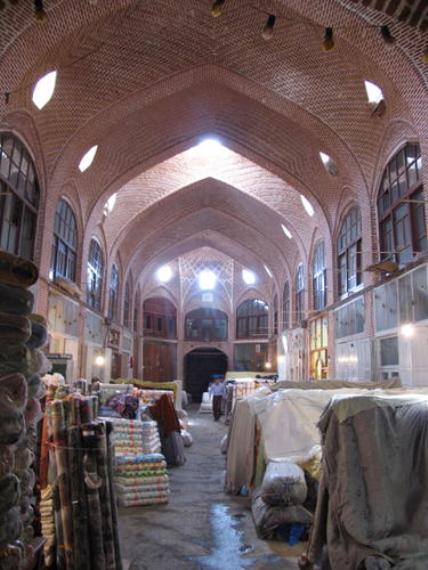
Tabriz bazaar Ceilings

So what makes this one stand out?

Tabriz Historic Bazaar has been rocking cultural exchange and commerce for millennia.  Pin its staying power on location: it’s smack central on the old Silk Road, antiquity’s busiest trade route.  Moroccan explorer Ibn Buttata visited and raved about the beautiful slaves who modeled jewelry to the wives of rich Turks.  Marco Polo was a repeat customer.

Tabriz, an ancient city with Bronze Age origins, is capital of the East Azerbaijan province of Iran.  Its history is fascinating: an important 9th century military base and twice capital of Azarbin, it evolved into a desirable zip code for 14th century artists and philosophers.

In the run-up to the 1600s, manufacturing grew and diversified (weaving, metallurgy, weapon and tile production, leatherworks and soapmaking) and trade expanded.
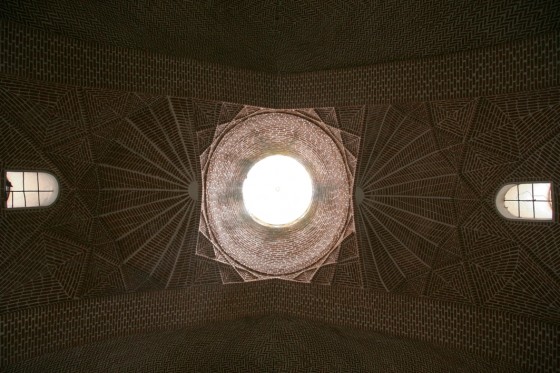
Tabriz bazaar iran brickwork

The city had rough patches.  It was sacked by Tamerlane, then by the Iranians, Ottomans and Russians.  Even Mother Nature took a turn, sending in earthquakes and floods.  Through it all, the bazaar remained an enduring commercial and economic center fro Tabriz and northwestern Iran.

The building bears history’s scars. Its last reconstruction followed a devastating earthquake in 1780.

In 1975, it became officially protected by the Iranian Cultural Heritage, Handicraft and Tourism Organization, which oversees protected monuments. Tenants then undertook minor rehabilitation via a smart policy of endowments and tax exemptions.  In 2010, it was added to the UNESCO World Heritage List.

The spectacular brick structure covers about 67 acres with almost 4 miles of covered shops and product-specific “sub-bazaars” for gold, carpets, shoes and food.  It’s used for important Islamic holidays, like the Day of Ashura when merchants cease trading for about 10 days and the bazaar hosts religious ceremonies.
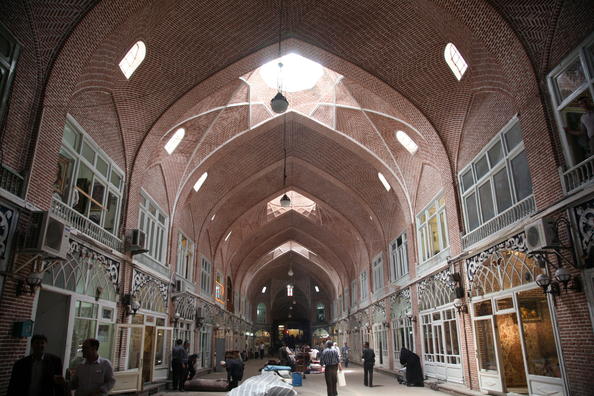
Tabriz bazaar iran InteriorIt’s increasingly rare in the Middle East for urban development to cast heritage in a catalyst role.  Rather than abandon the bazaar in pursuit of a modern market, or cringe-inducing mixed-use “lifestyle destination”, the people behind this project elected to rejuvenate Tabriz by preserving its history.

Tabriz Bazaar developed over the centuries, remaining true to it’s core function as an economic, social, political, and religious complex where different activities and cultures are integrated in a unique living environment.  Kudos to this project from keeping Iran’s storied past fit for present purpose.

Images from UNESCO

1 COMMENT

Comments are closed.

TRENDING

Zoroastrianism from Iran is the world’s first eco-religion

When Zarathustra started preaching around 1200 BCE in ancient Persia, which is known today as Iran, he wasn't just founding a religion—he was creating the world's first environmental protection movement. Good thoughts, good words, good deeds. But there was a mantra and words to live by: don't pollute the earth, water, or fire. Ever.

UNESCO forest being developed in Iran

Environmental activists in Iran often face significant personal risk when speaking out about illegal land grabs, deforestation, or the destruction of protected areas. In recent years, several high-profile environmentalists have been detained, interrogated, or imprisoned on broad national-security charges, sometimes without transparent legal proceedings.

Iran’s rarest forest is on fire

It's full of rare and endemic species, and it's a UNESCO heritage site. Iran's natural treasure, a 1000-kilometer forest, the Hyrcanian forest has been on fire for several days. It stretches from the Caspian Sea and into neighboring Azerbaijan and is home to more than 3,200 kinds of plants. 

Sustainable Architect Ronak Roshan on the Politics Behind the Houston Ismaili Center

Roshan’s reflection situates the Houston Ismaili Center within a broader discussion about architecture as diplomacy — where aesthetics, faith, and geopolitics intersect. Her words challenge readers to question whether “green” design and grand symbolism can coexist without transparency and accountability.

Iran’s holiest city about to run dry as terror chosen over water management

Iran’s second-largest city, Mashhad, is facing an acute water emergency after dam reservoirs feeding the city fell below three percent capacity, according to Iranian state and local media. Officials warn that without rainfall or improved inflows from neighboring Afghanistan, the city’s supply could soon collapse.

Turning Your Energy Consultancy into an LLC: 4 Legal Steps for Founders in Texas

If you are starting a renewable energy business in Texas, learn how to start an LLC by the books.

Tracking the Impacts of a Hydroelectric Dam Along the Tigris River

For the next two months, I'll be taking a break from my usual Green Prophet posts to report on a transnational environmental issue: the Ilısu Dam currently under construction in Turkey, and the ways it will transform life along the Tigris River.

6 Payment Processors With the Fastest Onboarding for SMBs

Get your SMB up and running fast with these 6 payment processors. Compare the quickest onboarding options to start accepting customer payments without delay.

Qatar’s climate hypocrisy rides the London Underground

Qatar remains a master of doublethink—burning gas by the megaton while selling “sustainability” to a world desperate for clean air. Wake up from your slumber people.

How Quality of Hire Shapes Modern Recruitment

A 2024 survey by Deloitte found that 76% of talent leaders now consider long-term retention and workforce contribution among their most important hiring success metrics—far surpassing time-to-fill or cost-per-hire. As the expectations for new hires deepen, companies must also confront the inherent challenges in redefining and accurately measuring hiring quality.

8 Team-Building Exercises to Start the Week Off 

Team building to change the world! The best renewable energy companies are ones that function.

Thank you, LinkedIn — and what your Jobs on the Rise report means for sustainable careers

While “green jobs” aren’t always labeled as such, many of the fastest-growing roles are directly enabling the energy transition, climate resilience, and lower-carbon systems: Number one on their list is Artificial Intelligence engineers. But what does that mean? Vibe coding Claude? 

Somali pirates steal oil tankers

The pirates often stage their heists out of Somalia, a lawless country, with a weak central government that is grappling with a violent Islamist insurgency. Using speedboats that swarm the targets, the machine-gun-toting pirates take control of merchant ships and then hold the vessels, crew and cargo for ransom.

Related Articles

Popular Categories