Direct Seeding Helps Moroccan Farmers Adapt to Climate Change

agriculture, direct seeding, drought, water scarcity, Plan Maroc Vert, World Bank, sustainable agricultureFarming is risky business in Morocco, where a 30 percent drop in precipitation since 1970 makes steady, predictable annual crop yields virtually impossible. So the World Bank was called in to help implement Plan Maroc Vert – an ambitious initiative designed to boost the country’s cereal production and create a more sustainable agricultural sector by 2020.

And though Morocco’s Berbers have long cultivated water management practices that sustained their crops, it turns out that direct seeding can substantially improve yields in an uncertain future.

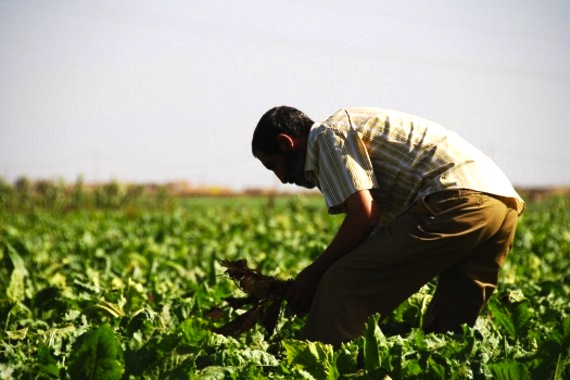
Planting directly in the soil

Direct seeding involves planting seeds directly into the soil instead of nurturing seedlings in water-intensive nurseries beforehand.

“…direct seeded plants are more likely to be able to reach moisture remaining in the soil after the rainy season has ended than those raised in plant nurseries because of their more extensive root system,” according to the Eden Initiative, which began promoting direct seeding in the Sahel in the 1990s.

“They are therefore better able to tolerate drought,” they add.

This is of particular importance to small farmers who have limited access to sophisticated irrigation systems, and where water supplies are intermittent, scarce and shared across various sectors.

Drought resistance

“Compared to traditional plowing and sowing, direct seeding (also known as “conservation agriculture” or “no-tillage”) allows for both increasing organic matter in soil and making the most of the limited rainfall,” Gabriella Izzi from the World Bank notes.

“This is great for risk mitigation: while direct seeding and traditional seeding result in essentially the same yield in good years, when droughts occur, a crop planted by direct seeding can produce remarkably higher yields than those sown with traditional seeding.”

Research and technology

While other water-scarce countries in the Arab world are turning to land grabs to generate a sense of food security for the upcoming decades, Morocco is investing in its own country’s food production systems – a much more sustainable approach in the long term.

And various sectors are pooling their resources to achieve these goals.

“…associations of small farmers, public services, agencies, and research institutes, are working together to develop direct seeding in Morocco,” Izzi reports on MENA blog.

“The establishment of associations allows for economies of scale among small farmers. The alignment of financial subsidies with applied research allows associations to access the state-of-the-art machinery needed for direct seeding,” she adds.

As climate change escalates, with no sign of abatement in the foreseeable future, it is crucial for citizens and governments across the globe to start implementing sound adaptation strategies now – before it’s too late.

And Morocco is ahead of the fold.

:: MENA Blog
Tafline Laylin
Tafline Laylinhttp://www.greenprophet.com
As a tour leader who led “eco-friendly” camping trips throughout North America, Tafline soon realized that she was instead leaving behind a trail of gas fumes, plastic bottles and Pringles. In fact, wherever she traveled – whether it was Viet Nam or South Africa or England – it became clear how inefficiently the mandate to re-think our consumer culture is reaching the general public. Born in Iran, raised in South Africa and the United States, she currently splits her time between Africa and the Middle East. Tafline can be reached at tafline (at) greenprophet (dot) com.
1 COMMENT

Comments are closed.

Hot this week

The Fitness App Revolution: Building the Future of Wellness Through Strategic Development

In an era where smartphones are ubiquitous and health consciousness is at an all-time high, the fitness industry has undergone a radical digital transformation. Fitness applications have moved far beyond simple pedometers, evolving into comprehensive wellness platforms that serve as personal trainers, nutritionists, and community hubs right in our pockets.

A Brief History of Basil From India to Italy

Beloved, fortunate, sweet, and royal; an herb with a long and storied history in Asia and across the world. Called by many names, basil has featured in previous Green Prophet articles, so enjoy another serving, a brief history of basil.

How Renewable Energy is Revolutionizing the Way We Power Our World

Solar has become the star of the transition thanks to modular hardware and straightforward installation. It fits dense cities and remote towns alike. Many companies are turning to rooftop arrays and carport systems - and exploring commercial solar installation as a practical way to lock in future savings.

How does one start prepping?

Faced with an extreme winter storm this year, Americans wonder how to be prepared for catastrophe. Miriam has lived through wars in the Middle East - so she's prepared on giving you a guide to prepping.

Fishermen sue tire manufacturers on behalf of the salmon

A federal trial in San Francisco has brought US tire manufacturers, fishing groups, and environmental scientists into court over a chemical most drivers have never heard of — but which scientists say may be silently reshaping aquatic ecosystems.

Topics

The Fitness App Revolution: Building the Future of Wellness Through Strategic Development

In an era where smartphones are ubiquitous and health consciousness is at an all-time high, the fitness industry has undergone a radical digital transformation. Fitness applications have moved far beyond simple pedometers, evolving into comprehensive wellness platforms that serve as personal trainers, nutritionists, and community hubs right in our pockets.

A Brief History of Basil From India to Italy

Beloved, fortunate, sweet, and royal; an herb with a long and storied history in Asia and across the world. Called by many names, basil has featured in previous Green Prophet articles, so enjoy another serving, a brief history of basil.

How Renewable Energy is Revolutionizing the Way We Power Our World

Solar has become the star of the transition thanks to modular hardware and straightforward installation. It fits dense cities and remote towns alike. Many companies are turning to rooftop arrays and carport systems - and exploring commercial solar installation as a practical way to lock in future savings.

How does one start prepping?

Faced with an extreme winter storm this year, Americans wonder how to be prepared for catastrophe. Miriam has lived through wars in the Middle East - so she's prepared on giving you a guide to prepping.

Fishermen sue tire manufacturers on behalf of the salmon

A federal trial in San Francisco has brought US tire manufacturers, fishing groups, and environmental scientists into court over a chemical most drivers have never heard of — but which scientists say may be silently reshaping aquatic ecosystems.

Listening to Water: Tarek Atoui’s Next Work for Tate Modern

Born in Beirut, Lebanon in 1980 and now living in Paris, Atoui has spent years building instruments that don’t sit comfortably in concert halls. Many of them involve water, glass, and ceramics — materials that react to sound instead of simply producing it.

Leading Through a Dual-Energy Transition: Balancing Decarbonisation with Energy Security

Experience in one area of the energy industry isn't enough to guarantee readiness across all the others. That's where a structured program like an MBA in energy can come in. Today's advanced curricula explore energy economics, finance, policy, and strategic management alongside the technical subjects. And when pursuing an energy MBA online, professionals can skill up and retrain without having to step out of the labor market -- an important perk at a time when skilled professionals are already in short supply.

From Green Energy to Healthy Societies: Why old systems thinking is becoming relevant again

Across the Middle East and North Africa, large investments are being made in green hydrogen, renewable energy, water infrastructure and sustainability. Most of these efforts are discussed in the context of climate change, decarbonization and economic diversification. That framing is important, but it may not capture their full value.

Related Articles

Popular Categories