Jordan Offers Cord Blood Bank for Your Newborn’s…Blood

muslim baby mom armsIs it creepy or clever to peddle insurance against baby’s first diseases?

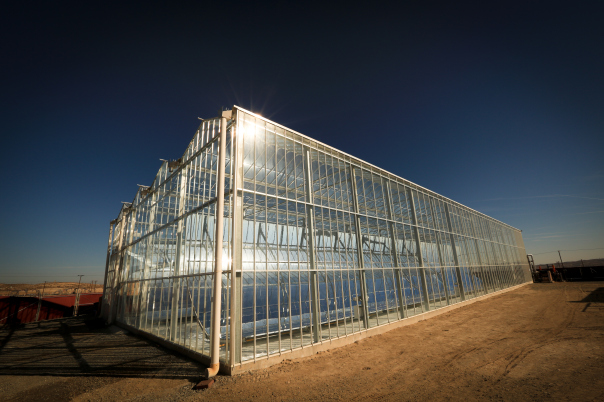
Sure, new parents get showered with adorable gifts and well-intended advice, but then the downpour of unsolicited marketing arrives: for baby gear, for college saving plans, and now, in Jordan, for baby blood banking. An unusual building is rising in the desert outside Amman, all swooping curves and gaping windows.  A dewy-cheeked newborn graces the hoarding that skirts the job site, a single word painted across the panels: BabyCord.  The provocative advertising targets hundreds of people in the cars and trucks speeding past on the airport highway.

It took an internet hunt and candid chat with two expectant co-workers to discover that the building is the new Jordan headquarters of BabyCord, a blood bank affiliated with Boston-based New England Cord Blood Banking.

Their banking program for umbilical cord blood is pitched as a one-time opportunity to save your newborn’s cord stem cells as a hedge against future diseases; a panacea against untold illnesses that may someday be treatable via this burgeoning biological field.

Stem cells have unique capability to develop into other cell types.  They can grow and rejuvenate specific cells or tissue and can be used to treat more than 80 acute and chronic diseases.

[youtube]http://youtu.be/C4rYL0frngM[/youtube]

Umbilical cord blood stem cells are smart, powerful and, unlike embryonic stem cells, they’re controversy-free (it’s halal and Vatican-approved).  Proponents cite three qualities that differentiate them from other stem cell sources:

•  Less risk of complications when transplanted (compared to bone marrow)

•  Immediately available: earlier treatment minimizes disease progression

•  Cryogenic storage protects the nascent cells from aging and exposure to

        environmental factors and viruses that can decrease functionality

Harvesting cord blood is a safe and painless procedure that usually occurs in the minutes after birth. After the umbilical cord is cut, all remaining cord blood is collected, packaged into the handy kit that’s supplied to your doctor or mid-wife pre-delivery, then shipped to a laboratory where it’s processed and frozen in cryogenic storage tanks.  All of the processed cells are preserved in your personal account: nothing is withheld for bank use or release to third parties.

Baby’s own stem cells are a perfect match for his/her blood type, and the likelihood of a match for siblings and parents is also high:  probabilities run 1:2 for a parent and 1:4 for a sibling.

The BabyCord website states that “while the science is still fairly new, according to published research, blood-forming stem cells stored up to 15 years can be used in transplants. In fact, most research indicates that stem cells slow-rate frozen and stored in liquid nitrogen are viable for an indefinite period.”

Founded in 2005, BabyCord Jordan is the first center in the entire Arab world to provide this service.  They also operate in Cyprus and Turkey. To date, they’ve banked cord blood for more than 20,000 Jordanian clients at an annual first-year fee of about $2,100.  Thereafter, storage fees cost about $210 per year.

My mom saved curls from our first haircuts and handfuls of our baby teeth:  mementos of childhood with no intrinsic value beyond scaring the wits out of us kids when we’d snoop in her dresser.  Is this just a natural progression?  Appealing to parental instinct to care for our children? Is it fear-mongering to a very susceptible slice of the population? Or is it smartly offering scientific currency against an uncertain medical future ?

Check out their FaceBook page and draw your own conclusion.

Image of infant by Shutterstock

1 COMMENT

LEAVE A REPLY

Please enter your comment!
Please enter your name here

TRENDING

Earth building with Dead Sea salt bricks

Researchers develop a brick made largely from recycled Dead Sea salt—offering a potential alternative to carbon-intensive cement.

Peace hospital opens between Jordan and Israel

The proposed medical centre, described by Emek HaMaayanot Regional Council head Itamar Matiash as “a centre for cancer treatment, so that people from Jordan or further away could come and receive treatment,” would become the flagship of a wider cluster of medical, academic and innovation-based services planned for the Israeli half of the zone.

Soil has hidden antibiotics ready to be found –– and the new race to find them

Most bacteria in soil cannot be cultured in the...

The Flash Flood Wave Redefining Policy in the MENA Region

If you’ve ever imagined the Middle East and North...

How EcoPeace Uses Environmental Education to Bridge Borders in the Jordan Valley

In a region long marked by political divides, armed conflict, and environmental degradation, EcoPeace Middle East is quietly advancing the power of peacebuilding. Peace through education. Through its cross-border teacher tours in the Jordan Valley, EcoPeace is bringing together educators from Israel, Jordan, and the Palestinian territories to address critical environmental issues.

Qatar’s climate hypocrisy rides the London Underground

Qatar remains a master of doublethink—burning gas by the megaton while selling “sustainability” to a world desperate for clean air. Wake up from your slumber people.

How Quality of Hire Shapes Modern Recruitment

A 2024 survey by Deloitte found that 76% of talent leaders now consider long-term retention and workforce contribution among their most important hiring success metrics—far surpassing time-to-fill or cost-per-hire. As the expectations for new hires deepen, companies must also confront the inherent challenges in redefining and accurately measuring hiring quality.

8 Team-Building Exercises to Start the Week Off 

Team building to change the world! The best renewable energy companies are ones that function.

Thank you, LinkedIn — and what your Jobs on the Rise report means for sustainable careers

While “green jobs” aren’t always labeled as such, many of the fastest-growing roles are directly enabling the energy transition, climate resilience, and lower-carbon systems: Number one on their list is Artificial Intelligence engineers. But what does that mean? Vibe coding Claude? 

Somali pirates steal oil tankers

The pirates often stage their heists out of Somalia, a lawless country, with a weak central government that is grappling with a violent Islamist insurgency. Using speedboats that swarm the targets, the machine-gun-toting pirates take control of merchant ships and then hold the vessels, crew and cargo for ransom.

Leopoldo Alejandro Betancourt López Turned Ocean Plastic Into Profitable Sunglasses

Few fashion accessories carry the environmental burden of sunglasses. Most frames are constructed from petroleum-based plastics and acrylic polymers that linger in landfills for centuries, shedding microplastics into soil and waterways long after they've been discarded. Leopoldo Alejandro Betancourt López, president of the Spanish eyewear brand Hawkers, saw this problem differently than most industry executives.

Why Dr. Tony Jacob Sees Texas Business Egos as Warning Signs

Everything's bigger in Texas. Except business egos.  Dr. Tony Jacob figured...

Israel and America Sign Renewable Energy Cooperation Deal

Other announcements made at the conference include the Timna Renewable Energy Park, which will be a center for R&D, and the AORA Solar Thermal Module at Kibbutz Samar, the world's first commercial hybrid solar gas-turbine power plant that is already nearing completion. Solel Solar Systems announced it was beginning construction of a 50 MW solar field in Lebrija, Spain, and Brightsource Energy made a pre-conference announcement that it had inked the world's largest solar deal to date with Southern California Edison (SCE).

Related Articles

Popular Categories