 An Israeli research team discovers a mechanism whereby even tiny seemingly insignificant chemical changes in a creature can affect the ecology of the earth.
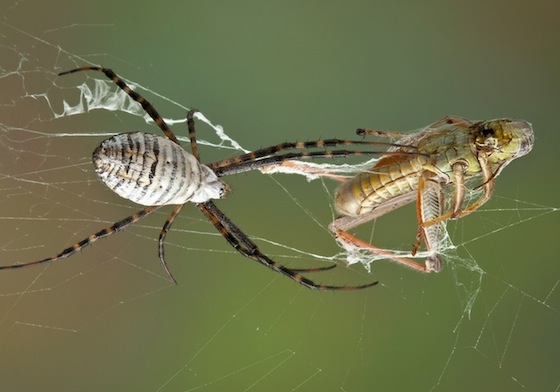
Snakes, spiders and creepy-crawly things that go bump in the night are the creatures of children’s nightmares. But who ever thought that the little critters might actually be scared of each other? A new research project by Israeli researchers at the Hebrew University of Jerusalem and scientists at Yale University, shows that grasshoppers are afraid of spiders. And this fear has an impact on the soil quality after the scared grasshoppers die.
According to a new paper written by the researchers in the prestigious journal Science, a fear of predation by spiders stresses out the grasshoppers so much that it affects their metabolism and subsequently the nitrogen content in their bodies. Scared grasshoppers eat more sugary plants, a process that affects the microbes and chemical processes in the local environment.
The study authors argue that the “fear of predation” may be slowing down the degradation of complex organic materials needed for plant growth.
“We are dealing here with an absolutely new kind of mechanism whereby every small chemical change in a creature can regulate the natural cycle, thus in effect affecting the ecology in total, such as the amount of carbon dioxide released into the atmosphere (through decomposition) and field crop productivity,” said Dr. Dror Halwena of the Department of Ecology, Evolution and Behavior at the Alexander Silberman Institute of Life Sciences at the Hebrew University.
“This has tremendous consequences for our ecological understanding of the living world,” he added.
A bug in the system?
The research gives a compelling argument as to why we should preserve animals of all kinds, since it is unclear how the loss of one, such as spiders or grasshoppers, could affect the productivity of plant life in forests.
In the face of global warming, some scientists argue that the world needs all its checks and balances in place so that nature can overcome any catastrophe brought on by climate change. A few degrees more warmth on average will expand oceans and radically affect what species of animals and plants will grow where.
Halwena explained: “We are gaining a greater understanding of the necessity of conserving all of the component parts of the ecosystem in general and of predators in particular. We are losing predators in nature at a much faster rate than other species.”
In their landmark ecological study, the researchers studied different populations of grasshoppers and how they cope with stress. Faced with the threat of spider attacks, one group of grasshoppers become stressed, and coped with this stress by eating plants more rich in carbohydrates in the same way stressed-out people eat more ice cream and other treats.
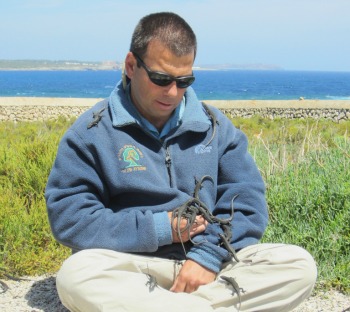 Hebrew University’s Dror Halwena with his test subjects.
This behavioral reaction by the grasshopper creates chemical changes in its body and in its excrement –– and both affect the ecosystem in which the grasshopper lives. The carcass of a dead stressed grasshopper, for instance, contains less nitrogen than one living without a continued threat of spiders. The carcasses with less nitrogen break down more slowly, consequently affecting the speed of nutrient cycling in the overall ecosystem. Stress-free grasshopper remains studied in the experiment decomposed at a rate between 62 percent and 200% faster than did the stressed grasshoppers.
The scientists also used a test group of artificial grasshopper remains made from sugar, chitin and protein with varying levels of nitrogen to see how the loss or addition of nitrogen affected the way soil microbes function. Their findings corroborated what they measured using real, live grasshoppers.
Halwena emphasizes that this study can be an important vehicle for understanding manmade stresses on ecosystems from hunting, global warming or overfishing.Snakes, spiders and creepy-crawly things that go bump in the night are the creatures of children’s nightmares. But who ever thought that the little critters might actually be scared of each other? A new research project by Israeli researchers at the Hebrew University of Jerusalem and scientists at Yale University, shows that grasshoppers are afraid of spiders. And this fear has an impact on the soil quality after the scared grasshoppers die.
According to a new paper written by the researchers in the prestigious journal Science, a fear of predation by spiders stresses out the grasshoppers so much that it affects their metabolism and subsequently the nitrogen content in their bodies. Scared grasshoppers eat more sugary plants, a process that affects the microbes and chemical processes in the local environment.
The study authors argue that the “fear of predation” may be slowing down the degradation of complex organic materials needed for plant growth.
“We are dealing here with an absolutely new kind of mechanism whereby every small chemical change in a creature can regulate the natural cycle, thus in effect affecting the ecology in total, such as the amount of carbon dioxide released into the atmosphere (through decomposition) and field crop productivity,” said Dr. Dror Halwena of the Department of Ecology, Evolution and Behavior at the Alexander Silberman Institute of Life Sciences at the Hebrew University.
“This has tremendous consequences for our ecological understanding of the living world,” he added.
A bug in the system?
The research gives a compelling argument as to why we should preserve animals of all kinds, since it is unclear how the loss of one, such as spiders or grasshoppers, could affect the productivity of plant life in forests.
In the face of global warming, some scientists argue that the world needs all its checks and balances in place so that nature can overcome any catastrophe brought on by climate change. A few degrees more warmth on average will expand oceans and radically affect what species of animals and plants will grow where.
Halwena explained: “We are gaining a greater understanding of the necessity of conserving all of the component parts of the ecosystem in general and of predators in particular. We are losing predators in nature at a much faster rate than other species.”
In their landmark ecological study, the researchers studied different populations of grasshoppers and how they cope with stress. Faced with the threat of spider attacks, one group of grasshoppers become stressed, and coped with this stress by eating plants more rich in carbohydrates in the same way stressed-out people eat more ice cream and other treats.
This behavioral reaction by the grasshopper creates chemical changes in its body and in its excrement –– and both affect the ecosystem in which the grasshopper lives. The carcass of a dead stressed grasshopper, for instance, contains less nitrogen than one living without a continued threat of spiders. The carcasses with less nitrogen break down more slowly, consequently affecting the speed of nutrient cycling in the overall ecosystem. Stress-free grasshopper remains studied in the experiment decomposed at a rate between 62 percent and 200% faster than did the stressed grasshoppers.
The scientists also used a test group of artificial grasshopper remains made from sugar, chitin and protein with varying levels of nitrogen to see how the loss or addition of nitrogen affected the way soil microbes function. Their findings corroborated what they measured using real, live grasshoppers.
Halwena emphasizes that this study can be an important vehicle for understanding manmade stresses on ecosystems from hunting, global warming or overfishing.
And further reading for grasshoppers: 6 tips to cutting down stress
This story was first published on ISRAEL21c – www.israel21c.org
Image of grasshopper in spider web from Shutterstock