

Tent Cities to House Thousands of African Migrants in Israel’s Negev Desert

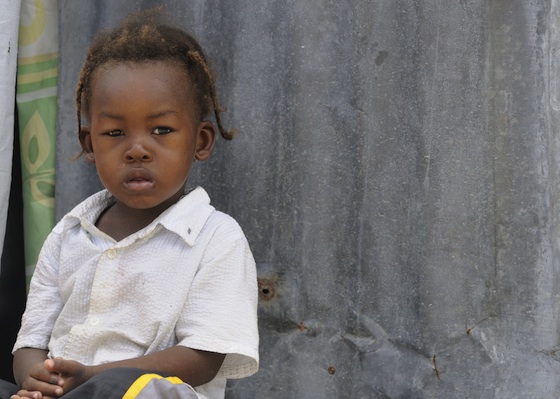
Refugees, asylum, Israel, tent city, shipping containers, desert, negevA young child sits in a Haitian tent city – a temporary housing solution for displaced refugees. Thousands of African migrants will soon be moved to similar units in Israel’s Negev Desert to the dismay of local residents.

Following a spate of violence against African migrants living in southern Tel Aviv, the Defense Ministry has dispatched dozens of bulldozers to Ketziot near the Egyptian/Israeli border to clear land for a detention center. Called Ir Amim, which means City of Nations in Hebrew, the desert asylum center will initially contain enough recycled shipping containers to house 3,000 African migrants.

Eventually the Ketziot center will be expanded to accommodate an additional 8,000 people. The Defense Ministry also announced that it will erect up to 25,000 tents for migrants in five detention centers that will be run by the prison service. The idea is to keep African migrants out of Israeli cities and create a deterrent to any future asylum-seekers. But the Negev Regional Council and local residents are deeply opposed to the plan.

Sanctuary in tents

Although Israel has begrudgingly provided sanctuary to African migrants who face political instability and violence in their home countries, a Jerusalem court recently ruled that Israeli can deport Southern Sudanese nationals despite the ongoing trouble in the newly-formed country. But Sudanese only represent a small minority of African migrants living in Israel.

For the rest, including thousands of Eritrean nationals and other future asylum-seekers, shipping and containers and tents in the Negev will be home. The first phase of the Ketziot center is expected to be completed by the end of this year, although people may start moving in as early as November, and the tent cities will follow soon thereafter.

But locals are not impressed.

“Setting up a tent city simply looks bad. You take people from south Tel Aviv, stick them in tents in the middle of the desert, and now [I’m supposed] to look after them,” said Ramat Negev Regional Council head Shmuel Rifman.

Solarize the centers

No sewage treatment facilities exist yet and energy in the region is already intermittent and scarce. Locals worry that these new compounds will usurp their own resources. Proving sufficient water to the new desert dwellers will also be an issue.

Palestinian politics aside, Israel is a small country, so there isn’t a lot of extra space to house the 2,000 migrants that enter the country each month. Although there is a risk that these centers could become unhealthy, unruly camps, there is also an opportunity to make use of the desert’s resources to mitigate that potential.

Instead of tapping into the national grid for power, the Defense Ministry should install solar panels to provide energy, which might placate local residents. And rather than build chemical waste treatment plants, hundreds of carefully-placed compost toilets would process human waste far more efficiently. It would only be necessary to replace the bins once a month.

Asylum-seekers who show leadership qualities can be tasked with monitoring the panels and toilets to ensure that they function properly, which in turn would help to promote internal rather than enforced order. Even though Israel wants to discourage further “infiltrators,” the public will be more supportive of this initiative if it is run humanely and without diverting a pile of resources financed by their tax contributions.

:: Haaretz

Image credit: Haiti refugee by Arindambanerjee, Shutterstock

More on Tent Cities and Shipping Containers:

How Israel’s Tent Cities Influenced Occupy Wall Street

Tent City Dismantled in Tel Aviv – Now What?

Street Art Meets Castro Fashion in Recycled Shipping Containers

Tafline Laylin
Tafline Laylinhttp://www.greenprophet.com
As a tour leader who led “eco-friendly” camping trips throughout North America, Tafline soon realized that she was instead leaving behind a trail of gas fumes, plastic bottles and Pringles. In fact, wherever she traveled – whether it was Viet Nam or South Africa or England – it became clear how inefficiently the mandate to re-think our consumer culture is reaching the general public. Born in Iran, raised in South Africa and the United States, she currently splits her time between Africa and the Middle East. Tafline can be reached at tafline (at) greenprophet (dot) com.
2 COMMENTS
  1. I love seeing how recycled shipping containers are being used to to provide quick temporary facility solutions. There is a high school in NJ http://www.brrsd.net/holh/ which has finished one out as a medical clinic and stocked it with donated supplies and is in the process of sending it to remote Uganda. What a great way to get their students thinking about the rest of the world and helping at the same time.

  2. African nations are habitually in chaos, so the refugees will never be able to return to their homes, but become citizens of Israel, a small nation already overcrowded beyond its resources. But the Israeli people do not wish to be overwhelmed by Africa’s population explosion and they should put a stop to this flood of humanity and encourage the African nations to attend to their own internal problem with family planning education. Otherwise, the chaos in Africa will become chaos in Israel.

LEAVE A REPLY

Please enter your comment!
Please enter your name here

TRENDING

Lizard tail stew, dhub mansaf, is a favored folk dish in Saudi Arabia

By exploring forgotten folk dishes like lizard stew, Green Prophet continues to connect the dots between culture, ecology, and the future of sustainable living in the Middle East.

Afghan Taxis Get Ancient Persian A/C Hack—And It Works Better Than Yours

The Afghan windcatcher car cooler isn’t just clever. It’s low-cost climate adaptation. With rising global temperatures and millions of cars still without functioning air con, it’s a design-for-the-rest-of-us moment. A punk rock move in a world of overdesigned heat tech. Plus, it’s deeply sustainable: no refrigerants, no increased fuel use, no carbon guilt. Just water, airflow, and a little DIY spirit.

Arab agricultural land is on the brink

Across the Arab world, croplands face a perfect storm of stressors. Excessive fertilizers and pesticides erode soil ecology. Poor drainage and over-irrigation drive salinization, leaving fields crusted with salt. Rising temperatures, dwindling groundwater, and more frequent sand-and-dust storms—all amplified by climate change—compound the crisis.

New Discovery in the Negev Desert Sheds Light on How Climate Affects Earth’s Surface

The research reveals how climate fluctuations over the past 230,000 years have influenced the migration of drainage divides in the Negev Desert, shedding light on the dynamic relationship between climate and landscape evolution.

Al Faya Lodge: Sustainable Architecture Meets Desert Serenity

The lodge's design takes the region's extreme climate into careful consideration. Sharjah’s desert environment presents a unique set of challenges, from searing heat and prolonged sun exposure in the summer to chilly nighttime temperatures. Jonathan Ashmore, Anarchitect’s founder, emphasized that any design in such an environment must account for these factors.

Qatar’s climate hypocrisy rides the London Underground

Qatar remains a master of doublethink—burning gas by the megaton while selling “sustainability” to a world desperate for clean air. Wake up from your slumber people.

How Quality of Hire Shapes Modern Recruitment

A 2024 survey by Deloitte found that 76% of talent leaders now consider long-term retention and workforce contribution among their most important hiring success metrics—far surpassing time-to-fill or cost-per-hire. As the expectations for new hires deepen, companies must also confront the inherent challenges in redefining and accurately measuring hiring quality.

8 Team-Building Exercises to Start the Week Off 

Team building to change the world! The best renewable energy companies are ones that function.

Thank you, LinkedIn — and what your Jobs on the Rise report means for sustainable careers

While “green jobs” aren’t always labeled as such, many of the fastest-growing roles are directly enabling the energy transition, climate resilience, and lower-carbon systems: Number one on their list is Artificial Intelligence engineers. But what does that mean? Vibe coding Claude? 

Somali pirates steal oil tankers

The pirates often stage their heists out of Somalia, a lawless country, with a weak central government that is grappling with a violent Islamist insurgency. Using speedboats that swarm the targets, the machine-gun-toting pirates take control of merchant ships and then hold the vessels, crew and cargo for ransom.

Leopoldo Alejandro Betancourt López Turned Ocean Plastic Into Profitable Sunglasses

Few fashion accessories carry the environmental burden of sunglasses. Most frames are constructed from petroleum-based plastics and acrylic polymers that linger in landfills for centuries, shedding microplastics into soil and waterways long after they've been discarded. Leopoldo Alejandro Betancourt López, president of the Spanish eyewear brand Hawkers, saw this problem differently than most industry executives.

Why Dr. Tony Jacob Sees Texas Business Egos as Warning Signs

Everything's bigger in Texas. Except business egos.  Dr. Tony Jacob figured...

Israel and America Sign Renewable Energy Cooperation Deal

Other announcements made at the conference include the Timna Renewable Energy Park, which will be a center for R&D, and the AORA Solar Thermal Module at Kibbutz Samar, the world's first commercial hybrid solar gas-turbine power plant that is already nearing completion. Solel Solar Systems announced it was beginning construction of a 50 MW solar field in Lebrija, Spain, and Brightsource Energy made a pre-conference announcement that it had inked the world's largest solar deal to date with Southern California Edison (SCE).

Related Articles

Popular Categories