
 Sour green plums the size of large marbles are in the shuk now, a seasonal favorite of the Iraqi community. Eat them out of hand as a snack, sprinkling each bite with a little salt. The classic Iraqi way to cook them is to pair them with meat in a flavorful stew. And if you want to ask for them in Persian, say, “Gojeh sabz!”
Fruit: The summer wave of colorful fruit has begun, to the rejoicing of cooks who love to put up preserves. Apricots, peaches, and nectarines have entered the markets, and are already sweet enough to be worth buying. Strawberries are still with us, although getting seedy in preparation for disappearing till next year. If you haven’t made your jam yet, here’s our recipe. Kiwis are sweet and ripe.
Cherries have arrived, and farmers predict huge crops this year due to the prolonged winter this region enjoyed, which allowed the trees to “sleep” and blossom after the windiest weather. Last year’s crop almost didn’t exist, due to windstorms that blew most of the blossoms off the trees.
Avocados are still in the market, but getting expensive again as their season wanes. As expected in warm weather, all the melons are sweet and ready for eating. Fresh green almonds have a different character now, because the milky interior gel has hardened into soft, pale kernels already. If you like them, buy now, for they will soon disappear. Loquat season is prolonged and abundant this year, with bigger and sweeter fruit than I’ve ever seen before.
Citrus fruit are still in evidence, with oranges, pomelos, and clementines for sale. Lemons are big and juicy; some lemon trees give two yearly crops, which accounts for their almost year-round presence. Good news for those who like to put up salty preserved lemons.
Vegetables: Tomatoes are expensive and will remain so for the next week or two, when a new crop comes in. If budget-conscious, look for smaller, less glamorous-looking tomatoes; they are just as good and cheaper. Depending on the day, cherry tomatoes can be cheapest of all.
The best bargains in vegetables today are cauliflower and all the cabbages, which are big, firm, and cheap. Okra is in season, although expensive. String beans, broad Italian beans and wax beans look fine now, as does sweet corn.
Parsley root and celeriac continue full and fat, but as summer temperatures rise, these roots will shrink back and won’t be worth bothering with. The same is true of celery, by the way. Kohlrabi, fennel, beets, turnips, and red radishes are very good now, at reasonable prices.
Summer loves white and red potatoes; time to make one of those Middle Eastern potato salads fragrant with olive oil and lemon. Cucumbers, corn, and eggplants are good now. Come really hot weather, get to the market early for decent eggplants. They are susceptible to heat and in full summer, they buckle in, languishing on the vendor’s stands.
All the peppers are good in May. Look for baby bell peppers for stuffing. Grilled, and combined with grilled eggplant, peppers make a delicious dip, similar to muhamarra.
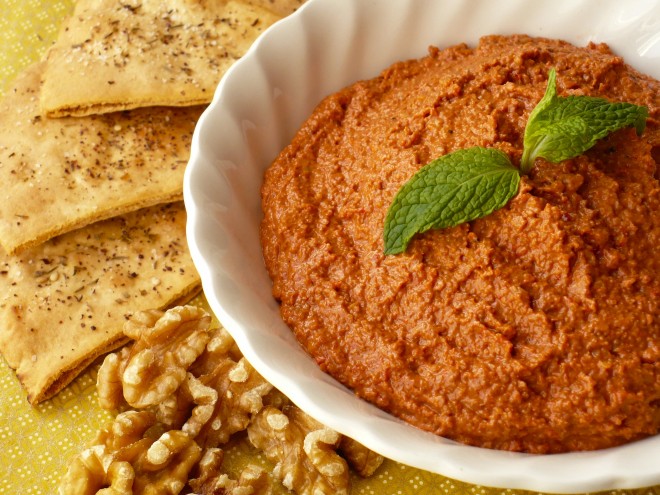
Here’s our recipe: just substitute grilled eggplants for the bread. Another well-loved Middle Eastern dish is stuffed zucchini – and zukes are looking good now too.
Pumpkins and butternut squash are in season. Combine one of them with a cob of local sweet corn, an onion, a tomato and your favorite herbs for a delicious soup. As every good cook knows, foods that come into season at the same time taste good together.
Two Middle-Eastern summer specialties are akoub, or tiny wild artichokes. They’re very thorny and labor-intensive to clean, so they’re always expensive. But as a seasonal treat, they can’t be surpassed, with their unique, delicate flavor. Any prickles that remain after cleaning soften upon cooking.
Melokhia, or mulokhia, has started its brief season. Here’s our recipe for traditional melokhia soup. The leaves may be rinsed, patted dry, and hung up by their stems to dry for future soups.
Herbs: Basil is back again. At the herb vendors, there are plenty of parsley, coriander leaf, chives, celery, and scallions. Still in evidence are sorrel, tarragon, wormwood, Swiss chard, spinach, leeks and lettuces. Mint continues especially lovely. Grape leaves for stuffing are now being sold in stacks. You may find bunches of lemon verbena for sale now.
Fresh ginger root is in every spice vendor’s and also at the herb stands. Ginger root freezes well and is easy to peel and grate. Just put the remainder right back in the freezer after use, because it gets mushy once thawed out.
UPDATE MAY 2013: Stone fruit (apricots, peaches, nectaries) are still new in the markets and not really sweet yet. It’s worth waiting another week to start putting up preserves.
Cherries have arrived; still quite expensive at this writing.
Watermelons and cantaloups are already sweet and delicious.
Forager’s notes: The landscape is drying up, with winter’s juicy wild greens just a memory. But there is always something for the alert forager to bring home. Purslane, summer’s featured wild edible, has started to appear on the ground. It’s tender now, so if you come across a nice patch of it, bring it home for your salads.
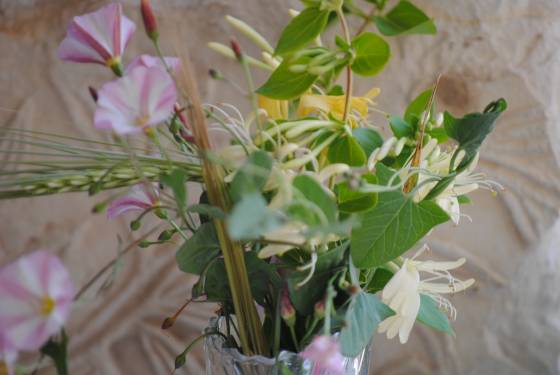
For a sip of sweetness and to revive childhood memories, pluck a few honeysuckle blossoms. Honeysuckle can be made into wine: if you are determined and have access to a large quantity of pesticide-free blossoms, you can find the recipe online. To capture that elusive flavor more easily, just drop a handful into a jar, cover with sugar, and wait a week. Rosemary is flowering, and it’s worth robbing the bees of a few blooms to flavor tea.
The dandelion of the Middle East is Taraxacum syriaca. It flowers sparsely and can only be found in hilly regions where winters are cold and consistently rainy. Dandelion is famous for liver support and as an effective diuretic. It’s also a natural superfood, loaded with minerals and vitamins.If you’re lucky enough to live where dandelions grow, pick the tender young leaves to marinate in vinaigrette before adding to salads. Older, tougher leaves are quite bitter, but a few cooked with almost any soup gives a delicious, not-bitter flavor. Dandelion roots are excellent in soups and stews. I used to make dandelion beer from the roots and leaves when I lived in the chilly north of Israel; there are recipes online. It was good beer, too.
Chicory shares all of dandelion’s medicinal properties, but is difficult to pick. The leaves are tiny, and the root almost impossible to dig out of the hardened soil where the plant is most often found. The fluffy blue flowers are a joy to behold early in the morning, though, especially when you catch just the moment when all of them open spontaneously at the same time.
Bindweed, the bane of farmers for its strong, thin vines that strangle crops in the fields, still produces beautiful pink and white flowers. Fill a vase with sprays of honeysuckle and bindweed for a wildflower bouquet to rest your eyes on.
 Recipes starring Middle-Eastern produce in season now:
Photos of sour plums in shuk Mahaneh Yehudah, Jerusalem and of honeysuckle/bindweed bouquet by Miriam Kresh.



i really would love to buy alot of these sour green plums , where can i buy them from
i live in england , leeds
i crave sour fruit
any ideas?
I am very interested in purchacing 7 lbs of your green plums. Do you have a phone number so I can speak with someone. asap… sooner the better. or call me at 954-632-5546. I am located in Davie Florida. My sister used to ship them to me but she passed and I will definitely become a regular customer…
Hi, saw a whole carboard box of the sour plums, was wondering where i can order a box of it? Where can i order them?
You can order the sour green plums from here:
http://www.tulumba.com/storeItem.asp?ic=FB887478YY767
but hurry! season is short
Green chickpeas also taste good raw as a garnish on salads or added to soups and heated for a few minutes.
Laurie, yes, it’s green chickpeas! Lovely to cook with. Try making fresh hoummous with them. I hadn’t seen them out yet, thanks for the heads up! And – thank you for the kind words.
Your posts are fabulous – really helpful, gets me playing with new food.
This month a small pale green “pod” has been showing up in mountains on roadside veg stands. I think they are beans – chickpeas? Any ideas what to do with them?
Look way to pretty to pass up.