

 Excellent at recycling oil, what are the barriers to Saudi Arabia in recycling other valuables?
There are significant barriers that hinder the wide application of reverse logistics in some industries of Saudi Arabia. Let me first present the definition of the concept. Iran’s S. Dowlatshahi defined reverse logistics as the process by which a manufacturing entity systematically retrieves previously shipped products or parts from the point-of-consumption for possible recycling, remanufacturing, or disposal.
The main drivers of this process are reaction of legislation toward environment protection, corporate social responsibilities and economic benefits. These drivers worked well in the oil industry of Saudi Arabia. When Saudi’s government prevented oil waste to protect the environment, the market of oil recyclers started to grow and competition rose to provide higher quality of recycled oil, and as a result these recycling manufacturers experienced a realistic return on investment.
However, there are some industries still behind the world class practices in Saudi arabia and the possible reason could be as follow:
Limitations of landfill usage should be created that prevent any wastes that could be recycled and take advantage of it. Although it is written clearly in the environment agency directive, the need of essential collaboration with cities’ authorities to apply it is important.
Although there are some campaigns in different locations, the need for larger campaigns of environmental awareness should be done by different players including Islamic agencies, commercials chambers, cities’ authorities and traditional and new media –- important to accelerate the process.
There is a lack of economic awareness that some recyclable items that go to the landfills by organizations like from furniture manufacturers are valuable.
There should be more encouragement for recycling by the Industrial Developing Fund. This agency will play an important role in extending the recycling manufacturers if they reduce and minimize the requirements of getting funds.
Overcoming these obstacles does not require much effort or huge investment. However, it calls for some legislations and organization to be done by different influential agencies including commercial and government sectors.
Mohammed Alnuwairan is a joint Member of Doctoral Program, Manchester Business School, Manchester, UK; and a Faculty Member of King Faisal University, Saudi Arabia
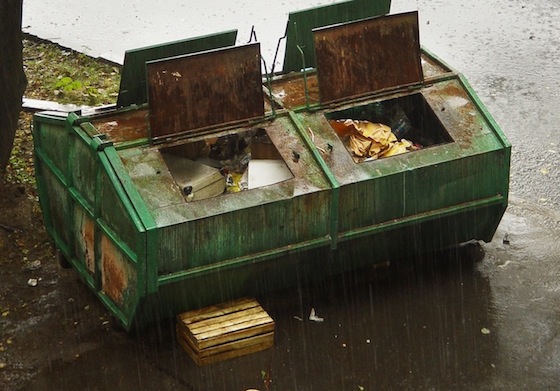
Image of wastebin from Shutterstock



At this moment at a business visit in Jeddah and reading the article of mr Alnuwairan it could not better be presented. As a ‘mediator’ between the western world in recycling and the new economies I can only admit that all the mentioned processes were also part of the western awareness of environment and the need for recycling. Although it starts with ‘education’ and ‘social awareness’ there are other factors that influence the development and implementation of recycling activities in the KSA. In general, besides the economic value of waste (waste doesnot excist any more. It is a combination of raw materials, not usable anymore in the present shape) the other leg for waste processing was the energetic value of the waste, allowing recycling companies and municipalities in the western world to set up and operate sophisticated ‘waste – to – energy’ installations for nearly every obsolete type of waste.
But the extremely low energy prices in the KSA make any initiative to start with a big scale transformation of several types of waste into energy hardly impossible. Not only municipal waste, also scrap gyres, contaminated oils and solvents, medical waste etc can be easily transferred into energy or even in oil and gas, applicable in industrial facilities or added to the public energy supplies. But every form of transferring waste into energy or recoiling products which need a lot of energy to be produced initially, is doomed to fail at the present energy policy of the KSA. What remains is the highest and most difficult step in the ‘waste staircase’, viz ‘prevention’ the existence of waste and second separation at the source. This requires not only a complete other way of thinking, but extremely efforts in education of the big crowds in the cities. Or price the recycling parts financially attractive for people to separate and transfer the valuables to a municipal or private waste collection station. This alter immediately the general view on ‘waste’, challenging people to clean up the mesh in their streets and prevent further pollution. There is a long way to go, including environmental regulations and forcing them.
Interesting subject, it could open many opportunities for investors to work in the recycling sectors.
Thanks for the author to present this subjects.
Great subject, hope the solid waste will be treated as oil waste.
it is worth!
I agree with the author.
It is enjoyable article. the government should focus on this subject due to save environment and economic increasing.
Yes, I agree with the author. collaborations need to be done to improve other sectors. Redesigning the supply chains to include recycling activities is very important. But this requires knowing how much recycling sector worth, and how much waste could be recycling.
Thank for the author to present this subject.
Very interesting article, I believe our country really require that kind of research and thought. I pray Allah SWT to be able to see one day a full implementation of reverse logistic in our country.