Does the Skyscraper Index Predict Economic Turmoil?

Sharjah, UAE, Middle East, skyscrapers, urban development, unsustainable development, architectureBrian argues that skyscrapers are not only “un-green,” but they could be a precursor to economic turmoil.

The Empire State Building was completed in 1931, the same year E.Y. “Yip” Harburg wrote these lyrics: “Once I built a tower up to the sun, brick and rivet and lime. Once I built a tower, now its done. Brother, can you spare a dime?” The song grew to become an anthem to unemployed American builders during the Great Depression. But these words could easily apply to those put out of work after building Burj Khalifa or one of hundreds of other skyscrapers that now cast long shadows across the Mideast.

The skyscraper index

Burj Khalifa’s construction coincided with a global economic downturn and it was completed just in time for Dubai’s financial crisis. This caused Burj Kalifa’s rents to plummet 40% and left 92% of its apartments empty.  Similar stories are being repeated around the globe.

If you’re beginning to wonder whether skyscrapers are an economic jinx, you are not alone.

What began as Andrew Lawrence’s tongue-in-cheek “Skyscraper Index” to correlate skyscraper construction with business cycles has grown into serious research. As recently reported by BBC news, Barclays capital wrote: “Often the world’s tallest buildings are simply the edifice of a broader skyscraper building boom, reflecting a widespread misallocation of capital and an impending economic correction…”

Misallocation of resources is one of the unfortunate side effects of economic bubbles. Mega skyscrapers may be an indication of a distorted relationship between land values and construction costs. But  that hasn’t stopped India, China and Turkey from doing what was once thought to be a bad idea.

Is there an economic reason for building these things?

The construction cost of a one story commercial building is typically $100-$200 per square foot.  (It varies widely because up to 70% of this is the cost of the land.)  The construction cost per square foot of a skyscraper is approximately $500 per square foot and the cost of WTC 1 in New York City is $1,150/square foot.

Working through the details is an exercise for the reader, but economic reasons for building a skyscraper seem to vanish by the tenth floor. So if a pencil building seems to be the best fit for the economics of a site, you might want to consider funding horizontal public transportation to another location.

Chances are good that the land values are floating atop an economic bubble. And when the bubble pops, the skyscraper will have to support itself long after it makes economic sense.

Are they Green?

While there can be an advantage in avoiding horizontal sprawl, vertical sprawl can be just as bad for the environment, possibly worse.  Even so-called “green” skyscrapers consume a massive amount of resources and energy.  They cast long shadows, kill millions of birds and expose far more surface area for collecting solar heat than the land beneath them.

If the buildings are dark, this excess heat contributes to the urban heat island effect.  If the buildings are reflective, the heat can be concentrated where it doesn’t belong. So while one skyscraper can claim to be slightly greener than another, none are as green as the empty lot it was built on. None are green when they are only designed to work for a decade or two.

Skyscrapers are symbols of…?

The Great Pyramid of Giza stood as the highest man-made structure on earth for almost 4000 years before the Lincoln Cathedral exceeded its height in the 14th century. This record held for another six centuries before the Washington monument topped it at 555 feet.

These were all symbolic structures. They didn’t pretend to be green or economically practical. They were works of art which symbolized something. Skyscrapers rarely make economic sense, but they can be powerful symbols. So many people think of modern skyscrapers as symbols of economic prosperity it has become a cliche since they often indicate quite the opposite.

The real question is, will they be regarded as useful works of urban art six months from now when they are no longer breaking any records. How about one hundred years in the future? Do they symbolize a harmonious relationship between people and nature or do they symbolize a temporary insanity, pride and hubris?

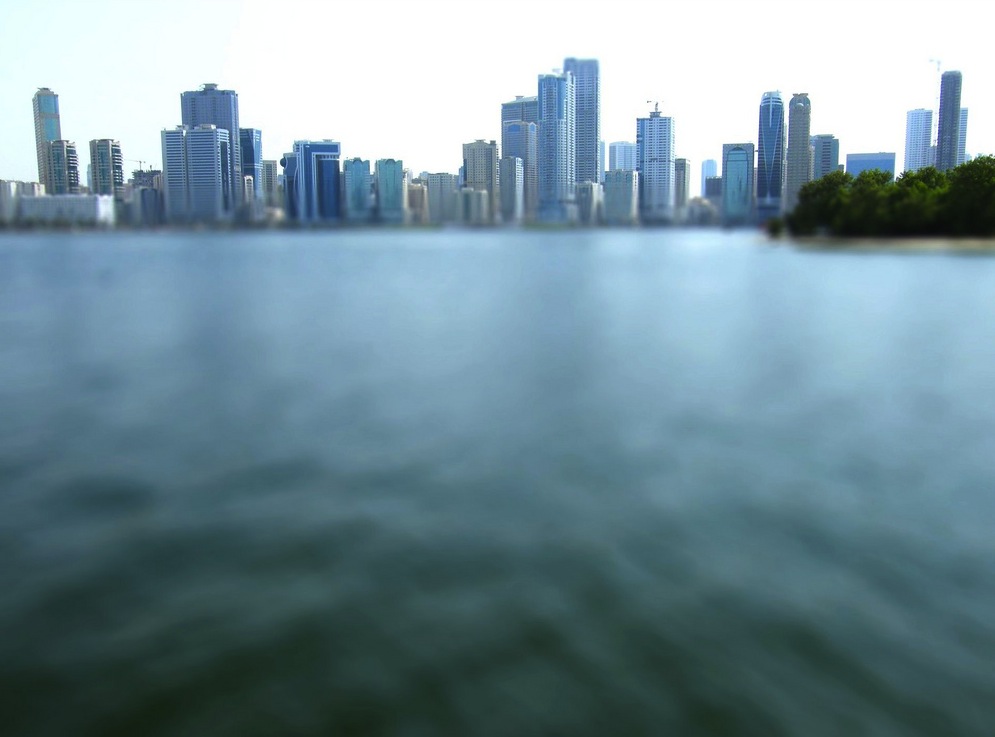
image via Uggboy, Flickr

More on unsustainable development in the Middle East:

An Ant in Dubai

Sustainable Architecture Saudi Style: King Abdullah Financial District

Dubai Breaks its own Record for the World’s Tallest Hotel

Brian Nitz
Brian Nitzhttp://www.greenprophet.com
Brian remembers when a single tear dredged up a nation's guilt. The tear belonged to an Italian-American actor known as Iron-Eyes Cody, the guilt was displaced from centuries of Native American mistreatment and redirected into a new environmental awareness. A 10-year-old Brian wondered, 'What are they... No, what are we doing to this country?' From a family of engineers, farmers and tinkerers Brian's father was a physics teacher. He remembers the day his father drove up to watch a coal power plant's new scrubbers turn smoke from dirty grey-back to steamy white. Surely technology would solve every problem. But then he noticed that breathing was difficult when the wind blew a certain way. While sailing, he often saw a yellow-brown line on the horizon. The stars were beginning to disappear. Gas mileage peaked when Reagan was still president. Solar panels installed in the 1970s were torn from roofs as they were no longer cost-effective to maintain. Racism, public policy and low oil prices transformed suburban life and cities began to sprawl out and absorb farmland. Brian only began to understand the root causes of "doughnut cities" when he moved to Ireland in 2001 and watched history repeat itself. Brian doesn't think environmentalism is 'rocket science', but understanding how to apply it within a society requires wisdom and education. In his travels through Europe, North America, Asia and the Middle East, Brian has learned that great ideas come from everywhere and that sharing mistakes is just as important as sharing ideas.
1 COMMENT

Comments are closed.

TRENDING

Iran’s water mafia and thirst for war leaves the country on brink of being dry

Iran’s Lake Urmia, once the Middle East’s largest saltwater lake, has shrunk by 90 percent due to mismanagement, dams, and drought. As Tehran pours billions into foreign conflicts, water activists face repression at home. The crisis mirrors Syria’s drought-driven unrest, showing how water scarcity can destabilize entire regions.

Creamy Eggplant Soup Recipe

Eggplant seems an unlikely soup ingredient. But blended with vegetable stock, herbs, and cream, the shiny purple vegetable makes a creamy soup full of Middle-Eastern flavors.

Six “Green” Reasons To Drink Camel’s Milk

With 5 times the amount of Vitamin C in camel's milk, and full of iron, camel's milk needs no nutritional help. It has a shelf life of 5 days before pasteurization, after which it will survive for up to 3 weeks. Camel's milk is just as versatile as other milk, used as it is to produce low-fat varieties of cheese, chocolate, and a fermented delicacy that is used in areas that lack refrigeration.

The Kibbutz Movement from Israel Revival

Want to learn about organic agriculture and how it's...

Forage Wild Herbs of the Mediterranean Winter: Navelwort, AKA Pennywort

In my foraging walks during late winter and spring,...

Turning Your Energy Consultancy into an LLC: 4 Legal Steps for Founders in Texas

If you are starting a renewable energy business in Texas, learn how to start an LLC by the books.

Tracking the Impacts of a Hydroelectric Dam Along the Tigris River

For the next two months, I'll be taking a break from my usual Green Prophet posts to report on a transnational environmental issue: the Ilısu Dam currently under construction in Turkey, and the ways it will transform life along the Tigris River.

6 Payment Processors With the Fastest Onboarding for SMBs

Get your SMB up and running fast with these 6 payment processors. Compare the quickest onboarding options to start accepting customer payments without delay.

Qatar’s climate hypocrisy rides the London Underground

Qatar remains a master of doublethink—burning gas by the megaton while selling “sustainability” to a world desperate for clean air. Wake up from your slumber people.

How Quality of Hire Shapes Modern Recruitment

A 2024 survey by Deloitte found that 76% of talent leaders now consider long-term retention and workforce contribution among their most important hiring success metrics—far surpassing time-to-fill or cost-per-hire. As the expectations for new hires deepen, companies must also confront the inherent challenges in redefining and accurately measuring hiring quality.

8 Team-Building Exercises to Start the Week Off 

Team building to change the world! The best renewable energy companies are ones that function.

Thank you, LinkedIn — and what your Jobs on the Rise report means for sustainable careers

While “green jobs” aren’t always labeled as such, many of the fastest-growing roles are directly enabling the energy transition, climate resilience, and lower-carbon systems: Number one on their list is Artificial Intelligence engineers. But what does that mean? Vibe coding Claude? 

Somali pirates steal oil tankers

The pirates often stage their heists out of Somalia, a lawless country, with a weak central government that is grappling with a violent Islamist insurgency. Using speedboats that swarm the targets, the machine-gun-toting pirates take control of merchant ships and then hold the vessels, crew and cargo for ransom.

Related Articles

Popular Categories