
Israel Turns on the Tap in River So Endangered Fish Can Swim

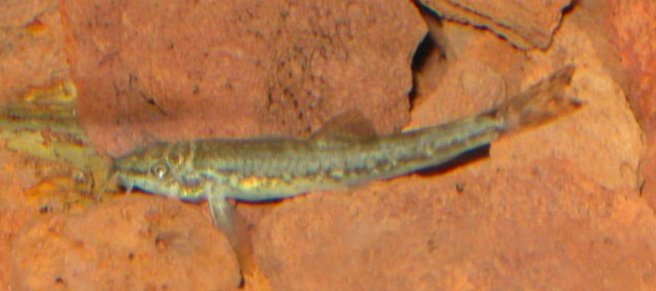
Nemacheilus dori israel Israeli ecologists are creating habitat to save the severely endangered fish Nemacheilus dori, which measures only two inches.

The fate of a tiny endangered fish in Israel`s northern region may rest on whether ecologists can create additional aquatic habitat.  The Nature and Parks Authority is working to save the fish,  a hillstream loach, in Israel’s northern wetlands.  The species, Nemacheilus dori, is endemic to Israel.  It is found only in one 0.7-hectare wetland nature reserve, located in the north of Israel, at Ein Malkoach.

Nemacheilus dori is quite small, measuring only two inches in adulthood. They are the only fish in this particular wetland area and are notoriously difficult to see with the naked eye. That`s because “their color is very similar to that of the ground and they like to be under stones,” says Dana Milstein, an aquatic ecologist for the Nature and Parks Authority.

The fish is challenged in particular by lack of water flows.  The natural spring at Ein Malkoach flows at about 5 cubic meters of water per hour – not enough for the Nemacheilus dori to migrate and seek shelter.  That`s why the Nature and Parks Authority built two additional artificial ponds connected to the river.

The Authority now pumps water into those ponds to create flow.

With a rapidly growing populace and extremely limited real estate (Israel is about the size of New Jersey), ecologists need to think creatively to protect increasingly threatened wildlife and bolster diminishing habitat.

Israeli ecologists have fought to save other critically endangered species over the years. For example, two threatened species of sea turtle – Greens and Loggerheads – nest every year on the beaches north of Tel Aviv.

After the number of female turtles migrating to the beaches plummeted, the Nature and Parks Authority built a hatchery.  Now, with the help of staff and volunteers who monitor the nests, the numbers are steadily increasing.

Additionally, Israel has fully protected 3% of the Mediterranean region and 20% of the desert region as nature reserves. Special rescue operations for protected species such as the leopard, gazelle, ibex and vulture have been undertaken, including establishment of feeding stations and nesting sites.

The country has even taken a few notes from the Bible in its conservation efforts, breeding and reintroducing animals which historically populated the hills and deserts of the Land of Israel into suitable habitats. Such species include the white oryx, ostrich, Persian fallow deer, and roe deer.

Israel`s major wildlife legislation, the Wildlife Protection Law, was established in 1955.  At that time, the law treated “game“ species and “protected animals“ differently.  This distinction allowed for widespread sport hunting.  As a result,protections were not comprehensive and many wildlife species were overhunted.

But it`s not just hunting that has led to significant wildlife declines: Israel has changed significantly during the last 50 years in ways that have severely impacted animals.  Threats to wildlife include habitat loss from housing and infrastructure development, urbanization, appropriation of land for agriculture, pesticide spraying, poisoning and uncontrolled hunting.

In 2010, Israel´s legislature amended the Wildlife Protection Law. The amendment instituted new regulations to control the numerous threats to wildlife.  The changes were sweeping.  All wildlife are now defined as protected.  Sport hunting licenses have been fully revoked.  Transferring and abandoning wildlife is prohibited.  Poisoning wildlife or trading in fur is punishable as a crime.  And stricter penalties are available to enforcement authorities.

An additional reason for the amendment was to implement the requirements of the Convention on International Trade of Endangered Species, to which the country is a signatory.

With the new ponds built by the Nature and Parks Authority, the Nemacheilus dori now swims in flows of 12 cubic meters per hour.  That`s more than double the volume of the river before the artificial ponds were built.  More creative solutions will be needed as wildlife in Israel feel the pressure from human activity.

Above image via the Israel Nature and Parks Authority.

Joshua Basofin
Joshua Basofinhttp://www.greenprophet.com
Joshua is an environmental attorney and writer living in Tel Aviv. He has worked for several conservation groups in his native United States, including The Nature Conservancy and Defenders of Wildlife. Joshua specializes in laws and policies aimed at protecting natural areas. He has a particular interest in freshwater and marine habitats. Growing up in the suburbs of Middle America, Joshua learned to escape into nature and leave the strip malls and parking lots behind. He has hiked and explored around the world, from South America to Australia to Thailand. Joshua is fascinated by the often polarizing worlds of tradition and modernity. He thrives on studying the intersection of environmental conservation, religion, and human culture. And he may have found his greatest challenge yet in Israel.
12 COMMENTS
  1. A well-written and gratifying account of Israel’s efforts to protect all animals, endangered or not, as part of it’s Biblical heritage to preserve life.

LEAVE A REPLY

Please enter your comment!
Please enter your name here

TRENDING

Astro uses AI to help procure land for renewable energy

For oil-rich, environmentally vigilant Gulf states, Astro isn’t just another startup story. It is a blueprint for accelerating an energy transition that is now existential, not optional.

Earth building with Dead Sea salt bricks

Researchers develop a brick made largely from recycled Dead Sea salt—offering a potential alternative to carbon-intensive cement.

Farm To Table Israel Connects People To The Land

Farm To Table Israel is transforming the traditional dining experience into a hands-on journey.

Remilk makes cloned milk so cows don’t need to suffer and it’s hormone-free

This week, Israel’s precision-fermentation milk from Remilk is finally appearing on supermarket shelves. Staff members have been posting photos in Hebrew, smiling, tasting, and clearly enjoying the moment — not because it’s science fiction, but because it tastes like the real thing.

An Army of Healers Wins the 2025 IIE Goldberg Prize for Peace in the Middle East

In a region more accustomed to headlines of loss than of listening, the Institute of International Education (IIE) has chosen to honor something quietly radical: healing. The 2025 Victor J. Goldberg Prize for Peace in the Middle East has been awarded to Nitsan Joy Gordon and Jawdat Lajon Kasab, the co-founders of the Army of Healers, for building spaces where Israelis and Palestinians — Jews, Muslims, Christians, Druze, and Bedouins — can grieve, speak, and rebuild trust together.

Qatar’s climate hypocrisy rides the London Underground

Qatar remains a master of doublethink—burning gas by the megaton while selling “sustainability” to a world desperate for clean air. Wake up from your slumber people.

How Quality of Hire Shapes Modern Recruitment

A 2024 survey by Deloitte found that 76% of talent leaders now consider long-term retention and workforce contribution among their most important hiring success metrics—far surpassing time-to-fill or cost-per-hire. As the expectations for new hires deepen, companies must also confront the inherent challenges in redefining and accurately measuring hiring quality.

8 Team-Building Exercises to Start the Week Off 

Team building to change the world! The best renewable energy companies are ones that function.

Thank you, LinkedIn — and what your Jobs on the Rise report means for sustainable careers

While “green jobs” aren’t always labeled as such, many of the fastest-growing roles are directly enabling the energy transition, climate resilience, and lower-carbon systems: Number one on their list is Artificial Intelligence engineers. But what does that mean? Vibe coding Claude? 

Somali pirates steal oil tankers

The pirates often stage their heists out of Somalia, a lawless country, with a weak central government that is grappling with a violent Islamist insurgency. Using speedboats that swarm the targets, the machine-gun-toting pirates take control of merchant ships and then hold the vessels, crew and cargo for ransom.

Leopoldo Alejandro Betancourt López Turned Ocean Plastic Into Profitable Sunglasses

Few fashion accessories carry the environmental burden of sunglasses. Most frames are constructed from petroleum-based plastics and acrylic polymers that linger in landfills for centuries, shedding microplastics into soil and waterways long after they've been discarded. Leopoldo Alejandro Betancourt López, president of the Spanish eyewear brand Hawkers, saw this problem differently than most industry executives.

Why Dr. Tony Jacob Sees Texas Business Egos as Warning Signs

Everything's bigger in Texas. Except business egos.  Dr. Tony Jacob figured...

Israel and America Sign Renewable Energy Cooperation Deal

Other announcements made at the conference include the Timna Renewable Energy Park, which will be a center for R&D, and the AORA Solar Thermal Module at Kibbutz Samar, the world's first commercial hybrid solar gas-turbine power plant that is already nearing completion. Solel Solar Systems announced it was beginning construction of a 50 MW solar field in Lebrija, Spain, and Brightsource Energy made a pre-conference announcement that it had inked the world's largest solar deal to date with Southern California Edison (SCE).

Related Articles

Popular Categories