
How Islam Could Help Fight Water Scarcity

water-shortage-islam-save

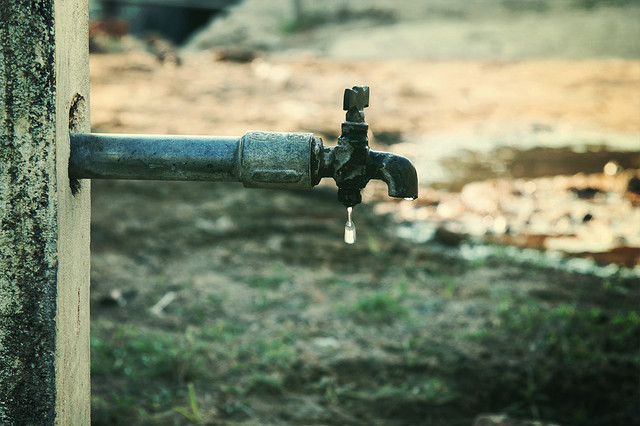
Muslim nations may face a lot of diverse problem but one concern they share is water scarcity. At the latest conference of Islamic environment ministers, water shortage was highlighted as one of the most pressing environmental issue facing the region and Muslim leaders stated it finding a solution was one of the ‘most important duties of our time’. Could reconnecting to Islamic water management principles help Muslim countries avoid the worst effects of water scarcity brought on by climate change?

What Islam Says About Water

As the ultimate source of life, water is held in high regard by most societies. It is considered a blessing, a gift and something which must be protected for the benefit of all of mankind.

According to an excellent report by Naser I. Faruqi entitled “Islam and water management: Overview and principles” water is of profound importance to Islam. In the Qur’an, water is a reoccurring motif of purity as it is used for ablutions (washing before prayers) five times a day and paradise is also described as “gardens beneath which rivers flow”.

The main principles which emerge from Islamic teachings is that every human has a right to clean water to quench their thirst and also that water is precious resource which must not be wasted even during abundance. The right to water is established by the notion that water (as well as land and fuel) is a shared resources which everyone must have access to.

In the fact the importance of sharing water equally was highlighted by a hadith in which the Prophet Muhammed (pbuh) said that one of the people Allah ignores on judgement day is the person who hoarded water excessively to the detriment of others. Whilst humans are judged to have first priority access to water, it must be shared with other creations and finally, if there is water remaining, it can be used for agriculture.

Saving Water And Changing Behaviours

Limiting waste and conserving water is also highlighted in Islamic teaching. The Qur’an tells mankind that they should care for precious resources and limit waste: “O Children of Adam… Eat and drink: But waste not by excess, for God loveth not the wasters.” Furthermore, there is evidence which states that the Prophet used just 2/3 of a litres of water to perform ablution and that he spoke of not wasting water even when it was abundant: “Do not waste water even if performing ablution on the bank of a fast-flowing, large river.”

Whilst these two principles may appear to be common sense notions, the strength of invoking these Islamic principles is their ability to reach out to a wide group of people and also to change behaviours in the Muslim world. Faruqi states in his report that considering the clear Islamic water ethic, “it is surprising that they are not used more widely to promote water conservation in predominantly Muslim countries.”

Whole scale behavioural change is one of the major stumbling blocks for dealing with climate change, but in the Muslim world at least, highlighting the Islamic notions of water care could be a useful solution to the region’s water problems.

For more on Islam and water issues see:

Muslim Countries Tackle Water Scarcity

Global Warming Message Goes Awry at UAE Water Park

Lebanon’s Mediterranean Apocalypse: Scuba Diving In Waters Devoid Of Life
Arwa Aburawa
Arwa Aburawahttp://www.greenprophet.com
Arwa is a Muslim freelance writer who is interested in everything climate change related and how Islam can inspire more people to care for their planet and take active steps to save it while we can. She is endlessly suspicious of all politicians and their ceaseless meetings, especially as they make normal people believe that they are not part of the solution when they are the ONLY solution. Her Indian auntie is her model eco-warrier, and when Arwa is not busy helping out in the neighborhood alleyway garden, swap shopping or attempting fusion vegetarian dishes- with mixed success, she’d like to add- she can be found sipping on foraged nettle tea.
2 COMMENTS
  1. Jazaki Allah khair for this article! I was looking for the Hadith you mentioned. Can you tell me where you learned that our Prophet Muhammed sallalahu alayhi wa salaam only used 2/3 a liter of water to perform ablutions? I believe it, but would like to know the source! Your article has inspired me to make more of an effort to use less water when making wudu inshallah.

Comments are closed.

Hot this week

How Renewable Energy is Revolutionizing the Way We Power Our World

Solar has become the star of the transition thanks to modular hardware and straightforward installation. It fits dense cities and remote towns alike. Many companies are turning to rooftop arrays and carport systems - and exploring commercial solar installation as a practical way to lock in future savings.

How does one start prepping?

Faced with an extreme winter storm this year, Americans wonder how to be prepared for catastrophe. Miriam has lived through wars in the Middle East - so she's prepared on giving you a guide to prepping.

Fishermen sue tire manufacturers on behalf of the salmon

A federal trial in San Francisco has brought US tire manufacturers, fishing groups, and environmental scientists into court over a chemical most drivers have never heard of — but which scientists say may be silently reshaping aquatic ecosystems.

Listening to Water: Tarek Atoui’s Next Work for Tate Modern

Born in Beirut, Lebanon in 1980 and now living in Paris, Atoui has spent years building instruments that don’t sit comfortably in concert halls. Many of them involve water, glass, and ceramics — materials that react to sound instead of simply producing it.

Leading Through a Dual-Energy Transition: Balancing Decarbonisation with Energy Security

Experience in one area of the energy industry isn't enough to guarantee readiness across all the others. That's where a structured program like an MBA in energy can come in. Today's advanced curricula explore energy economics, finance, policy, and strategic management alongside the technical subjects. And when pursuing an energy MBA online, professionals can skill up and retrain without having to step out of the labor market -- an important perk at a time when skilled professionals are already in short supply.

Topics

How Renewable Energy is Revolutionizing the Way We Power Our World

Solar has become the star of the transition thanks to modular hardware and straightforward installation. It fits dense cities and remote towns alike. Many companies are turning to rooftop arrays and carport systems - and exploring commercial solar installation as a practical way to lock in future savings.

How does one start prepping?

Faced with an extreme winter storm this year, Americans wonder how to be prepared for catastrophe. Miriam has lived through wars in the Middle East - so she's prepared on giving you a guide to prepping.

Fishermen sue tire manufacturers on behalf of the salmon

A federal trial in San Francisco has brought US tire manufacturers, fishing groups, and environmental scientists into court over a chemical most drivers have never heard of — but which scientists say may be silently reshaping aquatic ecosystems.

Listening to Water: Tarek Atoui’s Next Work for Tate Modern

Born in Beirut, Lebanon in 1980 and now living in Paris, Atoui has spent years building instruments that don’t sit comfortably in concert halls. Many of them involve water, glass, and ceramics — materials that react to sound instead of simply producing it.

Leading Through a Dual-Energy Transition: Balancing Decarbonisation with Energy Security

Experience in one area of the energy industry isn't enough to guarantee readiness across all the others. That's where a structured program like an MBA in energy can come in. Today's advanced curricula explore energy economics, finance, policy, and strategic management alongside the technical subjects. And when pursuing an energy MBA online, professionals can skill up and retrain without having to step out of the labor market -- an important perk at a time when skilled professionals are already in short supply.

From Green Energy to Healthy Societies: Why old systems thinking is becoming relevant again

Across the Middle East and North Africa, large investments are being made in green hydrogen, renewable energy, water infrastructure and sustainability. Most of these efforts are discussed in the context of climate change, decarbonization and economic diversification. That framing is important, but it may not capture their full value.

We saw peace – an interreligious encounter deep in our eyes

They came from Israel, Palestine, Jordan, Iraq, Yemen, Morocco, Tunisia, Lebanon, Egypt… There are Sunni Muslims, Shiite Muslims, Jews (Orthodox and Reform), Orthodox Christians, Coptic Christians, Protestant Christians, Druze, Baha'is, a Scientologist.

Can biochar reduce ‘Forever Chemicals’ in food if it’s used in farms?

Biochar is produced by heating organic material in a low-oxygen environment so it does not burn. This process, known as pyrolysis, transforms plant matter into a stable, carbon-rich material.

Related Articles

Popular Categories