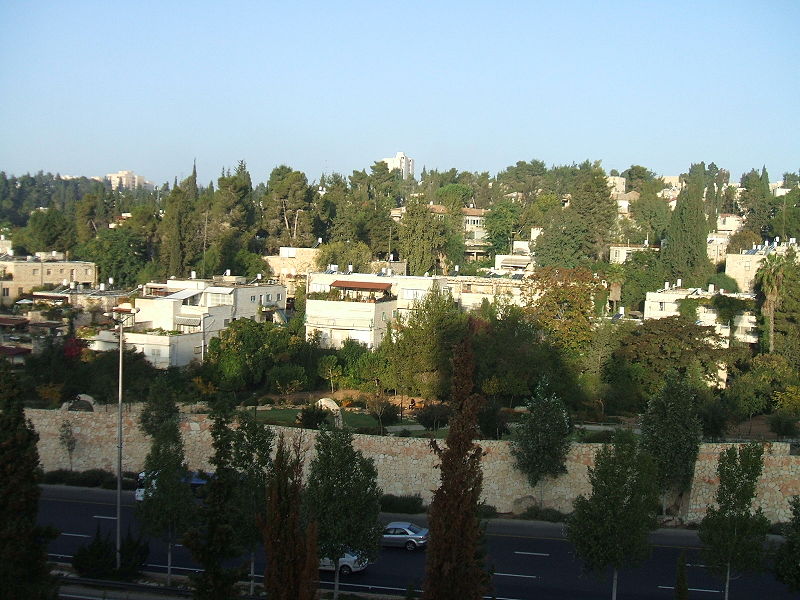

 Beit Hakerem, an upscale “green” Jerusalem Neighborhood may not be so green underground due to solvents contamination.
Israel’s soil and ground water is constantly being threatened by a number of different kinds of pollution. This pollution is caused by oil and gasoline leakage from gas stations and oil storage depots, and by large garbage landfill sites such as the recently closed Hiriya Landfill near Tel Aviv hat is now being made into a giant eco-park.
Some of the most dangerous soil and ground water polluters are sites that used to house Israel Defense Forces munitions plants, such as one in the Beit Hakerem neighborhood in Jerusalem. This site, located in valley that is between the Beit Hakerem neighborhood and the Givat Ram campus of Hebrew University, is now said to be highly polluted with highly toxic chemicals and gasses, according to Haaretz. Despite the risks, and that pregnant women in Jerusalem are full of chemicals, plans are going ahead to construct a new neighborhood on the munitions site. Buyers beware.
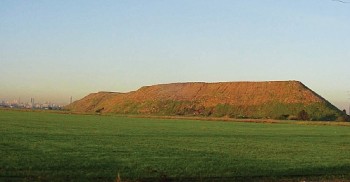 Hiria Garbage Mound still polluted underground
The site, which is now being turned into a private housing development is said to have toxic substances that are 191 times greater than the maximum threshold allowed for human habitation. The substances, derivatives of toxic solvents used on metals such as cadmium, chrome, zinc, copper and nickel, were found on the site, which is slated to have 240 housing units built on it.
The findings, a result of a 2010 survey at the site, are on top of an earlier survey in 2007 that revealed toxic gasses in 15 of 18 spots tested – some of which were up to 1,000 times the allowed threshold. In a report prepared by Sarit Caspi-Oren, and environmental expert for the Israel Union of Environmental Defense, Caspi-Oren wrote that the gasses found in the site “are highly carcinogenic to both animals and Man”.
This is not the first time that this type of problem has occurred. Being a small country, military facilities, including munitions plants, have often been built close to residential areas. This includes a former munitions plant in the Nof Yam neighborhood in Herzylia Petuch (10 km from Tel Aviv); and an ongoing IDF munitions production facility next door to the prestigious suburban community of Ramat Hasharon, just a few km northwest of Tel Aviv.
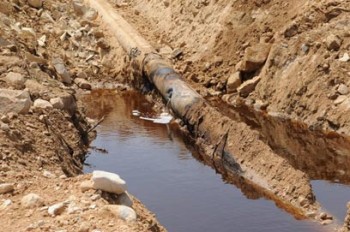 Nahal Zin jet fuel leakage disaster
To make matters worse, this revelation comes on the heels of what may be worst man-made environmental disaster in the Negev Desert in Israel, when a tractor scoop accidentally ruptures a pipeline carrying aviation jet fuel. Thousands of gallons of the fuel leaked into to ground, and hence to the groundwater sources in the Nahal Zin area afterwards.
According to Dr. Rafi Mandelbaum, and expert on soil pollution who was hired by area residents to determine if the site is safe for habitation, three toxic gases were found in the soil at the site: perchloroethylene (PCE ), trichloroethylene (TCE ) and dichloroethene (DCE ). All three are organic solvents used in the metal industry, and all are highly toxic to both humans and animals. In his report, Dr. Mandelbaum wrote that these findings indicate a clear danger to anyone who would live on the site as well as to people living nearby.
While the outcome of the surveys conducted at the site have not been officially confirmed by government authorities, the findings have been enough to indicate “reasonable suspicion” that the pollution came from the former munitions plant – even though it was relocated 14 years ago. This is clearly an indication that industrial pollution can remain for years even though the source of the pollution has been removed.
Read more on regional soil and groundwater contamination:
A New Face For Israel’s “Garbage Park”
Poison at the Pump: Israel Gas Stations are Major Ground Water Polluters
Looking to the Valdose Zone to Rehabilitate Groundwater Pollution