Fenugreek seeds linked to E. coli Outbreak

egypt, agriculture, E. coliThe EU has banned 10% of Egyptian agricultural products after linking that country to the devastating E. coli outbreak that killed 49 people earlier this year.

The European Union has linked the May/June E. coli outbreak that killed 49 people to produce grown in Egypt. Following a dedicated probe, officials concluded that a shipment of fenugreek seeds used to grow sprouts imported by a German company was the “most likely common link” to the outbreak.

Following this announcement, the EU has established an official ban on 10% of Egyptian agricultural products. The ban, which will be in place until 31 October, 2011, is the latest in a chain of economic woes that imperil Egypt’s smooth recovery – including a significant drop in tourism and the third explosion of a natural gas pipeline.

Homegrown food sold for export

The Media Line points out that during the E. coli outbreak in Europe earlier this year, the United Arab Emirates, Qatar, and Kuwait banned imports and the sale of cucumbers from Germany, Spain, Denmark, and the Netherlands, suspecting those countries of selling contaminated produce.

Instead, the produce was “home grown” in Egypt, where agricultural standards are relatively relaxed since most farmers produce food for a local, less demanding market.

Even so, since 2009 Egypt has been working to improve its standards in order to meet the demands of the European market and the Agriculture Export Council even boasted just one month before it was linked to the deadly E. coli outbreak that it was increasing its continental exports.

This is what Egypt stands to lose as a result of the ban, according to the Media Line:

The EU ban will cause a big dent in exports. In 2010, the EU says it imported from Egypt about 49,000 tons of the types of seeds affected by Tuesday’s decision valued at over 56 million Euros ($80 million). That’s about 11% of Egypt’s total. The impact, however, may be considerably bigger as European importers, distributors, and shoppers shun Egyptian products not covered by the ban.

Although it would be nice to think that this hard knock will encourage the authorities to develop higher standards, the reality is that the country is receiving hard financial knocks in every sector – from energy to tourism – and will battle to provide even the bare necessities for its citizens this year.

:: The Media Line

More on Agriculture in Egypt:

Egypt to Get 3% of Africa’s Slow Food Gardens

Climate Change Poses Threat To Egypt’s Farming, Tourism, and Water Supply

Egypt Could be on the Brink of Famine

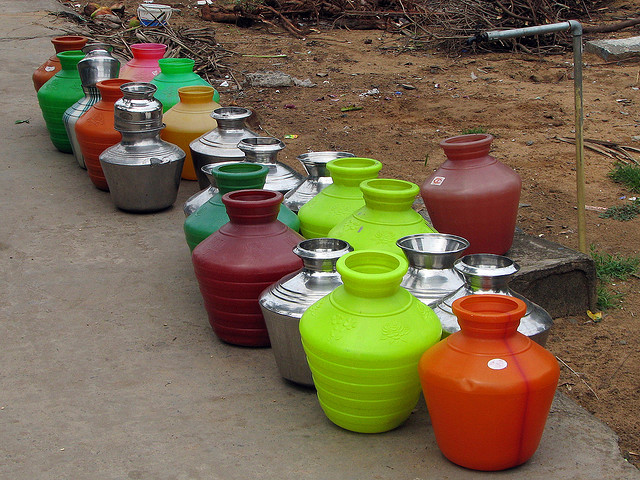
image via Dan Zen
Tafline Laylin
Tafline Laylinhttp://www.greenprophet.com
As a tour leader who led “eco-friendly” camping trips throughout North America, Tafline soon realized that she was instead leaving behind a trail of gas fumes, plastic bottles and Pringles. In fact, wherever she traveled – whether it was Viet Nam or South Africa or England – it became clear how inefficiently the mandate to re-think our consumer culture is reaching the general public. Born in Iran, raised in South Africa and the United States, she currently splits her time between Africa and the Middle East. Tafline can be reached at tafline (at) greenprophet (dot) com.
1 COMMENT
  1. How convenient for the EU that their new ISO9001 food tracking system didn’t need to be put to the test and the food originated outside the EU.

    A little odd isn’t it that an antibiotic resistant superbug originated in a country where it’s unlikely antibiotics are given to animals much, if at all…..

LEAVE A REPLY

Please enter your comment!
Please enter your name here

TRENDING

Farm To Table Israel Connects People To The Land

Farm To Table Israel is transforming the traditional dining experience into a hands-on journey.

Iran’s holiest city about to run dry as terror chosen over water management

Iran’s second-largest city, Mashhad, is facing an acute water emergency after dam reservoirs feeding the city fell below three percent capacity, according to Iranian state and local media. Officials warn that without rainfall or improved inflows from neighboring Afghanistan, the city’s supply could soon collapse.

1,600-Year-Old Samaritan Farm Estate Found in Kafr Qasim Shows How Ancient Communities Lived Sustainably

Archaeologists in Kafr Qasim have uncovered a 1,600-year-old Samaritan agricultural estate with colorful mosaics, an olive oil press, and a ritual bath. This rare discovery reveals how ancient communities lived sustainably—growing food locally, reusing materials, and balancing faith with farming—offering lessons for modern climate resilience in the Middle East.

Arab agricultural land is on the brink

Across the Arab world, croplands face a perfect storm of stressors. Excessive fertilizers and pesticides erode soil ecology. Poor drainage and over-irrigation drive salinization, leaving fields crusted with salt. Rising temperatures, dwindling groundwater, and more frequent sand-and-dust storms—all amplified by climate change—compound the crisis.

Jordan turns to ancient fire and mines volcanic soil to solve water crisis

In the volcanic highlands of northern Jordan, north of Amman engineers are mining a natural resource not for energy, but for agriculture. The material: crushed volcanic rock, now processed into a mineral-rich soil that may hold the key to reducing water and fertilizer demand in arid regions.

6 Payment Processors With the Fastest Onboarding for SMBs

Get your SMB up and running fast with these 6 payment processors. Compare the quickest onboarding options to start accepting customer payments without delay.

Qatar’s climate hypocrisy rides the London Underground

Qatar remains a master of doublethink—burning gas by the megaton while selling “sustainability” to a world desperate for clean air. Wake up from your slumber people.

How Quality of Hire Shapes Modern Recruitment

A 2024 survey by Deloitte found that 76% of talent leaders now consider long-term retention and workforce contribution among their most important hiring success metrics—far surpassing time-to-fill or cost-per-hire. As the expectations for new hires deepen, companies must also confront the inherent challenges in redefining and accurately measuring hiring quality.

8 Team-Building Exercises to Start the Week Off 

Team building to change the world! The best renewable energy companies are ones that function.

Thank you, LinkedIn — and what your Jobs on the Rise report means for sustainable careers

While “green jobs” aren’t always labeled as such, many of the fastest-growing roles are directly enabling the energy transition, climate resilience, and lower-carbon systems: Number one on their list is Artificial Intelligence engineers. But what does that mean? Vibe coding Claude? 

Somali pirates steal oil tankers

The pirates often stage their heists out of Somalia, a lawless country, with a weak central government that is grappling with a violent Islamist insurgency. Using speedboats that swarm the targets, the machine-gun-toting pirates take control of merchant ships and then hold the vessels, crew and cargo for ransom.

Leopoldo Alejandro Betancourt López Turned Ocean Plastic Into Profitable Sunglasses

Few fashion accessories carry the environmental burden of sunglasses. Most frames are constructed from petroleum-based plastics and acrylic polymers that linger in landfills for centuries, shedding microplastics into soil and waterways long after they've been discarded. Leopoldo Alejandro Betancourt López, president of the Spanish eyewear brand Hawkers, saw this problem differently than most industry executives.

Why Dr. Tony Jacob Sees Texas Business Egos as Warning Signs

Everything's bigger in Texas. Except business egos.  Dr. Tony Jacob figured...

Related Articles

Popular Categories