

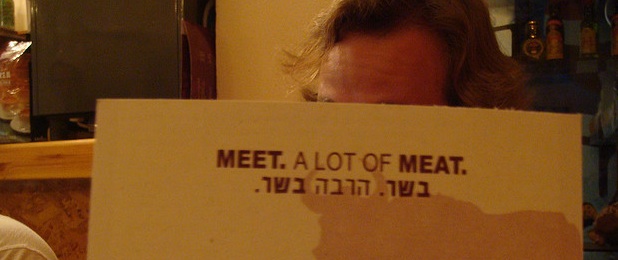
We pay for barbecued meat with our health
Every year the air pollution rises steeply during Israel’s Independence Day, where even people with vegetarian (or vegaware) leanings have a sudden urge to fry ground beef “kebabs” on the mini BBQ grill sold at minimarkets and basically tossed out after use. But the effects of man’s ancient meat roasting urge are badly felt in the north of Israel where coal ash dust, from charcoal kilns, produced by a factory in the West Bank’s Wadi Ara, is blowing onto Israeli villages: “This pollution is ruining our lives and hurting my son’s health,” said Udi Razamovitz of Kibbutz Metzer to Haaretz: “I’m considering leaving the kibbutz altogether.”
In the Wadi Ara environs, some 1,600 tons of charcoal are produced every month, and most of it is destined for Israeli barbecues. The source material from old orchards is dug up in Israel, and then sent to the West Bank to be processed.
Israeli residents living in the vicinity of kiln smoke recognize that the kilns are an important source of income for their neighbors, and meanwhile are asking the kiln factories to install filters –– to protect the air they breath, and also to protect the Palestinians who are working in the kilns.
In the spirit of American BBQs, Green Prophet suggests that Middle East meat eaters acquire an America-style gas BBQ. They are less smoky, less likely to be tossed in the trash, and the gas used in them is much less harmful to the environment. And my father, a trash collector, has found BBQs to be an excellent source of scrap material that scrap dealers will pay a pretty penny for after the BBQ has cooked its share of burgers.
On a positive side note, Israelis rank high among western countries for consumers of the least amount of beef per year: only 17 kilos compared to the big meat eaters: 54 kilos in Argentina (also in today’s Haaretz).
See the video below to learn more about how charcoal is made:
[youtube]http://www.youtube.com/watch?v=TZaeP2WN0PQ[/youtube]
::Haaretz


