

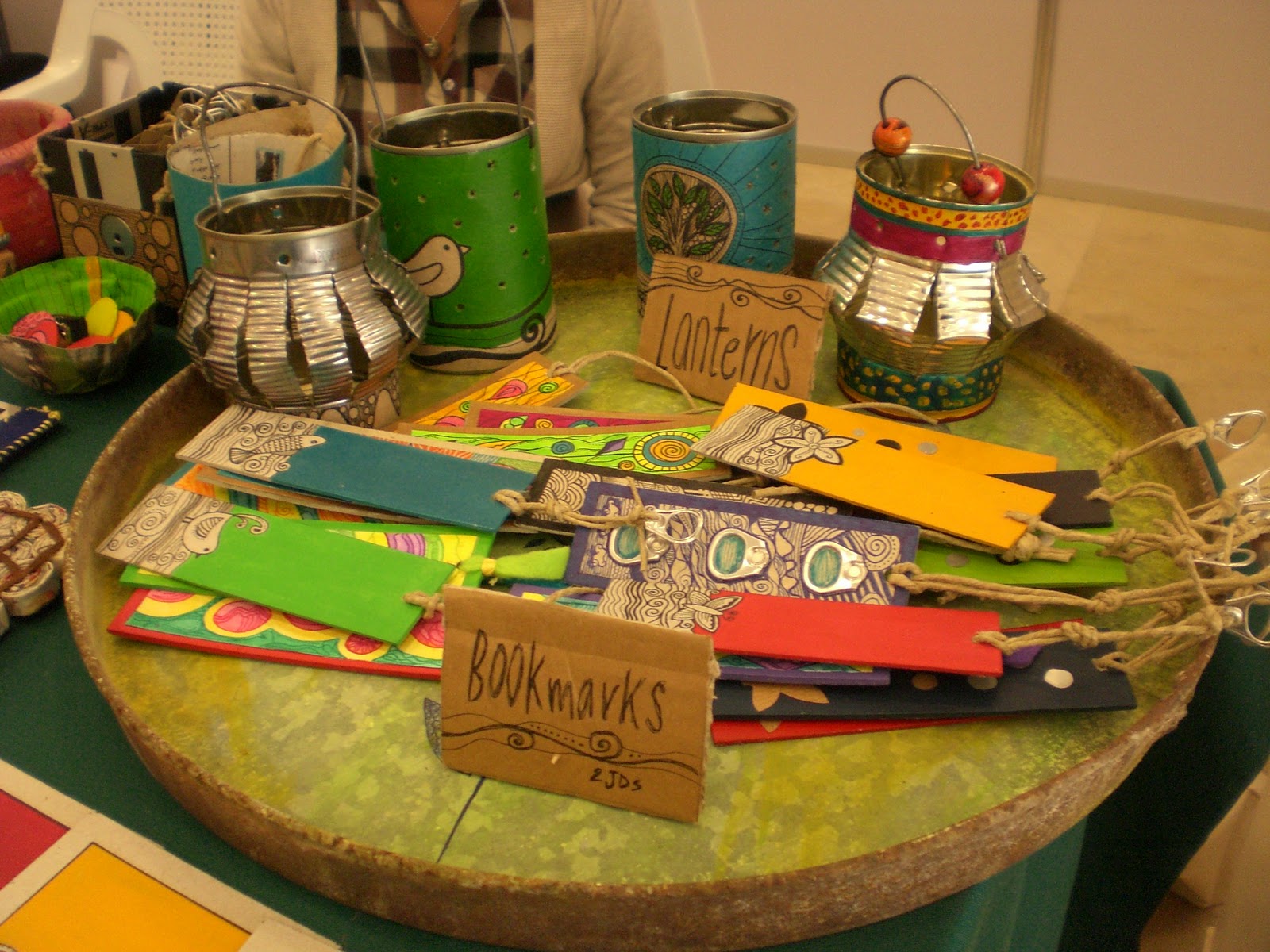
Meet Hana Faouri- the Upcycling Designer from Jordan

If you have a lot of stuff laying around that you can’t bear to part with but currently has no use, than Hana would be a god send. The Jordan-based eco designer can turn tins into lanterns, skateboards into necklaces and plastic bags into notebooks. Not only is she a budding designer with great flair but she also has the time to help out on projects working with children in refugee camps, women’s rights and helping the planet. I spoke to the upcycler about all things hand-made, taking a leap into the unknown to do something you love and changing people’s perceptions of trash.

Also, check out Hana’s tin can lantern tutorial which is a great step-by-step guide to making a gorgeous lantern from a tin- but if you don’t have the time to make it yourself, you can always snap up one of Hana’s!

Where in Jordan were you born and raised and have you always wanted to be a designer?

I was born and raised in Amman, I knew since I was a child that I wanted to be an artist but the idea evolved as I grew older and I started to know myself better. Eventually I realised that I want to do something artistic that has a certain function to it and holds meaning.

Upcycling is a new and pretty word of an old concept. How did you get introduced to upcycling?

It was by coincidence that I got introduced to upcycling. I used to make jewellery out of old leather from bags or shoes or even leather seats but I didn’t know that what I was doing is called upcycling until I decided to research jewellery ideas on the internet and only then was I introduced to this term.

What is it about upcycling that you love?

I love the idea of turning something that people see as trash into something beautiful that also has a function. I also love that there are so many ways that you can upcycle something, for example I use the sewing machine to make bags and purses out of old neckties, on the other hand I use the jigsaw to make the skateboard jewellery, so there’s always a new skill to learn. And since I’m a person who doesn’t like routine this job is perfect for me!

I read that you quit your job as a graphic designer to become an upcycler. Was that a difficult decision to make?

It was difficult at first because I had to move out of my comfort zone where I get paid consistently, but I’m the kind of person that if I don’t do what I want I become miserable and depressed. So I had no other choice and in the end it’s the best decision I made.

All of your work involves turning old stuff into fabulous new stuff. Is the ‘green’ aspect of upcycling important to you?

To be honest, at first the concept of green products didn’t occur to me because like I said I didn’t know that what I was doing was called upcycling- it was just something I did to pass the time. But as the project grew bigger I realised that what I was doing could raise awareness about the environment, and being someone who has always loved nature it made sense to do it. I now go to different areas in Jordan where I give workshops on how to reuse certain things that harm the environment like plastic bags and bottles. I started reading more about how those things harm the environment and try to come up with ideas that can help prevent those problems.

What has the reaction to your work been like from your family and the wider community?

The reaction has always been positive, my family is very supportive and they encouraged me all the way- they even helped me build a workshop. People have been bringing me all their “trash” which is something I never thought I would appreciate but I really do, because now people think twice before throwing something away that could have potential to be turned into something beautiful.

And finally, what’s your dream project?

Opening a shop is my dream project. This is actually how it all started, I was sitting with a friend one day and it hit me- I told him I’m going to quit my job and open a shop. I didn’t know anything else back then, I didn’t know it will have to do with upcycling I just knew that this is what I wanted to do.

For more Eco-Designers from the Middle East see:

Hasadna Design Workshop Does Upcycled Chandeliers

Artiquea: The Beautiful Art of Recycling

Interview with Egyptian Eco-Fashion Designer Nadia Nour
Arwa Aburawa
Arwa Aburawahttp://www.greenprophet.com
Arwa is a Muslim freelance writer who is interested in everything climate change related and how Islam can inspire more people to care for their planet and take active steps to save it while we can. She is endlessly suspicious of all politicians and their ceaseless meetings, especially as they make normal people believe that they are not part of the solution when they are the ONLY solution. Her Indian auntie is her model eco-warrier, and when Arwa is not busy helping out in the neighborhood alleyway garden, swap shopping or attempting fusion vegetarian dishes- with mixed success, she’d like to add- she can be found sipping on foraged nettle tea.
2 COMMENTS
  1. Dear Hana, I really like your work!

    I’m also an ‘upcycler’ from Australia, currently based in Amman and looking to volunteer with any groups/workshops in Amman who are creating new objects out of rubbish/trash. I’ve travelled a bit in Europe and have seen these places, but nothing yet in Amman. If you could recommend any groups which I could join in Amman that would be great. Many thanks!

LEAVE A REPLY

Please enter your comment!
Please enter your name here

TRENDING

Astro uses AI to help procure land for renewable energy

For oil-rich, environmentally vigilant Gulf states, Astro isn’t just another startup story. It is a blueprint for accelerating an energy transition that is now existential, not optional.

Urban miner Sortera raises $45 million USD to pull aluminum from the scrap pile

Sortera Technologies, founded in 2020 by Nalin Kumar and Manuel Garcia, is emerging as a major U.S. circular-industry player. Led by CEO Michael Siemer, the company uses AI and advanced sensors to turn scrap metal into high-value aluminum alloys. Its new ~$45 million funding round signals investor appetite for industrial decarbonisation—where emissions cuts come not from PR-friendly solar installs, but from upgrading the materials that power EVs, solar frames, and construction.

Pea pod wine recipes are making a comeback with allotment gardeners

Yes, pea pod wine is a real thing, an old-fashioned, home-brewed country wine made from the leftover pods after shelling fresh peas. It is a sustainable, no-waste practice, often popular among allotment gardeners.

Pilsok turns airbags into bags

Pilsok creates sustainable, eco-friendly bags from upcycled airbags, turning automotive waste into stylish, functional accessories. Their innovative approach to recycled materials supports the circular economy, reduces landfill waste, and promotes ethical fashion for a greener future.

Flour Sacks to Ecological Fashion Statements in Times of Crisis

In times of hardship, creativity often becomes a lifeline. The "Heroines" exhibition at the Design Museum Holon, running since March 31, 2025, delves into this theme by showcasing how women during World War II used fashion as a means of survival and expression.

Qatar’s climate hypocrisy rides the London Underground

Qatar remains a master of doublethink—burning gas by the megaton while selling “sustainability” to a world desperate for clean air. Wake up from your slumber people.

How Quality of Hire Shapes Modern Recruitment

A 2024 survey by Deloitte found that 76% of talent leaders now consider long-term retention and workforce contribution among their most important hiring success metrics—far surpassing time-to-fill or cost-per-hire. As the expectations for new hires deepen, companies must also confront the inherent challenges in redefining and accurately measuring hiring quality.

8 Team-Building Exercises to Start the Week Off 

Team building to change the world! The best renewable energy companies are ones that function.

Thank you, LinkedIn — and what your Jobs on the Rise report means for sustainable careers

While “green jobs” aren’t always labeled as such, many of the fastest-growing roles are directly enabling the energy transition, climate resilience, and lower-carbon systems: Number one on their list is Artificial Intelligence engineers. But what does that mean? Vibe coding Claude? 

Somali pirates steal oil tankers

The pirates often stage their heists out of Somalia, a lawless country, with a weak central government that is grappling with a violent Islamist insurgency. Using speedboats that swarm the targets, the machine-gun-toting pirates take control of merchant ships and then hold the vessels, crew and cargo for ransom.

Leopoldo Alejandro Betancourt López Turned Ocean Plastic Into Profitable Sunglasses

Few fashion accessories carry the environmental burden of sunglasses. Most frames are constructed from petroleum-based plastics and acrylic polymers that linger in landfills for centuries, shedding microplastics into soil and waterways long after they've been discarded. Leopoldo Alejandro Betancourt López, president of the Spanish eyewear brand Hawkers, saw this problem differently than most industry executives.

Why Dr. Tony Jacob Sees Texas Business Egos as Warning Signs

Everything's bigger in Texas. Except business egos.  Dr. Tony Jacob figured...

Israel and America Sign Renewable Energy Cooperation Deal

Other announcements made at the conference include the Timna Renewable Energy Park, which will be a center for R&D, and the AORA Solar Thermal Module at Kibbutz Samar, the world's first commercial hybrid solar gas-turbine power plant that is already nearing completion. Solel Solar Systems announced it was beginning construction of a 50 MW solar field in Lebrija, Spain, and Brightsource Energy made a pre-conference announcement that it had inked the world's largest solar deal to date with Southern California Edison (SCE).

Related Articles

Popular Categories