

 Water is fast becoming the new oil. Without it, nations starve and conflicts ensue, like the piracy off the Somali coast we’ve written about. Predictions become direr as we factor in global warming. And new conflicts in the Middle East could erupt at any time over that most innocuous and life-sustaining element.
With limited resources and no cooperation from neighboring countries, authorities in Israel quickly understood that they would have to bootstrap what little water options they have, to irrigate their very dry land. Necessity spurs innovation, and along the way, Israel created an industry.
Cost effectiveness, familiarity with both the business and geographical climates, innovation, and solutions that really work, are among the factors that draw water infrastructure representatives from all over the world to meet with Israeli companies.
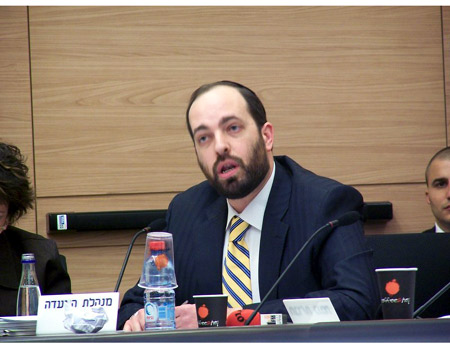
One of the best channels to Israeli water solutions and investments is via Oded Distel, director of the government-run NEWtech, a new initiative to help countries access Israeli water technologies. Before its establishment, contacts were usually forged at conferences, like the upcoming WATEC water conference in Tel Aviv in November.
NEWtech, which stands for the National Water Technology program, is a one-stop shop for advice and solutions pertaining to your water needs and investment goals. Read on to see more about what they do, and about some of the hottest Israeli water companies.
Water is a primary strength
Formerly a business development director in the private sector, Distel says that while NEWtech launched officially in 2006 to cover both Israeli water tech and energy, water is its primary strength. At the WATEC conference in November, Distel will lead an innovation platform featuring 30 new Israeli water tech startups.
“When we started the program in 2006, Israel had [water tech] exports of about $700 million and we ended last year, 2008, with $1.4 billion.”
He says it’s harder to estimate the exports in the energy sector but he would say that they are about $100-200 million since some companies like Ormat, a world leader in geothermal power, have limited exports from Israel, but their volume of business is high.
Drip irrigation, perhaps the most valued innovation in agriculture worldwide, was invented in Israel by Netafim (read about Netafim’s work with biofuel here). “Irrigation is an important sector when we talk about water technologies and it can be forgotten,” says Distel, pointing out that 70 percent of the world’s water is transferred via irrigation. In some states in the US these percentages are higher, with California using about 85% of its water through irrigation.
“Until now drip irrigation is just at the beginning of penetrating the market – it is still only about 6% of the total irrigation market. But in those 6-8%, Israel controls over 50% of the market,” states Distel.
“Obviously there is more potential for growth in the Western world but it is useful in developing countries like India, China and Africa,” he adds. And Israeli companies offer products that are suitable for anything from a small agricultural holding to farms that are hundreds and thousands of acres in size.
Taking the salt out of water
Distel asserts that Israel is also a world leader in desalination technologies. IDE Technologies is the frontrunner. The firm runs one of the world’s largest desalination facilities off Israel’s coastal town of Ashkelon, not far from the Gaza Strip. At the Global Water Awards ceremony in Dubai in 2006, IDE won the award for Desalination Company of the Year.
“It’s not just about delivering technology, but timing,” says Distel. “The case of Ashkelon is a very good story in the sense that the project met the timeline, budget and the quality constraints. This is something difficult to do.”
The facility now produces about 100 million cubic meters of water per year through reverse osmosis. “It’s the biggest [plant] of its kind,” Distel says.
Having the solutions and delivering them on time are critical factors and Israel has the management capability to deliver the goods, asserts Distel.
“We have a holistic approach and the ability to create the right balance between the two sides of supply and demand,” explains Distel pointing to Israel’s incredibly diverse water sources, which include underground aquifers, surface water from the Sea of Galilee, and water from desalination.
Turnkey solutions from Israel
Israel’s water management companies are providing turnkey solutions. For an example of a successful merger of Israeli innovation with real world management solutions, Distel refers to the Israeli companies Miya, Mekorot and Tahal. Other well-established Israeli water companies he names are Amiad, Bermad, Arcal and Arad.
But it’s not just about the major players, says Distel: “There are tons of smaller companies with very advanced technologies. We are seeing a lot of people from IT and healthcare software taking their technologies and bringing them to the water world. It’s wonderful,” he adds, because these people come with “a lot of business experience.”
At NEWtech, Distel explains, all these opportunities come together under one roof: “NEWtech is a focal point for all entrepreneurs and companies in Israel, which gives them different tools in marketing and helps them through various phases in R&D through our various partners.”
Since Israeli companies are active in such vital spheres as saving water, minimizing waste water and utilizing drainage water and sewage effluents, according to the WATEC conference organizers, about half of Israel’s water leaders expect sales growth in 2009, despite the global economic meltdown.
(This article is reprinted courtesy of ISRAEL21c – www.israel21c.org.)



[…] Israel NewTech has launched a interactive map of green Israeli innovations as part of a new Industry, Trade & Labor Ministry campaign that aims to showcase the country’s international influence in the clean tech and energy sectors. […]
How Israel’s NewTECH Is watering the economy http://tinyurl.com/mnc3tq
RT @FloridaIsrael: How Israel’s NewTECH Is Watering The Economy – Water is fast becoming the new oil. http://ow.ly/15LJZr
RT @FloridaIsrael: How Israel’s NewTECH Is Watering The Economy – Water is fast becoming the new oil. http://ow.ly/15LJZr
New blog post: How Israel’s NewTECH Is Watering The Economy http://bit.ly/cCuVM