
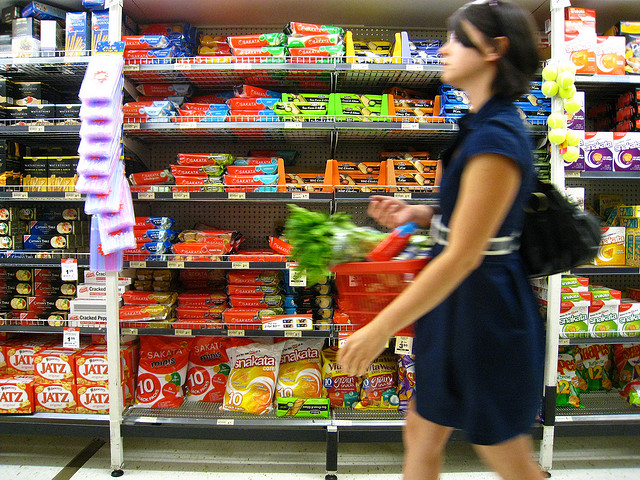

 Bad food choices lead to obesity and poor health. Why do we do it?
Israeli business magazine The Marker reports that sales of healthy foods have increased in the last two years. However, sales of snack foods and soft drinks have remained stable or increased slightly. People are simply buying more food, and obesity rates continue to rise. Of course, purchase of healthy food doesn’t mean it gets eaten. The brown rice might find a home at the back of the cabinet, or the garbage.
We all know we should eat healthier food, so why don’t more people choose it? Here are the main factors that affect all of us.
- Information: Nutrition and health are in the news, but data prevented as fact can be misleading or downright wrong. Other health claims are controversial, or we simply don’t have enough information. Is soy healthy, or not? Antioxidants and vitamin D are good, but how much do we need and in what form? In many cases, there is no simple answer. When people get contradictory findings, or are bombarded with information, they are likely to throw up their hands and choose foods that appeals to them at the moment.
- Advertising. Advertising and public relations pitches greet us everywhere, and people who claim to be immune are simply naive. Even if you could ignore the advertising, much of the scientific research is tainted. Food manufacturers fund studies that they believe will help promote their product. See the Israeli Dairy Board’s contribution to a faulty study that claimed that exposing babies to cow’s milk at an early age could prevent allergies.
- Labeling. The way foods are labeled in many countries is confusing. Sugar and fat might be listed in the ingredients under several different names, and most consumers don’t bother to calculate sodium content. The good news is that the Holland-based Choices International Foundation issues a tag affirming that a product meets a minimum nutritional standard based on the amount of fiber, transfat, sugar and sodium in the item. In Israel, a few products by Knorr, Angel, Lipton, Etz Hazayit, Telma and Patit carry the tag.
- Habits. The Marker stressed that while Israeli consumers purchase more buckwheat, olive oil and sesame paste now than in 2008, sales of fried chicken breasts and instant soups have stayed the same. Purchases of snack foods and soft drinks have actually increased slightly.
- Cost. People in lower socio-economic groups have less acccess to accurate information about health. While lentils will always remain cheaper than frozen pizza,olive oil can cost ten times that of soy. Brown rice, whole-wheat flour and whole-grain bread are all more expensive than their white counterparts. The cost to health and the health care system is difficult to calculate. One solution might be to subsidize the cost of healthy foods.
- Convenience. Cooking from scratch is always healthier than purchasing ready-made, but home cooking takes time, skill, and advance preparation. Demanding careers and lack of experience, along with the other reasons listed, mean that home-cooked meals are becoming rarer.
Remaining aware of barriers to healthy eating can help us make wiser choices at our next shopping trip.
More Green Posts by Hannah Katsman:
Wear Your Baby in a Sling for Eco-Benefits
What Is Causing Breast Growth in Chinese Toddlers?
Why Baby’s First Gift Shouldn’t Be Formula from the Hospital
Hannah Katsman also writes at CookingManager.Com, a website devoted to helping beginning and advanced cooks make healthy food while saving time and money.


Interesting article. Author did a nice job.
I do have an issue with the photo editor who chose a headless person for the image. Seems most articles about health and food are accompanied by an unidentified, headless fat person. Fat people have faces, y’all, and personalities, and names. Sometimes we even smile and look friendly.
Sarah, I was just coming in to change the picture (because of another complaint) when I saw your comment. Point taken and apologies for any offense–none was meant.
Emily, very good point. I agree. And a new bakery just opened across the street. I’ve avoided going in there so far!
Great article Hannah. I agree with all of your points and I’m all for subsidies of healthy food too!
As a Nutrition and Health Educator, I see something else that stops people from making healthy changes also: Healthy food is perceived a less “fun” and less tasty than unhealthy food. I hear all the time “Who wants to eat healthy? We could all die tomorrow and I want to enjoy!” Taste-wise, healthy, natural foods have a hard time competing with the chemicalized super flavors of processed foods. Taste buds need to adjust to the less intense flavors of natural foods. Israelis are so used to shoveling soup powder into their soups, that without it, they feel it tastes bland.
And with bakeries on every corner, cafes, packaged processed foods everywhere we turn, people seem to just not to deprive themselves this bounty of sugar, fat and artificial flavor.
Thanks, Anna. Perhaps it’s for another article, but whole grains are more fragile and should be refrigerated. So there is an objective reason for them to be slightly more expensive, even though they require less processing.
Good article. Your suggestion to have subsidies for healthy foods is spot-on, especially since the reason why whole-wheat flour/bread is more expensive than their white counterparts is usually because of government subsidies on white flour/bread. Whole wheat should be cheaper, since there is less done to the flour, but subsidies make the unhealthier option more financially viable.