Mountain watchers in Iran

iran-Alborz-mountainsThe Iranian hills “are alive” with Mountain Watch and other groups working to clean hiking trails around cities.

During the past few years Iranian environmental activists have been worried about the great volume of trash which is polluting the environment around the cities and on far away mountains. With fast urbanization and population growth in Iran, the number of visitors to green spaces around the cities has increased, putting a strain on the environment with increased littering.

The mountains north of Tehran, like Touchal and Darband, as well as along the inner-city roads, are popular weekend destinations for many of Tehran’s residents.  So are Sabalan in East-Azarbaijan Province, Damavand, and Alam Kooh, the first and second highest mountains of Iran. Their popularity has also contributed to their deminse, so mountaineers and activists in Iran are helping people clean up their acts.

Efforts for Cleaning the Mountains

It has been two decades since the first cleaning events in the mountains were initiated by Iranian mountaineers and environmental activists. Abbas Mohammadi is the head of a group called Mountain Watch that is also connected to the Alpine Club of Iran on Facebook but not active since 2013.

According to  interviews in the press (in Farsi), one of the aims of groups like the Mountain Watch is to lead visitors and hikers to have a more environment-friendly culture. Mohammadi says that some members of the group are tired of picking up the trash from the ground and putting it in a bag and that unaware hikers litter more rapidly.

But he believes that these attempts have had good results up to now and the similar groups will be more successful by informing and teaching people more.
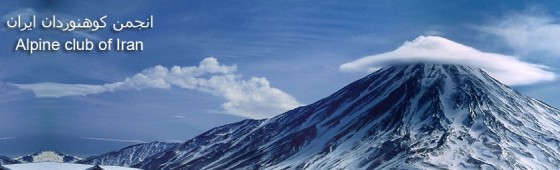
alpine-club-iran

The method that the group uses is to talk face to face to the hikers who are careless about keeping the mountains clean. Maybe this is a good way of promoting the level of participation of people in cleaning the natural environment around the cities in long term.

In one of the cleaning events, which took place on Earth Day the members of the Alpine Club of Iran used the following tactics to influence hikers:

  • Cleaned the mountaineering route for at least one or two hours;
  • Talked to other mountaineers about cooperating in the program;
  • Talked to the local residents of the region about the importance of preserving the natural environment;
  • Explained the concept of sustainable development;
  • Contacted city councils, environmental preservation offices, and natural resources offices and encouraged them to arrange similar programs;
  • Contacted radio and television channels and websites and informed about the Earth Day and the mountain cleaning programs;
  • Collected information about the urbanization, road and dam construction, and mining projects and their environmental impacts and gave the result of your observations to the authorities;
  • Identified the people who are responsible for destruction of the environment to the responsible organizations.

Similar events took place in Yemen and Lebanon, demonstrating that while awareness is building slowly, it is possible to clean up our beautiful places with active participation from ordinary people and activists not only in Iran, but throughout the Middle East.

Above image in Alborz Mountains via Hamed

More green news from Iran:
Eco Tourism in the Middle East: Iran
Iran Looks to Create Biofuel
Iran Inaugurates Its First Solar CSP Plant
Celebrate Spring and Iranian New Year

Mehrdad Parsipour
Mehrdad Parsipourhttp://www.greenprophet.com
Mehrdad Parsipour is an urban researcher who is based in Germany. He is originally from Iran and is interested in the traditional urbanism and architecture of Iran and Middle East. Mehrdad’s other research interests are western traditional urban development trends, Islamic cities, and sustainable urban forms, and finally the environment. Since 1997 he has been working in the field of civil engineering, and also urban and regional planning.

Hot this week

How Renewable Energy is Revolutionizing the Way We Power Our World

Solar has become the star of the transition thanks to modular hardware and straightforward installation. It fits dense cities and remote towns alike. Many companies are turning to rooftop arrays and carport systems - and exploring commercial solar installation as a practical way to lock in future savings.

How does one start prepping?

Faced with an extreme winter storm this year, Americans wonder how to be prepared for catastrophe. Miriam has lived through wars in the Middle East - so she's prepared on giving you a guide to prepping.

Fishermen sue tire manufacturers on behalf of the salmon

A federal trial in San Francisco has brought US tire manufacturers, fishing groups, and environmental scientists into court over a chemical most drivers have never heard of — but which scientists say may be silently reshaping aquatic ecosystems.

Listening to Water: Tarek Atoui’s Next Work for Tate Modern

Born in Beirut, Lebanon in 1980 and now living in Paris, Atoui has spent years building instruments that don’t sit comfortably in concert halls. Many of them involve water, glass, and ceramics — materials that react to sound instead of simply producing it.

Leading Through a Dual-Energy Transition: Balancing Decarbonisation with Energy Security

Experience in one area of the energy industry isn't enough to guarantee readiness across all the others. That's where a structured program like an MBA in energy can come in. Today's advanced curricula explore energy economics, finance, policy, and strategic management alongside the technical subjects. And when pursuing an energy MBA online, professionals can skill up and retrain without having to step out of the labor market -- an important perk at a time when skilled professionals are already in short supply.

Topics

How Renewable Energy is Revolutionizing the Way We Power Our World

Solar has become the star of the transition thanks to modular hardware and straightforward installation. It fits dense cities and remote towns alike. Many companies are turning to rooftop arrays and carport systems - and exploring commercial solar installation as a practical way to lock in future savings.

How does one start prepping?

Faced with an extreme winter storm this year, Americans wonder how to be prepared for catastrophe. Miriam has lived through wars in the Middle East - so she's prepared on giving you a guide to prepping.

Fishermen sue tire manufacturers on behalf of the salmon

A federal trial in San Francisco has brought US tire manufacturers, fishing groups, and environmental scientists into court over a chemical most drivers have never heard of — but which scientists say may be silently reshaping aquatic ecosystems.

Listening to Water: Tarek Atoui’s Next Work for Tate Modern

Born in Beirut, Lebanon in 1980 and now living in Paris, Atoui has spent years building instruments that don’t sit comfortably in concert halls. Many of them involve water, glass, and ceramics — materials that react to sound instead of simply producing it.

Leading Through a Dual-Energy Transition: Balancing Decarbonisation with Energy Security

Experience in one area of the energy industry isn't enough to guarantee readiness across all the others. That's where a structured program like an MBA in energy can come in. Today's advanced curricula explore energy economics, finance, policy, and strategic management alongside the technical subjects. And when pursuing an energy MBA online, professionals can skill up and retrain without having to step out of the labor market -- an important perk at a time when skilled professionals are already in short supply.

From Green Energy to Healthy Societies: Why old systems thinking is becoming relevant again

Across the Middle East and North Africa, large investments are being made in green hydrogen, renewable energy, water infrastructure and sustainability. Most of these efforts are discussed in the context of climate change, decarbonization and economic diversification. That framing is important, but it may not capture their full value.

We saw peace – an interreligious encounter deep in our eyes

They came from Israel, Palestine, Jordan, Iraq, Yemen, Morocco, Tunisia, Lebanon, Egypt… There are Sunni Muslims, Shiite Muslims, Jews (Orthodox and Reform), Orthodox Christians, Coptic Christians, Protestant Christians, Druze, Baha'is, a Scientologist.

Can biochar reduce ‘Forever Chemicals’ in food if it’s used in farms?

Biochar is produced by heating organic material in a low-oxygen environment so it does not burn. This process, known as pyrolysis, transforms plant matter into a stable, carbon-rich material.

Related Articles

Popular Categories