
Sufi Poetry: Lessons In Nature & Leadership

Eco-spiritual inspiration in Sufi poetry.

Sufis, followers of the mystic sect of Sufism, have a deep reverence for nature and nowhere is this more obvious than in their world-famous poetry and literature. The renowned 13th century Sufi poet Rumi wrote sublime poetry highlighting the connection between spirituality and nature, and Sufi literature and poetry frequently refers to roses, trees, oceans, rivers, and birds in particular to symbolize the soul.

As well as teaching us about the importance of nature, Sufi poetry also has a profound message about finding leadership and strength within ourselves rather than looking to our ‘leaders’. As world leaders return from another failed climate meeting in Cancun, this message is an important one for the entire environmental movement to consider.

At One With Nature

Here at Green Prophet, we have already noted the important place of Sufis and Sufism in the environmental movement. Although they a small minority within the Muslim population, they have embraced the natural world and the need to protect it whilst pointing out that their faith emphasizes ‘eco-spirituality’.

As Shireen Qudosi explains: “the majority of Sufis use the ‘signs to the Signifier’ approach. The Signifier being a divine source, the analogy is similar to the process of understanding an artist through studying his creations. In this way, many Sufis embrace the natural world, and as such it’s no surprise that Sufis are great defenders of the environment.”

In other words, as nature is a sign of god’s creation it must be embraced to better understand the creator of all mankind. The need to reconnect ourselves with nature is at the heart of Sufi poetry and this message is even more relevant in this modern age of urban living that has taken us away from the natural world.

One of Rumi’s most famous poems echoes the interconnectedness of humans and nature:

I died as a mineral and became a plant,
I died as plant and rose to animal,
I died as animal and I was Man.
Why should I fear? When was I less by dying?

Rumi’s poetry remains influential in Muslim and non-Muslim countries alike and he is the best-selling poet in English today.

Finding Our Inner Strength

Another famous Sufi poem invoking nature is The Conference of the Birds (Mantiq al-tayr) by Farid al-din ‘Attar. The poem is nearly five thousand couplets long (so I won’t quote it here!) and tells the story of the world’s birds quest to find a king to lead them.

The hoopoe insists that they already have a king, the Simorgh, a magical bird from ancient Iranian mythology and sets about putting together a group to find him. Many birds refuse to help and of those that embark on the quest, only thirty (si) birds (morgh) remain- or Simorgh.

So, it turns out that they were the mythical king they were seeking all along.

At its core, this poem is about realizing that we are the answers and the solutions to our problems. We shouldn’t look to some mythical leaders for solutions because we won’t find any.

As world leaders return from the latest climate meeting at Cancun with meager progress, this message couldn’t be more profound. These leaders can’t come up with, never mind agree on, effective solutions to the problems of climate change.

Therefore, we shouldn’t put all our energies into making sure that they broker the right agreement at international level and ignore the power that we have- right now- to change things in our neighbourhoods and in our cities and towns.

:: Richard C. Foltz, Animals in Islamic Tradition and Muslim Culture, Oneworld Publication

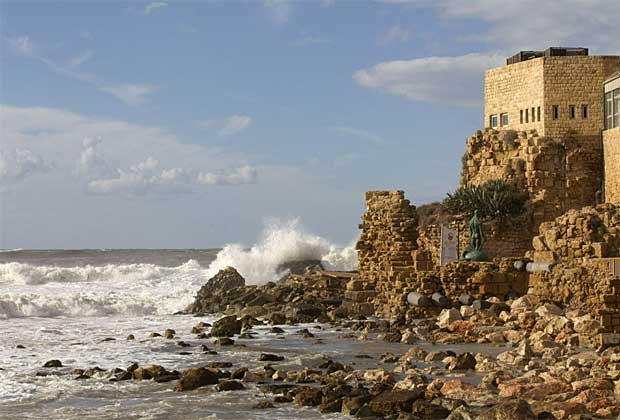
:: Image via B@ni on flickr.

For more on Sufism and Cancun Climate Summit see:

Cancun Ends On Slightly Better Note Than Copenhagen

Sufis Are Islam’s Eco Guardians

From Rockstars to Recycling: Interview with Kristiane Backer – An Eco-Muslimah
 

Arwa Aburawa
Arwa Aburawahttp://www.greenprophet.com
Arwa is a Muslim freelance writer who is interested in everything climate change related and how Islam can inspire more people to care for their planet and take active steps to save it while we can. She is endlessly suspicious of all politicians and their ceaseless meetings, especially as they make normal people believe that they are not part of the solution when they are the ONLY solution. Her Indian auntie is her model eco-warrier, and when Arwa is not busy helping out in the neighborhood alleyway garden, swap shopping or attempting fusion vegetarian dishes- with mixed success, she’d like to add- she can be found sipping on foraged nettle tea.
3 COMMENTS
  1. I was pleased to read that sufism embraces the natural world and endorses individual responsibility for its protection. So you can imagine my confusion when a friend who is an active sufi sees no conflict between her belief and her action in logging 50,000 air miles for personal pleasure. Are carbon offsets not a part of Sufism’s environmental position?

LEAVE A REPLY

Please enter your comment!
Please enter your name here

TRENDING

Sustainable Architect Ronak Roshan on the Politics Behind the Houston Ismaili Center

Roshan’s reflection situates the Houston Ismaili Center within a broader discussion about architecture as diplomacy — where aesthetics, faith, and geopolitics intersect. Her words challenge readers to question whether “green” design and grand symbolism can coexist without transparency and accountability.

Ancient mud buildings in the Muslim world are spectacular and sustainable

Other notable mud structures in the wider Muslim world include the Bob Dioulasso Grand Mosque in Burkina Faso, and the Khiva Wall in Uzbekistan, which is built around a collection of Islamic schools and mosques. The Siwa Oasis in Egypt (which we visited and posted about here) and the Eastern Castle in Syria have also employed mud bricks in their construction, and research shows that the famous walls of Jericho were built using sun-dried mud bricks.

Why Muslims don’t drink beer

Many Muslims avoid beer because Islamic law forbids all intoxicants, yet drinking habits vary across cultures. Green Prophet explores the religious basis, real-world exceptions, and the rise of alcohol-free trends like mocktails and kombucha among Muslim and non-Muslim drinkers.

Can Muslims drink kombucha?

Can Muslims drink kombucha even though it may have traces of alcohol?

The Orange Economy: How Religion and AI Are Shaping Innovation

Looking toward the future faith, creativity and technology will often intersect. The pathway from “prophet” to “profit” will not always be clear. However, creativity, at times fueled by faith, will help spur greater creativity where-in new technologies will allow the visionaries of the future to unlock new possibilities for collaboration, innovation, and mutual understanding more quickly than ever.

Qatar’s climate hypocrisy rides the London Underground

Qatar remains a master of doublethink—burning gas by the megaton while selling “sustainability” to a world desperate for clean air. Wake up from your slumber people.

How Quality of Hire Shapes Modern Recruitment

A 2024 survey by Deloitte found that 76% of talent leaders now consider long-term retention and workforce contribution among their most important hiring success metrics—far surpassing time-to-fill or cost-per-hire. As the expectations for new hires deepen, companies must also confront the inherent challenges in redefining and accurately measuring hiring quality.

8 Team-Building Exercises to Start the Week Off 

Team building to change the world! The best renewable energy companies are ones that function.

Thank you, LinkedIn — and what your Jobs on the Rise report means for sustainable careers

While “green jobs” aren’t always labeled as such, many of the fastest-growing roles are directly enabling the energy transition, climate resilience, and lower-carbon systems: Number one on their list is Artificial Intelligence engineers. But what does that mean? Vibe coding Claude? 

Somali pirates steal oil tankers

The pirates often stage their heists out of Somalia, a lawless country, with a weak central government that is grappling with a violent Islamist insurgency. Using speedboats that swarm the targets, the machine-gun-toting pirates take control of merchant ships and then hold the vessels, crew and cargo for ransom.

Leopoldo Alejandro Betancourt López Turned Ocean Plastic Into Profitable Sunglasses

Few fashion accessories carry the environmental burden of sunglasses. Most frames are constructed from petroleum-based plastics and acrylic polymers that linger in landfills for centuries, shedding microplastics into soil and waterways long after they've been discarded. Leopoldo Alejandro Betancourt López, president of the Spanish eyewear brand Hawkers, saw this problem differently than most industry executives.

Why Dr. Tony Jacob Sees Texas Business Egos as Warning Signs

Everything's bigger in Texas. Except business egos.  Dr. Tony Jacob figured...

Israel and America Sign Renewable Energy Cooperation Deal

Other announcements made at the conference include the Timna Renewable Energy Park, which will be a center for R&D, and the AORA Solar Thermal Module at Kibbutz Samar, the world's first commercial hybrid solar gas-turbine power plant that is already nearing completion. Solel Solar Systems announced it was beginning construction of a 50 MW solar field in Lebrija, Spain, and Brightsource Energy made a pre-conference announcement that it had inked the world's largest solar deal to date with Southern California Edison (SCE).

Related Articles

Popular Categories