8 Exquisite & Endangered Animals of the Middle East

baby croc middle east

From snow leopards to the Pakistani sand cat: The vast deserts, rough mountains and scarce waterways of the Middle East are home to many unique animals.

Enjoy these 8 unique exquisite Middle Eastern mammals, birds and reptiles threatened with extinction because of hunting, loss of habitat, lack of prey, or poisoning. Share them with your friends to draw awareness to this beautiful diversity and need for preserving habitat.

Dhole

dhole, or Asiatic wild dog

Fewer than 2500 dholes, or Asiatic wild dogs, survive today. The dhole’s main prey, deer, have become scarce, and they have dense mountains, alpine forests and scrub jungles of the Middle East and Asia next to grassy plains where their prey feed. Also known as the whistling hunter, the dhole has a distinct high-pitched call.

Photo credit: guwashi999

Slender-Horned Gazelle

slender horned gazelle

The slender-horned gazelle lives in sandy and stony desert lands of Algeria, Egypt, Sudan, and Libya. It relies on a plant-based diet for water. Only about 1000 individuals remain in the wild, as the slender-horned gazelle’s horns were once prized ornaments in North Africa.

Glenn, C. R. 2006. “Earth’s Endangered Creatures – Slender-horned Gazelle Facts”

Photo credit: just chaos

Pakistani Sand Cat

Pakistani Sand Cat

Pakistani sand cats get their water needs from the rodents, mammals and insects in their diet. They live in the desert, so their habitat is safe. But they are hunted as pets, and by livestock traders who consider them a threat. No one knows how many have survived.

Photo credit: Benimoto

Mugger Crocodile

mugger crocodile

The mugger crocodile, a freshwater reptile that can reach a length of 13 feet, is found throughout the Indian subcontinent and the surrounding countries, including India, Iraq, Pakistan, and Sri Lanka. The Iranian and the Ceylon sub-species are endangered. The crocodiles feed on fish, frogs, crustaceans, birds, mammals, and other reptiles, and chase prey on land for short distances.

Only 100-200 Iranian crocodiles survive, because of illegal skin trading, fishing nets, and the loss of habitat. Their population is increasing in protected areas.

Photo credit: jackol

Egyptian Vulture

Egyptian Vulture

The Egyptian, or scavenger, vulture nests on rock ledges and feeds on carrion, small mammals or eggs. Unlike other birds, it uses small rocks to crack thick-shelled ostrich eggs. Between 10,000 and 100,000 individuals survive worldwide. Poison from the environment, along with disease and electrocution from power lines, threaten their existence.

Glenn, C. R. 2006. “Earth’s Endangered Creatures – Egyptian Vulture Facts”

Photo credit: Steve Snodgrass

Snow Leopard

Snow Leopard

The snow leopard is found in the mountain ranges of Central Asia, and eat boars, arkhar, markhor, bharal, ibex, marmots, and other small rodents. Snow leopards were once heavily hunted for their fur pelts, and other body parts are valued in traditional Asian medicine. Loss of habitat, persecution, and competition with humans for prey also threaten the species. Snow leopards do well in captivity. Conservation efforts have increased the current population to 6000 from about 1000 in the 1960s.

Photo credit: digitalART2

Black Bear

Bukhistani Black Bear

The Baluchistan bear, a subspecies of the Asiatic black bear, is also known as “moon bear” because of a distinctive white crescent marking on its chest. The Baluchistan bear is only found in Iran and Pakistan and is threatened by habitat destruction and hunting for its skin, paws and gall bladder used in Oriental medicine.

They eat crops and domestic livestock, and attack humans, too. Their diet consists of fruits, nuts, buds and insects as well as leftover prey killed by tigers and occasionally, domestic livestock. All Asiatic black bears are protected by law, but the law is rarely enforced.

Photo credit: Drew Avery

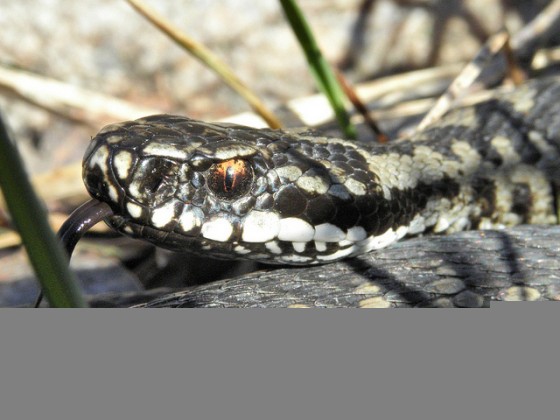
Lars Valley Viper

Viper

The venomous Lars Valley Viper, also known as a Latifi viper, is so rare that no pictures are available–an American viper is pictured. Zoologists considered the Lars Valley species to be extinct, until they found an isolated population in the Elburz Mountains of Iran in 2000.

Photo credit: Billy Boy

You may also enjoy:

7 Eco-Wonders of the Middle East

Israel, Iran Take Top Two Endangered Species Design Prizes

Hannah Katsman
Hannah Katsmanhttps://www.greenprophet.com/
Hannah learned environmentalism from her mother, a conservationist before it was in style. Once a burglar tried to enter their home in Cincinnati after noticing the darkened windows (covered with blankets for insulation) and the snow-covered car in the driveway. Mom always set the thermostat for 62 degrees Fahrenheit (17 Celsius) — 3 degrees lower than recommended by President Nixon — because “the thermostat is in the dining room, but the stove’s pilot light keeps the kitchen warmer.” Her mother would still have preferred today’s gas-saving pilotless stoves. Hannah studied English in college and education in graduate school, and arrived in Petach Tikva in 1990 with her husband and oldest child. Her mother died suddenly six weeks after Hannah arrived and six weeks before the first Gulf War, and Hannah stayed anyway. She has taught English but her passion is parental education and support, especially breastfeeding. She recently began a new blog about energy- and time-efficient meal preparation called CookingManager.Com. You can find her thoughts on parenting, breastfeeding, Israeli living and women in Judaism at A Mother in Israel. Hannah can be reached at hannahk (at) greenprophet (dot) com.

TRENDING

A Fact-Based Reflection on Sustainability and Tourism in Hormuz

A Documented Response to the Article “The Aga Khan...

Dubai sets up smart feeding stations for abandoned cats

Dubai Municipality has set up 12 AI-powered "Ehsan Stations" to safely and officially feed strays. The city also officially supports Trap-Neuter-Return (TNR) programs. 

Eco organization offices destroyed by Iran missile

Tel Aviv's eco organization, the Heschel Center, was impacted by an Iranian missile.

Zoroastrianism from Iran is the world’s first eco-religion

When Zarathustra started preaching around 1200 BCE in ancient Persia, which is known today as Iran, he wasn't just founding a religion—he was creating the world's first environmental protection movement. Good thoughts, good words, good deeds. But there was a mantra and words to live by: don't pollute the earth, water, or fire. Ever.

Ethiopians are Looking to Somaliland for Red Sea Access as Global Powers Move In

Somaliland, for its part, has operated as a de facto independent state since 1991. It has its own government, elections, currency, and security forces. It’s often described as one of the more stable and democratic political systems in the region, despite never being formally recognized internationally. 

Should You Invest in the Private Market?

startustartup Unlike public stock exchanges, which offer daily trading, strict...

How to build a 100-year-company

Kongō Gumi is a Japanese construction company, purportedly founded in 578 A.D., making it the world's oldest documented company. What can we learn about building sustainable businesses from them?

From Pilot Plant to Global Stage: How Aduro Clean Technologies’ 2026 Expansion Signals a Turning Point for Chemical Recycling Investors Like Yazan Al Homsi

The company's Next Generation Process (NGP) Pilot Plant in London, Ontario, has officially moved into initial operating campaigns, generating the kind of structured, repeatable data that separates laboratory promise from commercial viability.

How AI Helps SaaS Companies Reduce Repetitive Customer Support Work

SaaS products are designed for large numbers of users with different levels of experience, and also in renewable energy.

Pulling Water from the Air

Faced with water shortage in Amman, Laurie digs up...

Turning Your Energy Consultancy into an LLC: 4 Legal Steps for Founders in Texas

If you are starting a renewable energy business in Texas, learn how to start an LLC by the books.

Tracking the Impacts of a Hydroelectric Dam Along the Tigris River

For the next two months, I'll be taking a break from my usual Green Prophet posts to report on a transnational environmental issue: the Ilısu Dam currently under construction in Turkey, and the ways it will transform life along the Tigris River.

6 Payment Processors With the Fastest Onboarding for SMBs

Get your SMB up and running fast with these 6 payment processors. Compare the quickest onboarding options to start accepting customer payments without delay.

Related Articles

Popular Categories