

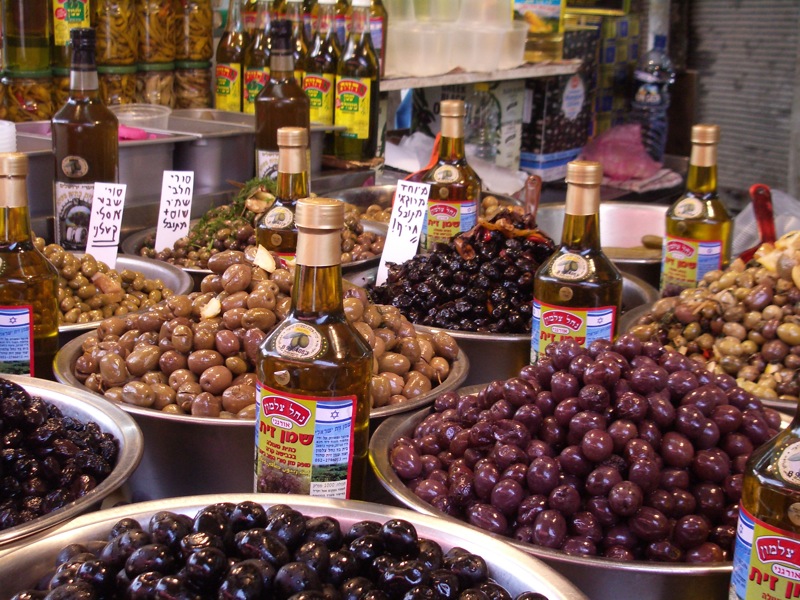
 Tel Aviv Carmel Market. Above image via esme
Visitors to Israel’s best fruit and vegetable markets already know the country’s two most famous landmarks: The Carmel Market in Tel Aviv, which winds down from trendy Sheinkin Street right down the Mediterranean the Sea.
And Jerusalem’s Machane Yehuda market, which anthropologically speaking, is most interesting on Friday afternoons as religious Jews shop frantically before the Sabbath. There you can find fruits, nuts, meat, veggies, good hummus, fish, clothing, and sweets. Also look out for the crazy Kabala juice man.
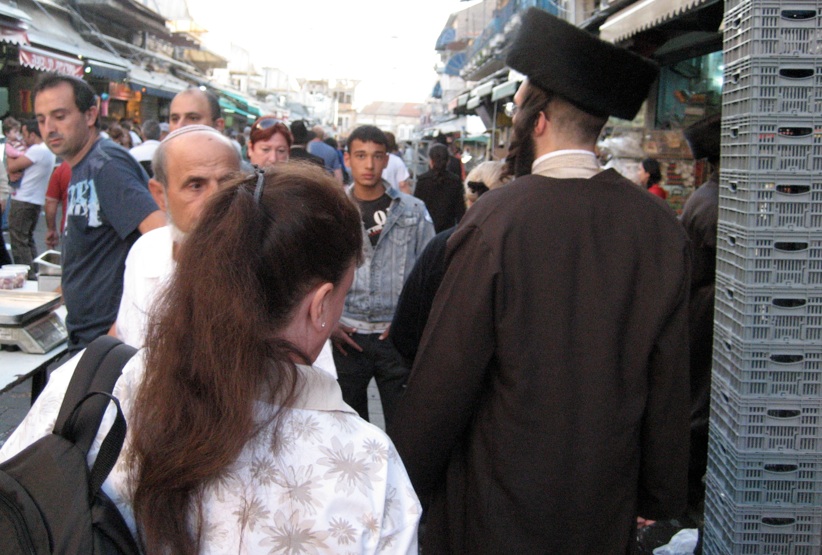
On another level, there is a group of “market wardens” see the picture of my Canadian mom (below) checking out the ultra-Orthodox men, with fur hats, warning stall owners in Jerusalem to shut down before twilight, or else. She got a real kick out of that when she visited Israel.
As the saying goes, variety is the spice of life, and when it comes to food market shopping, Israel is very much spicy, and alive. Speaking of spices, all the country’s best chefs, and restaurant owners know that there is only one place to get the country’s best offerings of spices, nuts and specialty cheeses. The place is Shuk Levinsky in South Tel Aviv. Like the big fruit and veggie market –– the Carmel Market –– which also sells cheese, meat, fish, kitchen wares and clothing, the Levinsky Market is open 6 days a week, from Sunday early am until after sunset, closing before sunset on Friday late afternoon before the Sabbath rest.
Also in recent years, Israel has gone beyond its basic needs for olive oil, tomatoes, cucumbers and pita bread. It’s taken the cue from countries like Canada and France and a new class of markets have opened, being touted as farmer’s markets. Now these aren’t simple hoedowns you’d find in North Bay region villages, but specialty farms that have come to Tel Aviv to offer some of the finest hand-made cheeses, baked goods and organic veggies.
According to the Tel Aviv Farmer’s Market website, the market represents about 50 producers from all over Israel, who are selling their local, fresh, small scale and quality produce. Look for fruits, vegetables, herbs, cheese, bread and cakes, honey, olives and olive oil, halva and tehina, wine, beer and flowers. All sold without the middle man. Instead of going to top quality restaurants or flown out of the country as exports, the market brings these products to you the people.
Don’t expect to bring your goods home in plastic though, so carry a fabric bag or cart to wheel your purchases back home or to your hotel. Also – expect a little snobbery visitors to the Port Farmer’s market have pointed out. (See tasty but elitist).
Last on our list: Taking advantage of a renovated train station in the north of Tel Aviv, is the city’s latest farmer’s market called Orbanic. It’s probably the city’s hippest, accessible by foot from the city’s boardwalk, right beside the not-to-miss historic neighborhood of Tel Aviv Neve Zedek where I used to live. It’s a must see.
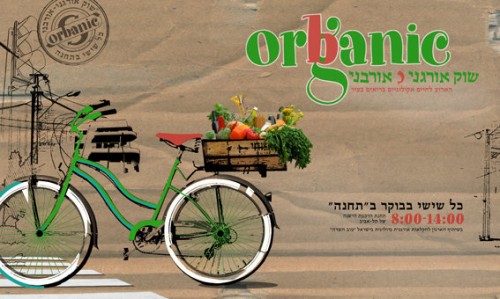
Situated in “Hatachana” (or, “the station”) Orbanic is Tel Aviv’s first and only all-organic farmer’s market. Run jointly by Hatachana and the Organization for Organic Agriculture in Israel, you can visit Orbanic every Friday from 8 am to 2 pm. From farmer’s organic fields to your mouth, expect high quality organic and natural delicacies, and ecological products.
The market, reports Green Prophet, also holds lectures about ecology and nutrition on a weekly basis, at 11 am and 1 pm. Additional perks include Tai Chi in the morning at 8 am. And for those who just want to relax while snacking on some organic goat’s cheese brie, check out the jazz and world music shows at 10.
To recap: 5 best markets in Israel:
1. Carmel Market in Tel Aviv (Links to Google map) – Open Sunday to Friday sundown
2. Machane Yehuda in Jerusalem (Links to Google map) – Open Sunday to Friday sundown
3.Shuk Levinsky in South Tel Aviv (Links to Google map) – Open Sunday to Friday sundown (links to Google map)
4. Tel Aviv Farmers Market at the Port (Links to Google map) – Open every Friday 8 am to 3 pm
5. Orbanic organic market, south Tel Aviv (Links to Google map – Menashiya) – Open from 8 am to 2 pm
A Quick Guide to Market Shopping in Israel:
If you are going for food, and not for the experience, best to go to the traditional markets on days other than Fridays. The farmer’s markets we recommended of course, are only open on Fridays. Generally though Fridays are the day of the week in Israel when last minute or lazy Sabbath shoppers head out for supplies. Check ahead first before you head out to see if the market is still on.
Bring a bottle of water to drink, a hat to wear and comfy shoes. Yes, many Israeli women zip around on their bikes with platform heels, but if you don’t want to tire easily, wear comfy shoes for walking.
Don’t be part of the plastic problem in Israel. Take canvas bags, and a shopping cart if you have one to lighten the load. Don’t worry about looking like a grandma. Everyone in Israel uses them.
Take small change. Prices in Israel are negotiable. Carry small change, in shekels, 5 shekel and 10 shekel coins. Chances are you’ll get a better deal than waving a 200-shekel bill at a stall owner, especially in the Carmel Market or Jerusalem’s Machane Yehuda market.
If you go late in the day, especially on Fridays, ask for deals. Stall owners want to clear out their goods, and in Israel bargaining is open season all year long. Prices for organic food and boutique wines and cheeses aren’t cheap, so don’t expect to come home with a pile of stuff that you’ve paid less for in Canada. Prices might be the same, and for some goods, even more.
What’s Israel is good at? Olive oil. Olives. Nuts. Fruits that are in season. Watermelon, oranges. Bananas. Tomatoes. Fresh cheeses made from goat’s milk, not the hard varieties like cheddar.
That’s Israeli market shopping in a nutshell.
Now print this out and enjoy your travels!
(This post was first published on Canada’s Israel blog)

There are two other Farmer’s Markets you haven’t mentioned.They’re not as large as the ones you featured, but they’re still great! One is in Herzliya Pituach Industrial Area on Thursday afternoons, and the other, which is my favorite, is in Ra’anana at the park which has a pond with swans (don’t know the name) on Friday mornings, from 8:00. They have an organic farm vendor with all kinds of vegetables and sometimes eggs, two goat cheese sellers, all kinds of fruits, olives, breads and other baked goods, nuts, flowers and more.
There are probably others as well. I focused on those that would interest tourists. Thanks for the update.