

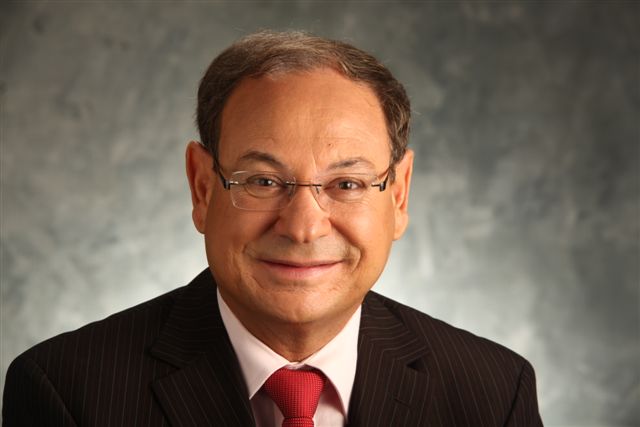
 He’s already building a water bridge with the city of Gaza. How does Ashkelon’s mayor Benny Vaknin see “liquid” peace in the region?
Can water lubricate peace? We hope so. This is our second to last interview in our water series. Today we interview Benny Vaknin, the Mayor of Ashkelon, who is trying to cooperate with Gaza for building a sewage treatment plant in Gaza city.
The former businessman is working to solutions for peace and cooperation with the nearby Gaza City. He thinks through water is a good way to achieve that. Here are his views on the water situation in Israel and regional water cooperation:
Q. Turkey and Israel have had talks about freshwater supply and purchase in the past. The Turkish government has been positive in its overall response so far but there is some opposition to this in the Turkish political spectrum. If the Turkish government were to agree to supply 1 BCM of freshwater to Israel, is there a possibility that Israel will agree in return to share this water with the Palestinian Authority (PA) and Jordan?
A1. This project that you mention between Turkey and Israel is not economical and therefore is not relevant.
Q2. Israel is counting on desalination as a major source of its future water supply. However, there are limits to the growth of Israel’s water supply based on marginal water alone. What are the other ‘regional’ solutions that Israel can examine in terms of water cooperation with other countries?
A2. Water shortage is a common problem amongst all countries in the Middle East. One of the regional solutions that Israel should consider is transportation of water. They have extra water in Lebanon. Perhaps we should consider transportation of water from Lebanon for all the countries in the region where there is shortage of water.
Q3. Lebanon’s Litani River has a particularly high quality of water, with a very low quantity of chlorates and nitrates present. Water cooperation with Lebanon would therefore serve Israeli interests but in order for this to happen, political cooperation between these two parties is required; in addition Israel-Lebanon relations are inter-linked with the Israel-Palestine conflict. Is it worth it for Israel to find political cooperation with Lebanon in order to secure its water situation or is this not a practical option?
A3. Israel wants peace with all the countries of the region and this could result in a very positive initiative. One of the outcomes of such peace would be cooperation on water. Water can be a cause for war but it can also be a good platform for peace.
Q4. Technical reports suggest that over-pumping is leading to the depletion of groundwater aquifers in the West Bank, both in terms of water levels as well as water quality. This could cause water shortages in the short-run and devastation of the eco-system in the long-run. What can be done to preserve these aquifers?
A4. Desalination is a part of the solution. Both the Israelis and the Palestinians are pumping water; the state of Israel supplies 40 -50 million cubic meters of water every year to the Palestinians. The best solution is for cooperation is the regional management of water.
Q5. Israel has experienced a severe drought period in the recent past. With environmental neglect and the effects of climate change, this can be a frequent and imminent risk in the future. What can be done to minimize the impact of such a danger in terms of national measures as well as well as regional cooperation?
A5. At the national level Israel has implemented the use of re-used water for agriculture. Israel should also utilize and manage a more effective water system. At the regional level Israel can assist and share its experience with others in the region. Another promising effort in regional cooperation is the pilot project that is being implemented in Gaza using sewage water for agriculture.
Read our series of interviews with Israeli water experts:
1. All the Water in Israel: Interviews with Government, Analysts and Researchers
2. Interview with Israel’s past water commissioner, Shimon Tal
3. Gidon Bromberg on Water Security and Sustainability in the Middle East
4. Read our interview with Israel’s Water Commission
5. Interview with Eli Ronen, the Chairman of Mekorot
6. Interview with Ranaan Borel (SPNI) on Water Security in Israel



[…] Eli Ronen, chairman of Mekorot 6. Interview with Ranaan Borel, water consultant and activist 7. Interview with the Mayor of Ashkelon, Benny Vaknin, a peacebuilder through water and the environment… 8. Interview With Israel’s Ministry of Environmental Protection AKPC_IDS += […]
#Water and #Peace: Water Bridge Planned from #Ashkelon to #Gaza City
http://tinyurl.com/yec4qxd #israel #climate #green #energy #environment
#Ashkelon mayor interviewed on city's environmental work and trying to cooperate with Gaza on clean water http://bit.ly/6pT6c5
[…] Eli Ronen, chairman of Mekorot 6. Interview with Ranaan Borel, water consultant and activist 7. Interview with the Mayor of Ashkelon, Benny Vaknin, a peacebuilder through water and the environment… AKPC_IDS += "15893,";Browse topics: Israel, Jordan, Palestinian Authority, Turkey, […]