

Who would ever have thought that wind blower fans in a cow barn would spark an idea to create innovated vertical wind turbines?
It turns out that a small, clean technology startup company located in a kibbutz near Ramat Hasharon, Israel may be developing a new stackable wind turbine that could compete with the giant propeller ones currently in use around the world.
Coriolis Wind (now out of business) is the brain child of its 3 co-founders Rafi Gidron, an entrepreneur from Precede Technologies, an entrepreneurship and investment firm focused on high growth markets such as alternative energy; Orni Petruschka, also with Preclude; and Shuki Sheinman, formerly connected with NASA, Scitex and El Op.
The basis of the technology comes from a scientific phenomenon known as the Coriolis effect named after a French mathematician, Gaspard Gustave de Coriolis who wrote a treatise in 1835 about how the earth’s rotation affects the direction and force of wind. It’s also called the “toilet flush effect.”
Using the Coriolis Effect to generate wind energy:
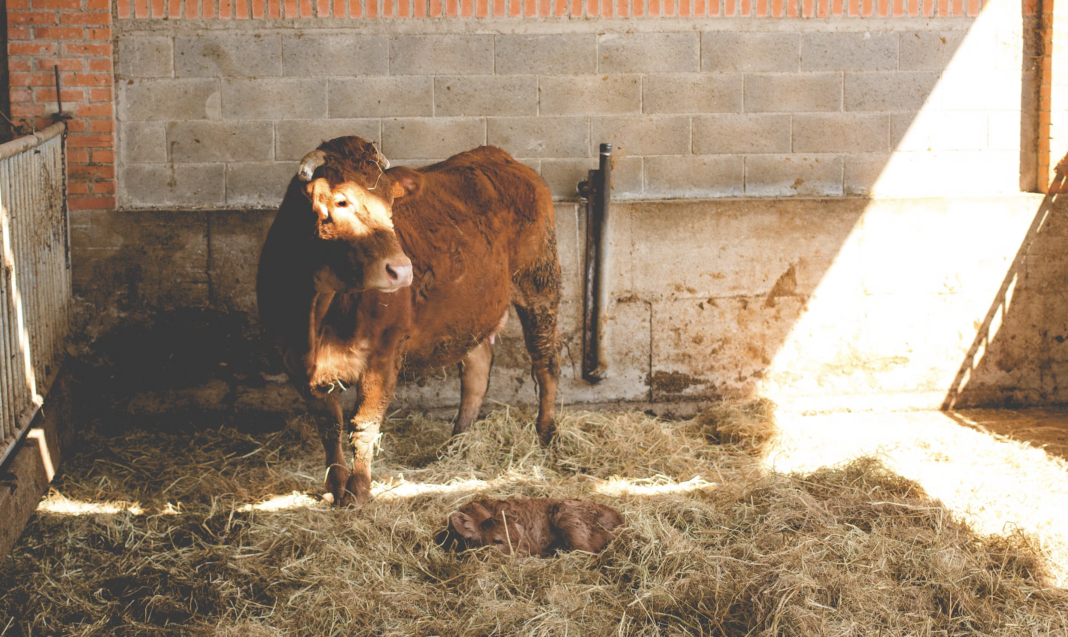
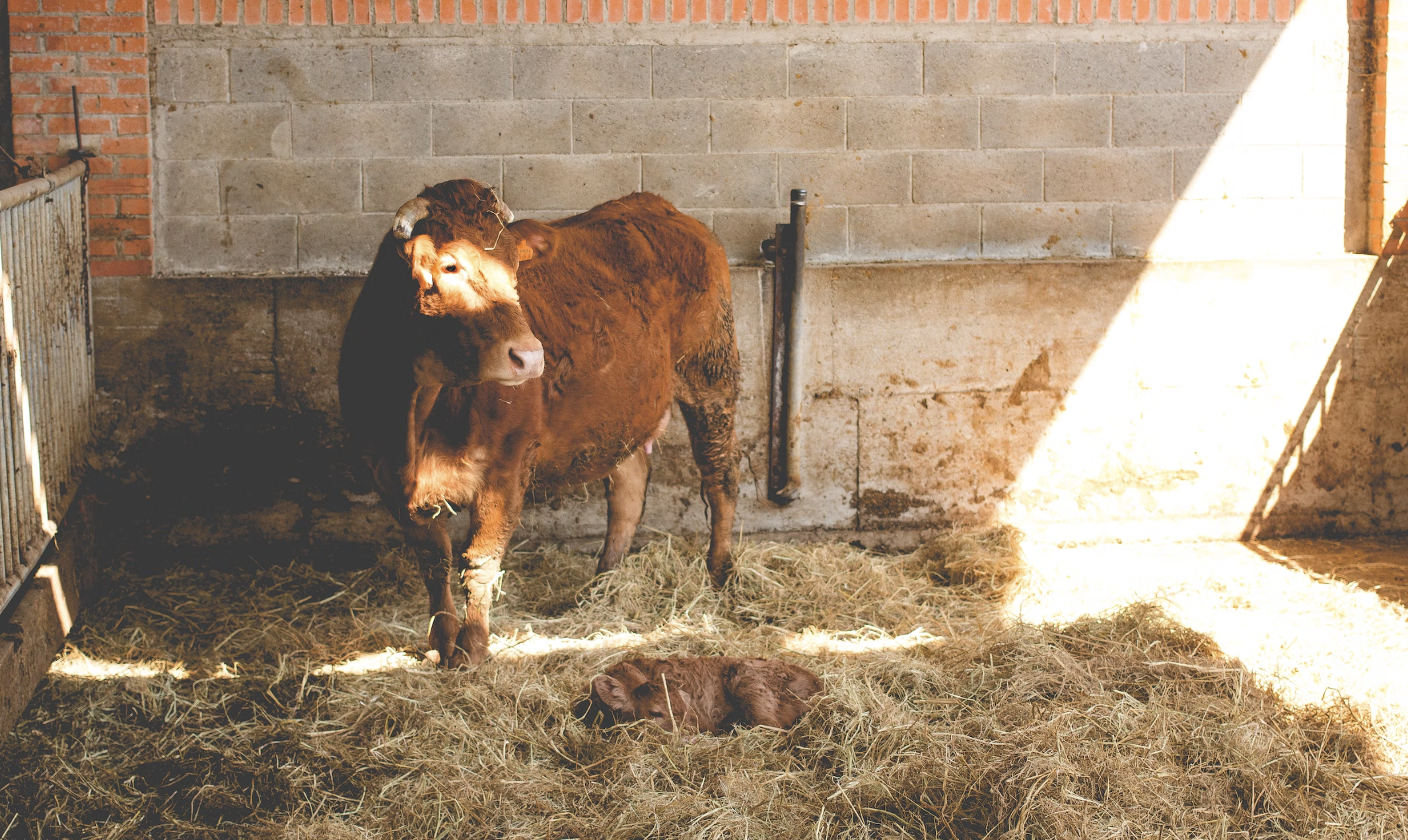
This theory resulted in Gidron and his partners coming up with a very different type of vertical wind turbine that can utilize the earth’s rotational effect of winds to create the most efficient energy. The “wind testing” idea they use is even more unique as it revolves around a using cow barn at Kibbutz Kfar Hayarok, outside Tel Aviv to create a wind tunnel for testing their vertical wind turbines.
The “wind” used in their initial experiments does not come from the cows themselves but from the fans used to ventilate the areas the dairy cattle are living in (which can be quite smelly for obvious reasons).
According to Dr. Sheinman, who used his experience with NASA to help design the special rotary turbine blades, the main idea is to capitalize on what is known as the minimum wind “cut-in speed”; below which no useable power can be produced by a wind force.
By experimenting with different wind speeds in their “cow barn wind tunnel” they found that the minimum cut-in speed is 3.5 meters per second or 12 km per hour. Their idea is to capitalize on using minimum wind velocities, as influenced by the Coriolis effect to create the most energy and with a much lighter weighted smaller turbine device than the standard wind turbines we are all reading about.

By developing very light weight vertical turbine blades of only 2 meters in length, and made from a light weight plastic molding material, the turbines are then placed in a “pod” of three turbine fans, which are then linked together to form a module. The desired wind power is then created by combining enough modules which are mounted on vertical stands, which utilize less space than the large propeller turbines “that are the size of a 747 aircraft and very heavy” according to Dr. Sheinman.
Rafi Gidron is banking on the financial potential that his company’s new wind turbine concept may create. He says that with wind turbines already being a multi-million dollar business around the world, their new design should be able to capture “at least 12-15% of the total market” when put into full production. With the idea of “building a better mouse trap” as the old innovation saying goes, this new wind energy concept may very well accomplish this feat, once they get past the “cow barn” testing stage, that is. And it looks like they have.
By 2023 when this post was edited the company’s website was down and not functioning.




You ought to be a part of a contest for one of the greatest websites on
the net. I will recommend this website!
Broadcast all of a catalogue of adult men and women
exactly who acquired a medical history of versions, also are able to actually appreciate a anything alongside Full farrah abraham sex tape appropriate up until associated
with is adjusted.
Yes! Finally something about filmowanie.
Good article. I absolutely love this site. Continue the good
work!
[…] Blower Fans in the Cow Shed Test Vertical Wind Turbines of Coriolis […]
Great article and video. Thanks for sharing.
[…] on a single unit that rotates three blades vertically, like a barber’s pole, Coriolis Wind’s solution which we’ve reported on earlier, is scalable – each unit of 50 kilowatts can be stacked together with others to generate as […]
[…] more innovative vertical turbines, such as ones currently being developed by an Israeli company, Coriolis Wind, which are able to produce electricity from a much lower “wind cut-in speed” by taking […]
[…] more innovative vertical turbines, such as ones currently being developed by an Israeli company, Coriolis Wind, which are able to produce electricity from a much lower “wind cut-in speed” by taking […]
An Israeli cowshed sparks some major wind energy innovation: http://bit.ly/7mggL2
Blower Fans in the Cow Shed Test Vertical Wind Turbines of Coriolis | Green Prophet – http://bit.ly/4LpYin
VIDEO: Blower Fans in Cow Barn Test Vertical Wind Turbines of Coriolis http://bit.ly/4RJ8yW
VIDEO: Blower Fans in Cow Barn Test Vertical Wind Turbines of Coriolis – Green Prophet (blog): VIDEO: Blower Fa.. http://bit.ly/4SnVMJ
News:: VIDEO: Blower Fans in Cow Barn Test Vertical Wind Turbines of Coriolis http://bit.ly/4VmIgF