
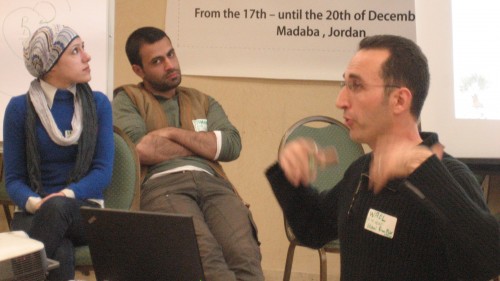

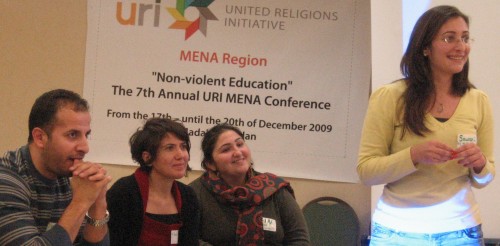
As we’ve been saying, Green Prophet hosted a Green Blogger’s Conference in Jordan earlier this week. We’ve recapped what we’ve learned from the Jordanian activists. Now Hiba Hamzeh from Volunteering for Peace living in the West Bank, Palestinian Authority, blogs about her desire to initiate a “green” change among people and youths in the PA:
Talking about the environmental issue in the Palestinian community is something we would rarely hear or read about. So far the activities related to environmental awareness and preservation are rare. On the other hand it is of great importance to start from somewhere to lead this human community to emphasize how essential working on this issue could be on different levels.
The Palestinian community is not of the richest communities in the world, so thinking “green” could add some financial benefits, as people will start to use their waste and leftovers for other purposes. This line of thinking will improve the environmental atmosphere in Palestine which will guide Palestinians to a better and healthier standard of life, which eventually will lead to more environmental awareness.
As an educated Palestinian woman, I feel that I have a responsibility to be a part of a campaign aimed to spread the environmental awareness in my community since I was introduced to it and know how important it is for humanity.
The way to start this in Palestine could begin from the very simplest ways so they would be observed easier, and would be easy for the people to implement in their lives. The examples to do this through environmental awareness could be unlimited, and they can be used to make the environment a part of the peoples’ lifestyles and in small daily activities that they do.
One of the few examples for a simple way that could be implemented in the Palestinian community easily is garbage compressing for organic leftovers. Another example could be introducing people to use some solid leftovers such as glass bottles for other purposes like preserving food, or for keeping other stuff in them, even sell them to glass factories so they will be re-manufactured again into other forms.
In order for us to introduce people to such practices we can start from working in the Palestinian cities and villages and guide the local community through these model activities to show them how they can do this in their homes and lives, and how this would save them much in both finance and health.
The possibilities out there in this community are huge: on one hand it is a young society where the youth form a large percentage of the population. Their energies could be hired in many activities in the streets, schools, and at home. Also many people in the villages are farmers and could use the compressed organic compost leftovers as fertilizer on their land.
-Hiba Hamzeh
Read more on our green workshop:
Multifaith Writers and Activists Unite in Jordan
Green Bloggers Page (with all updates)
Meet the green bloggers and activists from Jordan
Part I: Learn About Jordan


[…] (with all updates) Meet the green bloggers and activists from Jordan Part I: Learn About Jordan Instigating Environmental Awareness in Palestine AKPC_IDS += "15096,"; […]
[…] (with all updates) Meet the green bloggers and activists from Jordan Part I: Learn About Jordan Instigating Environmental Awareness in Palestine AKPC_IDS += "15019,";Browse topics: gardening, green investing, Palestine, permaculture, […]
[…] Hiba Hamzeh, 25, from Hebron, told the group about her hopes to start urban recycling in Palestine. […]
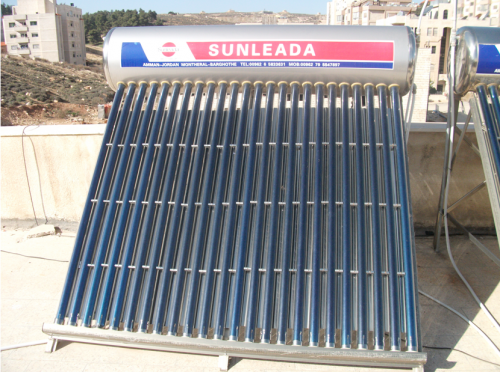
[…] (with all updates) Meet the green bloggers and activists from Jordan Part I: Learn About Jordan Instigating Environmental Awareness in Palestine AKPC_IDS += "14878,";Browse topics: environmental education, Jordan, Solar Energy, […]
These aren't local efforts to get attention, these are ways to survive an brutal occupation. Also, my grandparent used many of the same techniques to grow much of their own food. The lie of liberalism and modernism made certain things “backward” and certain things “forward.” Organic food, composting, water saving techniques etc. became backward, while industrial farming became the enlightening and civilized way to grow food. when Israel was founded on Palestinian land, many of this industrial farming techniques were brought by European Jews settlers. Now, all of sudden, since it popular to return to more natural ways of growing food, many people are jumping on the bandwagon. I didn't say that Israel invented industrial farming. We can blame most of that on the industrial revolution from the UK and US. But I do take issue with Israelis talking about the environment when their is a clear lack of regard for human rights, which in my opinion include environmental rights as well. Look at water usage. Israelis use 4 times the amount of water per capita that Palestinians use. Why? because our water levels are restricted by the Israeli government. Read this recent report for exciting new information. http://www.amnesty.org/en/library/asset/MDE15/0… Is this just another green issue, or a policy of the occupation? This isn't a simple conversation about green news, and you cannot exclude the Political from the conversation. To do so would be dishonest. Ignore the environmental policy, which honestly has the most impact on the environment, and you ignore possibly the most important aspect of the conversation.
Please let us know more about local efforts. We'd like to report on them. Industrial farming is not something Israelis invented. It's also replaced the First Nation's practices in Canada, and that of old school Europe. Again, I think your comments are unjustly over-politicized. We encourage a more moderate voice on this venue. We are not politicians, just people trying to explore green news and solutions in the Middle East.
I know several families in the Bethlehem area (beit jala, beit sahour) who do composting, collect rainwater, and do grey water recycling. But they don't do it because its popular to be green right now. They do it because Bethelehem is surround by a 26-foot wall that restricts their movement. They are green because they get water once every 14 days, and because they don't know when a curfew will stop them from leaving their house. There is a lot of learning that can be done from the indigenous population. Palestinians have been farming and living green (living with nature, not against it) for centuries, long before mechanical and industrial farming ruled the ground.
These aren't local efforts to get attention, these are ways to survive an brutal occupation. Also, my grandparent used many of the same techniques to grow much of their own food. The lie of liberalism and modernism made certain things “backward” and certain things “forward.” Organic food, composting, water saving techniques etc. became backward, while industrial farming became the enlightening and civilized way to grow food. when Israel was founded on Palestinian land, many of this industrial farming techniques were brought by European Jews settlers. Now, all of sudden, since it popular to return to more natural ways of growing food, many people are jumping on the bandwagon. I didn't say that Israel invented industrial farming. We can blame most of that on the industrial revolution from the UK and US. But I do take issue with Israelis talking about the environment when their is a clear lack of regard for human rights, which in my opinion include environmental rights as well. Look at water usage. Israelis use 4 times the amount of water per capita that Palestinians use. Why? because our water levels are restricted by the Israeli government. Read this recent report for exciting new information. http://www.amnesty.org/en/library/asset/MDE15/0… Is this just another green issue, or a policy of the occupation? This isn't a simple conversation about green news, and you cannot exclude the Political from the conversation. To do so would be dishonest. Ignore the environmental policy, which honestly has the most impact on the environment, and you ignore possibly the most important aspect of the conversation.
Please let us know more about local efforts. We'd like to report on them. Industrial farming is not something Israelis invented. It's also replaced the First Nation's practices in Canada, and that of old school Europe. Again, I think your comments are unjustly over-politicized. We encourage a more moderate voice on this venue. We are not politicians, just people trying to explore green news and solutions in the Middle East.
I know several families in the Bethlehem area (beit jala, beit sahour) who do composting, collect rainwater, and do grey water recycling. But they don't do it because its popular to be green right now. They do it because Bethelehem is surround by a 26-foot wall that restricts their movement. They are green because they get water once every 14 days, and because they don't know when a curfew will stop them from leaving their house. There is a lot of learning that can be done from the indigenous population. Palestinians haveing been farming and living green (living with nature, not against it) for centuries, long before mechanical and industrial farming ruled the ground.
Hiba, you are an amazing woman and an inspiration for us all! I am so happy I got the chance to meet you. -Karin
Environmental Awareness in Palestine “A Need to Start” http://www.greenprophet.com/2009/12/24/14824/green-blogging-hiba-palestine/