

 Worried about your carbon footprint? Not sure where to turn for accurate information? This book certainly delivers what it says on the jacket.
Drawing together a range of contributions from travel and green experts, it offers the reader opportunity to explore options for travelling worldwide which take least toll on the environment and which contribute to the communities of developing countries.
What is Green Travel? the reader is challenged to think beyond the way we travel and look at the wider implications of actions we take. How can we choose our airline tickets, destinations, and travel companies according to a more eco-friendly set of criteria? Here you can learn more about the entire spectrum of Green Travel and how you can reduce your carbon footprint. Not only that, but you will learn more about how Green Travel can benefit developing countries.
In Section two – Way to go – there is information on everything from boating, cycling and camping in the UK and abroad; skiing; safaris; getting to Australia by bus; travelling by freight; comparing the environmental impact of a range of forms of transport; working out whether a company which says it’s eco-friendly really is; understanding the accreditation schemes, and family friendly options.
Section three – Directory – offers comprehensive information on handpicked places to stay around the world plus a great deal more.
This guide gives space for expert contributors to make comments about whether we help developing countries by travelling there; whether we make things worse because the local communities don’t see the tourist money anyway; or whether projects which promise to ‘off-set’ environmental harm are viable. It even provides comparison tables so that a traveller can decide which mode of transport is ‘the greenest way to go’.
It’s big and glossy with beautiful pictures so more suitable for the coffee table, dinner party discussion or the planning stages of trip than tucked at the top of your backpack.
If you’re looking for easy-to-grab-and-run ideas with sets of laid-out routes, this isn’t the travel guide for you. If you’re looking to change your life and travel mindfully it is. If you want to go slow and steady and ensure that your grandchildren will be able to admire the same scenery in a few years time, this is a must read. If you want fast and furious and don’t care about what the next generations see, don’t bother.
Particularly enjoyable were the gently humourous anecdotes from Dan Kieran – By Train or bus on pages 92-93: “You’ve heard of the magician’s code, right? Well, the rail code is even more secretive. We don’t want just anyone discovering the joys of a weekend rail break, and clogging up the dining cars. Not when everyone is seemingly so content to be herded around by the no-frills airlines.”
(Having just discovered Eurostar, I could relate to this as I had already asked myself why had I ever flown to Paris.)
Susan Greenwood – By Bike on page 126: “It is quite tricky to pinpoint, when you factor in bleeding buttocks, unidentified insect life crawling in panniers and ridiculous, permanent tan lines, exactly what makes travelling by bicycle such a profound joy.”
(Being a keen cyclist I know this sentiment.)
And Louise France – On foot on pages 135-137 and speaking of her trip along the Camino de Santiago de Compostela: “Day one was rather good fun. I didn’t actually start crying until the morning of day two.”
(Yes. I know that feeling. The first three days of my trek to Annapurna Base Camp in Nepal consisted of rain, rain and more rain and excruciatingly steep stone steps. I think I cried on day three. The rain stopped on day four. I completed the trek and would go back and do it again!)
In this travel guide, I discovered:
a) “Rail is usually the greenest option but this can vary depending on the route, the type of fuel and the number of people travelling” and
b) there are some basic guidelines for if you fly – “Avoid short-haul flights, fly direct, fly economy, choose airlines with modern fleets and high capacity, avoid night flights, avoid winter flights, fly less, stay longer, keep luggage to a minimum.”
Having been a long and short-haul junkie for some years, I have noticed the thrill has waned a little with increased queueing, security checks, items being confiscated (I had to put my small cabin-sized luggage in the hold recently, all for the sake of a jar of marmalade!)
I have also noticed, latterly, when my eyes stray to some exotic destination in the brochures the joy is tinged with the guilty thought of my carbon footprint stamping through the skies, so The Guardian Green Travel Guide made a timely entrance into my life along with my discovery of the joys of Eurostar.
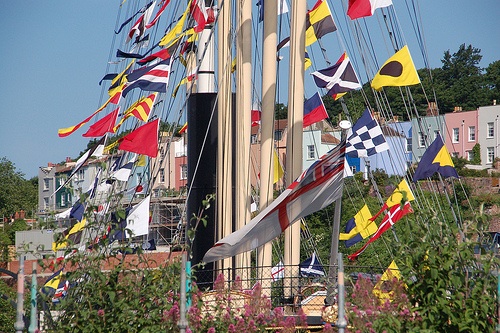
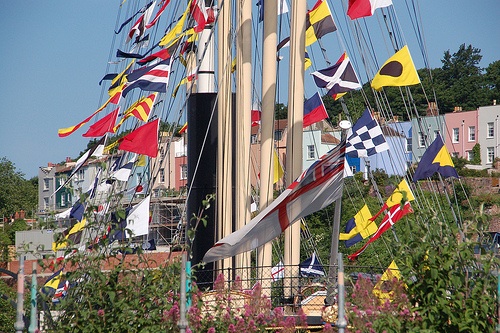
According to this guide I can explore the whole of Europe starting out from St. Pancras Station. Alternatively, Bristol, my home town is mentioned as a leader in sustainability with The Soil Association and SUSTRANS based here. Maybe, like the SS Great Britain, whose days of steaming across the seas have long since gone, it might be time for me to stay harmlessly at home in dry dock.
I found this book a mine of information in a minefield of greenwashing. Would I buy it? Probably not. I’d take it out of the library, borrow it from a friend, or swap it at book exchange. After all, I’m trying to do my bit for the environment.
Reviewer – Louise Gethin:
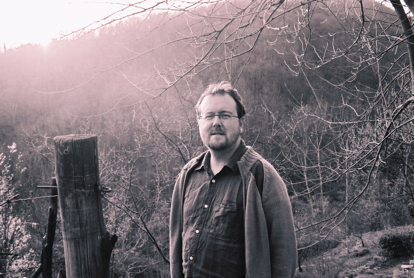
Born and brought up in Bristol, Louise has lived in France, Germany and New Zealand, and has spent time holidaying in Jerusalem, Spain, Ireland, Indonesia, Australia and Singapore.
Originally trained as a nurse in Bristol, she spent four years working with people with HIV in the mid nineties. Highlights of her life include: trekking to Annapurna Base Camp, Nepal; working in New Zealand; being an aunt to three nephews and two nieces; winning first prize at the Winchester Writers’ Festival for her short story, Innocent’s Baby; and living for three years on a houseboat only a stone’s throw away from Windsor Castle.
She’s a keen amateur photographer, cyclist and hockey player. Her biggest ambition is to publish her collection of short stories ‘Anecdotes of Love and Death’.
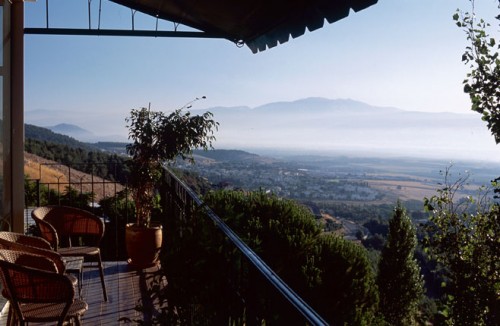
(Photo by reviewer Louise Gethin)

[…] Castle. She’s a keen amateur photographer, cyclist and hockey player. Louise has also reviewed ‘The Guardian Green Travel Guide’ for GP. Her biggest ambition is to publish her collection of short stories ‘Anecdotes of Love and […]
wish that there are only bridges across countries for such an accessible travel and exciting too…
nice post
[…] Louise Looks At Eco-Travel With “The Guardian Green Travel Guide … […]
[…] Louise Looks At Eco-Travel With “The Guardian Green Travel Guide … […]