Will Israeli Hightech Workers Lose Their Leased Cars and Pay Taxes on Parking Spots As The Government Goes Green?

cars-israel-azrielli
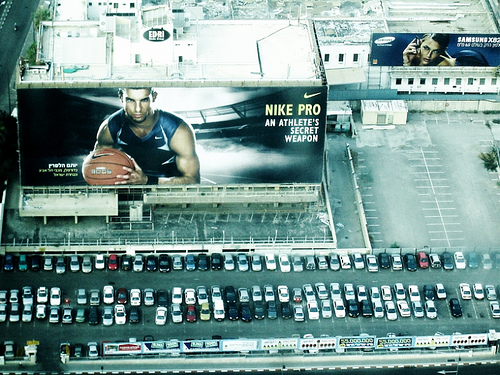
(View of parking lot below Azrielli Center in Tel Aviv)

They giveth and then taketh away: The recently Annual Report issued by the Bank of Israel, has devoted an entire chapter to the excessive use of leased company vehicles by employees, which are clogging up the country’s motorways and contributing greatly to the amounts of air pollution in and near major cities.

The report noted that even though amounts paid by employees for these vehicles increased considerably, following changes set in place by the Finance Ministry, the increased amounts have not caused any measurable reduction in the numbers of such cars on the road.

The report noted that 61% of the people using such cars drive them much more than those who drive their own cars (21%). The original idea was to enable company employees an easy way to get to and from work in situations in which public transport is not readily available; as well as allowing employees to work longer hours and not have to depend on bus or train schedules to get home after work.

While this appears to have been good logic, especially when employees of many high tech companies work as many as 12 to 14 hours a day; it was found that these employees use these cars for all types of private journeys, including weekend jaunts all over the country – at the employer’s expense.

The amounts the employee pays for using the lease car includes all fuel expenses, insurance, maintenance and repairs. As long as the employee doesn’t drive in excess of the annual mileage allotment given in the lease agreement, he or she pays the same price whether the car is driven every day, or simply sits in the parking space where the employee works or lives.

And since the amount the employee has to pay has increased, it virtually makes it conducive for them to use the car more often to “get their money’s worth” out of the deal.

Regarding leased company cars, the Ministry is recommending that cleaner, more fuel efficient cars be given to employees; such as new hybrid models which incorporate a duel power system of both electric and gasoline engines. This will help reduce the amount of pollution and save fuel consumption at the same time.

The quality of public transport is to be improved to encourage employees to use it for getting to and from work. The Ministry is also studying the idea of special taxes being levied for people entering major cities such as Tel Aviv with their car to encourage them to use public transport instead.

Parking spots that employees receive at their work may also be taxed, and workers willing to give up their parking place will be given a sum of money to do so.

Another measure being considered is to plan better public transport for new residential settlements so that the residents do not have to resort to private cars to go to work

For a country in which only 1 family in 4 owned or had use of a car as recently as the early to mid 1980’s, use of lease cars has resulted in two and even three car families being commonplace.

The present state of congestion on the country’s motorways is a sobering indication in which government traffic planning has not kept up with current realities. What’s more, people have simply become spoiled and used to the convenience of having a car available to go even two blocks to the neighborhood supermarket.

It’s time for Israel to shape up its public transportation policies if it wants to think about a sustainable future.

[image via saks08]

::Globes

Maurice Picow
Maurice Picowhttps://www.greenprophet.com/
Maurice Picow grew up in Oklahoma City, U.S.A., where he received a B.S. Degree in Business Administration. Following graduation, Maurice embarked on a career as a real estate broker before making the decision to move to Israel. After arriving in Israel, he came involved in the insurance agency business and later in the moving and international relocation fields. Maurice became interested in writing news and commentary articles in the late 1990’s, and now writes feature articles for the The Jerusalem Post as well as being a regular contributor to Green Prophet. He has also written a non-fiction study on Islam, a two volume adventure novel, and is completing a romance novel about a forbidden love affair. Writing topics of particular interest for Green Prophet are those dealing with global warming and climate change, as well as clean technology - particularly electric cars.
5 COMMENTS
  1. […] Will Israeli Hightech Workers Lose Their Leased Cars and Pay Taxes on Parking Spots As The Governmen… – (View of parking lot below Azrielli Center in Tel Aviv … of private journeys, including weekend jaunts all over the country – at the employer’s expense. The amounts the employee pays for using the lease car includes all fuel expenses, insurance … […]

  2. Maybe if we could get our act together enough to start/complete the planned high speed train network then less people would have to use their cars. For such a ‘high-tech’ country we should be able to do at least that!

LEAVE A REPLY

Please enter your comment!
Please enter your name here

TRENDING

Earth building with Dead Sea salt bricks

Researchers develop a brick made largely from recycled Dead Sea salt—offering a potential alternative to carbon-intensive cement.

Farm To Table Israel Connects People To The Land

Farm To Table Israel is transforming the traditional dining experience into a hands-on journey.

Fishermen sue tire manufacturers on behalf of the salmon

A federal trial in San Francisco has brought US tire manufacturers, fishing groups, and environmental scientists into court over a chemical most drivers have never heard of — but which scientists say may be silently reshaping aquatic ecosystems.

Remilk makes cloned milk so cows don’t need to suffer and it’s hormone-free

This week, Israel’s precision-fermentation milk from Remilk is finally appearing on supermarket shelves. Staff members have been posting photos in Hebrew, smiling, tasting, and clearly enjoying the moment — not because it’s science fiction, but because it tastes like the real thing.

An Army of Healers Wins the 2025 IIE Goldberg Prize for Peace in the Middle East

In a region more accustomed to headlines of loss than of listening, the Institute of International Education (IIE) has chosen to honor something quietly radical: healing. The 2025 Victor J. Goldberg Prize for Peace in the Middle East has been awarded to Nitsan Joy Gordon and Jawdat Lajon Kasab, the co-founders of the Army of Healers, for building spaces where Israelis and Palestinians — Jews, Muslims, Christians, Druze, and Bedouins — can grieve, speak, and rebuild trust together.

Qatar’s climate hypocrisy rides the London Underground

Qatar remains a master of doublethink—burning gas by the megaton while selling “sustainability” to a world desperate for clean air. Wake up from your slumber people.

How Quality of Hire Shapes Modern Recruitment

A 2024 survey by Deloitte found that 76% of talent leaders now consider long-term retention and workforce contribution among their most important hiring success metrics—far surpassing time-to-fill or cost-per-hire. As the expectations for new hires deepen, companies must also confront the inherent challenges in redefining and accurately measuring hiring quality.

8 Team-Building Exercises to Start the Week Off 

Team building to change the world! The best renewable energy companies are ones that function.

Thank you, LinkedIn — and what your Jobs on the Rise report means for sustainable careers

While “green jobs” aren’t always labeled as such, many of the fastest-growing roles are directly enabling the energy transition, climate resilience, and lower-carbon systems: Number one on their list is Artificial Intelligence engineers. But what does that mean? Vibe coding Claude? 

Somali pirates steal oil tankers

The pirates often stage their heists out of Somalia, a lawless country, with a weak central government that is grappling with a violent Islamist insurgency. Using speedboats that swarm the targets, the machine-gun-toting pirates take control of merchant ships and then hold the vessels, crew and cargo for ransom.

Leopoldo Alejandro Betancourt López Turned Ocean Plastic Into Profitable Sunglasses

Few fashion accessories carry the environmental burden of sunglasses. Most frames are constructed from petroleum-based plastics and acrylic polymers that linger in landfills for centuries, shedding microplastics into soil and waterways long after they've been discarded. Leopoldo Alejandro Betancourt López, president of the Spanish eyewear brand Hawkers, saw this problem differently than most industry executives.

Why Dr. Tony Jacob Sees Texas Business Egos as Warning Signs

Everything's bigger in Texas. Except business egos.  Dr. Tony Jacob figured...

Israel and America Sign Renewable Energy Cooperation Deal

Other announcements made at the conference include the Timna Renewable Energy Park, which will be a center for R&D, and the AORA Solar Thermal Module at Kibbutz Samar, the world's first commercial hybrid solar gas-turbine power plant that is already nearing completion. Solel Solar Systems announced it was beginning construction of a 50 MW solar field in Lebrija, Spain, and Brightsource Energy made a pre-conference announcement that it had inked the world's largest solar deal to date with Southern California Edison (SCE).

Related Articles

Popular Categories