

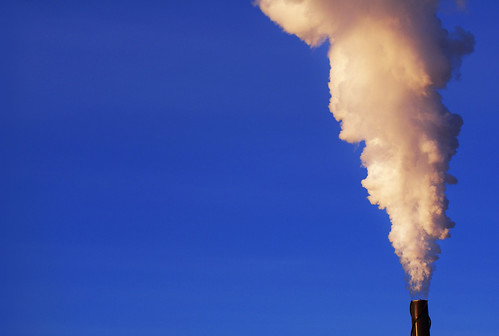
 In preparation for Israeli election day, we present a series of posts with a summary of the environmental positions of the parties running for the Knesset on the following topics: Open Areas and Beaches, Green Energy, Radiation and Global Warming, Sustainable Development, Recycling, Water, and Air & Industrial Pollution and Enforcement.
AIR POLLUTION, INDUSTRIAL POLLUTION & ENFORCEMENT
Green Movement – Meimad
l. A significant budget increase to the Ministry of Environmental Protection, the major portion of which will be direct to the creation of a monitoring unit and special enforcement within the Division of Air Quality.
2. Increased action for the purpose of deterrence also in the area of prosecution against polluters and increase the frequency of mandatory self-reporting that is required by abnormal emissions and air pollution.
3. Advancement of the preparation of standards that will give quantitative expression to the principles detailed in the Clean Air Law in order to maximally realize the potential of the law.
4. Governmental policy in the area of air quality will be derived from the public interest of public health, workers’ health, and the national goal of increasing the quality of life.
5. Renew the activity of the Fund for Investment in Clean Production, in order to aid industries that are prepared to invest in environmental technologies but are having difficulties with the costs involved. Grants will be allocated to industries that show economic difficulties parallel to environmental improvement following installation of new equipment.
The Green Party
1. The refineries are important to the Israeli economy, but it is not inconceivable that the damage that they cause cancels out this importance. For their continued existence this industry will be required to adhere to a clear and unequivocal timetable for the gradual reduction of their emission of pollutants, according to models that have been successfully tried in Europe (e.g. “polluter pays” etc);
2. Power plants are essential to the market, but their activity today is unfettered: many power plants are built beyond actual need, they pollute and use badly needed space. The solution will come with the help of a transfer to energy from clean sources, and compliance with reduced emission standards according to a government plan;
3. Petrochemical industries, minerals, chemicals and building materials will be required to comply with strict regulations adopted by the European Union.
4. The Ministry of Environment will prepare a goal for pollutant emissions for every factory in Israel. A factory that does not comply with the goal and continues to endanger the lives of the public will be shut forthwith;
5. Air quality monitoring stations will be operated under the auspices of the Ministry for Environment, which will give alerts about dangerous exceedances, identify their source and allow the determination of policies for mitigation.
Hadash
1. Aggressive action against the economic interests that stand behind environmental destruction; Special protection of residents around industrial areas.
2. Creation of a national plan for the protection of public health from environmental hazards: enforcement of the laws for the prevention of pollution and harm to the environment; increase the punishments given to polluters; a policy of assertive enforcement against polluting factories; extraction of the full cost of pollution from the polluters themselves, in accordance with the principle of “the polluter pays”; Requirement of industrial factories to install units that prevent pollution of the air and environmental pollution; Make information on the condition of the environment available to the public.
Israel Betenu
A deepening of the connection between industry and environmental protection.
Israel Hazaka
1.Decrease pollution of the air, earth, and water by the energy and transportation industries; Coordinated and determined action is required to reduce all of the negative ramifications of the energy industry on the environment and especially the ramifications of the emission of hothouse gases and poisonous air pollution.
2.Increase the enforcement and punishment against polluting factories and facilities.
Kadima
1.Preservation of the environment requires decreasing pollution of the air, water, rivers, agricultural lands, the sea, and nature.
2.Concentration of cooperative municipal industrial and business areas, with the division of Arnona in order to prevent inefficient land use.
Labor
1. A significant reduction of air pollution levels from industry, transportation and power facilities, and the establishment and implementation of a national plan for the reduction of air pollution which includes measurable parameters and clear timetables for the reduction of air pollution.
2. Completing a base of detailed environmental legislation which guarantees efficiency, certainty, equality, transparency and stability for environmental topics based on the principle of polluter pays, which will include tools for enforcement and supervision, stricter punishment, and the granting of wider enforcement authority to local and national authorities.
Likud
Acting to solve the problem of air pollution and to achieve the non-existence of polluting and dangerous infrastructures.
The New Movement – Meretz
1. Legislation of a law to promote environmentally friendly industries which will mandate incentives to environmentally friendly industries and will brig about a shift to “green” industries instead of pollution industries.
2. Allocation of resources for enforcing the prohibition on discarding trash in open areas and for a national network for supervision on the discharge of effluent to streams and the sea;
3. Instituting a policy of “polluter pays”, de jure and de facto, while setting severe fines and deterrent punishments;
4. Creating legislation that will enable the filing of personal suits against polluters, for harming the quality of life and health of the residents, while transfering the burden of proof to the polluter.
Shas
Limit industries that damage, destroy, and pollute natural and national assets.
This page translated by Daniel Pedersen and Bill Marcus, www.hinematov.net.
This summary was compiled in Hebrew ::Bar Ilan Environmental Clinic :: Chayim Usviva :: Translated by the greenprophet.com team.

Israel’s Elections: Platforms on Air Pollution, Industrial Pollution & Enforcement http://tinyurl.com/blpnv5