The Water Crisis and the Electric Car

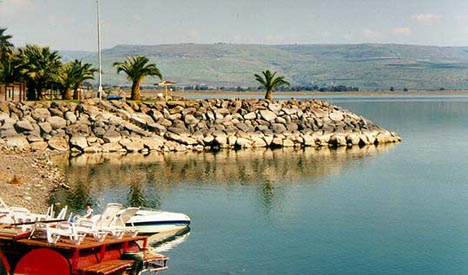
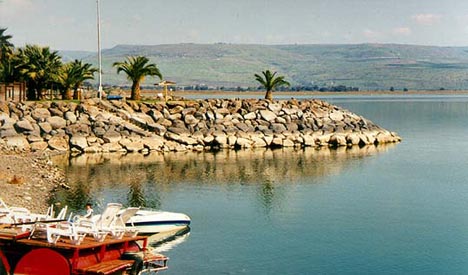
kinneret-drying-up.jpg

The public discussion of Israel’s water problems intensified last week, with Israel’s most respected newspaper, Ha’aretz, calling on water authorities to shift to regulating demand for the scarce resource. During the same week, a new study was released which suggested that a shift to electric cars could seriously impact water consumption in countries where this technology is adopted.

The crux of the study’s argument is that, as cars increasingly rely on the national grid for energy (instead of on gasoline), national electricity generation (currently based on non-renewable sources) must increase, which will significantly elevate power plants’ demand for water resources.

As Andrew from TreeHugger has noted, yes, it takes water to produce electricity – but this does not have to be a deal-breaker. However, in Israel, where ambitious entrepreneurs aim to put 100,000 electric cars on the road by the end of 2010, authorities would be wise to heed the advice of the researchers, and consider the broader impacts of large-scale adoption of the plug-in vehicle before plunging head first in this direction.

Located downstream from other regional consumers of water, and with no precipitation for around half of the year, Israel has never been a land flowing with water (unlike milk and honey, which still flow in abundance). And, as Israel approaches the end of the current rainy season, the country is facing the worst crisis the national water economy has seen in a decade. The agricultural sector, already in crisis mode, will probably be the first to suffer the economic effects of the drought, and the local effects of global climate change are only expected to exacerbate the situation over the coming years.

On top of the energy demands of the electric cars themselves, the factories that manufacture them will likely be built in Israel, and, despite the welcome boost to the country’s green economy, will also become major consumers of energy and water. Although Israeli water authorities and green groups have held up transport projects in the past, it is not yet clear how the various groups involved view the electric car project at this stage.

The researchers behind the study on electric cars and water consumption, Carey W. King and Michael E. Webber of the University of Texas at Austin, offer these words of caution to policy-makers:

Overall, we conclude that the impact on water resources from a widespread shift to grid-based transportation would be substantial enough to warrant consideration for relevant public policy decision-making. That is not to say that the negative impacts on water resources make such a shift undesirable, but rather this increase in water usage presents a significant potential impact on regional water resources and should be considered when planning for a plugged-in automotive economy.

The best solution to the dilemma may be a wholesale shift to renewable energy. While Israel currently gets most of its energy from fossil fuels, King points out that, in an energy economy based on wind or solar energy, the electric car’s additional contribution to water consumption would be “essentially zero.”

Israel is well-positioned to take advantage of one of its only major natural resources, the sun, with considerable academic, technical, and business prowess in the solar field. The solar economy is just beginning to take off, with new regulations allowing private citizens to sell power produced by their solar panels to the national grid and new solar power plants planned in the southern Negev and Arava regions.

Via TreeHugger

Image courtesy of http://pini.freeyellow.com/Tour03.htm.

Jesse Fox
Jesse Fox
Jesse Fox is hoping to complete a graduate degree in urban planning at the Technion sooner rather than later. In the meantime, he is working at green NGO’s,volunteering with African refugees and writing as much as he can to try and get the word out. He is also a regular contributor at TreeHugger.com. Originally from North Carolina, Jesse has lived in Memphis, Boston, Quito and the Arava before finally settling down in Tel Aviv. There he can occasionally be found chilling at the beach. Jesse can be reached at jesse (at) greenprophet (dot) com
3 COMMENTS
  1. We my need to accept that the key to our energy future may not come from the government or big energy companies, but rather from small research and development companies and individual inventors working on water cars, fuel cells and on board hydrogen fuel generators.

  2. As Far as I know the electric car is not going to be manufactured in Israel . It is a Renault-Nissan product. Shy Agassi is developing an infrastructure on Israel Roads to swap batteries in the car while empty’, a kind of “battery station” like we have “Oil station” to day.
    I understood from Agassi say that there “solar energy” will be produce in the amount of that will compensate the electry supply for the car. Let see if the promise will be filled

LEAVE A REPLY

Please enter your comment!
Please enter your name here

TRENDING

Astro uses AI to help procure land for renewable energy

For oil-rich, environmentally vigilant Gulf states, Astro isn’t just another startup story. It is a blueprint for accelerating an energy transition that is now existential, not optional.

EU Ports Still Power Russia’s Arctic Gas Exports Despite Phase-Out Pledge

The findings suggest that rather than declining, Europe’s reliance on Yamal LNG intensified in 2025. Yamal cargoes accounted for 14.3% of the EU’s total LNG imports, equivalent to roughly one in every seven LNG ships arriving at European terminals.The findings suggest that rather than declining, Europe’s reliance on Yamal LNG intensified in 2025. Yamal cargoes accounted for 14.3% of the EU’s total LNG imports, equivalent to roughly one in every seven LNG ships arriving at European terminals.

Sink holes from over-watering farmers’ fields

Sinkholes are rapidly appearing in Turkey’s central Anatolian farming region, particularly around Konya and Karapınar. These giant gaping holes in the ground in areas of farmland, known locally as obruk, are not random geological events. They are linked to prolonged drought, climate-driven heat stress, and heavy groundwater extraction for agriculture in one of the country’s most important breadbaskets.

Oil pollution in Basrah’s soil is 1,200% higher than it should be

Soil pollution levels in parts of Basra are 1,200% to 3,300% higher than those typically measured in cities like Toronto or New York, according to new comparative soil data. It's getting into water.

Peace hospital opens between Jordan and Israel

The proposed medical centre, described by Emek HaMaayanot Regional Council head Itamar Matiash as “a centre for cancer treatment, so that people from Jordan or further away could come and receive treatment,” would become the flagship of a wider cluster of medical, academic and innovation-based services planned for the Israeli half of the zone.

6 Payment Processors With the Fastest Onboarding for SMBs

Get your SMB up and running fast with these 6 payment processors. Compare the quickest onboarding options to start accepting customer payments without delay.

Qatar’s climate hypocrisy rides the London Underground

Qatar remains a master of doublethink—burning gas by the megaton while selling “sustainability” to a world desperate for clean air. Wake up from your slumber people.

How Quality of Hire Shapes Modern Recruitment

A 2024 survey by Deloitte found that 76% of talent leaders now consider long-term retention and workforce contribution among their most important hiring success metrics—far surpassing time-to-fill or cost-per-hire. As the expectations for new hires deepen, companies must also confront the inherent challenges in redefining and accurately measuring hiring quality.

8 Team-Building Exercises to Start the Week Off 

Team building to change the world! The best renewable energy companies are ones that function.

Thank you, LinkedIn — and what your Jobs on the Rise report means for sustainable careers

While “green jobs” aren’t always labeled as such, many of the fastest-growing roles are directly enabling the energy transition, climate resilience, and lower-carbon systems: Number one on their list is Artificial Intelligence engineers. But what does that mean? Vibe coding Claude? 

Somali pirates steal oil tankers

The pirates often stage their heists out of Somalia, a lawless country, with a weak central government that is grappling with a violent Islamist insurgency. Using speedboats that swarm the targets, the machine-gun-toting pirates take control of merchant ships and then hold the vessels, crew and cargo for ransom.

Leopoldo Alejandro Betancourt López Turned Ocean Plastic Into Profitable Sunglasses

Few fashion accessories carry the environmental burden of sunglasses. Most frames are constructed from petroleum-based plastics and acrylic polymers that linger in landfills for centuries, shedding microplastics into soil and waterways long after they've been discarded. Leopoldo Alejandro Betancourt López, president of the Spanish eyewear brand Hawkers, saw this problem differently than most industry executives.

Why Dr. Tony Jacob Sees Texas Business Egos as Warning Signs

Everything's bigger in Texas. Except business egos.  Dr. Tony Jacob figured...

Related Articles

Popular Categories