Bialik Square Loses Famous Centerpiece

bialik-square-1.jpg

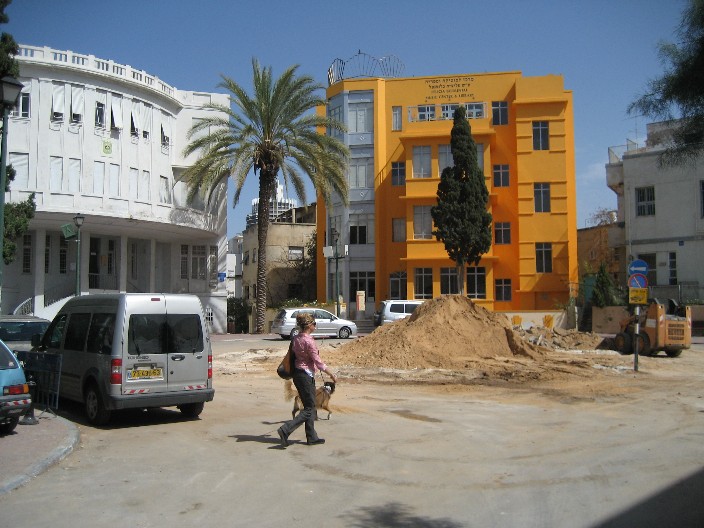
The colorful sculpture that once graced Bialik Square in the center of Tel Aviv is no more. The sculpture, designed for the square by artist Nahum Gutman in the 1970’s, rose out of a circular fountain and recounted 4000 years of Tel Aviv-Jaffa history in tiled mosaics. Today, a pile of dirt sits in the middle of the square, and Gutman’s piece sits, disassembled, in storage. Later this year, the city plans to reassemble the sculpture and move it to Rothschild Boulevard.

City authorities told Ynet (Hebrew link) that the decision to remove the sculpture was made a year ago, in coordination with the Gutman family, which supports the move. The reason for moving the sculpture is the fact that it partially blocked the facade of the old city hall building, which is slated for renovation and will house the Museum of the History of Tel Aviv-Jaffa. In place of Gutman’s mosaics, a “biological pond,” similar to the pond that existed pre-Gutman, will become the square’s new centerpiece.
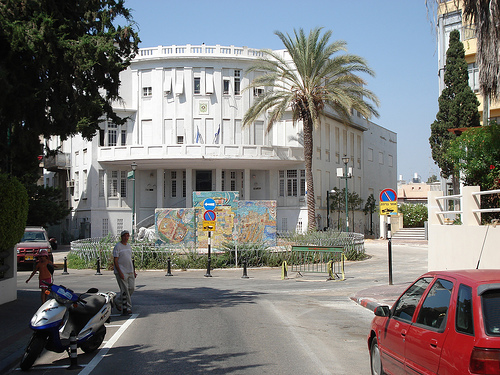
gutman-sculpture-bialik-square.jpg
Bialik Square in its former glory, with Gutman’s sculpture intact (courtesy Flikr).

Bialik Square sits in one of the most interesting and historic areas in the city, between Allenby and Ben Yehuda Streets. This one short street contains four museums – in addition to the Museum of the History of Tel Aviv-Jaffa, the poet Haim Nahman Bialik’s house (Beit Bialik) has been preserved and serves as a museum and gallery, the Ruben Museum displays the work of famous Israeli artist Reuven Rubin and a small Bauhaus museum has recently opened in a Bauhaus-style building across from Beit Bialik – as well as a synagogue and music library.

Bialik Street also boasts some of the most interesting and well-preserved local architecture in the city, and is seen by many as an open-air museum displaying various historic building styles specific to Tel Aviv. Recently, the street’s residents defeated a plan promoted by the Tel Aviv Municipality for an underground parking lot, which would have been built beneath the square.
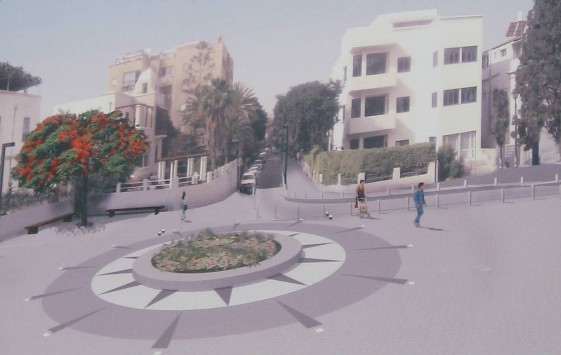
image-new-fountain.jpg
The city’s vision for a “biological pool” in the square.

So what is the logic behind removing a piece of art which recounts the history of the city (and is itself a piece of the city’s history) from a historic street which is slated to host a museum of the city’s history? This prophet is stumped.

Jesse Fox
Jesse Fox
Jesse Fox is hoping to complete a graduate degree in urban planning at the Technion sooner rather than later. In the meantime, he is working at green NGO’s,volunteering with African refugees and writing as much as he can to try and get the word out. He is also a regular contributor at TreeHugger.com. Originally from North Carolina, Jesse has lived in Memphis, Boston, Quito and the Arava before finally settling down in Tel Aviv. There he can occasionally be found chilling at the beach. Jesse can be reached at jesse (at) greenprophet (dot) com
3 COMMENTS
  1. I went to the Bialik House today and saw the new fountain… it does not shine a penny next to the old mosaic history seeped sculpture. The renovation of the TLV Muncipality building is underway and I am sure it will add some excitement to the square which now lacks both charm and tranquility due to the renovation. The newly renovated Bialik house next door is a must see.

Comments are closed.

Hot this week

The Christ’s thorn (sidr tree) is also a well-known folk medicine

Christ’s thorn jujube (Ziziphus spina-christi) also known as the sidr tree is a real, identifiable tree native to the Middle East, and it appears—directly or indirectly—in Islam, Judaism, and later Christian tradition. The connections between the three faiths are not theological agreements but overlapping uses, names, and symbolic associations rooted in the same landscape.

Farm To Table Israel Connects People To The Land

Farm To Table Israel is transforming the traditional dining experience into a hands-on journey.

The Lote Tree of the Utmost Boundary, explained

In Islamic tradition, there is a point where creation ends — a boundary that marks the limit of what any created being can reach. That boundary is called Sidrat al-Muntahā, often translated as “the Lote Tree of the Utmost Boundary.”

The Air Tea Kettle creates a new way to meet plants and herbalism

Air Tea is a new technology. Instead of drinking tea, you inhale herbal vapor through warm air extraction. There is no water and no combustion. The warm air releases essential oils that are often lost in hot water and digestion.

Why Health Systems Are Reaching a Turning Point

Health emerges from a continuous energy and material flow from water through food to human physiology. Technical energy systems support this cycle through water treatment, agriculture, and infrastructure.

Topics

The Christ’s thorn (sidr tree) is also a well-known folk medicine

Christ’s thorn jujube (Ziziphus spina-christi) also known as the sidr tree is a real, identifiable tree native to the Middle East, and it appears—directly or indirectly—in Islam, Judaism, and later Christian tradition. The connections between the three faiths are not theological agreements but overlapping uses, names, and symbolic associations rooted in the same landscape.

Farm To Table Israel Connects People To The Land

Farm To Table Israel is transforming the traditional dining experience into a hands-on journey.

The Lote Tree of the Utmost Boundary, explained

In Islamic tradition, there is a point where creation ends — a boundary that marks the limit of what any created being can reach. That boundary is called Sidrat al-Muntahā, often translated as “the Lote Tree of the Utmost Boundary.”

The Air Tea Kettle creates a new way to meet plants and herbalism

Air Tea is a new technology. Instead of drinking tea, you inhale herbal vapor through warm air extraction. There is no water and no combustion. The warm air releases essential oils that are often lost in hot water and digestion.

Why Health Systems Are Reaching a Turning Point

Health emerges from a continuous energy and material flow from water through food to human physiology. Technical energy systems support this cycle through water treatment, agriculture, and infrastructure.

Sustainability That Sells: How Profit and Purpose Come Together in the Hive

Whether you are a commercial grower, hobbyist beekeeper or retail equipment supplier, this system opens a new income stream with minimal environmental impact.

The Fitness App Revolution: Building the Future of Wellness Through Strategic Development

In an era where smartphones are ubiquitous and health consciousness is at an all-time high, the fitness industry has undergone a radical digital transformation. Fitness applications have moved far beyond simple pedometers, evolving into comprehensive wellness platforms that serve as personal trainers, nutritionists, and community hubs right in our pockets.

A Brief History of Basil From India to Italy

Beloved, fortunate, sweet, and royal; an herb with a long and storied history in Asia and across the world. Called by many names, basil has featured in previous Green Prophet articles, so enjoy another serving, a brief history of basil.

Related Articles

Popular Categories