 Step back, LEED. Back off, BREEAM. Easy there, Estidama: Qatar’s developing a new building standard and it’s called GSAS.
Qatar’s revamped its QSAS green building rating system. Re-launched under a new name, the Global Sustainability Assessment System (GSAS) is muscling in as Middle East- North Africa’s green standard. Developed by the Gulf Organization for Research and Development (GORD) in collaboration with the University of Pennsylvania’s T.C. Chan Center for Building Simulation and Energy Studies, the original QSAS melded criteria bespoke to Qatar with established green benchmarking systems, creating a performance-based scheme customized to the unique requirements of this rapidly developing Gulf state.
GSAS is self-positioned as the world’s most comprehensive sustainability rating system.
QSAS was adopted in 2010: GSAS expands upon the original, seeking to broaden application throughout the GCC region.
Its name change supports its versatility; GSAS can assess all types of development ranging from urban planning to individual buildings. GORD envisions application to projects in Gulf States and Middle East and North Africa (MENA) nations, with no limitation to broader global use.
Dr. Yousef Mohammed Al-Horr, GORD’s founder and Chairman, told AMEInfo, “The launch of GSAS is a huge step forward in our mission to promote sustainable practices within the framework of a globalized society. We’ve conducted in-depth studies of 40 green building codes from around the world in order to develop a truly comprehensive assessment scheme.”
Dr. Al-Horr views GSAS as a cornerstone to regional environmental security, economic growth and social development.
Saudi Arabia, Kuwait, Jordan and Sudan may adopt GSAS as the unified regional code.
During the 2010 Saudi First Green Building Forum, Saudi invited GCC countries to adopt the original QSAS, declaring it a vision attuned to Arab values and cultural mores, and considerate of Gulf climate, geographical aspects, and regional challenges with natural resources.
That forum incited the name change from Qatar SAS to Gulf SAS.
Last May, in an action that echoes the GCC‘s mission of intra-national knowledge sharing, support and cooperation, Kuwait signed a Memorandum of Understanding (MOU) with GORD outlining their plan to adopt GSAS as the national code for green building. That MOU outlined the intention to commence:
1- Common effort to implement the standards of GSAS providing technical support
2- Contribution to the field of research and development about environmental issues
3- Collaboration in the field of practice and individual development
4- Cooperation to develop standard qualities of green building materials and system
Total change to design/build practices to meet future generations’ needs.
Public works authority Ashghal is the first governmental institution to fully adopt GSAS. Established by Emiri Decree in 2004, Ashghal has oversight of all state buildings and infrastructure projects in Qatar. All new government buildings including mosques, schools and hospitals approved as of 2012 must adhere to these green specifications.
Qatar is undergoing major transformation, with a rapid increase in major construction projects in the past decade. Development in support of international sporting events such as the 2006 Asian Games, the 2011 Pan Arab Games, and the AFC Asian Cups in that same year has been intense. In 2010, Qatar was selected to host the 2022 FIFA World Cup.
Doha International Airport is undergoing near-continual expansion. The country is expanding its road network by adding flyovers, underpasses, and service roads. Government facilities, including hospitals and schools are being renovated. There are related improvements to power delivery and wastewater collection and treatment systems.
Two critical actions ensure rapid success.
GSAS was quickly adopted into the environmental design curriculum at Qatar University and King Fahd University, and its requirements were integrated into the Qatar Construction Specifications. This means that upcoming designers are systematically trained in GSAS, and mandatory compliance by developers is simpler to achieve as the system is now codified in national building specs.
These are key differentiators between GSAS and other ratings systems. LEED and BREEAM aren’t incorporated into national building codes; they (and Estidama) aren’t core curriculum for design students.
Similar to LEED and BREEAM, GSAS covers a series of sustainable categories; each measures aspects of a project’s environmental impact. All three rate different project types: commercial, neighborhoods, schools, residential. QSAS goes a step further with categories for large-scale projects currently emergent within the GCC such as mosques, hotels, sports venues and railways.
Mandatory requirements include energy and water efficiencies, reduction in solid waste and wastewater, and improved indoor environments. Although GSAS focus is on sustainability, it’s inextricably linked to human health and safety for construction workers, end-users, and the wider community where the project is sited.
Pilot project puts GSAS in action.

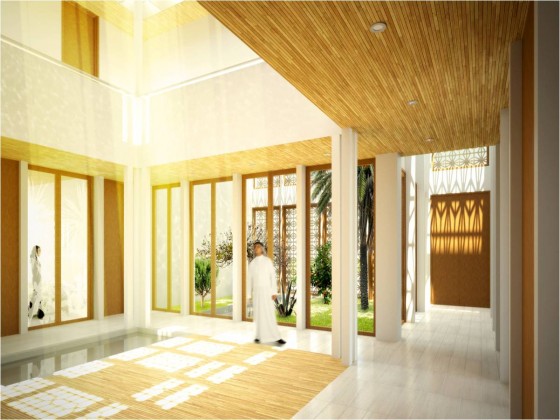
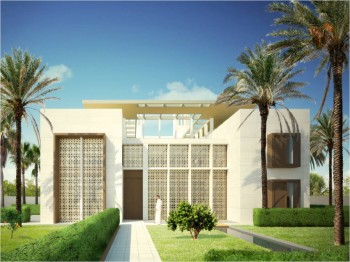
GORD has announced plans to develop “ECO VILLA”, a landmark project intended to underscore Qatar’s role as a leader in sustainable development. The villa is been designed to achieve a score of 4 GSAS stars, and serve as a model for sustainable community development.
The villa will feature on-site renewable energy generation, water-efficient plumbing fixtures and irrigation, energy efficient indoor lighting design, and intelligent building control system. Building materials will be sustainably sourced or recycled with low volatile organic compounds (VOC) emission rates.
GORD, a not for profit subsidiary of QATARI DIAR real estate investment company, promotes environmentally responsible building practices in Qatar and the entire Gulf region.
Images of Eco Villa courtesy of GORD