Israel Corporation Subsidiary to Build 510 MW Hydro Project in Peru

Israel-Peru-hydro-electricity-510mw

Israel Corporation subsidiary Inkia Energy has signed an engineering procurement contract for the construction of a huge 510 MW hydro-electric project in Peru. Its Cerro del Águila Hydroelectric Power Plant will be located in the province of Tayacaja.

Peru is a country that already gets 48% of its electricity from hydropower, which depends on water at elevation for its operation. Peru’s Energy and Mines Ministry, Pedro Sanchez said in a press release that the project is one of three hydroelectric plants it was seeking tenders for building and operating, that will require a combined investment of $1.7 billion.

Sanchez hailed the awarding of the contracts and said the cumulative hydroelectric capacity of the three projects, 911 MW, is enough to supply 20% of the current nationwide demand of 4,500 MW. About half of the power produced by all three proposed hydro projects will go to the mining industry in Peru, which accounts for 59% of all its exports.

Israel Corporation had moved Inkia Energy’s headquarters to Peru in 2007, where it owns 75% of the fifth largest power company in Peru, and a small share of the largest. But, notably, most of the electricity in the Inkia Energy portfolio is produced not from hydro but from natural gas, a much less sustainable form of of electricity.

Inkia Energy will begin with an environmental impact review and will try to get the financing for the 510 MW hydro-electric project. It has six months. If it is unable to get the financing, it can cancel, but if it can get financing, it will then have four years to get it built. The construction of the project is to be carried out by Italian firm Astaldi SpA and Peru’s Graña y Montero SA.

In March, the company signed a 15-year power purchase agreement (PPA) with Peru’s government-owned electricity company, to begin upon completion of the proposed project in the second half of 2015.

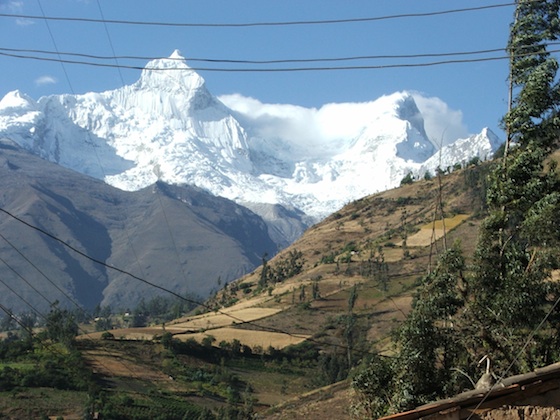
The success of the project depends on Peru still having a rich source of water, from its glaciers, to supply the meltwater that hydro-electricity needs over the long term. Already it has lost 22% of its glaciers since 1970. It is widely expected to be one of the first nations to suffer the effects of climate change on water supplies.

Related stories:
Ethiopia Can’t Afford The New Nile Dam
Morocco to Pioneer 1 GW Hydro-Wind Hybrid Power
Hydropower Could Meet More Of Turkey’s Energy Demand

TRENDING

Astro uses AI to help procure land for renewable energy

For oil-rich, environmentally vigilant Gulf states, Astro isn’t just another startup story. It is a blueprint for accelerating an energy transition that is now existential, not optional.

Huge Fish Nursery Discovered Under Freezing Arctic Seas

In 2019, an underwater robot camera exploring the seabed...

Remilk makes cloned milk so cows don’t need to suffer and it’s hormone-free

This week, Israel’s precision-fermentation milk from Remilk is finally appearing on supermarket shelves. Staff members have been posting photos in Hebrew, smiling, tasting, and clearly enjoying the moment — not because it’s science fiction, but because it tastes like the real thing.

The US leaves 66 United Nations organizations to “put America first”

The world needs a reset and to restart well intentioned cooperation projects from start. Because right now the UN and EU projects look like software built on code from the 80s, rickety, patched, slow to adapt, and prone to crashing under the weight of outdated assumptions.

Turkey named as climate change COP31 home in 2026

Murat Kurum as President-Designate of COP31

Turning Your Energy Consultancy into an LLC: 4 Legal Steps for Founders in Texas

If you are starting a renewable energy business in Texas, learn how to start an LLC by the books.

Tracking the Impacts of a Hydroelectric Dam Along the Tigris River

For the next two months, I'll be taking a break from my usual Green Prophet posts to report on a transnational environmental issue: the Ilısu Dam currently under construction in Turkey, and the ways it will transform life along the Tigris River.

6 Payment Processors With the Fastest Onboarding for SMBs

Get your SMB up and running fast with these 6 payment processors. Compare the quickest onboarding options to start accepting customer payments without delay.

Qatar’s climate hypocrisy rides the London Underground

Qatar remains a master of doublethink—burning gas by the megaton while selling “sustainability” to a world desperate for clean air. Wake up from your slumber people.

How Quality of Hire Shapes Modern Recruitment

A 2024 survey by Deloitte found that 76% of talent leaders now consider long-term retention and workforce contribution among their most important hiring success metrics—far surpassing time-to-fill or cost-per-hire. As the expectations for new hires deepen, companies must also confront the inherent challenges in redefining and accurately measuring hiring quality.

8 Team-Building Exercises to Start the Week Off 

Team building to change the world! The best renewable energy companies are ones that function.

Thank you, LinkedIn — and what your Jobs on the Rise report means for sustainable careers

While “green jobs” aren’t always labeled as such, many of the fastest-growing roles are directly enabling the energy transition, climate resilience, and lower-carbon systems: Number one on their list is Artificial Intelligence engineers. But what does that mean? Vibe coding Claude? 

Somali pirates steal oil tankers

The pirates often stage their heists out of Somalia, a lawless country, with a weak central government that is grappling with a violent Islamist insurgency. Using speedboats that swarm the targets, the machine-gun-toting pirates take control of merchant ships and then hold the vessels, crew and cargo for ransom.

Related Articles

Popular Categories