

 Natasha Paracha was Miss Pakistan World in 2008. In 2011, she’s using her beauty and smarts to build a sustainable renewable energy climate in Pakistan.
Everyone knows that the first thing you ask any beauty queen is about that wish –– what she would do to make the world a better place if she ruled the planet. In 2008, Natasha Paracha got that question moments before she became Miss Pakistan World. But instead of pursuing a glamorous tour promoting products, she chose to make her wish come true: today she is using education as a tool to accelerate clean technologies and sustainable development in Pakistan.
Natasha is from Islamabad, Pakistan and is residing in New York City and lives between both worlds helping Pakistan become more sustainable. She is doing this in a number of ways –– both locally and globally. Her insights can help investors and philanthropists access opportunities to ignite change.
In Pakistan she works with the Alternative Energy Development Board, the Ministry of the Environment, and with private businessmen focusing on climate change and renewable investments. In North America she’s the spokeswoman for Katerva, an ideas and technology accelerator.
Green Prophet speaks with Paracha on what investors and entrepreneurs can learn about the clean tech opportunities emerging from Pakistan, desperately in need of help.
A UN World Health Organization report just out says the city of Quetta –– the fruit garden of Pakistan –– is the third dirtiest city in the world for air pollution. WHO says that rapid industrialization and poor quality fuels for transport and electricity generation are to blame.
The sad news is that there is a lot of work to be done. Power needs, water and food are the biggest issues that Pakistan faces today, says Paracha.
On a really local level her family has founded an organization called Vision of Development, which provides micro-financing loans to Pakistani villagers. Her parents now reside in Los Angeles and hold fundraisers in support of rural development for their villages in Pakistan.
Speaking from the Punjab region Paracha says that the most annoying problem is load shedding. In simple terms this means that the capital city of Pakistan, Islamabad, has nearly twelve hours of load shedding per day. “The pattern without exaggeration is that we experience a power outage every other hour. In other words there is electricity from 1 to 2pm and none from 2 to 3pm and so forth. In the 21st century very few countries experience electricity crisis at extreme levels and unfortunately Pakistan is one of them.”
Epic flooding in Pakistan
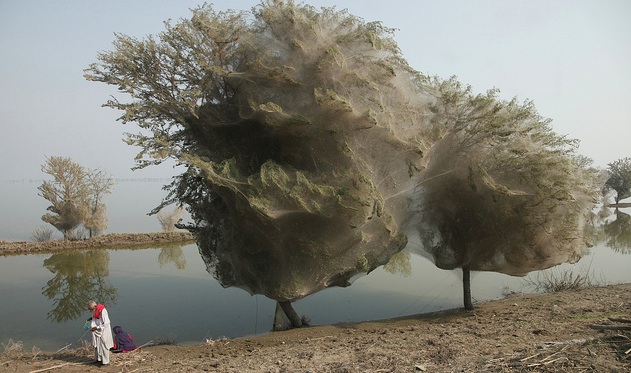
If you’ve been watching the news, Pakistan has other severe problems as well. Annual flooding devastates and displaces millions every year. This year alone an epic 6 million people were displaced. Along with the flooding; field crops are lost, food is contaminated, and water-borne diseases like Dengue start flooding the streets.

Flooding causes an outbreak of pests which can be controlled without using pesticides. Image via dfid
In terms of needs Pakistan could use investment in dam technology, water purification systems, and load management technology to stabilize some of Pakistan’s most basic resources.
Annual floods destroy all the crops of local farmers and make the land infertile for months with stagnant water. Furthermore, clean water and food distribution become near impossible due to communities severed by the flood waters.
These are problems that can also be addressed as opportunities to stakeholders in making Pakistan sustainable. Whether for personal interests, or financial ones, the Pakistani diaspora has an important role to play, she says, welcoming other industrialists, like her family does, to adopt, and invest in Pakistan through fundraisers in the UK, Canada and the United States.
Paracha started working in development at the United Nations in 2007 where she covered the renewable energy beat around the Middle East, Latin America, and South East Asia. After her stint as a reigning beauty queen, she quit the pageant circle to focus on renewable energies for Pakistan. That has been since 2009, and the industry is still very much at a nascent stage, she says.
Pakistan looks to import clean technologies
Historically, Pakistan started its renewable energy quest in the 1970s, with hydra-dams, and now it is looking into wind farms and solar energy. “My primary focus is finding cheap sources of alternative energies for rural regions of the country. These could be technologies that are being imported from Europe, the US, Canada and China,” Paracha says.
Doing business in Pakistan could mean investing in solar streetlights, solar-run farming technologies, wind farms, and waste to energy for bio-diesel –– all areas of interest that she oversees on the job.
It is still hard to provide concrete examples of what’s happening in Pakistan because the idea of clean energy implementation is still in the early stages: “Renewable energy is up and coming and is attracting the leading Pakistani families [industrialists] in textiles, mills or farming. They all want to build power plants, explore opportunities in biomass and other forms of clean technology,” she says.
 Solar lights help women cook at night after the flood, in Sindh, Pakistan. Image via dfid
Many Pakistani industrialists living abroad have an attractive network of social entrepreneurs willing to help the cause of sustainable development within Pakistan. “This could possibly be an effective means of advancing Pakistan’s clean tech sector. These initiatives can be taken on by local individuals and NGO’s striving for change for a better Pakistan,” says Paracha.
The larger project is that the villages can start selling the energy they are producing. A few Investors have put money into similar projects and the government is extremely supportive of these types of renewable energy projects.
A few field notes from Pakistan:
Pakistan has close ties with Turkey, and many Turkish consulting firms are moving into the region and establishing offices in oil and gas, flood rehabilitation, and they are also building facilities for energy storage. Investment in the millions has gone into developing wind and solar industries. Turkey is very comfortable working with companies in Pakistan.
In terms of grassroots activities the Alternative Energy Board of Pakistan has filed reports and studies on basic needs. The Paracha family has established an NGO addressing those needs called Vision of Development where the focus is micro financing. “Pakistan is in dire need of such projects and it is important that non-resident Pakistani’s contribute to improve the standard of living of Pakistan,” she says. Her parents have funded a few projects for their NGO, and they are constantly looking for additional funding for similar projects. Various models are being looked into by other influential families within the country.
Ethical farming and fair trade may be common with many of the coffee retailers in the UK and North America, while young people who visit coffee shops in Pakistan have caught onto to the trend. “One of the biggest fads here is coffee shops,” says Paracha. “A few of the cafes are now going green and they buy fair trade beans. Some restaurants are going green as well by purchasing locally and organically grown products, implementing power saving mechanisms and the use of recycled material. This is creating a trend in the country which is slowly being followed by others.”
Recycling bottles and non-biodegradable materials is important for a densely populated Pakistan to consider. Natasha reports that there are a few organizations working in this niche namely WasteBusters based in Lahore working in the Punjab province. “Recycling is a huge problem in Pakistan. There are a lot of landfills and very little is being done to address the issue. We are trying our best to lay the foundations for this right now.
“The focus within the country is to move towards cost effective and technically efficient renewable resources.”
Want to help Pakistan accelerate its renewable energy market? Green Prophet is collecting contacts and ideas for Pakistani stakeholders in the English-speaking diaspora. Email [email protected] for more.


Hi Natasha,
Being Miss Pakistan World has got you the voice needed to bring changes!!! Keep it up Miss Pakistan World !!!!
Great Post Karin,
First of all i would like to thanks Green Prophet for such a good initiative and website, more informative for the energy players- Natasha, has written excellent post- i really appreciative Natasha’s vision that She is thinking for the rural communities, who are still deprived of the basic needs of electricity-
Being a young entrepreneur in the energy market of Pakistan, i welcome Natasha and other interested personals who can upgrade the energy sector of Pakistan,as we have huge energy resources- just to utilize them- before utilization we need to build public awareness- We are ready and available if need any kind of support to develop this sector-
Thanks, Great Job Natasha- Best of Luck-
Wishes,
Regards,
Rahim Diyar
Hydrolink