Bosphorus To Become Center of Hydrogen Energy Production If Second Canal Is Built

The proposed canal has been slammed by Turkish environmentalists. But authorities at Turkey’s center for hydrogen energy technology see a silver lining: the canal could enable Turkey to become one of the world’s most important producers of hydrogen energy.

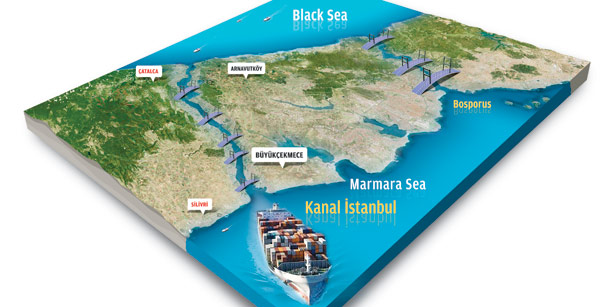
When Turkish Prime Minister Recep Tayyip Erdoğan announced his self-termed “crazy project” last month – a new canal connecting the Black Sea and Marmara Sea, a few kilometers west of the Bosphorus Strait – most environmentalists were aghast. The project would open up hitherto undeveloped areas around Istanbul to a rash of giant new constructions, including convention centers, exhibition halls, sports facilities, housing, and Turkey’s largest airport.

But the canal would also take over most of the ship traffic that currently fills the Bosphorus: about 150 ships per day, to be specific. And that would free up the strait for hydrogen energy projects that Turkey has been waiting years to realize.

The undersea flow of the Bosphorus could be harnessed to generate a huge amount of hydrogen energy, according to authorities from the International Center for Hydrogen Technologies (ICHET), which the United Nations Industrial Development Organization founded in Turkey in 2003.

The ICHET has tried to set up such projects in the past, but the heavy traffic through the strait was an insurmountable obstacle. If construction on the canal actually moves ahead, the ICHET will station a turbine on a submarine about midway up the Bosphorus, eight meters deep in the water. This initial generator would probably only generate 20 kilowatts of electricity, ICHET authorities told Turkish daily Today’s Zaman, but it would be a pilot project for future hydrogen energy endeavors in the strait.

By electrolyzing the seawater in the Bosphorus, the turbine would produce hydrogen, which would be stored under heavy pressure. That high-pressure hydrogen could then be used to fuel an internal combustion engine, which would generate electrical energy from mechanical energy, or could be used as raw fuel itself.

If the Bosphorus became available to the ICHET, it would mark the center’s biggest opportunity for hydrogen energy production since its founding. Little research and development of hydrogen energy has occurred so far, so its costs are still high. But with increased research and development, experts predict this renewable resource could become one of the most important ways for the world to wean itself from conventional fuels.

Turkey is well on its way to becoming a major player in this future industry. In February, the ICHET began work on Turkey’s first hydrogen filling station in Istanbul, and expects it to be ready for service in 2011. Concurrently, Turkey’s first hydrogen-fueled boat is being constructed in nearby shipyards. Foreign firms are  also eyeing the market for hydrogen-powered devices in Turkey; Mazda will begin selling hydrogen-powered cars  in Turkey in coming months.

Hydrogen energy could undoubtedly become one of the most exciting renewable energies in Turkey over the next century. Hopefully, it will attract more support from the government than the underappreciated solar sector, and entice the government away from sponsoring destructive hydropower projects in the country’s eastern regions.

:: Today’s Zaman

Read more about renewable energy in Turkey:

Hidden Costs of Constructing Wind Farms in Turkey Include Many New Roads

Hydropower Could Meet More of Turkey’s Energy Demand – But At What Cost?

Europe’s Biggest Solar Farm To Be Built in Turkey

Image via Today’s Zaman

Julia Harte
Julia Hartehttp://www.greenprophet.com
Julia spent her childhood summers in a remote research station in the Rocky Mountains of Colorado, helping her father with a 25-year-old experiment in which he simulated global warming over a patch of alpine meadow. When not measuring plant species diversity or carbon flux in the soil, she could be found scampering around the forests and finding snowbanks to slide down. Now she is a freelance journalist living in Istanbul, where her passion for the environment intersects with her interest in Turkish politics and grassroots culture. She also writes about Turkish climate and energy policy for Solve Climate News.

Hot this week

Why Health Systems Are Reaching a Turning Point

Health emerges from a continuous energy and material flow from water through food to human physiology. Technical energy systems support this cycle through water treatment, agriculture, and infrastructure.

Sustainability That Sells: How Profit and Purpose Come Together in the Hive

Whether you are a commercial grower, hobbyist beekeeper or retail equipment supplier, this system opens a new income stream with minimal environmental impact.

The Fitness App Revolution: Building the Future of Wellness Through Strategic Development

In an era where smartphones are ubiquitous and health consciousness is at an all-time high, the fitness industry has undergone a radical digital transformation. Fitness applications have moved far beyond simple pedometers, evolving into comprehensive wellness platforms that serve as personal trainers, nutritionists, and community hubs right in our pockets.

A Brief History of Basil From India to Italy

Beloved, fortunate, sweet, and royal; an herb with a long and storied history in Asia and across the world. Called by many names, basil has featured in previous Green Prophet articles, so enjoy another serving, a brief history of basil.

How Renewable Energy is Revolutionizing the Way We Power Our World

Solar has become the star of the transition thanks to modular hardware and straightforward installation. It fits dense cities and remote towns alike. Many companies are turning to rooftop arrays and carport systems - and exploring commercial solar installation as a practical way to lock in future savings.

Topics

Why Health Systems Are Reaching a Turning Point

Health emerges from a continuous energy and material flow from water through food to human physiology. Technical energy systems support this cycle through water treatment, agriculture, and infrastructure.

Sustainability That Sells: How Profit and Purpose Come Together in the Hive

Whether you are a commercial grower, hobbyist beekeeper or retail equipment supplier, this system opens a new income stream with minimal environmental impact.

The Fitness App Revolution: Building the Future of Wellness Through Strategic Development

In an era where smartphones are ubiquitous and health consciousness is at an all-time high, the fitness industry has undergone a radical digital transformation. Fitness applications have moved far beyond simple pedometers, evolving into comprehensive wellness platforms that serve as personal trainers, nutritionists, and community hubs right in our pockets.

A Brief History of Basil From India to Italy

Beloved, fortunate, sweet, and royal; an herb with a long and storied history in Asia and across the world. Called by many names, basil has featured in previous Green Prophet articles, so enjoy another serving, a brief history of basil.

How Renewable Energy is Revolutionizing the Way We Power Our World

Solar has become the star of the transition thanks to modular hardware and straightforward installation. It fits dense cities and remote towns alike. Many companies are turning to rooftop arrays and carport systems - and exploring commercial solar installation as a practical way to lock in future savings.

How does one start prepping?

Faced with an extreme winter storm this year, Americans wonder how to be prepared for catastrophe. Miriam has lived through wars in the Middle East - so she's prepared on giving you a guide to prepping.

Fishermen sue tire manufacturers on behalf of the salmon

A federal trial in San Francisco has brought US tire manufacturers, fishing groups, and environmental scientists into court over a chemical most drivers have never heard of — but which scientists say may be silently reshaping aquatic ecosystems.

Listening to Water: Tarek Atoui’s Next Work for Tate Modern

Born in Beirut, Lebanon in 1980 and now living in Paris, Atoui has spent years building instruments that don’t sit comfortably in concert halls. Many of them involve water, glass, and ceramics — materials that react to sound instead of simply producing it.

Related Articles

Popular Categories