The Gulf of Mexico Oil Spill Opens Pandora's Box at Alberta Tar Sands

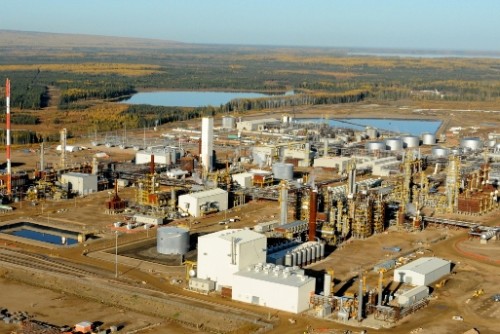
alberta tar sands photoHow can the polluting oil tar sand oil extraction – here Opti Canada’s operations – be better than offshore drilling?

The Gulf of  Mexico oil “leak” is a gusher pouring as much as 3.4 million gallons of oil into the waters every day, scientists estimate in a NY Times story. It’s below the surface what counts. The oil spreading underwater may result in much of this body of water becoming a “dead zone” or void of marine life. This slick could eventually spread into the Caribbean Sea as well as parts of the Atlantic Ocean as well. Government sources and BP have “estimated” something different – some 5,000 – 7,000 barrels of oil per day, that people are being led to believe is escaping in the Gulf.

Could this be one of the planet earth’s worse ecological disasters since creation that rivals the events that spelled the end of the era of the dinosaurs more than 40 million years ago? Finding alternatives, oil purveyors look to Canada’s oil-rich tar sands. But what could be unleashed there in terms of pollution could be worse than the Gulf oil spill.

The Gulf oil event has already made the US and other world governments think seriously about continuing to drill for oil and natural gas under the oceans and seas, which often have to be more than a mile deep before reaching the sea bed, and subject to thousands of tons of underwater pressure.

Finding alternatives to offshore well drilling has already resulted in searching for oil in what are known as oil tar sands, in places like Alberta Canada. These sands, are said to be the “last frontier” for extracting fossil fuels, and despite their own environmental problems are considered as less problematic than offshore oil wells. The environmental issues surrounding the extraction of crude oil from oil tar sands, has already been noted by myself and other Green Prophet writers in which large amounts of steam is sent underground to “free” the trapped oil and bring it to the surface.

The down side of this kind of oil production was also noted in an article in the UK newspaper, The Guardian, that reported on research from the NGO, Friends of the Earth; there are  environmental ramifications of creating synthetic crude oil from bitumen deposits:

“Tar sands – bitumen that is extracted and upgraded to produce synthetic crude – has been heavily criticised for its poor environmental and social outcomes, locally and globally. Canada is currently the only major centre of production but investment is expanding, including by European oil companies such as BP, Shell, Total and ENI.”

What environmentalists are trying to tell people is that the main problem is Mankind’s continued desire to rely on fossil fuels as a major source of our energy needs – instead of trying to put more efforts into developing alternative and renewable energy sources.

Consider the Middle East, where a great deal of the earth’s remaining petroleum reserves are still located; this region also has huge solar energy potential since the sun shines here as much as 340 days a year. Even countries like Saudi Arabia are now beginning to develop solar energy to provide power for desalination plants and other industrial uses.

I shudder to think what could happen if a similar sized well blowout would occur in the eastern Mediterranean or in the Persian Gulf, which is still suffering from the effects of the largest man-made spill that occurred during the 1991 Gulf War.

In the end, the only way to prevent these oil spills, and environmental damage from tar sand oil extraction is to make more concerted efforts to developing alternative and renewable energy. And the sooner, the better.

(Photo above of tar sands via Opti-Canada Inc.)

Read articles dealing with oil tar sands and alternative energy:
Ormat Industries Involved in Alberta Tar Sands Crude Oil Project
Japan and Saudi Arabia Plan Large Plant to Manufacture Desalination Equipment
Ormat Taps into Thermal Volcanic Energy in Indonesia

Maurice Picow
Maurice Picowhttps://www.greenprophet.com/
Maurice Picow grew up in Oklahoma City, U.S.A., where he received a B.S. Degree in Business Administration. Following graduation, Maurice embarked on a career as a real estate broker before making the decision to move to Israel. After arriving in Israel, he came involved in the insurance agency business and later in the moving and international relocation fields. Maurice became interested in writing news and commentary articles in the late 1990’s, and now writes feature articles for the The Jerusalem Post as well as being a regular contributor to Green Prophet. He has also written a non-fiction study on Islam, a two volume adventure novel, and is completing a romance novel about a forbidden love affair. Writing topics of particular interest for Green Prophet are those dealing with global warming and climate change, as well as clean technology - particularly electric cars.
1 COMMENT
  1. I can already see that nobody gives a didly about this subject.
    This is why were are all in the mess we are in now, environmental wise!

Comments are closed.

Hot this week

How Renewable Energy is Revolutionizing the Way We Power Our World

Solar has become the star of the transition thanks to modular hardware and straightforward installation. It fits dense cities and remote towns alike. Many companies are turning to rooftop arrays and carport systems - and exploring commercial solar installation as a practical way to lock in future savings.

How does one start prepping?

Faced with an extreme winter storm this year, Americans wonder how to be prepared for catastrophe. Miriam has lived through wars in the Middle East - so she's prepared on giving you a guide to prepping.

Fishermen sue tire manufacturers on behalf of the salmon

A federal trial in San Francisco has brought US tire manufacturers, fishing groups, and environmental scientists into court over a chemical most drivers have never heard of — but which scientists say may be silently reshaping aquatic ecosystems.

Listening to Water: Tarek Atoui’s Next Work for Tate Modern

Born in Beirut, Lebanon in 1980 and now living in Paris, Atoui has spent years building instruments that don’t sit comfortably in concert halls. Many of them involve water, glass, and ceramics — materials that react to sound instead of simply producing it.

Leading Through a Dual-Energy Transition: Balancing Decarbonisation with Energy Security

Experience in one area of the energy industry isn't enough to guarantee readiness across all the others. That's where a structured program like an MBA in energy can come in. Today's advanced curricula explore energy economics, finance, policy, and strategic management alongside the technical subjects. And when pursuing an energy MBA online, professionals can skill up and retrain without having to step out of the labor market -- an important perk at a time when skilled professionals are already in short supply.

Topics

How Renewable Energy is Revolutionizing the Way We Power Our World

Solar has become the star of the transition thanks to modular hardware and straightforward installation. It fits dense cities and remote towns alike. Many companies are turning to rooftop arrays and carport systems - and exploring commercial solar installation as a practical way to lock in future savings.

How does one start prepping?

Faced with an extreme winter storm this year, Americans wonder how to be prepared for catastrophe. Miriam has lived through wars in the Middle East - so she's prepared on giving you a guide to prepping.

Fishermen sue tire manufacturers on behalf of the salmon

A federal trial in San Francisco has brought US tire manufacturers, fishing groups, and environmental scientists into court over a chemical most drivers have never heard of — but which scientists say may be silently reshaping aquatic ecosystems.

Listening to Water: Tarek Atoui’s Next Work for Tate Modern

Born in Beirut, Lebanon in 1980 and now living in Paris, Atoui has spent years building instruments that don’t sit comfortably in concert halls. Many of them involve water, glass, and ceramics — materials that react to sound instead of simply producing it.

Leading Through a Dual-Energy Transition: Balancing Decarbonisation with Energy Security

Experience in one area of the energy industry isn't enough to guarantee readiness across all the others. That's where a structured program like an MBA in energy can come in. Today's advanced curricula explore energy economics, finance, policy, and strategic management alongside the technical subjects. And when pursuing an energy MBA online, professionals can skill up and retrain without having to step out of the labor market -- an important perk at a time when skilled professionals are already in short supply.

From Green Energy to Healthy Societies: Why old systems thinking is becoming relevant again

Across the Middle East and North Africa, large investments are being made in green hydrogen, renewable energy, water infrastructure and sustainability. Most of these efforts are discussed in the context of climate change, decarbonization and economic diversification. That framing is important, but it may not capture their full value.

We saw peace – an interreligious encounter deep in our eyes

They came from Israel, Palestine, Jordan, Iraq, Yemen, Morocco, Tunisia, Lebanon, Egypt… There are Sunni Muslims, Shiite Muslims, Jews (Orthodox and Reform), Orthodox Christians, Coptic Christians, Protestant Christians, Druze, Baha'is, a Scientologist.

Can biochar reduce ‘Forever Chemicals’ in food if it’s used in farms?

Biochar is produced by heating organic material in a low-oxygen environment so it does not burn. This process, known as pyrolysis, transforms plant matter into a stable, carbon-rich material.

Related Articles

Popular Categories