
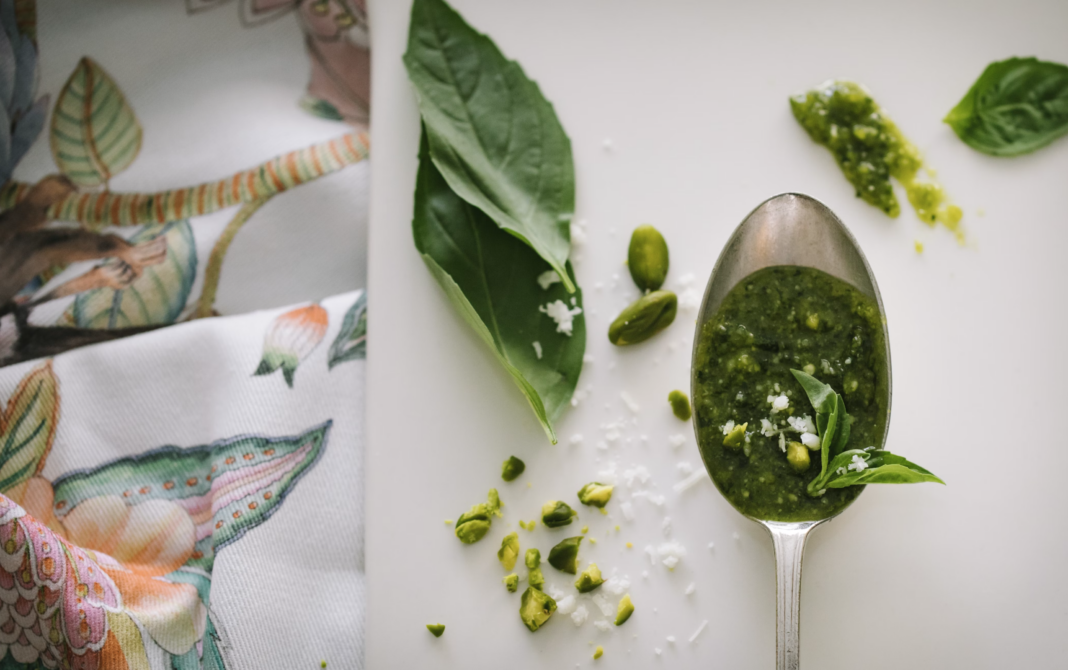


Basil grows like a weed. That’s my conclusion after planting a sprig of it 4 months ago. It’s late summer, early fall now here in Jaffa, Israel, and the basil (or basilicum as locals call it) is ripe for the picking. But how many leaves of basil can you garnish your salad with? Or eat in pasta? I had a plan to make pesto.
Related: 5 ways to use your basil bush
Now when I cook, I rarely make sure I have the right ingredients. And I practically never use a recipe. You could say that I like to swing it. Most of the time, the food turns out pretty good, but often quite “wow” as my friends say (no I don’t pay them), so I urge you to take a little chance when cooking. In the worst case you can downgrade your stir-fry to a soup or mix it with eggs for a casserole (recycling right?). In the very worst case, feed it to your dog or compost heap.
Pesto isn’t something I grew up eating in my small town in Canada, but something I grew to love as a spread working at the Liberty Cafe on King West in Toronto. Later, in Switzerland, I admired how one of my co-workers Esther (at an environmental research institute I was working at), prepared small jars of pesto for all her friends when basil was in season. She didn’t give me one, so maybe some latent jealously inspired me to create my own last week.
Onto the recipe: Normally pesto calls for pine nuts. Those things actually grow on pine trees over here in Israel and I am assuming in Lebanon and Syria too — wherever conifers tolerant to this Mediterranean climate can grow. Pine nuts are really expensive, and not something that I normally stock in the kitchen. But we did have walnuts (egozim or California nuts as Israelis call them), so I thought why not. A substitute couldn’t hurt.
I went to the garden and twisted off a few branches of basil, and proceeded to soak it in salty water, using chunky coarse salt. Since my herb garden is organic (I am not using pesticides), there is no need to wash well. But keeping in the tradition of kashrut , or kosher for Jewish dietary laws, I soaked the basil in salt so any creepy crawlies in the basil would float to the surface.
Salting the basil to remove insects

When it’s possible to save them, I do –– releasing the insects outside. Most of the time the small flies in lettuce and other leafy greens are already dead, so they flush down the drain. I did find a dead 8-legged spider in the basil. So good I checked. Jewish dietary laws say that Jews can’t eat insects, and I think most of the rest of the world agrees –– Muslims and Christians alike –– that that this rule is not such a bad one to enforce.
Once I ate a whole bowl of my mother’s soup thinking the small bits were vermicelli. While pouring out a ladle for my cousin, I realized the soup was full of larvae. Probably beetle. Needless to say, I inspect all dried noodles and soup mix before adding them to the pot.
Religious Jews tend to be extra-vigilant with the insect thing, so if you are preparing even just a salad for someone who is religious, consider giving it a thorough check and salting (you can rinse it off), before cutting and chopping.
Onto the recipe:
Using a $25 hand blender, I stuffed the soaked, salted, rinsed and cleaned basil into a jar, along with 1/4 cup of olive oil, 1/4 cup of walnuts, 2 cloves of garlic, some salt to taste and started blending.
Remove the leaves from the stalks and use just the leaves in the pesto. I didn’t have Romano cheese, as some recipes call, but no matter. One of my friends can’t eat bad cholesterol food, and there’s nothing wrong with keeping it vegan to reduce our carbon footprint. So voila, a vegan pesto recipe was born. Easy to do, and great to eat.
I used mine as a spread on bread, and then on a big pasta meal I cooked for eating in our sukka.
Here’s a recap on ingredients. Feel free to add more or less of each depending on consistency and taste. I also like to top the pesto up with olive oil so it doesn’t oxidize. It should keep about 2 weeks in the fridge. Keep it in a small glass jar or give it away to friends.
Homemade Pesto Recipe:
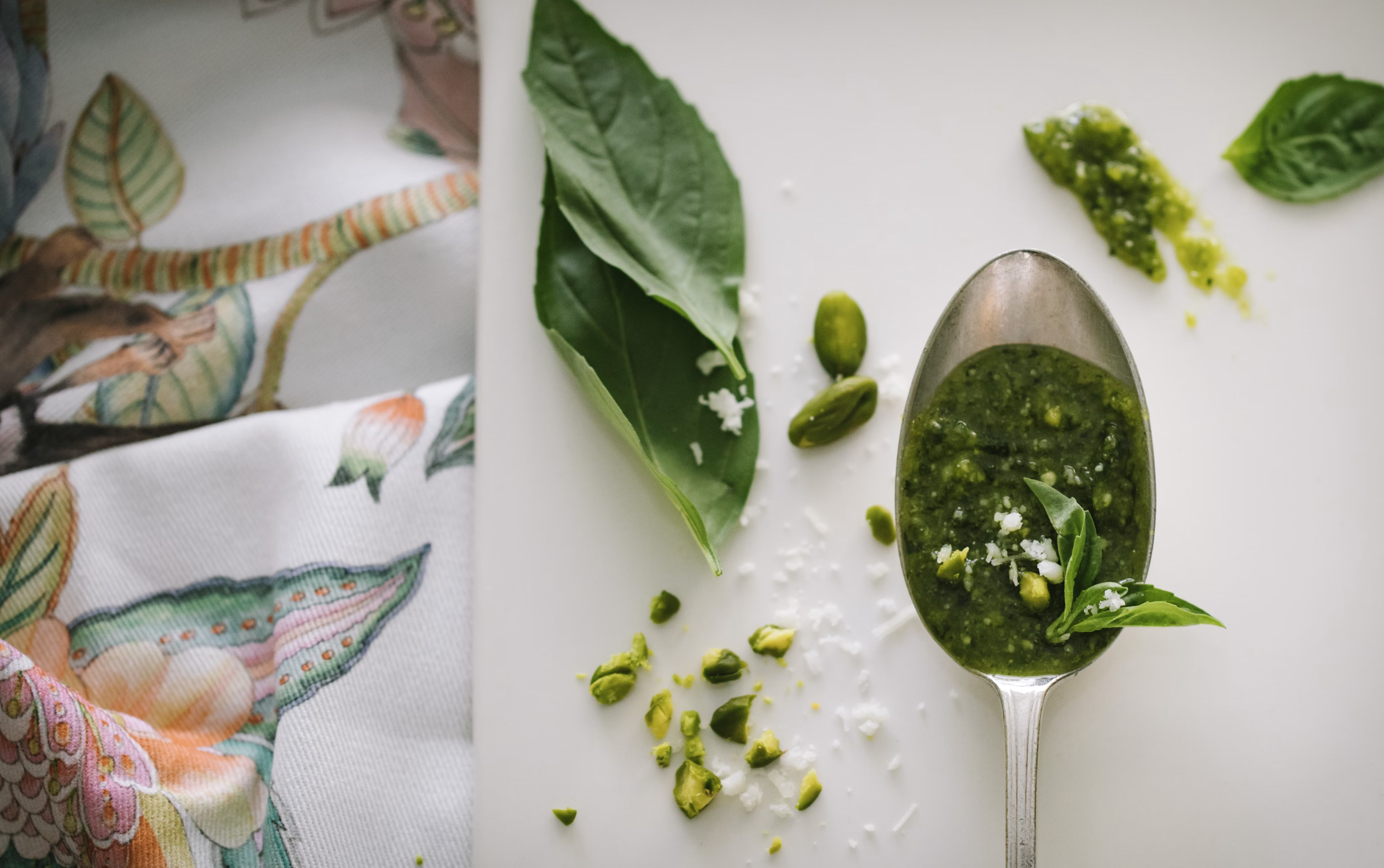
- 3 bunches of basil (green or purple)
- 2 cloves of garlic (not frozen)
- 1/4 to 1/2 cup of olive oil
- 1/4 to 1/2 cup of walnuts (or pine nuts)
- Salt to taste
- A large squeeze of lemon juice
- Make it extra delicious by adding in 100g of parmesan
- Make it extra healthy by adding in a handful of nettles.
Enjoy!
Want more recipes from Israel and the Middle East?
Knock-out recipe for the tehina and eggplant spread Baba Ganoush (babaganoush)
Mahamarra recipe – a roasted red pepper spread from Syria
Middle East kibbeh (kubeh or kube) recipe – a bulgar wheat and ground meat Levantine delight


2 cloves of garlic (not frozen)1/4 to 1/2 cup of olive oil1/4 to 1/2 cup of walnuts (or pine nuts)Salt to tasteA large squeeze of lemon juiceMake it extra delicious by adding in 100g of parmesanMake it extra healthy by adding in a handful of nettles. )
I make a similar pesto. When I went vegan and stopped using cheese, I found that adding some nutritional yeast (about 1 Tbl or to taste) gives an extra bite that was missing without the cheese. Mmmmm.
Great idea. I just bought some nutritional yeast and was thinking how to best use it. Anyone have any good ideas? I love a yeast sauce prepared by the Black Hebrews from Dimonah at their Taste of Life restaurant in Tel Aviv. But they won’t give me the recipe. Fair enough…
Vegan Pesto Recipe Makes Use of Basil Bonanza | Green Prophet http://bit.ly/inglg
Vegan Pesto Recipe Makes Use of Basil Bonanza | Green Prophet http://tinyurl.com/ykb5jg8
.@greenprophet Vegan Pesto Recipe Makes Use of Basil Bonanza. Basil grows like a weed. That’s my conclusion after http://j.mp/3ZRezq