Home Blog Page 698

Israel and China and clean tech

china-israel-clean-technology-photo

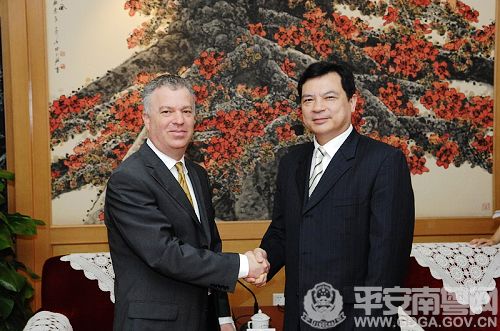
It’s always been natural for Israel to look to the West or Europe to capitalize on its clean technologies, through sales or investments. Recognizing the growing potential to the East, Israel recently launched a consulate general in the Guangzhou province of South China, the economic powerhouse of China.

Avraham Nir from Israel who will open the new center told China Daily that he hopes Israel’s presence there will strengthen ties between his country and South China. Besides high-tech, he sees Israel working with China on clean energy, water recycling and agriculture. Despite its dependence on coal for fuel, just this weekend China announced its desire to invest in clean technology, so the timing couldn’t be better.

Israel already has 2 other consulates in China — in Shanghai and Hong Kong. The Guangzhou consulate will cover the provinces of Guangdong, Hainan and Fujian, and the Guangxi Zhuang autonomous region.

Nir pointed out Israel’s good track record in the water industry (even with China)– citing Israel as the world’s most efficient recycled water user touted in a recent United Nations report.

Israel is also advanced in dairy farming and solar technology, he said. And despite the economic downturn, trade between Israel and Guangdong increased this year, he added.

In 2007, trade between Israel and Guangdong was at about $1.3 billion.

::China Daily

More green news on Israel and China:
Israel and China Build Israel’s Largest Solar Power Plant
Israeli Architects Build Agro-Housing in China
Israel and China Make a Water Pact

Algae Biofuel To Send Astronauts to Space? Israel’s Seambiotic Partners With NASA

11

astronaut-space-biofuel-nasa-seambiotic-photo-thumb

Algae could be a viable source of biofuel if it can be produced efficiently. Read our recent story on Algaenesis. Now Seambiotic, an Israeli company that develops marine microalgae for the nutraceutical and biofuel industries, has just announced that it will work with the NASA Glenn Research Center to develop an on-going collaborative R&D program for optimization of open-pond microalgae growth processes.

Under the Agreement, NASA Glenn and Seambiotic USA will work together to improve production processes and to study and qualify algae oil from alternative species and production processes as candidate aviation fuel at NASA’s test facilities.

“Under a Space Act Agreement, NASA is partnering with Seambiotic USA to model growth processes for microalgae for use as aviation biofuel feedstock,” said Prof. Ami Ben-Amotz, Chief Scientific adviser to Seambiotic.


“The goal of the agreement is to make use of NASA’s expertise in large-scale computational modeling and combine it with Seambiotic’s biological process modeling to make advances in biomass process cost reduction.”

The NASA research center is one of NASA’s 10 field centers, with the resources for developing cutting-edge technologies and advancing scientific research that address NASA’s mission to pioneer the future in space exploration, scientific discovery and aeronautics research.

Working in partnership with government, industry and academia, the center serves to maintain the U.S. economy’s global leadership while benefiting the lives of people around the world.

Seambiotic was founded in 2003 to grow and process marine microalgae for the nutraceutical and biofuel industries. Its research efforts include a pilot study at an Israeli Electric Corporation power station near the city Ashkelon, Israel, where various species of marine microalgae have been successfully cultivated using the power station’s CO2 emissions released directly from their smokestacks; the microalgae are in turn used as feedstock for biofuel. According to the website in 2023, it does not look like the company is operating.

GreenFuel, founded by Isaac Berzin in Israel was also on the path to commercialising algae as biofuel, but failed.

isaac berzin, algae pioneer
Isaac Berzin started a company called GreenFuel to turn algae into biofuel. The company failed to launch.

Seambiotic technology reduces the cost of microalgae production significantly while lowering global warming by reducing industrial CO2 emissions. The company is currently in transition from the pilot plant stage to large scale industrial algae cultivation and production.

More on algae for biofuel:

  1. Isaac Berzin Enlists Israelis Into The Business of Algae for Biofuel
  2. Expanding the Role of Algae: Algaenesis
  3. Algae-For-Biofuel Isaac Berzin’s New Advert Touting the Importance of this Alternative Energy Source
  4. Squeezing Energy From a Plant’s Metabolism at Hebrew University

[image via pahudson]

New Israel Fund Starts Tackling Environmental Issues

5

israel environmentThe New Israel Fund (NIF) has been the leading organization committed to democratic change, social justice, and equality in Israel since 1979.  Having been active in these fields for 30 years, it is now expanding its reach to environmental matters and becoming a partner in the Green Environment Fund.

The NIF explains on its reasons for joining the green cause on its website:

“Israelis have long had to balance growth with preservation of the country’s ancient archaeological treasures, as well as developing both industry and agriculture in an arid landscape where water is precious and scarce.  Today, environmental concerns in Israel, as in the rest of the world, are multiplying and becoming more urgent with the passage of time.”

Water Shortage Boosts Israeli Wine Production

6

tzuba-wine grapes israel photoNestled into the Jerusalem Hills, Kibbutz Tzuba has decided to scrap its apple orchards and grow more grapes to save on water during the current crisis.

According to the Jerusalem Post, Tzuba once grew kiwis that guzzled an outrageous 1,000 cubic meters of water per dunam (dunam=1/4 acre). Then the farm switched to apples, which take 750, and has finally settled on grapes, which sip a modest 200 cubic meters. The new vineyards will spread over 145 dunams and will expand Tzuba’s already strong wine lineup with eight new varieties.

For some background, read Green Prophet stories on the dire regional water shortage and efforts to cope in Israel, Syria, and the Palestinian Authority.

Tzuba’s story is a gradual reality check that speaks for the larger picture of Israeli farms. The kiwi growing era is an emblem for when the country’s water managers built massive projects to irrigate fields in the Negev, growing fruit that was more suited to Ecuador than to the arid Middle East. Over time, Israel has realized there are limits to human intervention. Tzuba’s newest crop has been grown in the Middle East for thousands of years and unsurprisingly makes the fewest demands. If necessary, grapes can also be grown without water. Tzuba’s wine is a deeper level of locally grown.

Image credit: Jerusalem Post

IDF Says Birds, Not Guns in Northern Reserve

1

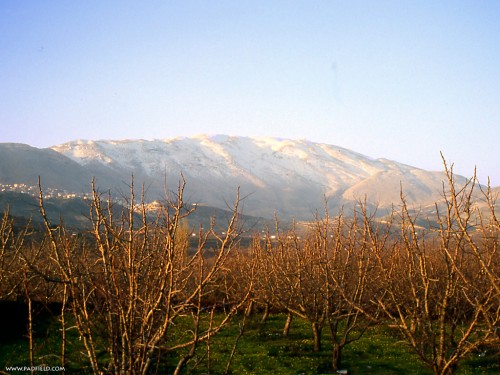
mount-hermonAccording to Haaretz, the Israeli army has decided to limit its activities in the Hermon Mountain nature preserve in the country’s North to give local animals and flowers a break.

We’ve written on these pages about the IDF’s bleak environmental record and its previous attempts to go green.

15K Israelis Retrofit Hotrods, Cars and Trucks To Power With Propane

propane-camero=gas-power-photo

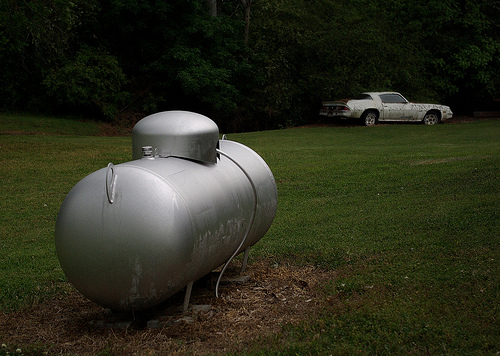
It’s much less expensive than regular refined gasoline, and they won’t let your car into a below ground shopping mall parking lot if you have this installation, but at least 15,000 cars and trucks in Israel have already been converted to run on liquefied propane gas, otherwise known as LPG.

From an environmental standpoint, using bottled LPG gas in your car is also much cleaner, with virtually no emissions, as compared to even unleaded gasoline.

So what’s involved with doing this and, how much does it cost? This information was revealed on a consumer magazine show with Channel 2’s roving reported Menachem Horowitz, who took his own Peugeot 407 Salon to the Gaspro garage in central Israel to have the device installed.

A breath mint made from coffee

1

breath mint from coffee

We all know why coffee shops like Starbucks puts boxes of breath mints close to the cash register. Your morning latte can create a startling aroma in your mouth, strong enough to startle your co-workers too.

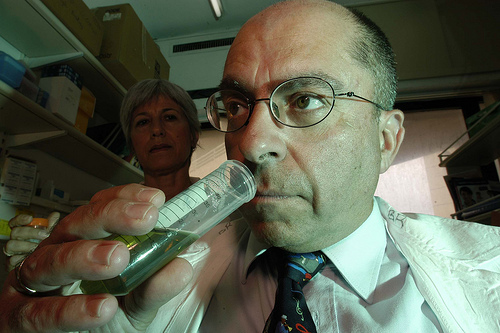
But intriguing new research from Tel Aviv University’s Prof. Mel Rosenberg finds that a coffee extract can inhibit the bacteria that lead to bad breath – coffee can be good for you in other ways too. New laboratory tests have shown that the extract prevents malodorous bacteria from making their presence felt — or smelt.

“Everybody thinks that coffee causes bad breath,” says Prof. Rosenberg, “and it’s often true, because coffee, which has a dehydrating effect in the mouth, becomes potent when mixed with milk, and can ferment into smelly substances.”

But not always. “Contrary to our expectations, we found some components in coffee that actually inhibit bad breath,” explains Prof. Rosenberg. The findings were presented last month to members of the International Society for Breath Odor Research in Germany by Yael Gov, a researcher in Prof. Rosenberg’s laboratory.

A “taster’s choice” for stopping bad bacteria

In the laboratory, the team monitored the bacterial odor production of coffee in saliva. In the study, three different brands of coffee were tested: the Israeli brand Elite coffee, Landwer Turkish coffee (get our recipe on making Turkish coffee here), and Taster’s Choice.

Finjan coffee, Turkish coffee

Prof. Rosenberg expected to demonstrate the malodor-causing effect of coffee in an in vitro saliva assay developed by Dr. Sarit Levitan in his laboratory. To his surprise, the extracts had the opposite effect.

“The lesson we learned here is one of humility,” says Prof. Rosenberg. “We expected coffee would cause bad breath, but there is something inside this magic brew that has the opposite effect.”

Prof. Rosenberg would love to isolate the bacterial-inhibiting molecule in order to reap the biggest anti-bacterial benefits from coffee. “It’s not the raw extract we will use, he says, “but an active material within it.” His latest discovery could be the foundation for an entirely new class of mouthwash, breath mints and gum.

Purified coffee extract can be added to a breath mint to stop bacteria from forming, stopping bad breath at its source, instead of masking the smell with a mint flavor.

Prof. Rosenberg is a successful scientist and inventor who has already developed a popular mouthwash sold widely in Europe, a pocket-based breath test, and an anti-odor chewing gum.

Untreated Wastewater Poses Huge Threat to West Bank Palestinians

A report published Sunday by the Israeli human rights group B’tselem, titled, “Foul Play: Neglect of Wastweater Treatment in the West Bank” found untreated wastewater to be a major source of pollution in the West Bank.

91 million cubic meters (mcm) of wastewater is produced each year in Israeli settlements, parts of Jerusalem, and Palestinian communities, says the report (for perspective: this amount is the equivalent of 36,400 Olympic-sized pools).  The majority of this sewage goes untreated, dishcarging directly into the environment, causing severe health hazards and posing a major pollution risk to the Mountain Aquifer, a key water resource for both Israelis and Palestinians.

Red-Dead Canal Announcement Stirs Controversy

Dead Sea

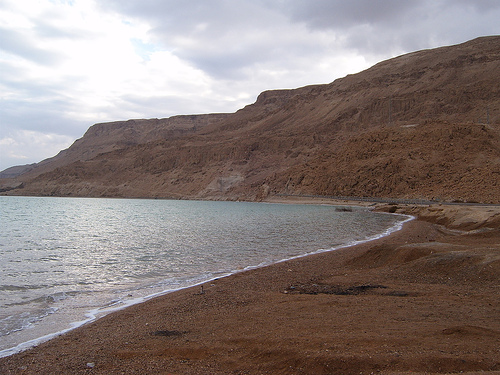
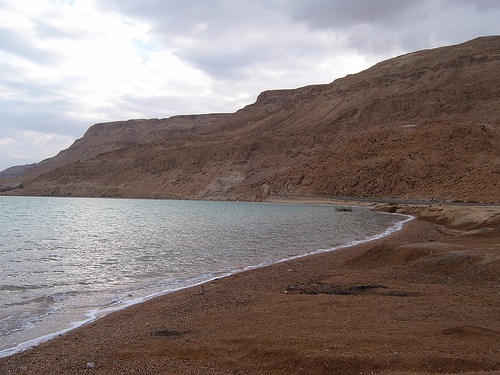
The global contest for the Seven New Wonders of the World is not the only reason the Dead Sea is making news this week.

Last Saturday, Israeli Vice Premier Silvan Shalom announced that the World Bank  agreed to finance a $1.25 billion feasibility study on the Red-Dead Canal plan.  The plan, a joint venture supported by Israeli, Jordanian, and Palestinian officials, proposes a 180 kilometer (110 mile) pipeline between the Red Sea and the Dead Sea.  The pipeline will transfer 200 billion cubic meters of water to the Dead Sea, half of which will be pumped to the rapidly receding body and half of which will be used in desalination projects to provide drinking water to the drought-stricken region.

The World Bank launched a Study Program in 2008, based on terms of reference the three parties introduced (but did not agree on fully), to investigate the environmental, social, and technical costs of the canal.  Although the World Bank confirmed that Mr. Shalom did meet with its president, Robert Zoellick, during an official visit to Washington DC last week, it has not made an official commitment to finance the study.

Benvenisti Mourns the Forgotten Rural Heritage of Israel in "Sacred Landscape"

Meron_benvenistiFor readers who have driven or hiked past unmarked, run-down old stone buildings in Israel, former Jerusalem Deputy Mayor Meron Benvenisti’s Sacred Landscape (University of California, 2000) will reveal a layer of Arab ghosts inside Israeli towns, cities and the countryside.

Born in 1934, Benvenisti spent his childhood accompanying his father on geographical tours of Mandatory Palestine. The elder Benvenisti traveled in order to rename the Arab features of the map with Hebrew monikers, but his son saw an enchanting world of Palestinian villages. Meticulously researched with zealous attention to detail, Sacred Landscape asks the question of how the rural Palestinian fabric within Israel’s 1948 borders ceased to exist both on land and in the minds of the Israelis who replaced it.

Palestinians Support Dead Sea for Wonder of the World

4

dead-seaAlthough the Palestinian Authority had previously opposed nominating the salty lake that borders the West Bank, Israel and Jordan as one of the Seven New Wonders of the World, Haaretz reports that as of today, the PA is on board.
The New Seven Wonders is an international Internet voting competition that seeks to raise environmental awareness of the seven most stunning natural formations on the globe. The Dead Sea was listed among 77 candidates until three days ago when the Palestinians boycotted the campaign because the Israeli side includes the Jordan Valley settler council. For a site located in multiple countries to be listed, all the countries must agree to nominate it. Now that PA President Mahmoud Abbas has pushed to participate, the Sea will be reinstated. There are six more days to vote at the Seven Wonders site.

Eco-friendly Sewage Treatment Comes to the West Bank

9

sewer-drain-street-photo

A new scheme has just got underway for Palestinians to treat their sewage waste and purifying it for agricultural use by using wetlands.

Forsaking electricity, the system instead relies on a system of man-made pools which utilise plants to assist in the organic breakdown of the sewage.

The West Bank village of Um a-Rihan, not far from Umm el-Fahm in Israel, is home to 50 families and until now has not been connected to a proper sewage system. The wetlands will not only prevent pollution to the aquifer but will also provide the village residents with purified water for their crops, reports the Jerusalem Post.

No More Crying Over Spilt Milk With AfiMilk

afimilk-logo

Israeli company AfiMilk has developed a new meter that can monitor milk production in real time and online, giving dairy farmers critical information about possible contamination to milk supplies. 

Normally farmers would take a sample of milk from “each cow, once a month, and send that sample to the lab,” says Noa Yonish, the marcom rep of AfiMilk, based in Kibbutz Afikim near the Sea of Galilee. 

Obviously such tests require a lot of manpower, and are not altogether very accurate. If there is a problem in the milk, it’s never isolated at the right time, allowing room for contamination to spread before a farmer is alerted. 

Not knowing what cow is sick, and when, is another reason why farmers opt for mass injections of antibiotics, even if the entire herd isn’t ill. 

Breastfeeding, plastics and dioxin

2

breastfeeding, micro plastics, plastics in milk, dioxins

Scientists have long known that human breast milk is high in dioxins, environmental contaminants that enter our diets when we ingest agricultural pesticides and pollution from plastics.

Researchers at the University of Rochester School of Medicine exposed pregnant mice to a dioxin known as TCDD. TCDD is one of a family of isomers known chemically as dibenzo-p-dioxins. The results showed that TCDD “caused severe defects in mammary gland development and function.”

The defects were noted during the earliest days of the pregnancy, according to the study. And it is during pregnancy, that mammary glands of mammals grow and develop to prepare for nourishing the new baby. What does this mean for us humans?

In the same way that we are seeing negative effects of environmental contaminants on the human reproductive system, the new study suggests an effect of dioxin on the mechanism of lactation. Scientists now suspect that exposure to a type of dioxin can affect development of mammary glands early in pregnancy, which may lead to low milk supply after birth.

High levels of dioxins in a pregnant woman’s system have the potential to cause birth defects in babies. In theory, dioxins in breastmilk can also harm babies, although studies have shown that even among populations exposed to high levels of dioxins, breastfed babies have better health and developmental outcomes than formula-fed babies.

Breastmilk contains more dioxins than cow’s milk because dioxins accumulate in animal fat and are only excreted to the fetus during pregnancy, and to the baby during lactation.

Humans are highest on the food chain, so they accumulate the dioxins from the fat of the animals they consume. Plastics and manmade pollution from fertilisers and pesticides are the source. This is a reason to eat organic foods, or at least to cut back on fat from meat, dairy and fish.

However, the antibodies and nutrients in breastmilk, along with the psychological benefits, far outweigh any negative effect of dioxins. Also, the baby’s exposure to dioxins is much greater in utero than while breastfeeding.

It is essential to eliminate environmental contaminants in order to keep breastmilk as pure and plentiful as it is meant to be.

Israel's Cleantech 2009 Emphasizes Water Projects and Renewable Energy

6

miya-water-arison-israel

Israel’s 13th annual Cleantech exhibition on environmental technology and renewable energy projects is currently underway at the Israel Trade Fairs and Conventions Center in north Tel Aviv. You can read about innovative companies on display at the event last year, here.

This year, both water technologies and renewable energy innovations appear to be the featured categories of the two day exhibition, running through to today Tuesday June 30.

The section dealing with water technologies is one that has particular importance to Israel, as well as other countries in the region. Divided into several segments, water technologies covers instruments for analyzing, metering, monitoring, and testing of existing water resources.