In a previous article dealing with eco tourism, Green Prophet o whet your desire to do some “eco-touring” of the Middle East, where there is a lot to see – both from a positive as well as a negative standpoint.
Today we feature 7 ‘must-see’ locations from an eco-tourism point of view. So let’s put on our trekking shoes and begin in a very special place:
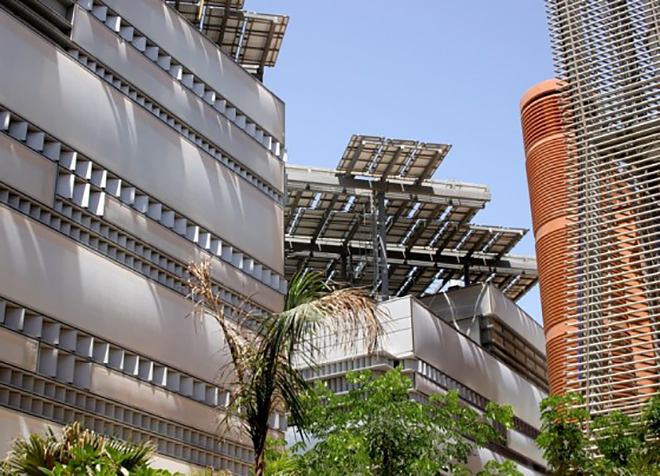
1. First stop: Masdar City in the UAE’s Sheikdom of Dubai, where futuristic cities are rising up out of the desert and self sustained environmental residential and commercial projects like Masdar City are being built.
The world’s tallest building, Burj Dubai, all 818 meters of it, is also being built in Dubai, complete with specially designed cooling systems to conserve water and special energy conserving lighting. Dubai also has other on-going projects, such as The World, an off-shore artificial island project designed to resemble a map of the world’s major continents when viewed from the air.
The World, and other artificial island projects, including Palm Island, are feared to be causing considerable, and perhaps irreparable damage to the marine life of sections of the Persian Gulf when the projects are being built.
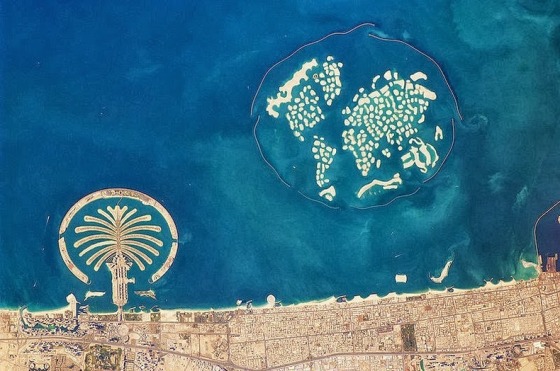
Although Dubai has a number of environmental projects, including those incorporating solar and wind energy, the entire building boom in the UAE’s part of the Gulf is said to be doing more ecological harm than good.
Water created from desalination is also being wasted in recreational attractions like golf courses (Dubai’s professional course even hosts an annual international golf tourney) and a complete indoor international snow ski center, which we believe wastes not only a considerable amount of water, but energy as well. Better use can be found in using expensively made desalinated water.

2. Desalination in Saudi Arabia. While we are still on the Arabian Peninsula, let’s not forget the Kingdom of Saudi Arabia, in which a number of desalination pants have been built; let’s make stop 2 at the desalination plant in Saudi, reportedly the largest in the world at Jubail II Industrial City.
These plants for the most part, however, are still being powered by fossil fuels – a resource that is still plentiful in Saudi Arabia. The Kingdom also has a smaller version of Dubai’s indoor ski slope, which also is wasting water that can be put to better use.
Related: see the Middle East Travel Planner
3. The mighty Nile. Jumping across the Red Sea, west of Saudi Arabia, we reach the three African countries of Egypt, Sudan, and Ethiopia, all three of which have the mighty Nile River flowing through them. All three countries have chronic and even acute water problems, even though they have the Nile as a water resource.
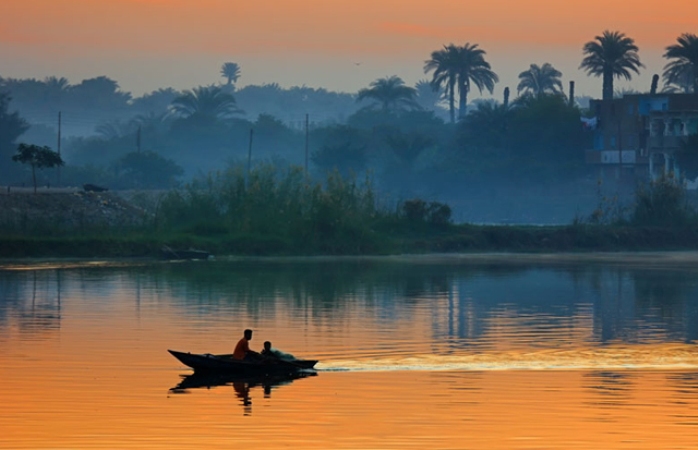
These three countries were noted recently by a Green Prophet interview with environmentalist Courtney Nichols , who had a lot to say about the severe water problems in these countries, especially Ethiopia (which has an ample underground aquifer that has not been tapped due to this country not having enough financial resources to drill deep enough to “tap” it).
Sudan has more than a million people at risk, especially in the country’s southern and western regions. And, of course, there’s Egypt, with one of the fastest growing populations in the world. All three countries suffer intensely from “desertification” and are vitally dependent on a river that appears to have less water flowing through it each year – most likely the result of increasing drought caused by global warming.
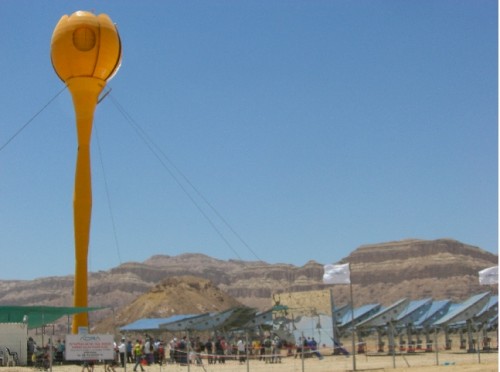
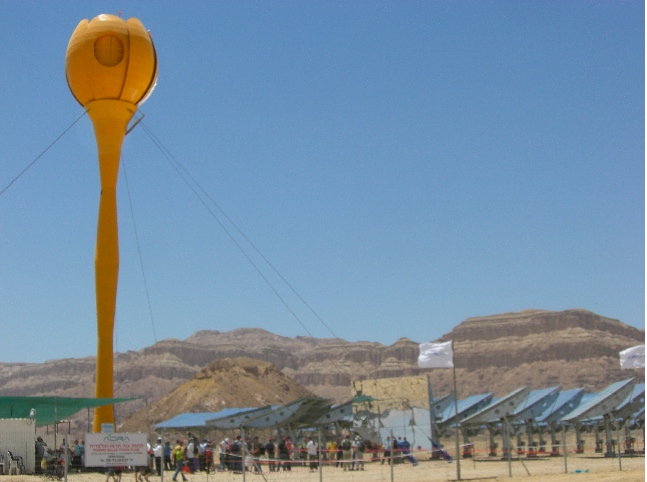
(Israel solar company Aora powers up solar flowers in the desert)
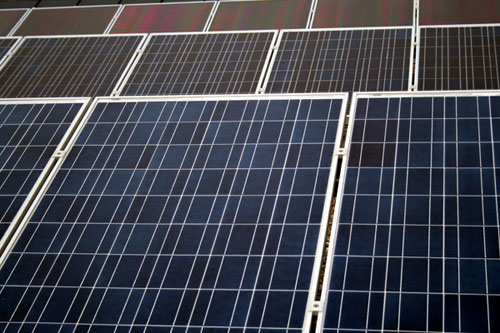
4. Israel’s clean technology companies. After, Egypt, we reach Israel (don’t get your passport stamped if you are planning to return to Arab countries). Israel, despite it’s small size is currently involved in a number of interesting environmental projects including solar energy power plants in the country’s southern Arava region, desalination plants (the one outside Ashkelon is one of the largest in the world); waste water reclamation projects in various parts of the country; and (probably it’s most famous soil and water conservation project to date) it’s country-wide tree planting projects dating back a hundred years, when the entire area was called Palestine and ruled by the Ottoman Empire.
Tree planting, sponsored largely by the Jewish National Fund, has largely been responsible for the magnificent forests found in many sections of the country today, including the Carmel mountain range, the Galilee area, and the forests located west of Jerusalem.
On the negative side of the country’s environment is the Ramat Hovav waste dumping side in the southern Negev region (an ecological “time bomb”); the “sinking” of the Dead Sea (due to less water reaching it from the Jordan River); the increasing pollution of the country’s cities and streams, including the Jordan; and the problem dealing with the decreasing water levels of the country’s main source of fresh water, the Sea of Galilee (Lake Kinneret).
The future of this lake as a major water resource is currently in question due to Syria’s claim on the Golan Heights, a major supplier of fresh water to the Jordan River and the Kinneret, and to part of the water in the Kinneret itself. This issue is far from being settled; with Syria becoming increasing more hostile regarding the future of the Golan Heights, and hence the lake itself.
 5. Water, war and the cedars of Lebanon. After Israel, we continue northward to Lebanon, whose environmental problems, due to the 2006 war with Israel, are from being solved.
There is also the matter of intense pollution of the country’s coastline from sewage and wholesale dumping of garbage; and the future of the country’s stately groves of cedar trees. Lebanon’s cedars have been a historical part of the country’s culture ever since some of them were used by the Israelite King Solomon to construct the Temple in Jerusalem.
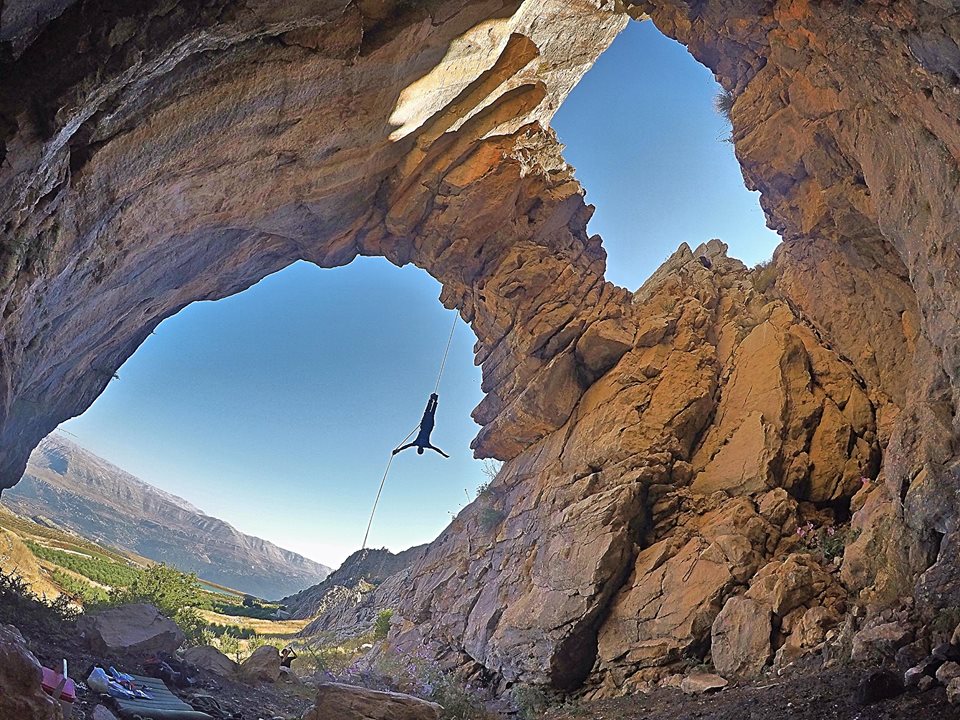
The cedar is a national symbol and proudly displayed on the country’s national flag. Lebanon also is currently suffering from a chronic water problem, which is partly a result of global warming.
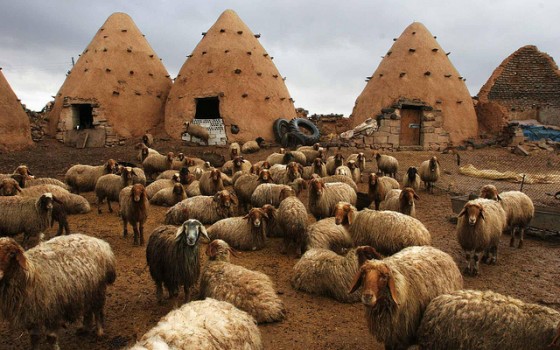
6. The Euphrates in Turkey. Continuing eastward into Syria, we can visit the Euphrates River which has its sources in Turkey, another country currently experiencing a severe water problem.
Turkey is also the source of another great river, the Tigris, which together with the Euphrates flow into Iraq and eventually come together at the southern Iraqi city of Basrah, and then flows into the Persian Gulf.
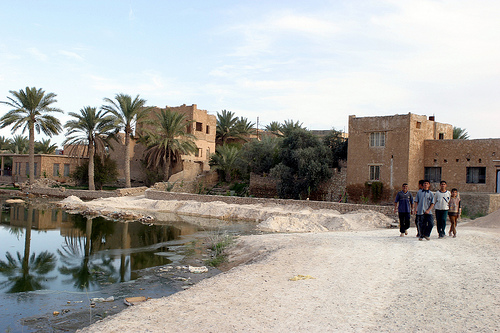
(The Euphrates in Iraq)
Iraq is still suffering from a number of environmental problems; many of which have occurred from the aftermath of the 2003 invasion of Iraq, as well as years of neglect under the tyrannical rein of dictator Saddam Hussein.
There is still much to be done to solve this country’s environmental problems.
7. Water stops in Jordan. The last stop on our 7 eco-curious sites Middle Eastern tour is the Hashimite Kingdom of Jordan.
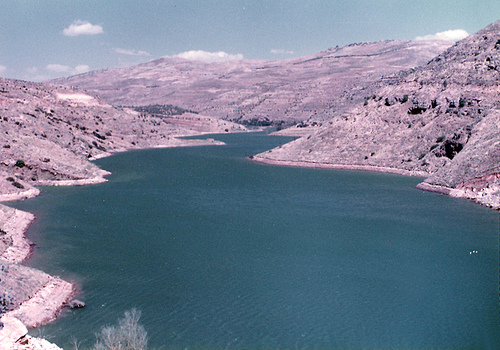
(Yarmouk river)
Jordan has one of worst water shortage problems in the world, despite agreements with neighboring Jordan, requiring Israel to share water from the Jordan River and a further agreement for some water from the Sea of Galilee as well.
Jordan’s main water sources are currently the Yarmuk and Jordan Rivers, which it shares with both Israel and Syria, as well as some ground water resources. The Kingdom is currently in the midst of constructing desalination plants on the Gulf of Aqaba,; and is also planning to construct a canal to run from Aqaba to the Dead Sea, the Red-Dead Canal, to re-supply it with water as well as create fresh water by desalination. Since Jordan shares the Dead Sea with Israel, the sea’s decreasing water levels are its concern as well as Israel’s.
As you can see from our seven sites tour, there is much to see and learn, regarding the environmental aspects of this important section of the Middle East. As travellers evolve from eco-tourists to eco-curious travelers, we hope some of these stops will be visited and your thoughts shared here.

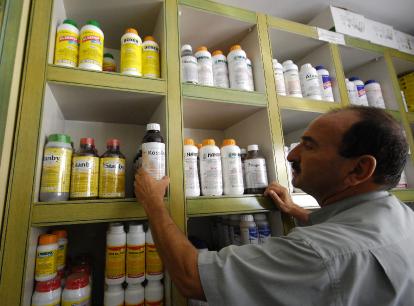
 As part of its long bid for European Union membership, Turkey has announced that 74 pesticides are off limits because they are poisonous. The Hurriyet Daily News reports that the EU has a list of 135 illegal chemicals, and Turkey is working on the others.

 5. Water, war and the cedars of Lebanon. After Israel, we continue northward to Lebanon, whose environmental problems, due to the 2006 war with Israel, are from being solved.


 Being oil-poor may be more of a blessing than a curse for both Israel and Jordan. A joint Israeli-Jordanian project-based on the production of biofuel from agricultural waste-will take center stage at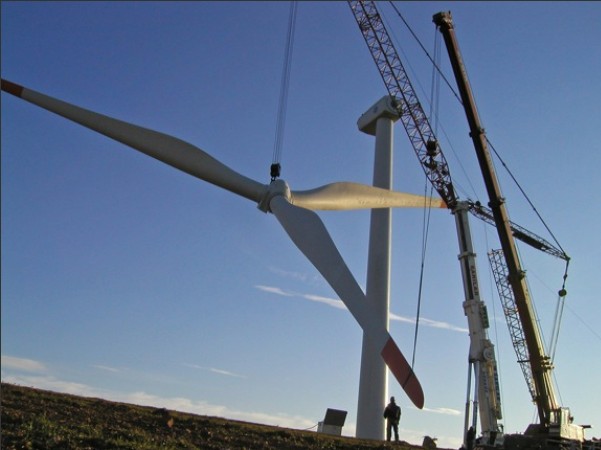


 In Constructing a Sense of Place: Architecture and the Zionist Discourse (Ashgate, 2004), architect and planner Haim Yacobi has compiled a fascinating collection of essays on how the Israeli landscape was born.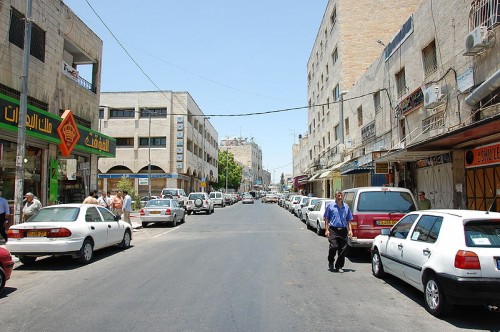




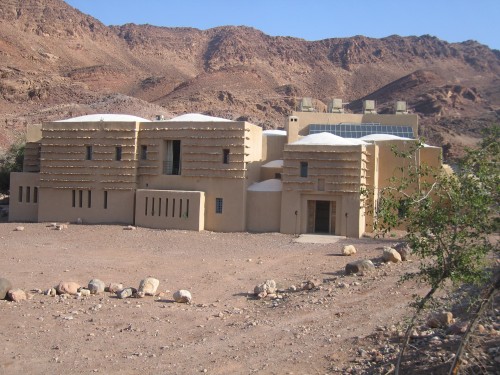
 Feynan Eco Lodge, one of several