Home Blog Page 681

Your Toilet May Be Overflowing …Without You Knowing It

8

toilet-tank

In order to understand how your toilet may be overflowing I first have to take a step back and explain how toilets work.

How Toilets Work

There are, basically, two parts to a toilet. The “Tank,” and the “Bowl.” The tank is where the water is stored, waiting to be flushed. The bowl is where you do your business. When you are ready to flush, by pushing down the handle you are, essentially, pulling out a plug inside the tank, which then allows all the water in the tank to empty into the bowl and flush your waste down the drain. For a great interactive visual representation visit “How Toilets Work.”

Once you flush, the tank refills. The toilet knows when to stop filling up because it has a floating device called the “filler float”. When the filler float reaches a specific height it blocks more water from coming into the toilet. This height is decided by the plumber and can easily be adjusted.

There is a second precaution against overflow. There is a tube called the “overflow tube” inside the tank. If the water level goes above the top of this tube, the water drains into the toilet. And this is were you may be having a problem.

If the filler float is set to stop the water at a level that is above the top of the overflow tube then every time your toilet’s tank fills up water will flow into the overflow tube and down the drain. Because there is nothing to stop it completely (remember, the “filler float” is set too high) then water will be overflowing constantly.

Essentially, IT IS LIKE LEAVING A FAUCET ON ALL OF THE TIME.

How Can I Know If This Is Happening?

If you know what to look for, it is actually see if this is happening in YOUR toilet.

  1. Open the lid of your toilet.
  2. Look at the back of the bowl.
  3. If you see a stream of water there, even a little, then your “filler float” is set too high.

The fact of the matter is, is that it is difficult to find the correct height for your “filler float” and there is a good chance that your toilet IS overflowing, even if it is just a little.

How Can I Fix This?

It is actually relatively easy to fix. A professional plumber from http://www.drdrip.com.au can take care of it in about 5 seconds. ”

The height of the filler float can be adjusted relatively easily inside your tank. Have in mind, though, that most toilets are different from one another.

After removing the lid of your toilet, look for your filler float, it will look like a hard-plastic balloon. Your filler float will be attached, most likely, to a plastic stick. Near the end of the stick you will probably find a small knob.When you turn it, only adjust it a VERY little bit at a time, you will be adjusting at what point your filler float will stop the water from coming into the toilet. Then flush your toilet and see if there is still a stream of water in your bowl after the tank refills.

Be aware that if you set the filler float to stop at a level that is TOO low, your toilet may not do it’s job correctly because you don’t have enough water in your tank. However, don’t stress. It is just as easy to change back what you did. If you feel uncomfortable tinkering, I guarantee that you have a neighbor that can do it in a jiffy and save you money on your water bill.

Image credit: aerostockians

AECOM Teams Up with Ellerbe Beckett to Create More Sustainable Building In The Middle East

4

aecom green building midde east
AECOM,  a known global provider of technical and management support services, including many environmental projects, has now teamed up with the Ellerbe Beckett architectural firm, known for its environmentally designed building projects all over the world.

AECOM is a Fortune 500 country with more than 44,000 employees. It is in involved in more than 100 countries and had revenues of more than $6.1 billion as of end July, 2009. Current AECOM residential projects are located in the Caribbean, Hong Kong (3 projects), the US State of Texas, and in Australia. Hopefully the new partnership will impact all the Middle East waste.

The Middle East Is Drowning In Waste

14

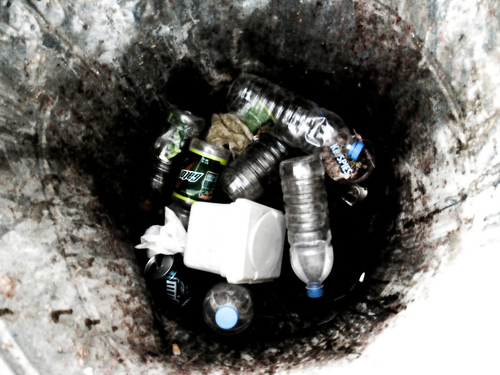
garbage-middle-eastThe waste produced by Arab cities is among the highest in the world.

Dubai, United Arab Emirates – “The short version of the story is that we’re not doing a very good job of managing waste,” says John Roosen, Technical Director of AECOM Environment Middle East. “Nowhere in the world does. We are going to drown in waste.” 

Roosen’s words hardly overstate the scale of the problem faced by the engineers, scientists and government officials gathered this month at the first annual IQPC City Waste forum in Dubai.

According to a recent report by the Arab Foundation for Environment and Development (AFED), the Arab world produces approximately 250,000 tons of solid waste every day, most of it dumped untreated in makeshift landfills, if it is collected at all. 

Queengil Provides Sensible Drip Irrigation Tape Drop by Drop

8

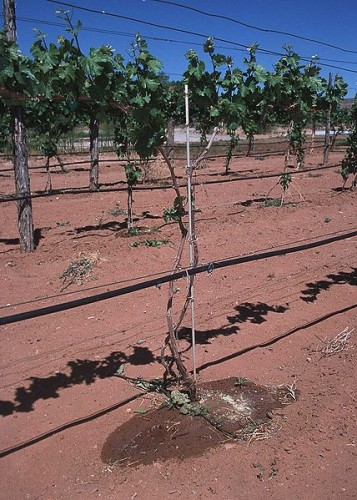
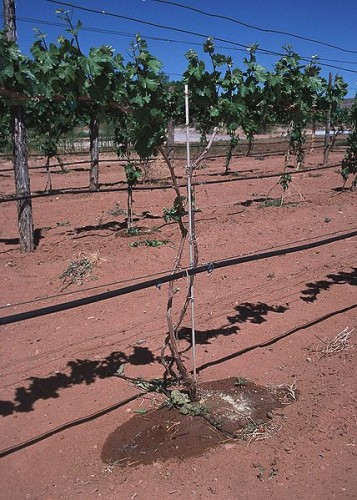
queengil drip irrigation israelIt is finally raining in Israel and other parts of the Middle East; but the region’s acute water shortage is far from being over. An Israeli company Queengil, is trying to help alleviate the problem of providing maximum crop irrigation with available water resources, refining the technology of “drip” irrigation which has already been doing so for over 50 years. Its in the same business market at other Israeli drip irrigation companies like Plastro and Netafim.

Since its inception in 1987, the water conservation products made by Queengil have been very useful for farmers in arid areas to provide water for growing a variety of crops, including grains, fruits and vegetables, and a variety of flowers and other plants.

Also known as micro-irrigation and trickle irrigation,  the idea of letting water seep slowly into the ground to irrigate crops has been in existence since ancient times, when clay piping and pots with small holes in them were buried in the ground to let water seep from them slowly to dampen the soil.

Totally "Ungreen" Environment Monstrosities In The Sky – Then and Now

7

The 1933 Soviet Kalilin K7
Hughes’ Spruce Goose and the 1933 Soviet Kalilin K7 (above) are some flying ungreen monsters from the past.

Green Prophet was at the last Paris Air Show looking for green innovation in the sky. Now we take a look at some of the old flying monstrosities that got us to where we are today: The world aeronautics industry, after being considered no more than a curiosity venture during WWI and the 1920’s, finally began to get serious about the role that aircraft could play in both civilian and military use during the early to mid 1930’s. During this time, commercial passenger and cargo airline flights began to become reality and the use of these “flying machines” as a viable military weapon also  began to take shape.

With oil being cheap and plentiful, there was no problem in supplying fuel for aircraft, and along with this, there was virtually no concern for the effects that aircraft would have on the global environment. Some countries, especially Germany and the Soviet Union began to seriously consider the advantage large aircraft would have as both troop carriers and for use in bombing enemy cities in wartime.

In fact, Nazi Germany was able to effectively test its newly developed military fighters and bombers during the 1936-39 Spanish Civil War, which assisted Germany greatly for its subsequent invasion of Poland in September, 1939, and resulted in the outbreak of WWII.

But it was the Soviets who tried to develop a gigantic type of aircraft that could not only carry large quantities of bombs but large numbers of troops as well. This led to the building of a huge prototype aircraft known as the Kalilin K-7 (pictured above), a monstrous aircraft that had a 173 foot (53 metre) wingspan and which was so heavy that two extra engines had to be added. This is to the already 6 engines that had been originally designed to lift the 24,400 kg behemoth off the ground.

SolarEdge Plans Holistic Approach to Solar Energy Efficiency

4

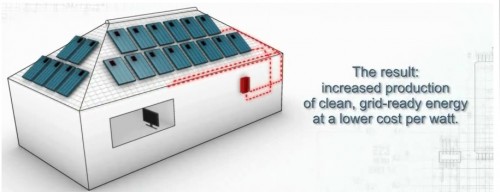
solaredge solar energy israel power photo home grid networkWith a $23 million investment, SolarEdge takes PV systems to the next level of efficiency.

GE just invested in them. Now, Guy Sella, founder and CEO of Israeli company SolarEdge, is planning a revolution. Don’t be alarmed though, this one isn’t dangerous. His goal is to transform the way photovoltaic systems are now operated, in terms of efficiency, safety and cost.

“People haven’t been looking at photovoltaic systems from a holistic point of view,” Sella tells ISRAEL21c. “Panel manufacturers care only about the panels and panel conversion efficiency. The people that develop classical inverters only care about the efficiency of the inverter. I asked: can we create a system that is better than we currently have?”

The answer, according to SolarEdge, is yes. The Herzliya-based has created “intelligent panels” that work together with a central Power Box, which would replace the passive panels that are the current norm. These new panels provide 25 percent more energy as well as solutions to some of the serious problems that plague current systems.

Don't Sit Close To Your CFL Lightbulbs, They May Cause Skin Cancer

16

CFL-compact-light-turkey-mosque Working or praying too close to CFLs? They may cause skin cancer to warn Israeli health officials.

A big “green” confession: I never did replace all the bulbs in my home with compact fluorescents (CFLs), those swirly-shaped bulbs which use much less energy and therefor produces fewer greenhouse gases. It was the quality of the light I don’t like.

Did I have a moment of prophecy?

According to the Israeli daily Haaretz, Health Ministry officials in Israel are about to warn the public that CFLs may cause skin cancer.

Book Now For Abu Dhabi's World Future Energy Summit 2010

19

world future energy summit abu dhabi

The 2010 World Future Energy Summit (WFES) is less than three months away; and plans are already underway to ensure that this conference will be even more successful than WFES 2009, which drew more than 18,200 visitors from 84 countries.

Hosted by Abu Dhabi’s Masdar Future Energy Company, the main themes of the 2010 Summit will be centered on the concept of “eco cities” and the issues surrounding technology transfer in order to advance the concept of sustainable and renewable energy; which will be vital to the success of the environment of the new eco-cities being planned for various parts of the globe.

Make Use of the Commute With Some Scientific Training On The Train

israel-train-commute-photoI am one of those people who has set up her life to spend as little of it as possible commuting.

I grew up with a father who commuted two hours a day traveling to the car plant in Oshawa, Ontario, leaving the family back home with two hours less of our father each day. He even bought a special car for the long haul to save money on gas.

Working from home and interviewing via the telephone or Skype, when I travel, I am not the kind who’ll sit with an iPod plugged into my head unless there is a really good Bob Boilen NPR podcast waiting for my ears. When I am on the train, plane or bus, I like to work. It’s hard for me to waste time, especially during the day. Now, the Hebrew University of Jerusalem has given me a good reason to get out of the house and use the train more often.

They have developed a lecture series on the train, so morning commuters can learn from Israeli academics and get “training” while on the way to work.

7 Solar Innovators From Israel That Could Fuel Our Planet

20

solel-solar-energy-tech-photo

They are on investors’ hit lists and the green tech media is keen to monitor their progress. Key policy makers from the United States urge them on. Israeli solar technology innovators are channelling and shaping the sun’s energy and breaking the world’s dependence on oil.

With organizations like the Cleantech Group, an international business development firm that’s listing Israel in a league of its own, world rankings show that Israel is no small player in solar energy innovation – and clean technology.

A recent survey released by the Guardian newspaper in the UK and the Cleantech Group chose five Israeli-based and two Israeli-developed cleantech companies among a global listing of 100. That’s a significant number, considering that Israel is about the size of a small American state.

Here are 7 of my favorites:

On Abu Dhabi's "Al Reem Island" – Who's Protecting (Artificial) Open Spaces In The Arab World?

9

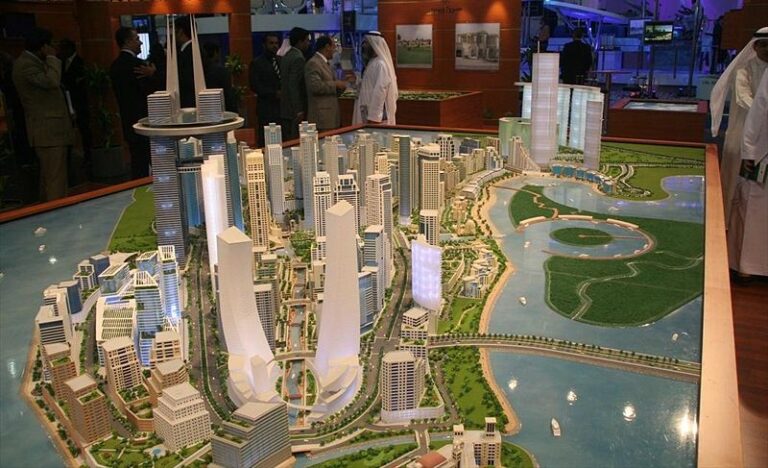
al-reem-island-model-abu-dhabiA model of Al Reem Island in Abu Dhabi. A playground for foreigners or ecological nightmare?


Looking at this gigantic real estate project, one might wonder if there will ever be an end to all of the monstrosities that being erected on every piece of available land in the United Arab Emirates and other parts of the Persian Gulf.

Located on Abu Dhabi’s Al Reem Island, a mere 600 meters from the island of Abu Dahbi itself,  the grandiose project called al Reem Island is being undertaken by three groups: Sorouh Real Estate PJSC , Reem Developers,  and Tamouh Investments. The project has gained interest as one of the first free zones in Abu Dhabi, where foreign nationals can buy property as leasehold.

On Al Reem, some 600 meters from the coast, developers are building a large marina on the island, a central business district and a special entertainment center known as the City of Lights.

Do I NEED to Use that Disposable…

3

tooth brushAs creatures of habit we tend to get into bad ones… Habits that is.

Here’s an eco-suggestion:

Try to re-evaluate what disposable products you REALLY need to use. For instance. Do you go out for picnics? Can you buy a set of cheap reusable plastic plates and cups instead of disposables?

How about the cup you use when you brush your teeth? Is IT disposable? Can you use a glass instead?

You’ll be surprised how many way you can improve your lifestyle when you take the opportunity to take a conscience look at it.

Sufis Are Islam’s Eco Guardians

“Defenders of the environment,” Shireen Qudosi explores the “green” beliefs of Islam’s Sufis.

Sufism is the undiscovered sect within Islam known only through its most famous disciple, the 13th century philosopher poet Rumi whose work reflected strong themes pairing nature and spirituality.  Sufis, “heirs of a mystical ancient tradition”, helped propagate the faith to the height of its expansion in Islam’s coined “Golden Age”.  The then flourishing multiculturalism played a key role resulting in the large number of Muslims today, roughly 1.5 billion followers worldwide. A great but under represented percentage this figure are still Sufi Muslims.

https://www.youtube.com/watch?v=P2FZUzEa74o

Initially rising out of a reaction to materialism and over indulgence resulting from excess wealth and power, Sufis are mystics at heart, lovers of the natural world inclined toward heterodoxy in a culture in which ego and possession is the norm. The key aim of any Sufi is to separate themselves from the material and seek enlightenment by way of serving God, achieved through an internal process that shifts perspectives away from to ego and toward the divine.

The process is usually performed through one of two ways. The less frequented approach is the view of “Signifier to signs”, in which Sufis work to look at the world through a macro to micro lens – in other words, understanding the bigger picture and then applying it to the individual instance. However, the majority of Sufis use the “signs to the Signifier” approach. The Signifier being a divine source, the analogy is similar to the process of understanding an artist through studying his creations.  In this way, many Sufis embrace the natural world, and as such it’s no surprise that Sufis are great defenders of the environment.

green-muslims-sufis-glasgow

Relevance of Sufism within the Arab World

Sufism emphasizes “eco-spirituality” – the fundamental belief in the sacred virtue of nature. Since Gnostic teachings, the Kabalah, Hinduism, Buddhism, etc, all hold this as a key truth, it’s easy to see how Sufism has the capacity to bridge perceived divides between Islam and other faith groups.

According to Sufi expert and director at the Moroccan Ministry of Religious Affairs in Rabat, Ahmad Kostas, “Progress and change are basic tenets of Sufi philosophy.”  With this in mind, and with the premise of mutual appreciation for environmental initiatives, the common interest in eco-spirituality is a potential conduit for possible future partnerships between Mid East nations and their neighbors.

A Green Middle East

With the reasoning that a physical environment is reflective of a moral and cultural environment, proactive Sufi efforts to protect the environment can be seen in Morocco, where local Sufi youth gather regularly to “debate timely topics of social and political importance, ranging from the protection of the environment and social charity to the war on drugs and the threat of terrorism.” It’s no wonder that this esoteric branch of Islam is now not only gaining increased worldwide attention as a possible solution to prevailing conflicts, but is also helping pave the way for a greener Mid East.

A green Mid East is slow in the making – mostly because as Green Prophet’s Karin Kloosterman points out, “environmental education is seriously lacking.” And while Sufis make up about 1/3 of all Muslims, unfortunately their reach and global presence is still limited. It’s Saudi Arabia that’s still the front runner role when it comes to Islam and Mid East issues. If there’s to be a trickle down effect of green Muslims in the region, then Saudi Arabia is a good place to start.

– This guest post is written by Shireen Qudosi.

Shireen Qudosi is writer and natural living enthusiast who believes that despite political attitudes towards climate change, there is no harm in trying to live a more sustainable life. Her passion for conservation and the environment is reflected in her Sufi beliefs, which has a deep respect for the natural world.  Her interest in Sufi philosophy is also what inspires her work as editor of The Qudosi Chronicles, an online journal that looks at issues stemming from Islam and the Middle East.  For more information, visit www.Qudosi.com

Based in Los Angeles, Shireen considers herself a galley slave to pen and ink, and hopes to some day carry out her indentured servitude from literally green pastures.

Image via Flickr’s tawel

Green housing construction gets underway in Israel, creates jobs in Negev town of Yeruham

8

REAL-green-housing-Yeruham green building israelThe first green, affordable home designed by an Israeli company has just come off the production line in the Negev town of Yeruham.

Following years of planning and design by REAL Housing, the 190 m2 house was inaugurated by Mayor of Yeruham and former Labour Party leader, Amram Mitzna.

The three-room, NIS 785,000 house (about $200,000 USD) is partly constructed from recycled materials and includes solar electricity panels and energy-efficient insulation as standard features.

The company, set up by World Trade Centre engineer, Prof Chaim Brown, also aims to be economically sustainable by providing employment in the sparsely-populated Negev desert. REAL Housing predicts that their new assembly plant and structural insulated panel (SIP) factory in Yeruham will create 120 new jobs in the next year.

Video: Meet Some of America's Green Muslims Fueling Change In The Middle East

Planting green roots in the Muslim community in America, this video points out the Islam-inspired Green movements in Washington and California. Like the Jewish eco-groups established for years already in the US, we see over here in Israel how the green values from America translates well to Israel.

America’s environment culture has a positive knock-on effect around the world. A Muslim group in this video is working with villagers in Egypt.

Let’s hope the green Muslims in America can fuel even more change in the Middle East where environmental education is seriously lacking.

Read up on Islam and the environment:
Saudi Sheik Says Ethanol Breaches Muslim Law
Chicago Muslims Launch Green Ramadan
Amman Subsidizes Vegetables for Ramadan
Meet Israel’s Green Bedouin
Immersion Arabic Course in First Solar Bedouin Village in Israel
Ben Gurion University Helps Green Bedouin City of Rahat
Saudi Arabia Adding Eco-guardians To Its Police Force
Go On Green Hajj With High Speed Train