Home Blog Page 673

The Ultimate Ful and Hummus Recipe

11

Got a yen for the food of strong men? Miriam shows how to make the Middle-Eastern working man’s lunch.

It’s so easy to just bop down to the corner falafel stand and pick up a pita full of the Middle Easts’ favorite fast food. But get to know – and make, another meal, the kind you have to sit down for.

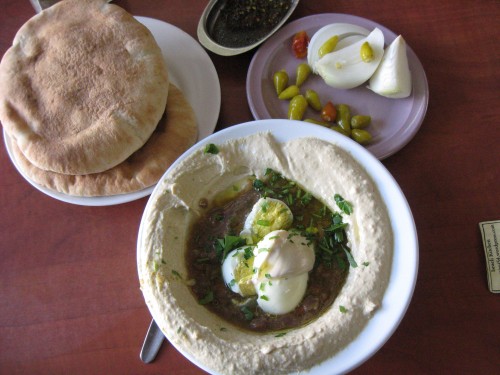
Dark, meaty fava beans set down in a nest of yellow choumous and a beige ring of tehinah, topped with a brown hamine (long-cooked) egg. Parsley, to offset the earthy flavors. Lemon juice, to balance the dish with a little acidity, and a generous drizzle of good olive oil. On the side, pickles for piquancy, and a little bowl of hot sauce. Onion, just because. Some preserved lemon quarters. And fresh pitas. Nutritious, cheap, comforting. Satisfying in every sense. It’s ful and hummous: the Middle Eastern workingman’s lunch.

The ingredients are always the same, but each cook makes them a little different. Some people like dark fava beans, using a traditional pot whose long neck allows slow evaporation of the cooking liquid. Some just boil up the quicker-cooking, lighter, haricot bean. Either way, ful and hummous is easy to make, but requires a number of steps. If you want to do this totally from scratch, you will need to prepare three ingredients the night before: beans soaking in one bowl, chickpeas in another, and a pot of gently-boiled eggs simmering on the stove.

Classic Ful and Hummous
This recipe serves 4-6.

Ingredients:

500 grams/1 lb. of dried fava or haricot beans
water for cooking
5 cloves of garlic
a bay leaf
olive oil
the juice of 2 lemon halves, and 1 more tablespoon
salt
1 tsp. cumin
6 eggs
the brown, shiny peels from 2 large onions
2 cups of chickpeas, or 1 can
1 cup tehina, plus 3 more tablespoons

First: The Ful.
Pick over the beans.
Rinse them and put them to soak overnight in plenty of water. Next morning, drain the beans and put them up to cook in fresh water.
Add a fat clove of garlic, a bay leaf, and some olive oil to the water. Cook the beans till tender. Favas take 1-3 hours. If you choose white beans, they will cook in far less time – up to an hour.
When the beans are soft but not falling apart, crush 2 fresh cloves of garlic into a small bowl. Stir 1 tsp. each of salt and cumin in, and add this seasoned garlic to the bean pot. Add a tablespoon of lemon juice. Stir the beans up. Crush some of them with a potato masher or a fork, so that they’ll absorb the flavors of the seasoning. Let them cook another 5 minutes. Then either turn the flame off, or start serving.

Second: The Hamine Eggs.
You can just boil eggs as usual, or take this opportunity to do it the old-fashioned way. Make several, it’s not worth the trouble for only one or two.
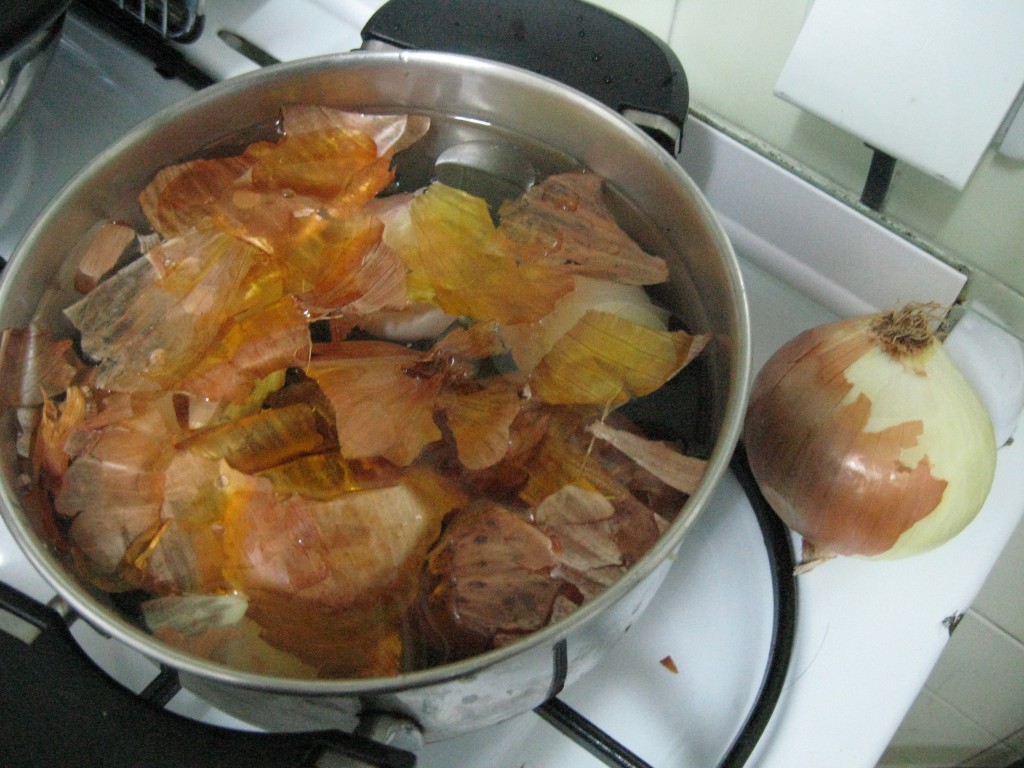
Take 6 eggs and the peels from 2 large onions. Put it all in a pot.
Cover the eggs and peels in plenty of cold water; bring to a simmer.
Drizzle a layer of olive oil over the surface. This prevents the water from evaporating during the long cooking period. Simmer the eggs, covered, over the very lowest flame you can achieve for 6 hours or overnight. They are delicate, creamy eggs, unlike any others.
Third: The Hummous
Put 2 cups of dried chickpeas in a separate bowl. Cover them with plenty of water and let them soak overnight. As with the beans, drain them, and cook in fresh water till soft. It’s not a sin to open a can of chickpeas either. Although fresh-cooked always taste the best, canned chickpeas still make good hummous
Do not add salt to either beans or chickpeas till they are completely cooked and easy to mash.
Put the cooked or canned chickpeas in a blender or food processor. To them, add

1 fat clove of garlic
3 Tblsp. of tehina
salt to taste
juice from 1/2 lemon
2 Tblsp. olive oil

Blend everything to a smooth paste, adding a little more olive oil if you like. We like our hummous with some texture in it, but if you like yours more mayonnaise-like, add more oil and a tablespoon of water, and keep blending till you like it. Once you’re satisfied, cover the hummous and set it aside while the beans finish cooking.

Fourth: Tehina.
Put into a bowl:

1 cup raw tehina paste
3/4 – 1 cup water, depending on how thick or thin you like it
1 fat clove garlic, crushed
salt
olive oil
juice of 1/2 lemon

Blend all the ingredients, either by hand or in the blender. If you’re not used to the ways of tehina paste, don’t be alarmed that it initially becomes very thick when mixed with water. Keep mixing, it will smooth out amazingly.

To serve:
Spoon a generous amount of hummous onto the plate. Take the spoon and spread it into a neat circle, thinner in the middle.

Spoon a ring of tehina on the inside of the hummous circle.

Put a pile of hot beans in the center of the plate. Top the beans with a little chopped onion, chopped parsley, and a peeled, still-warm hamine egg. Squeeze lemon juice over the whole; drizzle olive oil over it. If you’re fond of hot sauce, drizzle a few drops of it over the dish too.

Put some small plates or bowls with pickles, olives, sliced onions, or pickled lemons in them.
Now tear a chunk off your pita and use it to scoop up some of everything. Savor every mouthful, it’s the real McCoy.

Enjoy!

See also:
Organic Trend Hits Tel Aviv Where It Counts. The Hummus.
Pickling 101 – Vinegared Cucumber Salad

COP15 Outcome

13

ice_breaks_10[1] The glaciers are melting – and seas are rising – is climate change to blame?

It’s over: the two week long COP 15 conference on global warming and climate change ended Friday night with a weak agreement to try to keep global warming temperature levels at or below 2 degrees Celsius, and to allocate a sum of $ 30 billion towards dealing with the effects of climate change by the year 2012.

The hastily hammered out deal also calls for a measure of transparency to be established between developed and developing nations towards dealing with the consequences of global warming and climate change.

While not perfect by any means, the agreement, signed by leaders of the U.S., Brazil, India, South Africa, and China, was perhaps better than nothing, and at least kept the conference from ending in failure; with nothing more than photo shots of the participants, along with video clips of the outside “street participants” in running battles with Danish police and with scores of them being arrested and detained until the conference’s end.

A Jewish Heart for Africa Shines Its Jewish-American-Israeli Solar Lights During Hanukkah

5

jewish-heart-africaafrica at nightPicture an African village at night.

It is completely dark.

Look at the continent of Europe above (pictured left); and Africa below. Notice a stark difference?

In Africa, village children struggle to study and complete their homework by candlelight. The medical clinics are closed. Emergency surgeries and nighttime births are performed by the light of a leaking kerosene lamp, held close to patients’ open wounds. And there is no refrigerator. Without proper storage, children will go without vaccines for tuberculosis, measles and other preventable diseases.

But Israel has the power to help, says the Jewish Heart for Africa, a non-profit organization that uses sustainable Israeli technologies to facilitate African development.

Since its founding in 2008, the organization has completed 23 solar projects, powering African schools, medical clinics and water pumping systems in Ethiopia, Tanzania and Uganda. They have provided 70,000 African people with electricity for education, clean water and medical care. 3,000 children have received vaccines stored in their solar powered refrigerators.

Targets for Solar Deployment in the Middle East – The First Step After COP15

4

Rhone-ReschA guest post by Rhone Resch (right), president and CEO of the Solar Energy Industries Association (SEIA):

There is clear evidence that we need to do more and we need to do it sooner to address the pressing problem of global climate change. Yesterday, a delegation of global solar industry groups released a report at the UN Framework Convention on Climate Change (UNFCCC) in Copenhagen that showed how much electricity demand can be met by solar energy through 2020.

The European Union and the United States – the two most accelerated targets – indicated that with the right policies solar meet 12 percent and 15 percent, respectively, of electricity demand by 2020. With world-class solar resources, the Middle East will clearly have the opportunity to play a significant role in meeting similar targets.

The Penny Drops: Israel Solar Energy "Gold Rush" Threatened By Government Hold

9

After a burning hot run, Israel’s solar energy business doesn’t look so hot right now. Hundreds of solar-related jobs at stake.

Not long after local and foreign companies made investments in Israeli solar energy installations to benefit from the very attractive feed-in tariff, a sudden announcement by the Israel Electric Company (IEC) states that its subsidy funds have reached the quota. A panic in the country’s burgeoning solar energy development industry has ensued.

The announcement, published in several local newspapers, including Haaretz, reported the sudden “halt” announcement by the IEC.

The company said that funds allotted by the government’s National Infrastructure Ministry, together with the Public Utilities Authority (electricity sector) have dried up. From all the sun shining on the solar industry?

Eco Rabbi – Parshat Miketz – Solutions for Famine

3

Cow Grazing in WaterEvery week, observant Jewish people read a section of the Torah. This week, our in resident Eco Rabbi looks at Parshat Miketz.

Okay, this week’s parashah is a no-brainer. Seriously, how can an Eco-Rabbi NOT talk about Parshat Miketz? The parashah which contains the solution for dealing with famine…

Parshat Miketz opens with Pharaoh, King of Egypt, receiving a dream in which he sees 7 fat, healthy cows consumed by 7 weak and sickly cows. Then Pharoah sees 7 fat, healthy bundles of grain consumed by 7 weak and sickly bundles.

After consulting with every wise man around he finds Joseph, who had been thrown in jail. While in jail Joseph helped, correctly, interpret the dreams of 2 cellmates. One of them ended back in Pharaoh’s court – and it was he who recommended Joseph to Pharoah.

Lebanon and United Nations to Develop Solar Energy Projects

17

solar panel abu dhabiLebanon’s Energy Ministry plans to work with the UN’s regional development project, UNDP to use solar energy for both heating and energy in various parts of the country, reports the UPI.

The UN agency currently has at least 25 development projects ongoing in Lebanon, with at least two of them involving solar energy.

We’ve already reported that solar energy is being developed in Lebanon for powering the country’s Alfa mobile phone service company as well as for providing electricity at a new student center at the American University of Beirut which received an award for “green” architecture. The new student center, called the Charles Hostler Student Center, now receives most of its electricity from solar panels to catch the sun’s rays and convert them into electricity.

Imagine the Middle East in the Year 2500: a Worst Case Climate Scenario

4

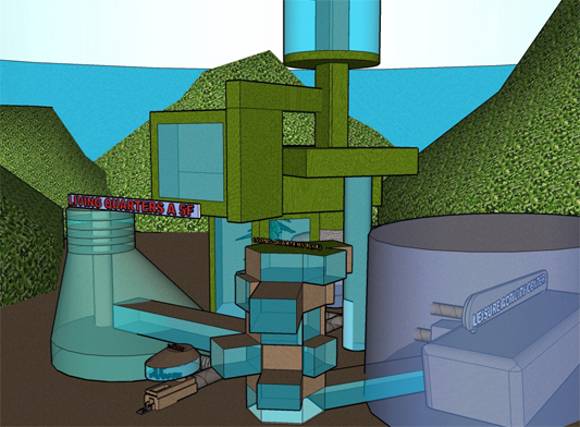
polarcitiesDan Bloom, an advocate of polar cities (a prototype for a building above), paints a bleak future for the Middle East. Action against climate change is needed now.

Two recent international news stories about climate change (“How much more proof is needed for people to act?” and “Ignoring the future — the psychology of denial,) emphasized the importance of facing major issues that will have an impact on the future of the human species.

Climate change is indeed an issue that is on everyone’s mind, and while most people in Israel and other parts of the Middle East seem to be far removed from the experts who recently made their way to Copenhagen to try — in vain, as it turns out — to hammer out blueprints to prevent global warming from having a Doomsday impact on humankind, the Middle East will also be on the front lines of these issues.

Despite most observers’ belief that solutions lie in mitigation, there are a growing number of climatologists and scientists who believe that the A-word — adaptation — must be confronted head-on, too. The fact is — despite the head-in-the-sand protestations of denialists like Marc Morano and Sarah Palin in the USA — that we cannot stop climate change or global warming.

Slow Food Movement is Active in Beirut

5

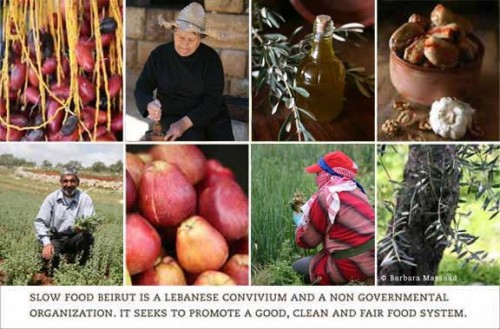
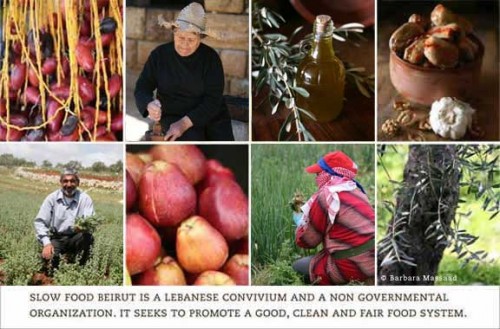
beirut slow foodThe Slow Food Movement, founded in 1989, in a non-profit organization that attempts “to counteract fast food and fast life, the disappearance of local food traditions and people’s dwindling interest in the food they eat, where it comes from, how it tastes and how our food choices affect the rest of the world.”

Delicious and important.  And the movement is hitting the Middle East.

Slow Food Beirut is becoming more active, encouraging a clean and fair food system.  It’s website offers a variety of ways to get involved with the movement, including: becoming a member, starting a convivium (a branch of the movement), proposing a presidium (a small project to support artisan producers), nominating a product to the Lebanon Ark of Taste, hosting an event at your farm/land, creating a recipe with an Ark food, and hosting a tasting for students.

VIDEO: Meet Israeli Water Technologies from Watec

3

[youtube width=”560″ height=”425″]http://www.youtube.com/watch?v=pU6JKptBq7Y[/youtube]

Interviewing Oded Distel from NewTech, and many others Harvey Stein from ISRAEL21c goes to the Watec conference a few weeks ago. Here is his video on water savings technologies. Companies featured include Takadu (smart grid technology), see the poop pellets of Applied Cleantech; there is also Solaris Synergy, solar panels that float on water. Enjoy the video, meet some new companies.

::ISRAEL21c

Human Coconut Waste Becomes Perfect Abode for Octopus

5

Australia Coconut OctopusIn this Dec. 10, 2009 photo taken near Indonesia and released by Museum Victoria, a veined octopus, Amphioctopus marginatus, hides in a coconut shell. Photo: AP

Not long ago Green Prophet reported strange activity of corals eating large jellyfish, as a possible response to global climate change. A team of young Israeli scientists got the pictures.

Even more bizarre behavior, the AP news source reports, Australian scientists working in Indonesia have found an octopus that collects discarded coconut shells and turns them into small homes on the sea floor. Reporting their findings in the journal Biology, they say it’s the the first instance of tool use in invertebrates, that has ever been reported. (Invertebrates are animals without spines).

The octopus, Amphioctopus marginatus, chooses its half coconut shells, empties them out, hauls them about 20 meters across the sea floor and assembles two together to make a perfect hide-out. Why are they doing it?

A DIY Build Your Own Electric Car

17

do it yourself electric car battery photo Mod your petrol-run car – and make it electric!

A lot of car buyers today are interested in cutting their carbon footprint – that’s why they want to purchase both hybrid and electric cars.

Hybrids (Karen writes about the pleasures of owning a Prius), are a combination of  both a gasoline and electric power source.

Hybrids are becoming very popular in Israel, despite their higher costs.  While these cars are more economical to drive, they do not completely solve the exhaust emissions problems as at least 70 -80% of the overall driving is still being done with the gasoline engine.

Then there are full electric cars: currently being developed by Israelis at the company Better Place, these guys have made agreements with both Renault and Nissan for developing full electric vehicles, which are being promoted at the COP 15 climate change conference now on. Full electric cars are still very expensive, however, and beyond the financial reach of many people.

With this in mind, if you don’t have the cash to lay down for a hybrid and can’t wait for a decent full electric solution why not build one of own?

You can convert your old polluting fossil fuel set of wheels to a totally electric one. I’m not referring to slapping a used electric motor from a washing machine onto a go-cart frame, or building a glorified golf cart from a set of plans taken from a back issue of Popular Mechanics (for those who are familiar with this popular American “how to do it” magazine).

A guide on converting a regular gasoline power car (in this case a ’95 Toyota Corolla) to on powered by electricity, appeared recently in an environmental website Residential Solar Power that told how to make this conversion, and on a limited “shoestring”  budget at that.

The text there is a little hard to follow and it won’t be easy. Either you have to be mechanically inclined, and have the proper tools and a car lift: to remove the old gasoline engine and exhaust system, and replace it with a suitable electric motor (DC current recommended); and create a “cradle” large enough to accommodate several automobile batteries (that will supply the power).

You also have to alter the car’s hydraulic transmission bit to work with new engine, as well as install a special battery charging unit to recharge to batteries (or do the old way with jumper cables attached to each battery to recharge it once it goes flat).

Supposedly, if all goes well with the conversion, you should wind up having a car that will accelerate off the line much faster than a gasoline driven one, and which should go at least  200 miles (300 km) at a top speed of 50 mph (80 kmh).

That’s okay for city driving, but won’t be good for highway speeds, however. And like having a sexual transgender operation, it would be a bit difficult to revert back to what was before (in this case, what the power source was previously).

There is also the problem on convincing your local governmental authorities, such as the Public Safety Department or Transport Ministry to authorize a license to drive such a car on public streets and roads. The article itself didn’t mention anything on how to deal with this “minor technicality.”

You’re on your own in dealing with this matter. But people who’ve converted their cars to on biodiesel and natural gas, may very well have the same problem.

Other people are trying to convert their cars to run on electricity, including a man in the American state of Mississippi who converted an old VW Scirocco to run on battery power. But his model entails the use of no less than 15 ordinary car batteries to supply the needed power, and the conversion costs much more.

But if the Residential Solar Power article  holds true, you may (hopefully) invest only a few hundred dollars, or the equivalent in your local currency, and wind up with an emissions-free car that, besides the cost of replacing worn out batteries, will be environmentally greener to drive and maybe more economical too.

If you have the money, however, it might be better to wait until Renault’s ZE Concept electric car line comes out around the end of 2012.

Israeli NGOs Light Channukah Candles and Push for Government Action in Copenhagen

0

Last night, Israel’s NGO delegation to the Copenhagen climate talks kicked off a week of activism with a very special Channukah candle-lighting.

Delegates gathered in City Hall Square of the city to publicly light the Channukah menorah, but with a climate-flavored twist.  Instead of singing the traditional words to age-old Channukah songs, the activists changed the words to reflect their reason for attending the conference.  “We light this candle for coal, and for cars – when will Israel have a [climate] plan?” they sang with mischievous grins (see video below, in Hebrew).

This clever stunt is one of thousands of NGO (non-governmental organization) activities taking place throughout the duration of the Copenhagen conference.  According to the UN framework, only official representatives of nations can make decisions in climate negotiations.  But that hasn’t stopped hordes of activists from descending on the Danish capital to push their leaders toward a strong, effective, and just international climate treaty.

Israeli Renewable Energy – Why Israel, Why Now?

11

danny-levBy Danny Lev, Analyst in IDC Research IL (www.idc.com)

An old Israeli joke describes how God led Moses through the desert to the Holy Land for 40 years, through hardships and dangers, only to lead the Israelite nation to the only spot in the Middle East where there isn’t a drop of oil.

Two thousand years later, things have remained pretty much the same. Today, Israel is considered an “island-state”, with over 99% of its capacity produced from imported fossil fuels.

In alignment with global trends, Israel has experienced a recent surge of new ventures in the field, comprising commercial, academic and regulatory initiatives. Although a pioneer and home to world leaders in the RE field, the post-80s low oil pricing era left the Israeli RE industry relatively dormant in comparison with its blossoming high-tech activity.

Recent developments in RE market volume and value have once again sparked an interest in RE-oriented R&D, as well as the initiation of ambitious domestic power generation projects. From my position as senior consultant at Ernst & Young’s RE division and later as an IDC cleantech analyst, I personally witnessed the transition of RE companies from marginal tree-huggers to hot investment opportunities. Now all that is left to be seen is if and how the country will harness recent supportive trends in becoming an energy-efficient global market leader.

Multifaith Green Writers Unite in Jordan

21

green prophet logo imageIsraeli, Palestinian, and Jordanians host cross-border workshop on environment blogging in Jordan to spur Middle East change.

The UN climate change meeting in Copenhagen is putting a lot of pressure on oil-producing nations in the Middle East; but the reality is that most countries in the region are failing miserably in all areas of environmental protection. To that end, the United Nations has called for more reporting on the environment in the Middle East to spur awareness and change, and three organizations have taken on the challenge.

Environmentalists and writers from Palestine, Jordan and Israel will meet in Madaba, Jordan this month for a 2-day workshop: “Blogging for the Environment” on December 20-21. The workshop will be hosted by Green Prophet, the premier Middle East environment news blog, the Jordanian youth organization Masar Center, and the Palestinian Volunteering for Peace group that organizes service trips for foreigners.

Funded by the San Francisco-based United Religions Initiative, 15 prominent journalists and bloggers in Arabic, Hebrew and English will meet to brainstorm new ways to report on and instigate environmental change in areas of activism, design, urban health, religion, and clean technologies. The bloggers plan on reporting their encounter (here) on GreenProphet.com.