
Home Blog Page 657

10 Tips For Greening Your Passover

2

Getting outside is one way to “green” your Pesach. 

Pessach, or Passover in English, is an interesting paradox of both returning to a way of simple living as well as celebrating the holiday in a truly royal manner. Matza, one of the primary mitzvot of the holiday, is made of the most basic ingredients – flour and water.

Yet, the Seder (the holiday meal) should be a truly royal event to the extent that it is the only day of the year when Jews are supposed to use all of their finest dishes. Dig into matza ball soup!

Perhaps this paradox is symbolic of the Jewish belief that one can only become a free man, a member of royalty, by freeing oneself from materialism. In this guest pot, Sviva Israel – an environmental education center – offers 10 tips to make Pesach more meaningful and kinder to the environment and one another.

1. Clean out your shelves– Do we really need all the things in your closet? Most of us don’t need 30% of what we own. Clear up your shelves and enjoy the extra space. You don’t need to rent space in Public Storage for unnecessary possessions.

2. Your Trash Can Save Others Cash – Clothing, food and other items in good condition can be used by others if you don’t need them. Give them to friends, charity organizations, or leave them neatly by the trash bin for others to take. What must be trashed can be separated into paper and plastics for recycling, which reduces landfill and helps preserve our green spaces.

3. Scavenger Hunt – There are some great treasures to be found that others have thrown out. Before Pesach, many people leave out great books, toys, furniture and the like. Save money and landfill space by taking them home and enjoying them.

4. Avoid Harmful Chemicals – Heavily acidic chemicals are bad for your health and the environment. If you can afford it, buy organic cleaners, or try old-fashioned alternatives like vinegar and baking soda.

5. Holy Fire – Fuel your hametz fire with recycled mitzvoth by burning your lulav from Sukkot . Burn your hametz in an area that won’t leave the fire marks until the winter rains. Remove the hametz from plastic and polystyrene packaging before burning, to avoid releasing dangerous chemicals in the air that can cause respiratory disease.

6. Seder Solutions – Ideally, according to Halacha and to minimize our environmental impact, one should not use disposables for the Seder. If you feel you can only host the 30 guests you have invited to your Seder by serving it on disposables, plan to use the minimal amount for each table setting, without superfluous courses and trappings.

7. The Simple Life – Do we really need flour-free Cheerios and pot-noodles for Pesach? Try skipping processed and over-priced Kosher-L’Pesach Foods and enjoy the simple pleasures of a baked potato and salad. Your body, your wallet and the earth will appreciate it.

8. Afikoman – Don’t offer the kids the latest electronic fad. Try suggesting your children a family trip during the year. You may be surprised to find they prefer to spend special time with you to the latest gadget. Alternately, think of gifts that can inspire their love of the natural world – binoculars, bug-identification kits, nature books, etc.

9. Stay Close to Home – Instead of guzzling gas by driving for hours up north and getting stuck in traffic jams, discover the beautiful trails that can be found near your home. There are some beautiful trails and nature sights close to most cities in Israel.

10. Aliya LaRegel – Recall the traditional pilgrimage on foot or mule to Jerusalem using the modern-day equivalent of public transportation. You’ll discover that it can be fun, economical, less stressful than trying to find parking places, and you’ll help reduce your ecological footprint.


Ecological Activities in Israel During Passover

1

hiria israel's shit mountain garbage photo aerialAn impressive aerial shot of Israel’s garbage mountain – site of new ecological activity – for Passover.


You’ve already begun your preparations for Passover – you’ve starting finishing up all the yeast (or hametz) in the house, you’ve thought of ways to avoid food waste during the holiday, you’ve bought local, handmade and green gifts for your family and friends, and you’ve cleaned your home with an emphasis on reducing, reusing, and recycling.

So what are you going to do during the days of the holiday?  What do you have planned? We’ve assembled a list of ecological activity suggestions for those of you living in Israel, and for those of you that are young and old.

Aerial Acrobatics on Hiria (aka Trash Mountain): On March 31st, Hiria Mountain (the huge garbage hill that has been trying to green its nasty reputation in recent years, and which is pictured above) will be offering tours to the top of the mountain where visitors will be able to enjoy a spectacular view of Gush Dan and a special acrobatics show.  For more information call Yaniv at 050-4488962.

The Earth is in Our Hands Eco Festival: On April 1st and 2nd, Neot Hashikma Park in Rishon Lezion will be hosting an eco festival for the entire family (check out the poster to the left).  Events include a green circus, paper recycling and crafting workshops, composting instruction, and eco-art exhibitions.

Potato Festival: This Potato Festival happening on April 1st in Hevel Habasor will include tours of the potato fields, a colorful farmer’s market, and a pet adoption station.  For more information call 052-9991003

Yevulim Farm Ecological Pesach Camp: The 5-10 year old campers at this ecological camp in central Israel will be exposed to a variety of activities that strengthen their connection to nature.

Read more about Passover:
Eco Rabbi Explores Passover Cleaning as a Good Opportunity to Reduce, Reuse & Recycle
A Happy, Sustainable Passover to All
Ten Tips to Avoid Food Waste on Passover

I Pee, You Poo, We All Need Peepoo (Emergency Sanitation Bags That Grow Crops)

7

peepoo bag how to photoThe Peepoople people have invented the Peepoo bag to solve sanitary problems. Good for disasters like Haiti, Maurice argues it could solve emergency sanitary problems in Gaza.

Finding solutions to sanitation problems in the developing world may get a big boost with the advent of a the Peepoo, a special biodegradable toilet bag plugged by the New York Times. Invented by a Swedish entrepreneur, this bag costs pennies to make, is designed to break down solid and liquid human wastes and turn them into fertilizer after killing the dangerous disease causing bacteria found in human feces. It could work to help cut down sanitation-related deaths around the world, where more babies die from diarrhoea than anything else. In the Middle East, it could work in Gaza where sewage treatment facilities are badly needed. The invention is a biodegradable bag, that when you “pee” or “poop” in it, works to break down the nasty bacteria that can lead to infection. It’s great for camping too. 

Middle Eastern LG Electronics Design Competition Concludes with Iranian Eco-Friendly Winner, Ali Kajuee

0

Ali Kajuee from Iran wins for his eco-friendly design, called “Ecoquina” [Image credit: AHMED KUTTY/Gulf News]

In order to better understand the needs of their consumers, and in particular their younger consumers in the Middle East, LG Electronics launched a three-month competition for what it referred to as “Conceptualife” kitchen design.  The company appealed to students all over the Middle East and African region in order to find out where this generation of designers feels should go into a kitchen.

Hamad Malek, the LG Director of marketing and communications for LG in the Middle East and Africa, said that “we feel great ideas can come from raw fresh minds, hence the students.  The sheer design and technology elements incorporated into the designs gives us a good understanding of what consumers are looking for.”

Is Urjuan a Wise Expenditure of Qatar's Oil and Gas Wealth?

4

Urjuan qatar beachThe Urjuan City Development is a Symbol of Qatar’s Rapid Economic Growth

In February we wrote about the memorandum signed by Qatar and Iran, which solidifies their mutual commitment to preserve the environment.   We also wrote about an exciting conservation effort to protect Qatar’s animal and plant populations.  With the third highest natural gas reserve in the world, and an impressive petroleum supply, we applaud when Qatar leverages its economic strength in support of environmental initiatives.  However, the next in a chain of building and design profiles, which ascertain the existing and potential impact on the Middle East’s environment, demonstrates that Qatar’s environmental policies are not always consistent. Urjuan in Al Khor, Qatar, was officially launched late 2008 and is expected to be completed in 2013.

RECIPE: Butternut Squash Stuffed With Quinoa

3

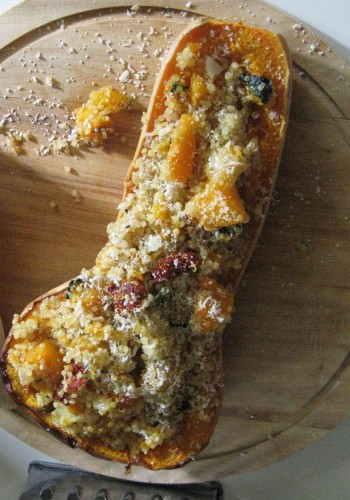
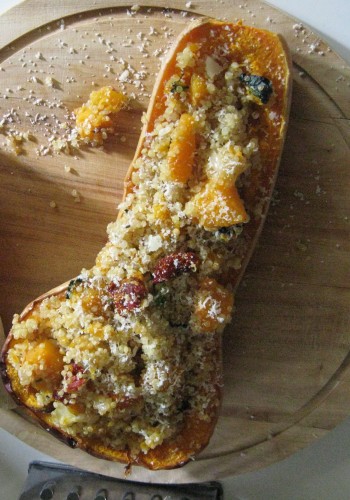
Butternut squash stuffed with quinoa Hungry? Run on down to your local shuk and get yourself a butternut squash.

Butternut squash is still in season. Try stuffing it with quinoa, the seed that the pre-Columbian Native Americans called “mother of the grains.” With its nutty taste and high nutritional protein levels (not to mention amino acids and minerals), quinoa’s a super-food. Nowadays you can buy it in health food stores and supermarkets everywhere.

Like rice, quinoa cooks up light, yet satisfies hunger. Get it organic if you can, and wash the grains before you start cooking.

Turning Another Nissan Leaf in the Middle East

nissan leafThe Leaf won’t be sprouting its electric engines soon in the Middle East, says Nissan CEO.

Nissan’s new Leaf electric car model may be about to roll off the company’s production lines, but it will be a while before it will be available in Middle Eastern markets, according to the company’s CEO, Carlos Ghosn. The Leaf, hailed by Nissan as a totally electric and emission free vehicle was featured in a previous Green Profit article I where Mr. Ghosn said that “the Middle East is not a prime target for electric vehicles.”

Stop Smoking, Stupid!

5

smoking pipe hookahA new study finds that smokers tend to have lower IQs. 

If you live in the Middle East, like I do, you’ll notice one of the most irritating habits you can’t escape is smoking. Cigarettes, pot, hookah pipe. Either you fight it or join them – something I did after being a virgin non-smoker for a whole 27 years.

I used to wage campaigns against my parents and scream with outrage when they smoked around me. At age 27, when most people want to stop, I started smoking cigarettes. One or two a day. The habit was later fed after dating a chain smoking man (advice: never date smokers). I’ve since quit both the guy and the habit, but does my old habit (or choice of partners) make me stupid? Probably, according to a new study from Israel.

We already know how cigarette butts pollute the ground and beaches, and how the smoke influences our quality of life and that of our children, and we generally think that people who smoke despite numerous health warnings and the increased risk of cancer do so because of social and economic reasons. Perhaps it’s a matter of irresistible peer pressure or maybe they simply don’t know any better? Not so, finds a new Israeli study that links smoking to lower IQs.

Dr. Mark Weiser from the Sheba Medical Center at Tel Hashomer Hospital in Israel found a direct correlation between the number of cigarettes a smoker inhales and his IQ. People with lower IQs are the ones who tend to be smokers and the heavier the smoker, the lower the IQ.

“It was really quite a straightforward study,” says Weiser, who compared the cognitive test scores of male adolescent smokers and non-smokers. “We looked at cross-sectional data on IQ and smoking cigarettes, and looked at people’s smoking status and their IQs,” he says.

Some media reports distorted the findings of the study that appeared recently in the journal Addiction, and reported that smoking actually damages your IQ, but Weiser says this is not likely the case, and it’s not what he and his colleagues found in their study.

“It’s very clear that people with low IQs are the ones who choose to smoke. It’s not just a matter of socioeconomic status – if they are poor or have less education – and because of that do less well on IQ tests. And that’s really the story,” he says.

Peer pressure tactics that are smoking hot

What the study does show, however, is that there could be a new intervention approach for health specialists at schools and in institutions where young people and teens are at risk for smoking. People with lower IQs could be targeted for specialized programs, helping them to kick or avoid the habit altogether.

The results could also be used to pressure friends and colleagues to quit smoking. If smoking means you have a lower IQ, this could be information one might be unwilling to advertise. Weiser agrees that “perhaps” this may help to convince smokers to give up the habit.

As a scientist, he sees his study as something that adds another piece of the puzzle to a larger group of studies ongoing around the world. Some scientists are testing the hypothesis that on average, people with lower IQs tend to make poorer decisions regarding their health. These are people who may be overweight, will abuse drugs more often and will exercise less to improve their health status, explains Weiser, who examined a cohort of 20,000 Israeli military personnel in his study.

Weiser and his colleagues found that 18-year-old men who smoke a pack or more of cigarettes a day were likely to have an IQ score that on average is 7.5 points lower than that of young men who choose not to smoke.

Unlike other studies that correlate health and IQ, the researchers did not include people who suffer from any major health problem, since these people are weeded out during army selection. This is one of many health-related studies based on the data collected by the Israel Defense Forces before, during and after recruitment.

Family status data not relevant

In the recent smoking study, the researchers found that 28 percent of the new recruits smoked one or more cigarettes a day; about three percent admitted to being ex-smokers, while 68% of the young men had never smoked.

Even after examining socio-economic data, including the level of education of the recruits’ fathers, the researchers found that the men who smoked showed a significantly lower IQ score than their non-smoking counterparts did.

An average IQ for a smoker was found to be about 94, while non-smokers averaged around 101. Interestingly, the researchers point out that a steady drop in IQ levels corresponds to a greater number of cigarettes smoked per day. Those who smoked more than a pack a day had IQs of around 90, for example. An average intelligence IQ score is described as one in the range of 84 to 116.

Even in studies of brothers, where environmental factors growing up can be assumed to be similar, the researchers found consistent results: The non-smoking sibling achieved a higher IQ than did his smoking brother.

The researchers conclude: “The IQs of adolescents who began smoking between ages 18-21 are lower than those of non-smokers. Adolescents with poorer IQ scores might be targeted for programs designed to prevent smoking.”

There are plenty of help programs on the web: if aids do not work for you, consider seeking help through substance abuse treatment programs.

More ungreen news on smoking:
No Ifs, And Or Cigarette Butts
Cigarette Cones – So You Don’t Butt Out on the Beach

Reflecting on Israel's Water Usage and Reviewing Water Saving Tips Before International Water Day

2

world water day tipsKaren provides some water-saving tips in praise of International Water Day, Monday. [image via: RonAlmog]

This coming Monday, March 22nd will be International Water Day, a time (almost like New Years) for countries to reflect upon their last year of water usage and make resolutions for the year to come.  This is especially important in the Middle East, where water is frighteningly scarce.

International Water Day is an initiative that came out of a 1992 United Nations Conference on Environment and Development (UNCED), and has since been celebrated every March 22nd.  The theme changes every year, with the theme this year being “Clean Water for a Healthy World.”

Super-Sex Insects With Breakfast of Champions To Be Better Lovers, and Killers!

4

A new super-sex protein jock shake “A Breakfast of Champions” for fruit flies and mosquitoes to make them better lovers, and mercenaries of their own race?

Writing from the beach in Panama City, Florida during Spring Break this new research from Hebrew U seems to ring true: that “males with the muscle,” get the chicks – in both the human and insect worlds. According to a new study at an Israeli university, researchers have uncovered a new sustainable pest control technique using “super-sexed” (but sterile- sorry guys) male insects to copulate with female ones. The approach, the researchers hope, will help the agri business use less chemicals, such as DDT, used since early in the last century to control crop pests or carriers of diseases.

Their trick? A Breakfast of Champions jock drink.

Green Pillow Talk: Sustainable and Healthy Choices For Your Bed

8

sex bedroom green photoWith all the time we spend in bed, it behooves us to make sure they are safe as well as comfortable.

Our pillows can do more than cradle and support heads and necks. Use the wrong kind, and they can make you toss and turn in your sleep. That is why this post is dedicated to making sure that your ‘pillow talk’ –– and pillows –– includes words like, green, clean and sustainable.

Conventional pillows typically contain petroleum chemicals that release volatile organic compounds into the air in your home.  Fire-retardant, non-iron, moisture-resistant pillows are made from compounds that are bad for your health and bad for the planet. Not to mention that many synthetic pillows make great incubators for dust mites, one of the leading allergens that are irritating to lungs, particularly in people with asthma. Yuck.

There are alternatives that are natural-filled and appealing to all personal pillow preferences. When you are choosing, don’t just consider what goes in the inside; make sure it is covered in organic cotton too. Below is a list of popular option, available from many vendors via the web. We’ve personally tested all four, and can vouch for the pros and cons. If readers know where to purchase any of these in the Middle East, we ask you to share this information in the comment section.

  • Natural Shredded Rubber
    A byproduct of the rubber tree, this renewable resource is sometimes called latex. Great for people with allergies and chemical sensitivities, these pillows offer firm support. They may take some getting used to and some sleepers don’t like the smell that new pillows give off. Make sure to avoid synthetic rubber.
  • Wool Fiber
    Choose pure virgin wool. Its many benefits include breathability, flame resistance, moisture absorbency, and bacteria/dust mite resistance. They also maintain temperature during hot or cold climates. Drawbacks: these pillows may be too firm for some, and they can flatten out over time.
  • Feathers/Down
    Pillows made from duck or goose feathers and/or down, and very comfortable, and come in a variety of qualities and price points. The higher the down content, the softer the pillow but higher the cost. May not be firm enough for all sleepers, or appropriate for people with allergies. They also need to be regularly ‘fluffed.’
  • Buckwheat Hull
    Buckweat hull pillows conform to the contours of your head and neck. They offer excellent insulation during summer and winter climates, and generally are reasonably priced. It may take some getting used to as they are ‘noisy’ when you turn in your sleep. They also need to be replaced, and don’t control for odor as well as some other options.

Greening your bedroom is a personal choice that must take budget and comfort into consideration. It may not be feasible for everyone to replace their entire bedroom and bedding with organic, health-conscious products, which is why we recommend starting with your pillow.

As for the next step, we suggest sleeping naked. It’s as natural as the day you were born, and makes breakfast in bed all the more fun. Stay tuned for more ways to make your sex life green, and your green life sexy. Or read our past post on Greening Your Bedroom.

The Best Way to Keep Buildings Green is Not to Build New Ones

2

Central Tel Aviv, Cira 1940’s: A Sustainable Idea Then and Now

All over the Middle East, many old and often historical buildings are being torn down in order to “make way” for new, modern ones. This trend is especially true in cities like Cairo, Egypt and Tel Aviv, Israel, where the quaint and classical architecture of the “colonial period” (which also applies to India) is often forced to give way to glass faced skyscrapers which even though are claimed to be safer in the event of earthquakes and other natural disasters are less sustainable in regards to keeping them cool in summer or warm in winter.

This issue was expressed in an article in Treehugger where they reported that older styles of architecture, built before the “thermostat age” we live in now, had to be constructed to enable people to cope with the climate they lived in – particularly in regions where people experienced extreme changes in temperature during various times of the year.

Dubai-based Timelinks Designs Modern Ziggurat

3

ziggurat timelinksIs it really sensible to squish one million people into this self-sustaining city/building?

Like many of Dubai’s projects The World, which will exacerbate shoreline erosion and habitat loss, and Burj Dabai, reputedly the world’s tallest building, are flashy and expensive.  They are also divorced from the United Arab Emirates’ environmental hazards such as scant freshwater supply and desertification, and though undeniably clever, their eco-footprints are questionable. Timelinks, a consortium of urban planners, scientists, and architectural designers, has designed another less-than-sensible solution to the UAE’s environmental and urban crises.  They call it the Ziggurat.

AGRAme, Honeywell, and Biofuel Projects in Dubai

samphire for biofuel imageHoneywell launches project that converts the oil from salicornia plants, commonly known as samphire into biofuel at Dubai’s AGRAme conference later this month. Image via me’enthedogs.
Global issues concerning green agriculture and energy sustainability have raised many viability questions during the early 21st century. Collaborate efforts of world leaders, non-profits, and research institutes have made great achievements in the area. Units like the CGI and Doug Band tackle Haitian Rice Crop Sustainability through the IRRI (International Rice Research Institute), while also manipulating emission reduction in the San Francisco Bay Area of the USA. Although, the US isn’t the only one playing their role!

Organizations like Ultra Green Middle East tackle issues like water treatment/purification, waste-to-energy and establish LEED eco-friendly buildings. Subsequently, continued success of green initiatives within the Middle East has led us to some of the greatest agricultural innovations yet.

Grow Old With The Sun As Israel’s Migdal Invests in Sunday Solar

1

A large insurance company from Israel invests about $30 milliom in solar energy company Sunday. Image via mcohenchromiste.

The sun makes us old and wrinkly, but in Israel getting some “sun” through your pension plan can make you green. Without the possibility of buying green bonds, many Israelis wonder how they can invest in solar energy (it’s a question I’ve asked to people in the government), and now by subscribing to Migdal, a major insurance broker and holding company, some of your pension plan will be diverted to making good energy: Migdal just invested $30 million in Sunday Energy