A Bahraini dhow in drydock. No fish. Maybe it’s time to go back to racing camels?
It’s not just dumping construction wastes in the Persian Gulf that’s killing delicate coral formations these days. Now, the Sheikdom’s fishermen are complaining that their catches are much lower than expected. Bahrain’s Gulf Daily News says the fishing industry has collapsed. And the fisherman’s tales of woe appear to be linked to those affecting the coral reefs in that part of the Persian Gulf. The problem is land reclamation, coastal erosion (which we’ve written about here) and sand dredging by construction companies, according to the fishermen.
The humidity of the Middle East can result in a six month stretch of “bad hair day”. But help is on the way, naturally. Image via Perfecto Insecto
When I think of summer, one of the first ideas that pops into my head is the beach, followed very closely by the thought “Oh no, but my hair…”. For as long as I can remember, I have had a battle with my hair to try to tame the thick, semi-curls – a battle which each summer here in the Middle East, I have consistently lost, until recently.
Sun, wind and solar updraft, could this skyscraper be the world’s first dual power plant and residential building?
It’s not easy to shine in Dubai, where architecture and design have captured all the world’s firsts: the tallest skyscraper, the largest collection of artificial islands – so large they are said to be seen from space. But these are not always flattering firsts. Finally a couple, both graduates of Carnegie Mellon University, are seeking saner firsts for Dubai. Architect Robert Ferry, whose wife Elizabeth Monoian is the Director of Society for Cultural Exchange, has designed a power-scraper that can double as either a commercial or residential building.
At home, at work, or among friends, Turkish coffee is drank all over the Middle East, every day. Some believe the left-over grinds can predict the future.
Café Turkí or Turkish coffee is taken for granted all through the Middle East. It’s the daily comfort of the people, always cheap and always on hand. Even tastier with a dash of fresh cardomon.
Eco coffee drinkers can even find organic Turkish coffee or use fair trade coffee beans bought in health food stores and some cafés. You can always buy the beans and then just order the size of the grind.
Traditionally, Turkish coffee is made in a finjan (seen above). It’s a special pot with a long handle, wider at the bottom so that most of the grounds stay behind when you pour the coffee out. You add the coffee, add water and boil it over a stove. In the Middle East, they’re commonly available. But if you don’t have a finjan, any small pot still makes good coffee.
Make your Turkish coffee from any bean you like. The important thing is that it be finely ground like espresso. A coarse grind won’t give you the aroma and flavor of the real thing. Some locals in Jaffa swear by burnt coffee. We find it too edgy. But go with your palette.
What is cardamom?
You’ll often get a whiff of cardamom in the coffee as you go past someone’s steaming cup. This recipe includes the spice known as “hawaij” for you to use at your discretion. We like to chew on the bits that float, but it’s all a matter of taste. The world is often divided up by those who love corriander and those who hate it. The cardamom spice is no different.
Cardamom, sometimes cardamon or cardamum, is a spice made from the seeds of several plants in the genera Elettaria and Amomum in the family Zingiberaceae.
Turkish Coffee Recipe
Ingredients:
1 cup cold water
1 heaping teaspoon extra finely ground coffee – experiment with less or more, according to taste
1/8 teaspoon ground cardamom
2 teaspoons sugar
Method:
1. Bring water and sugar to a boil in the pot.
2. Remove from heat and add coffee and cardamom.
3. Return pot to the heat and allow the coffee to come to a boil, while stirring. Remove from the heat when the coffee foams.
4. Pour the coffee into a cup or glass. Drink immediately; the finest aroma is considered to be in the head of froth.
You can add some milk or oat milk, but typically Turkish coffee is always drunk black.
It’s like an X-ray machine for solar panel quality control.
For hybrid cars, wind power, and solar energy technology, there’s more than just creative innovation involved in producing the batteries, generators and panels needed to drive the technologies forward. Reasonably-priced quality control processes are necessary so that the elements of new renewable energy technologies can be mass-produced according to the highest standards.
These same standards are required for the manufacture of photovoltaic (PV) thin film solar panels, BrightView System’s CEO Benny Shoham tells ISRAEL21c. Thin film is the specific area of PV production that is BrightView’s focus. Different from the standard PV wafers seen in most solar panels, thin film is not a bunch of wafers bundled together, but solar cells etched onto the panels. The aim is to eventually make this approach much cheaper than wafers, thanks to the abundance of glass.
Shoham and three partners founded BrightView in 2007 in the city of Petah Tikva in central Israel. Just as a production line in a car factory runs with state-of-the-art management software, robotics, and quality and production tests to ensure the line is working properly and cars are being produced with minimal defects, BrightView has developed a system for photo voltaic panels. Using optics and software, the system gives solar energy panel production factories the ability to analyze and understand what’s happening on the line.
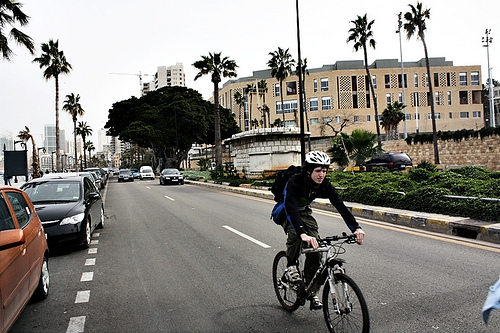
Is the solution to Lebanon’s reliance on carbon emitting personal vehicles as simple as a two-wheeler? [image via: mozzoom]
One hundred and fifty cyclists demonstrated how easy it could be to cycle through Beirut on Saturday morning, starting at Biel and going to the Luna Park – Manara and back. The eco-friendly protest, led by Fast Forward, was part of the Darreja Campaign to improve Lebanon’s transportation system and make it more sustainable. Fast Forward is a new advocacy group that is promoting sustainable, alternative forms of transportation (such as public transit, cycling, and walking) in Lebanon.
The Red Sea oil spill off Hurghada Coast is said to be contained, but it’s still leaking off the coast of Egypt, environmental activists say. Tourists are cancelling Red Sea holidays.
With all the attention focused on the still spewing oil platform leak in the Gulf of Mexico, who would be paying attention to another oil spill, now going in the Red Sea in the Middle East? That is what is apparently going on as Egyptian authorities appeared to try to cover up the spill which is occurring off the Hurghada Red Sea coastal resort, and is ready fouling the pristine beaches there as well as posing a great threat to some of the most beautiful coral reefs in the world, off the coasts of Israel, Egypt, and Jordan. The government says the spill is contained, but activists, the Associated Press reports are saying something else.
Natural gas in Israel, desalination plants, a new Palestinian-Israeli wind venture and more headlines related to Israeli cleantech and the environment. Image via GreenRoad.
During the week of June 15, 2010, GreenRoad, which offers solutions for improved driving, won an award from Frost & Sullivan for its excellence in green technology. Israel continues to be considered a model for alternative energy and an Israeli professor has developed potato batteries that have the potential to provide cheap power. For these stories and more, see this week’s 9 headlines below.
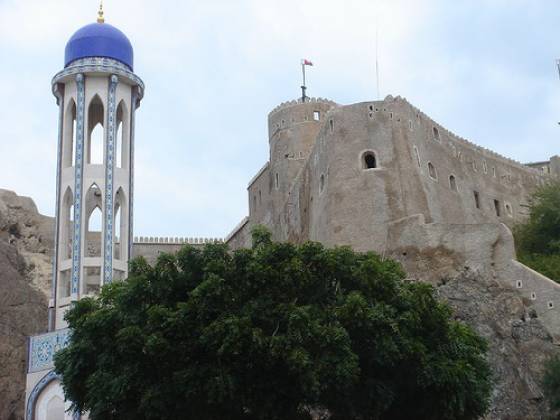
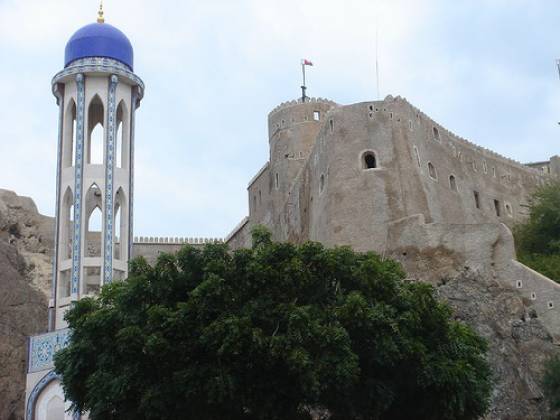
Can a city relying on oil revenue and desalination really be labeled “eco”? (Image by dislona via flickr)
At first, we felt a surge of pride to learn that Muscat, Oman, is the only Middle Eastern city on Mercer’s top 50 eco-city ranking. It ranks 48, just behind Glasgow, but ahead of Frankfurt. We were prepared to toot the vuvuzela for all the world to know, to proclaim that yes! the Middle East can be green too. Alas, when a for-profit consultancy business ranks a reasonably well-off oil-based economy, with only a few cottage industries, as an eco-city, an army of red flags go up.
Good for a sore throat, your hair and lowering cholesterol, the ancient honeycomb shows it can also improve your complexion.
“Eat the crusts, it will make your hair curly!”, “Add some honey to your tea instead of sugar, it will help your throat!”
Well after years of eating bread crusts, my hair is somewhere between curly and crazy so my faith in the old wives tales definitely diminished. It turns out however, that apart from being a great addition to many Middle Eastern recipes, there is some truth to the tale of honey being good for one’s health.
The tale is not a new one, since as far back as ancient Egypt it was used as a remedy for various ailments, applying it to wounds and making it part of the mummification process.
Since honey is largely made up of natural sugars, it is attracted to water making it capable of absorbing and maintaining moisture. This makes it an ideal application for external wounds, as it can absorb body fluids, while encouraging healing and preventing infection.
This ability to absorb fluids and prevent infection makes honey an amazing natural antibacterial and antibiotic, which explains the healing powers it has in a cup of tea (and as a natural cough medicine). In a world where antibiotics are prescribed for the smallest reasons, it might be worth remembering that after using these medicines, the body eventually builds up a certain amount of resistance to these drugs.
The healing powers of honey do not stop at a sore throat. By adding it daily to food instead of sugar it can also be used to lower levels of cholesterol, which can help fight various heart diseases.
From something as serious as heart disease to the annoyance of skin problems, honey can provide relief.
By mixing it with equal parts of cinnamon paste, you can apply it to your face as a natural relief for pimples, eczema and other skin infections.
The massive natural gas find in Israel and political tensions with Turkey, could put Turkey out of the energy story with Israel. It’s a big deal, says Washington based energy analyst Gal Luft.
A door has been closed. But amid the roar, the creak of an opening window was faintly audible. This window, a gigantic deposit of natural gas called Leviathan, 6.5 times the size of Tel Aviv, was found, roughly 100 nautical miles from where the flotilla fiasco took place and well within Israel’s extended territorial waters.
An old adage says that when God closes a door, somewhere he opens a window. To most people, the events off the coast of Gaza marked a sharp decline in Israel’s strategic posture. The Mavi Marmara incident sparked international condemnation and delivered what may have been a death blow to Jerusalem’s already precarious relations with Turkey. For decades that country was Israel’s closest ally in the Muslim world, but since the election of Recep Tayyip Erdogan, it is increasingly in the thrall of fundamentalist Islam.
A door has been closed. But amid the roar, the creak of an opening window was faintly audible. This window, a gigantic deposit of natural gas called Leviathan, 6.5 times the size of Tel Aviv, was found, roughly 100 nautical miles from where the flotilla fiasco took place and well within Israel’s extended territorial waters.
This discovery may provide Israel with security in terms of its supply of electricity, turn it into an important natural gas exporter and provide a shot in the arm of some $300 billion over the life of the field – one-and-a-half times the national GDP – to the Israeli economy, already one of the most resilient in the world.
Altogether the basin in the eastern Mediterranean to which those fields belong could contain an amount of gas equivalent to one-fifth of U.S. natural gas reserves. For a small country like Israel, such a bonanza could not have come at a better time.
Until recently, Israel was facing an energy predicament. Its fast-growing population – and the even faster-growing Palestinian Arab population to which it also supplies electricity – and the declining reserves of Egypt, its main gas supplier, required the identification of new sources of gas for electricity production.
One alternative was to import natural gas from Russia and the Caspian Sea via Turkey. To this end, Turkey and Israel negotiated the construction of a subsea pipeline. But with the deterioration of their relations, this option gradually became unfeasible. Another option was to import gas from Qatar, hardly a reliable supplier. Yet a third, more costly, possibility was construction of a liquefied natural gas terminal, which would enable imports from various suppliers.
The discoveries at Tamar and Leviathan solved the problem: Israel will no longer have to import natural gas. Its dilemma now, rather, is deciding where to export the excess and how to reap the most geopolitical gains from its new status as an energy exporter.
Geographically, the most natural market is Europe, where any non-Russian gas is more than welcome. There are three ways for Israel to access this market. The first is to construct a pipeline to Turkey, where Israeli gas would join product from the Caspian region en route to Central Europe. This option is highly unlikely to be realized in the current atmosphere of Israel-Turkey relations.
Alternately, and more likely, Israel could construct a pipeline to Greece via Cyprus or pipe it inland, liquefy it and export it to any European liquefied natural gas terminal by sea. Europe is not the only potential market in such a scenario. Once liquefied, Israeli gas could be directed to China, South Korea and Japan, which collectively consume more than half of the world’s LNG.
From a geopolitical standpoint, gas exports to India would be most beneficial to Israel. With hundreds of millions of its citizens facing energy poverty, India urgently needs reliable natural gas suppliers. One option for that country is to join the Iran-Pakistan pipeline – a project aimed at connecting Pakistan to Iran’s South Pars field by 2014. Should India decide to extend the pipeline, it will become beholden to Iranian gas for decades to come, to the detriment of Western efforts to weaken Iran economically.
Alternately, should India decide to construct LNG terminals along its coast, it will be able to import natural gas from Israel as well as other exporters, like Qatar and Saudi Arabia.
The creation of an energy corridor from Israel to the Indian subcontinent would mean that Israel would have to retrofit the existing 150-mile oil pipeline linking the Red Sea port of Eilat with the Mediterranean port of Ashkelon. Once this pipeline commences operation, Russian and Caspian natural gas could reach the Asian markets as well.
Ironically, the biggest casualty of such an energy corridor will be none other than Turkey, which now enjoys an unchallenged status as an energy bridge between East and West. Energy transit fees are an important source of income to the Turkish economy.
In the coming years, Israel will have to decide whether to direct its gas to Asia or to compete with Turkey over access to the European gas market. Should it choose the latter, Turkish-Israeli relations will remain in rough seas.
This post has been reprinted with permission from the Cutting Edge News. Cutting Edge energy and security analyst Gal Luft is executive director of the Institute for the Analysis of Global Security, and co-author of “Turning Oil into Salt: Energy Independence through Fuel Choice.”
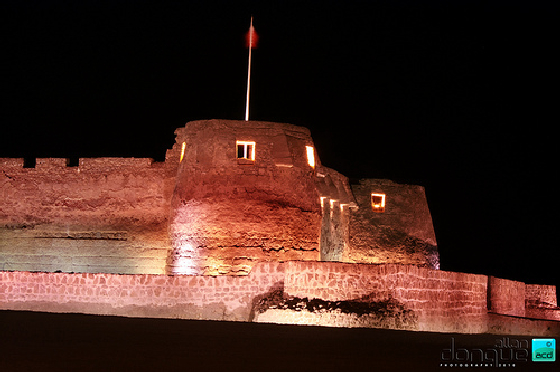
After her grandfather’s house was demolished, Sheikha Mai committed to preserving Bahrain’s venerable places Image by dunsky via flickr
Though most of our architectural news depicts ongoing developments (like in Bahrain), the BBC series giving prominence to “heritage heroes” preserving more venerable developments, marinated in history, has steered our green news reel in a different direction.
We are especially proud to brag about the shepherds fielding one-third of all UNESCO’s world heritage sites in the Middle East. Sheikha Mai was the first such shepherdess to shine in the BBC’s spotlight.
Afghanistan is not Pandora, but the tribal exploitation concept is similar Maurice argues.
Now that American forces in Afghanistan are commemorating the longest period of any war that America has been involved in, including the 1965-73 Vietnam War, the recent discoveries of large and extremely valuable mineral and metal deposits may finally bring to light a reason to continue the presence of US fighting forces in this war torn and backward country.
As we pointed out in the Afghan lithium piece top US Government officials are estimating that these mineral deposits may be worth between $1 and 3 trillion USD, and that they may change the market of electric cars.
Breastfeeding a baby is not only good for the baby, but can go a long way to “greening” Islam.
If you are breastfeeding a baby, some Muslim American bloggers recommend buying a special coverup. Here in the Middle East, modesty among religious Christians, Moslems, and Jews is often associated with inhibitions about nursing in public. But that isn’t necessarily true.
In my years counseling nursing mothers, I’ve found that modest dress and nursing in public are separate issues. Women covered from head to toe can be seen nursing their babies on a park bench, while some mothers in halter tops wouldn’t dream of nursing in public. In countries like the US, where babies are primarily bottle-fed, breastfeeding mothers are frequently asked to leave public places or cover up while billboards with exposed breasts are everywhere.
Breastfeeding is an important part of greening the planet. Manufacture, transport and disposal of formula, containers, and bottles create pollution and use extra water resources. Breastfeeding, and supporting breastfeeding mothers, is one of the greenest things you can do. But in many parts of the world, discomfort about public breastfeeding remains a significant barrier to higher breastfeeding rates.
If a mother needs to find a private place to feed her baby every time she goes out of the house, she’s likely to wean early. One mom told me that when her oldest nursed every three hours, she was able to do errands in between feedings. Her second child nursed more often, so she weaned him to formula to avoid nursing in public.
There is a wide range of attitudes about public breastfeeding in Middle Eastern countries. In traditional societies, breastfeeding is generally the norm. Islamic law requires feeding until age two, and some interpret Jewish law to require it as well. In Jordan, women stay inside with their babies for close to a year.
There may be other reasons that public breastfeeding is rarely seen. In many traditional cultures, women are segregated to begin with so the issue of public breastfeeding does’t come up. In some cultures it’s acceptable to nurse in front of male relatives but not strangers. In stricter Islamic regimes, like Iran and Saudi Arabia, women are never seen breastfeeding in public, whereas in Jordan it is fairly common.
There are many products designed to help a mother nurse discreetly including aprons, cover-ups, and clothing with special openings. But if the mother wears a loose shirt that can be pulled up, or a sleeveless t-shirt under a button-down shirt or jacket, the baby will cover any exposed parts of the mother’s breast and torso.
Not all babies like to nurse with something over their head. Of course mothers can nurse privately if they choose, but they shouldn’t be required to. Offended bystanders are free to move or look away, instead of disturbing the mother and baby. Since a mother’s first priority is to protect her child, she is not in a position to defend herself if attacked or criticized while feeding.
June 21 marks a celebration that mankind and paganic traditions have noted for eons: The Summer Solstice.
Your green love columnist at Green Prophet wants to give readers a simple gift this year: a recipe for an eco-sexy lip balm you can make in your own kitchen.
All you need is sweet almond oil, rose petals, rose absolute and beeswax. Choose organic ingredients if you can and prepare your lips for healthy and sweet kisses.

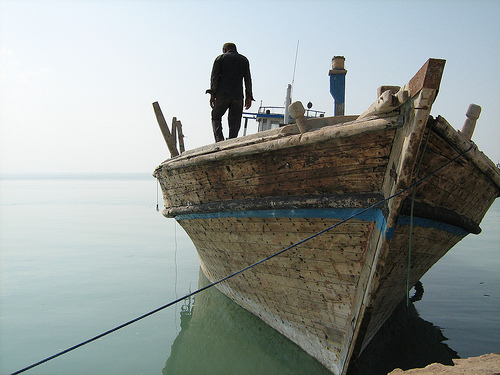
 A Bahraini dhow in drydock. No fish. Maybe it’s time to go back to racing camels?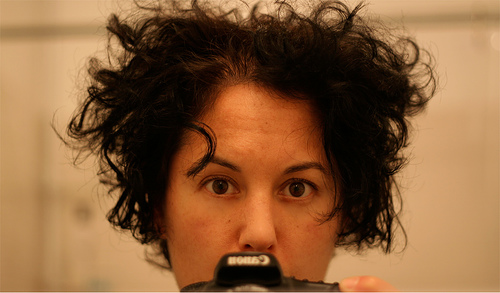
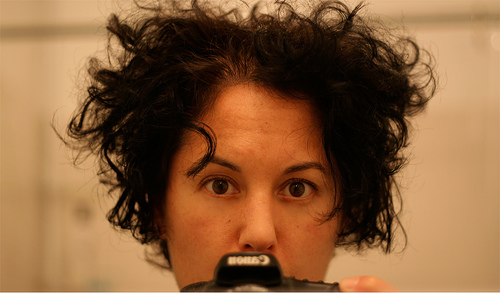 The humidity of the Middle East can result in a six month stretch of “bad hair day”. But help is on the way, naturally. Image via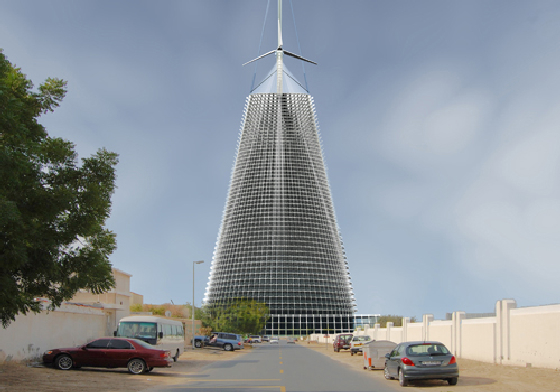
 Sun, wind and solar updraft, could this skyscraper be the world’s first dual power plant and residential building?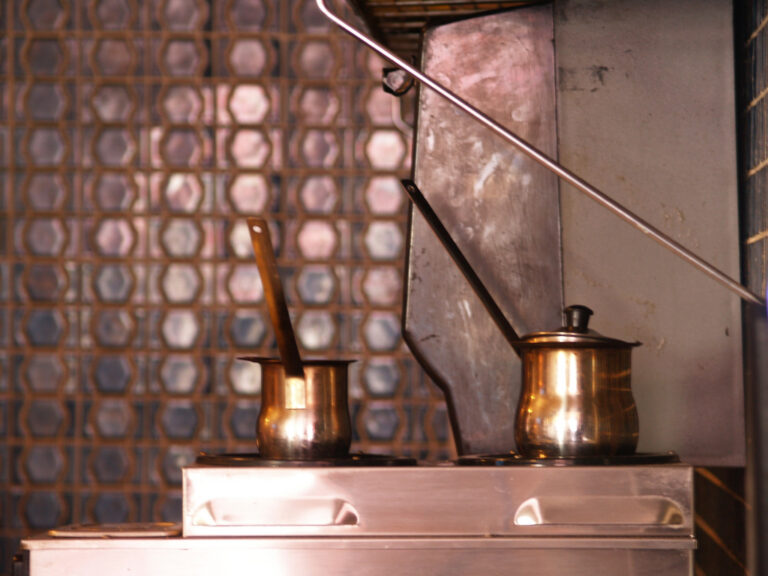



 It’s like an X-ray machine for solar panel quality control.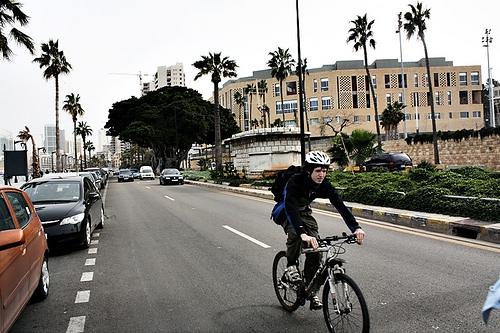
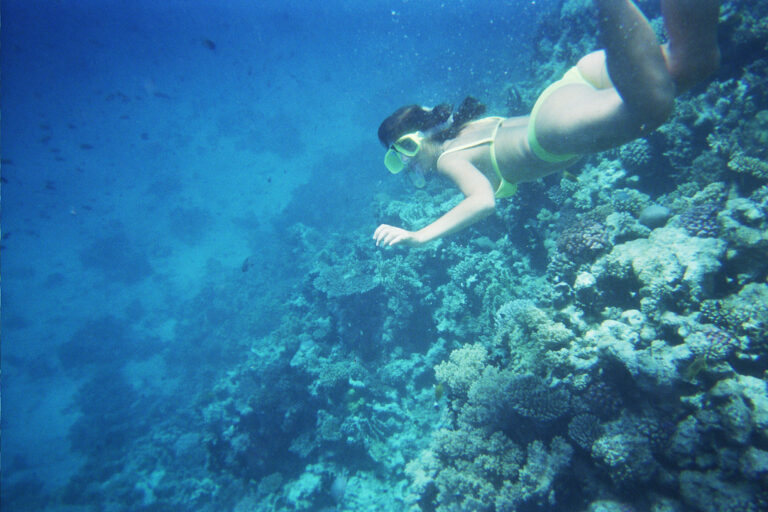
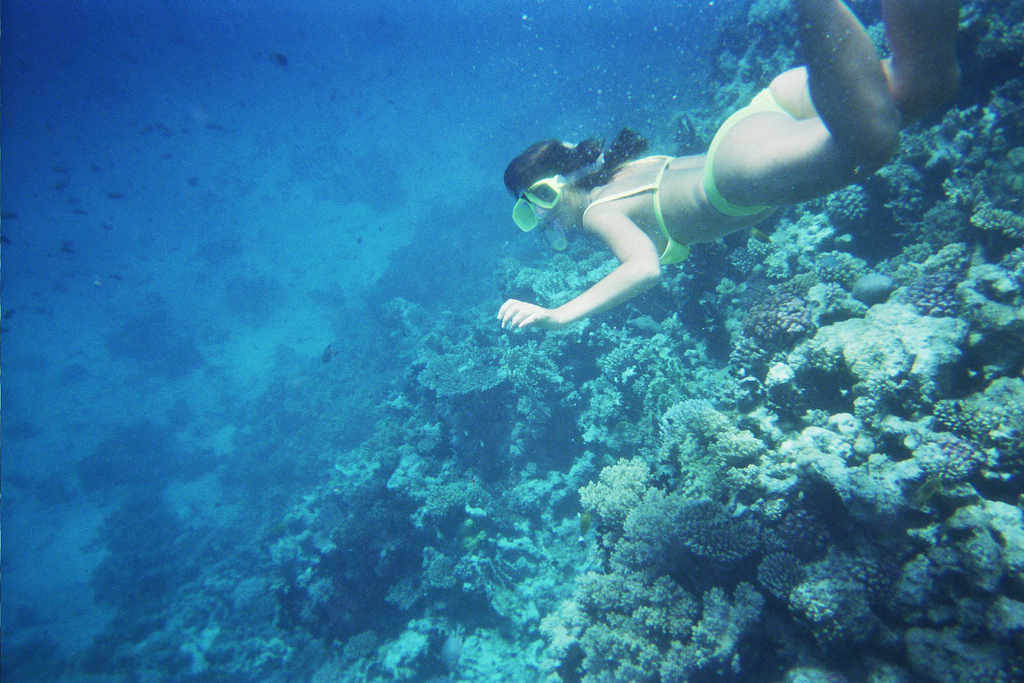 The Red Sea oil spill off Hurghada Coast is said to be contained, but it’s still leaking off the coast of Egypt, environmental activists say. Tourists are cancelling Red Sea holidays.


 Good for a sore throat, your hair and lowering cholesterol, the ancient honeycomb shows it can also improve your complexion.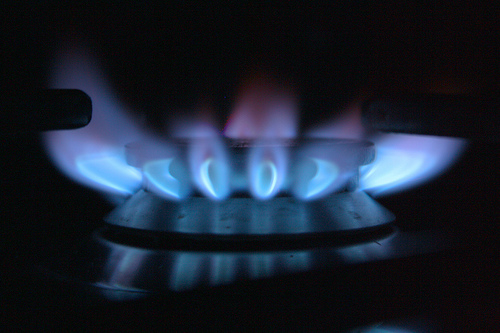



 Afghanistan is not Pandora, but the tribal exploitation concept is similar Maurice argues.

 June 21 marks a celebration that mankind and paganic traditions have noted for eons: The Summer Solstice.