Home Blog Page 410

Energy from Trash to Become Reality with $17 Million Israeli Investment

2

compost, recycling, food waste, biogas, Israel, waste to energyThere are nearly 8 million people crammed into Israel and most of them like a little A/C in the summer. But only 74, 520 families separate their organic and inorganic waste. What does that have to do with anything, you ask?

Well, it turns out that the Ministry of Environment has recently committed just over USD17 million to help biogas innovators turn organic waste into energy within the next three years. Which means that if more families make the effort to donate their organic waste, then the country can produce more energy to power their homes and appliances.

Save the Grace Combats Lebanon’s Year-Round Food Waste

0

food waste, syrian refugees, Lebanon, Ramadan, methaneWe continuously shine a bright light on the issue of food waste during Ramadan and have provided tips for keeping it down, but throwing away perfectly good food is not something that only happens during the holy month or in the MENA region. It is a global phenomenon.

Even though roughly 925 million people throughout the world go hungry every year, in that same time, we throw away up to 220 million tons of food. Moved to end this shocking waste in Lebanon at least, Lamia El-Sayed, a graphic designer based in Beirut, did what many forward thinking people do these days and started a Facebook cause page. It is called “Save the Grace.” 

Sowwah Square Receives First LEED-CS Gold Pre-Certification in Abu Dhabi

1

Sowwah Square, Abu Dhabi, Al Maryah Island, LEED-CS, USGBCUsually new developments seeking LEED certification have to “prove themselves” – so to speak – before they can achieve any kind of certification. However, in order to recognize the division between owners and tenants of new developments, the United States Green Building Council (USGBC) makes an exception for  core and shell buildings that are designed to be especially energy and resource-efficient.

This is how it’s possible that the Mubadala real estate company has been awarded LEED-CS Gold for Sowwah Square – a 450,000 sqm mixed-use development on Al Maryah Island in Abu Dhabi that is still under construction.

Is Natural Birth Connected with Post-trauma Stress in New Moms?

5

anesthesia, anesthesiologists, anticipation, back, birth, birthing, body, care, caucasian, clinic, doctors, epidural, females, group, health, healthcare, hospital, inject, injection, look, male, man, maternity, medical, medicine, nurses, nursing, obstetrics, patient, people, pregnancy, pregnant, preparation, prepare, procedure, professional, spinal, studio shot, surgeons, surgery, surgical, syringe, team, three persons, touch, treatment, white background, womenAn epidural could be the key to reducing PTSD in new mothers

Before I gave birth, I was sure it would be all-natural. For the sake of my baby, and my back, I decided to not take an epidural. The tune changed when the contractions attacked me like a lion, giving me no-where to run. Was this a smart decision to take the epidural, and do the short-term effects of it outweigh the other problems, like difficulties in breastfeeding, or lower back pain? According to a new study from Tel Aviv University, women who opt for the natural, pain-relief-free birth are at a much higher risk of developing full blown post-traumatic stress disorder (PTSD). It’s no trivial matter as PTSD is associated with serious health effects like depression and in the worst cases suicide. This news will no doubt get the La Leche League women fired up. Read on.

Israel’s Maccabi Soccer Uniforms by NIKE are Made From 13 Recycled Plastic Water Bottles

5

recycled plastic, soccer, NIKE, Maccabi, fashion, designIt gets so hot in Israel that safari animals are fed funky popsicles, so we were surprised to learn that the country’s most successful soccer team wears uniforms made out of 13 recycled plastic bottles! But it’s true. And even though the majority of Israelis are probably more passionate about soccer than they are about environmental issues, everybody is bound to be impressed with the sheer ingenuity of NIKE’s 2012/2013 kits home for the Maccabi team from Haifa.

Beit Sitti in Amman: Cook Like a Local Jordanian Grandmother

0

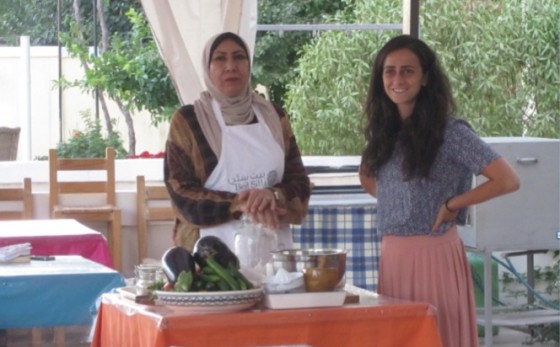
beit sitti amman jordan Jabal al-Weibdeh, cooking classKelly learns to cook like a local (vegetarian) Jordanian at Beit Sitti in Amman.

For all those tourists in Amman who want to gain authentic Arabic cooking experience to bring back home and impress their dinner guests, or for the local Jordanian who wants to throw a unique rooftop party in the area, Beit Sitti, My Grandma’s House, is the place to go.

littleBits LEGO-like Electronic Toys Designed by Lebanese Woman

1

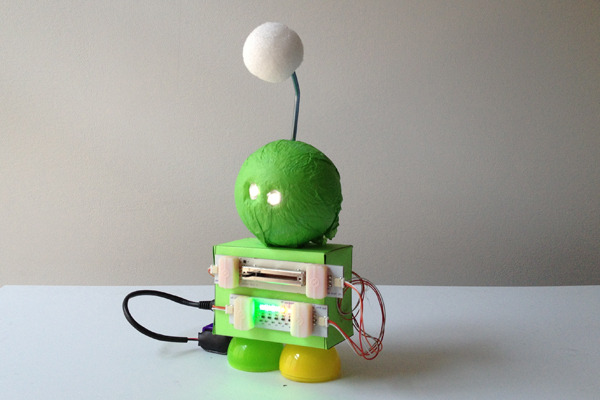
Lebanon, littleBits, electronics, technology, toys, designIf you ever wondered how the coffee machine works or how your iPhone responds to touch, then littleBits are for you. Lebanese designer Ayah Bdeir has recently received an additional $3.5 USD million in venture capital to scale up a hugely popular new line of toys that makes building electronic circuits as easy as fixing up cracks in Beirut’s buildings with LEGO bricks.

Currently unavailable in the Middle East unfortunately, littleBits has literally taken the rest of the world by storm. Within two weeks of marketing her products for the first time, Bdeir sold 2,000 of her LEGO-like bits, and large companies are knocking down her doors.

Ugandan Eco-Artist Wins TED Prize for an Amusement Park Made of Plastic Bottles

279

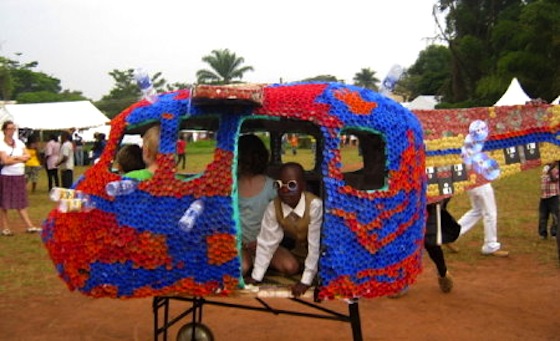
TEDx, Recycled Amusement, Uganda, Ruganzu Bruno Tsunguriwe, Kampala, Recycled Plastic BottlesUgandan eco-artist Ruganzu “Bruno” Tusingwire gave up art that is hung on walls in favor of doing work that actually makes a difference. Now that lofty ambition has received a substantial financial boost that will allow the 29-year-old to improve life for hundreds of children who live in the slums of Kampala.

The first of ten $10,000 prizes was awarded to Tusingwire at the recent TEDx Summit in Doha, Qatar. In keeping with the City 2.0 competition’s philosophy of linking short-term vision with long-term action, the TEDx Kampala founder will build an amusement park entirely out of recycled plastic bottles so that children marginalized by inequality, poverty and war will at least have a safe place to play.

Fool’s Gold Regulates Our World’s Oxygen Supply

0

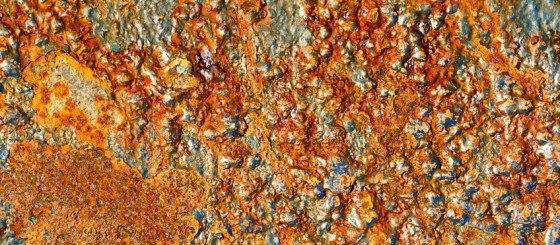
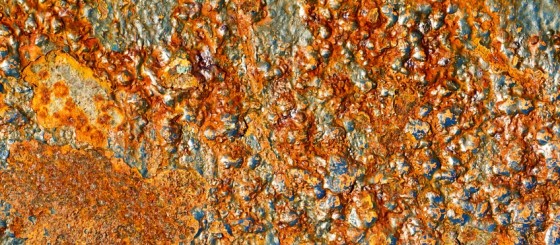
fool's gold, iron pyriteIron Pyrite or Fool’s Gold plays dominant role in the world’s sulfur cycle, new research shows

As sulfur cycles through Earth’s atmosphere, oceans and land, it undergoes chemical changes that are often coupled to changes in other such elements as carbon and oxygen. Although this affects the concentration of free oxygen, sulfur has traditionally been portrayed as a secondary factor in regulating atmospheric oxygen, with most of the heavy lifting done by carbon. However, new findings that appeared recently in Science suggest that sulfur’s role may have been underestimated.

Palm Fiber Crates: Cairo’s Sustainable Street Furniture

0

palm, sustainable materials, gireed, manar moursi, studio meem, cairo, egypt, design,Nothing escapes the watchful eye of Manar Moursi, the brains and the heart behind Studio Meem. You’ll recall that she recently displayed her sassy Off the Gireed furniture line at the Design is a Verb exhibition at the Bibliotheca Alexandrina Arts Center and continues to work with local artisans to produce unique, sustainable products that also celebrate Egypt’s cultural heritage.

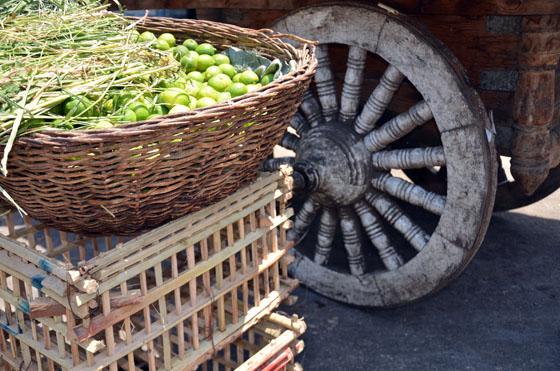
We recently caught up with Manar at the Ataba market in order to get a sense of how traditional palm fiber crates are used in the street. A bustling, chaotic place that links contemporary and medieval Cairo, Ataba is most famous for its booksellers and open air food market. In between the mayhem we found gireed crates used in a variety of industrious ways, although ugly plastic crates are beginning to encroach on this sacred territory as well.

The Kala on Samui Sets Eco Bar for Thailand

4

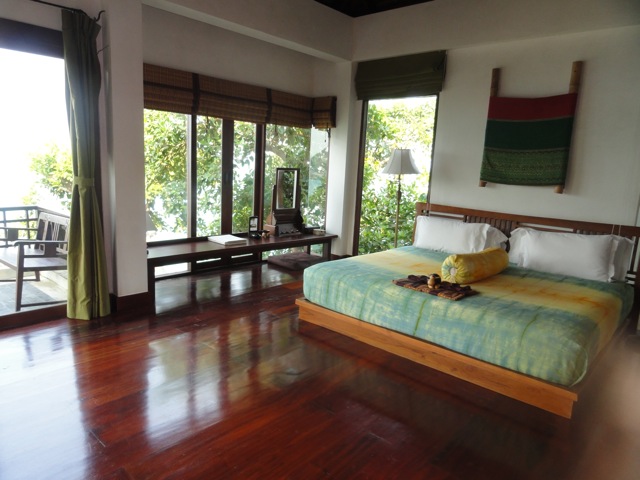
kala room samui thailand
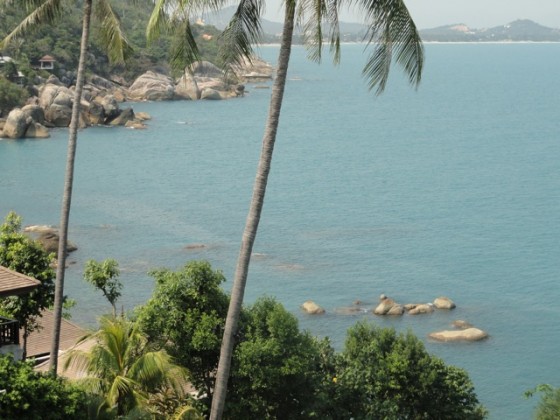
Nestled in a seaside grove of coconut trees planted by her husband’s father, and a deep commitment to planting roots Nuan Re-Ki built The Kala,  eco-resort on the tropical paradise of Koh Samui in Thailand. And she built it for keeps.

Unlike other boutique and luxury hotels on the Gulf of Siam island Nuan and her husband wanted to build something to last, and for her children and grandchildren to inherit. This is the basis of sustainable eco-tourism, and The Kala is a great escape for anyone looking to dip into some traditional Asian aesthetics in Thailand.

With thick reclaimed teak wood furnishings, floors and fixtures from Chang Mai in the north, and local natural fabrics dyed with mango and other local plants, the only plastic you’ll find in the resort is garbage liners (no doubt recycled) and packaging on your min-bar snacks.

A fanatic who aims to create as little waste as possible, Nuan (below with her husband) says that new staff don’t always get the message.

Nuan and her husband, owners of The Kala.Nuan and her husband, owners of The Kala.

This 37-room resort isn’t ecological in the western sense you’d expect: I mean it wasn’t built with a LEED guidebook, but was inspired by the simpler ways of Buddhism and influences from European environmentalism.

After staying there for two nights this past February with my family (husband, kid, mom and dad), I feel that this resort is light years ahead of most other so-called eco resorts.

While Nuan was influenced from her time working in Switzerland, it’s really an innate sense for protecting the earth and community that Nuan embraces, I feel.

Let me explain: you’ll find locally-made coconut soaps in your bathrooms and in the spa – all in locally-made ceramic dispensers. A gift shop in the lobby sells only handmade locally sourced products: you’ll find no Made in China junk trinkets there.

spa the kala, rose bathA bath in the spa, with rose petals.

When you enter your room, you’ll feel Asia, but you’ll also feel home. Built with real materials and not veneers and plastics, the rooms at The Kala will age well as the resort lives on.

This resort is located atop a mountain a few minutes drive north of the popular Chewang Beach and a few minutes south of the equally crazy Lamai Beach. Stepping inside this resort is tranquil: and it’s like walking into a picture frame, with the sea as a the subject.

The existing greenery on the site was preserved when The Kala was built, and the resort uses only ecological methods for pest control.
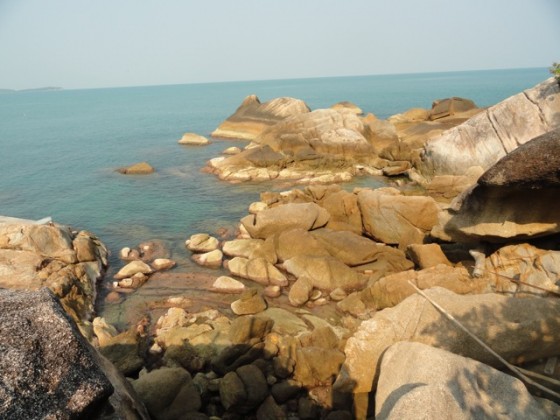
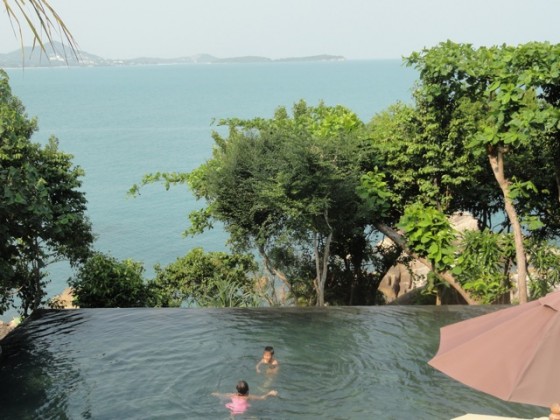
kala beach chewang samui koh thailandkala beach chewang samui koh thailandkala beach chewang samui koh thailand

Sticking to traditional Thai style, the couple very much had an input into integrating their boutique hotel buildings with the local surroundings when they worked with their architect.

They took a boat out to sea to see how the buildings could be built within the trees, while maintaining the integrity of nature. Neutral and natural colors were chosen to minimize the built environment pollution.

It’s zen modesty at its best.

Every room at The Kala has a sea view, and while some of them are stacked in units, you’ll feel complete privacy. The more costly rooms are private cabanas, with incredible outdoor showers, and tiny private pools.

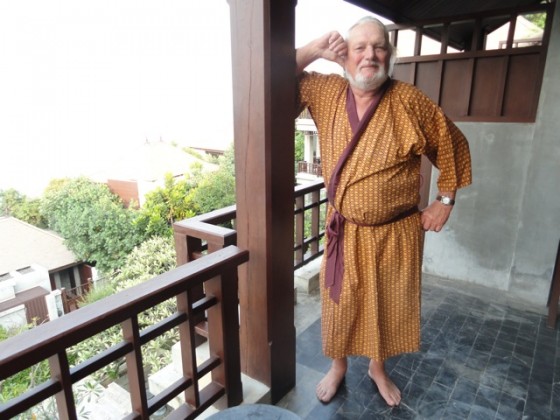
I loved the cotton Japanese kimonos in the rooms (see my dad in one below), all the way to the cloth napkins served with room service and the bowl of fruit that awaits you when you arrive. Laundry service bags are also cloth, further giving you that feeling of home.

That’s my dad below trying on his kimono. He surely loved it at The Kala.
There are no plastic signs hanging all over the place inside the rooms calling you to buy things- signs that I tend to remove anyway and put in drawers for any length of stay in a relax-style hotel or resort.

There is lots to explore both inside your room and outside. Each room while similar has unique features from the next. My parent’s room had an Asian style seated area near their balcony, while ours had a remarkable sliding door-window that gave way to the bathtub. See me playing in the door below.

There is a maze of nature and treasures on the grounds: as you work your way down to the rocky shoals of the sea for a dip (snorkel or kayak perhaps?), you can also take a dip in the pool.

While the beach isn’t sandy, The Kala resort has a wonderful swimming launch pad from the sea, off some of the local volcanic rocks, which are weather worn and smooth, but not too slippery. It’s very private and couples could easily find their own romantic sea nook. I was with a toddler and walking down there was kind of frightening.

If you are going with a family, wait until your kids are at least four before feeling safe down at the beach. Most of Thai beach resorts aren’t little kid friendly, so keep that in mind.

Sea kayaks and snorkling gear are available for guests’ use, along with a library, computers and free Internet.

I loved staying at The Kala, because I felt it was an authentic experience, built by authentic people who have built something to last. Of the ten hotels I stayed in the Samui Island region this past winter, The Kala gets the best grade. It’s highly recommended to stay there, especially if you like privacy, but also the ability to quickly dash off the craziness of Thai-style paries on Chewang or Lamai beaches.

Clientele ranged from cool Japanese to quiet Americans to excited Russians. I liked how it attracted Asian clients, because most of the other resorts we’d stayed at were favorites with just the Europeans and Americans. I guess it says something about the nature of the place.

Lycored replaces toxic Red 40 with tomato-based dye and it’s halal

0
Image via life is a garden
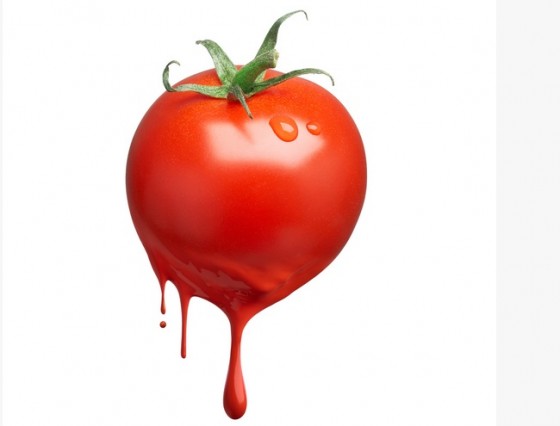
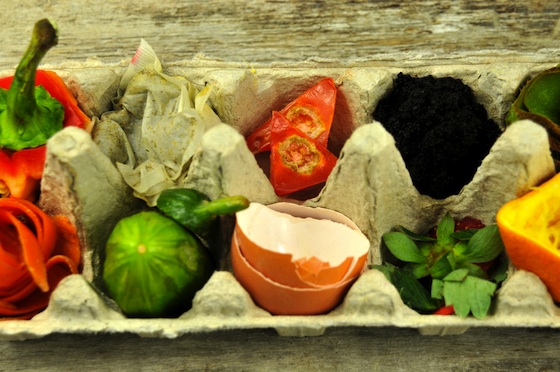
Image via Life Is A Garden. Red cochineal bugs have been used as a dye for centuries. But its a product from bugs, not deemed kosher or halal. A new product from Israel called Lycored makes red dye from tomatoes.

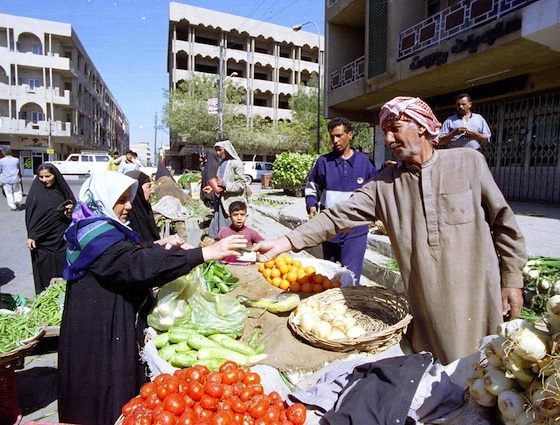
Look at any Middle East dining table and the humble tomato is usually there front and center, diced into a cucumber salad or sliced in big wedges drizzled with lemon juice and olive oil. No one knows fresh tomatoes like the Levant. It makes sense, then, that the Israeli company LycoRed should corner the market for lycopene, a new super-food and natural dye extracted from the tomato.

Lycopene is quickly replacing artificial and animal-based red dyes across America. Health-conscious, vegan, kosher and halal consumers are paying particular attention to this new “green” red dye.

Red food coloring is an attractive way to add a natural tint to milkshakes (Starbucks does it), red velvet cupcakes, candies and yogurts, but recent evidence on six synthetic dyes, including Red 40, links them to behavioral problems in children.

As savvy parents demand better solutions for candies and snack foods, and big retailers such as Starbucks are searching for natural alternatives for their fruit shakes, all eyes are on Israel.

LycoRed has been making natural dyes — from orange to red to red with bluish notes — for about 15 years using carrots or tomatoes. The company recently doubled production of Tomat-O-Red, its antioxidant-rich lycopene compound from non-genetically modified tomatoes grown in California and Israel.

Kosher– and halal-certified, it is recognized as safe for consumption by the US Food and Drug Administration (FDA).

Kicking the old red habits

Roee Nir, the company’s color and flavor global commercial manager says that the “Southamptom Six” — Red 40 and five other petroleum-based synthetic food dyes – were found by Southampton University researchers to be linked with childhood reactions including temper tantrums, aggressiveness, kicking, screaming and a lack of self-control. Children are particular susceptible to the effects of Red 40, while in adults it might cause nervousness, migraines or an upset stomach.

Food coloring makes a wide variety of processed foods more attractive.

LycoRed’s colorings offer fresh hope for the food industry. The company’s lycopene is now widely used in products including surimi, an artificial crab meat; smoothies and yogurts; beverages and juices; and confectionary like gummy bears and hard-boiled candies, says Nir.

And now Starbucks? A recent controversy was stirred when Starbucks declared it would no longer use a petroleum-based dye in its Strawberries & Crème Frappuccino. Initially the company announced it would switch to carmine, a dye produced from a beetle, but vegetarians objected and so did kosher consumers, who are not permitted to eat insects. Starbucks quickly replaced its “bug juice” with lycopene.

LycoRed is the only lycopene producer with FDA approval, so it’s a good bet that Starbucks uses the Israeli product, though Nir can’t name names due to non-disclosure agreements.

Cosmetics and drugs and pizza

Lycored, the producer of natural lycopene-based taste-enhancers for food and beverage, has unveiled tomato serums, Sante, and Clear Tomato Concentrate (CTC) for the pizza industry to reduce the amount of sugar and salt in sauces and crust recipes
Lycored, the producer of natural lycopene-based taste-enhancers for food and beverage, has unveiled tomato serums, Sante, and Clear Tomato Concentrate (CTC) for the pizza industry to reduce the amount of sugar and salt in sauces and crust recipes.

LycoRed has had to double its production to meet increasing demands, and Tomat-O-Red is expected to transition from the basic foods industry to cosmetics and pharmaceuticals.

Tomatoes, rather than Red 40, can color your luncheon meat.

Though other Red 40 replacements from the natural world include a dye from beetroot, Nir says these other solutions are not as chemically stable as lycopene and tend to degrade at high temperatures or over time. They are also more susceptible to damage from UV light.

That puts LycoRed in an enviable position, particularly as public awareness of lycopene’s health benefits for the skin and heart has really started taking off in America, Nir adds.

A new nutraceutrical is launched 

Lycored, the global leader in naturally derived carotenoids for food, beverage, and dietary supplement products, has just launched Lycomato Beadlets 5%—a new delivery format for their premier anti-inflammaging solution. Their flagship wellness extract Lycomato6 formerly known as Lyc-O-Mato.

The addition of the 6 in the branding emphasizes the power of the six tomato-based phytonutrients in the formula, including hero lycopene, phytosterols, phytoene, phytofluene, tocopherols, and beta-carotene. These components work independently and synergistically to support timeless aging and beauty from within.

Over 25 published studies demonstrate the effectiveness of Lycomato6 full composition in fighting inflammation and oxidative stress and supporting cellular wellness, skin health and beauty, heart health, and eye health. The innovative dry format unlocks additional application opportunities for Lycomato6 including gummies, capsules, powdered beverages and tablets, offering brands new ways to introduce the anti-inflammaging power of Lycomato6 to their consumers.

Iraqi Farmer Commits Suicide Over Intense Water Shortages

2

agriculture, desertification, water shortages, Iraq, farming, farmer commits suicideAdherents of Islam consider suicide to be one of the greatest of all spiritual transgressions, so when an Iraqi farmer recently took his own life because he could no longer maintain his crops amid chronic water shortages, it could not have been an easy decision.

Jordan’s Crippled Water Resources Protected by Security

2

jordan army protects waterJordan’s armed security forces have been enlisted to protect the Kingdom’s scarce water resources from recurring vandalism and theft.

Jordan is dealing with an increase in water theft. Ironically, as I type, I am awaiting a water truck arrival to refill our new apartment’s tank: I’d jumped in the shower, turned the knobs, and was met with – nothing. Landlord says it’s been three weeks since the city pumped water to the roof tanks, and the situation seems to be city-wide.

Now it makes sense why people would be breaking into the system.  Mark my words, water is the new oil.

Solar Flare Super Storm Could Put Middle East in Darkness

0

glowing sun solar flare stormCould we survive a massive  blackout caused by a solar super storm?

The sun, our most important source of natural energy, light, and even nutrition could one day also become our worst enemy if intense solar magnetic ‘super storms’ cause massive power blackouts. Whether these storms, which appear to come in 11-year cycles, could melt down nuclear reactors  as  might have happened earlier this year, is still a matter of speculation. These intense solar storms have in the past been so severe that they are said to have been responsible for severe damage to power grids and communications networks.