
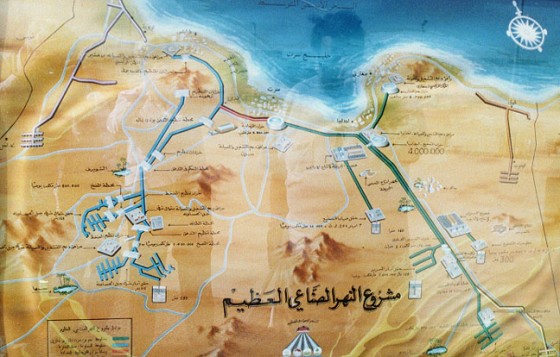
Ample fresh water supplies for agriculture and drinking by the world’s burgeoning population are becoming more and more scarace these days due to over-consumption and the ravages of global warming and climate change. This has resulted in the need to tap into prehistoric underground aquifers, such as North Africa’s Nubian Aquifer under Libya; and the the Disi and Wasia aquifers Jordan and Saudi Arabia.
After America’s fossil water goes dry, will the Middle East follow?
Dubai launches new Space Agency: Muslims on Mars!
 The Middle East joins the race to space with a new program which will launch a research probe to MARS in the next seven years. His Highness Sheikh Mohammed bin Rashid Al Maktoum (Vice President and Prime Minister of the United Arab Emirates (UAE) and Ruler of Dubai) announced establishment of a UAE Space Agency.
Greet, meet, and eat with African asylum seekers in Israel
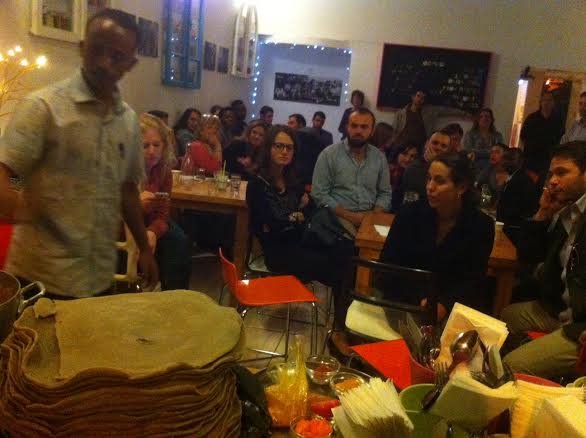
If you live in south Tel Aviv in the Shapiro neighborhood by the central bus station you might come in contact with an African migrant or refugee. Unless you live side by side with them, it’s doubtful that you’ll get a chance to talk to one of the tens of thousands of men, and sometimes women, who fled or migrated to Israel from countries like Eritrea and Sudan, in hope of a better life. But eating with them? That’s a different story.
What biomimicry architects can learn from scorpions
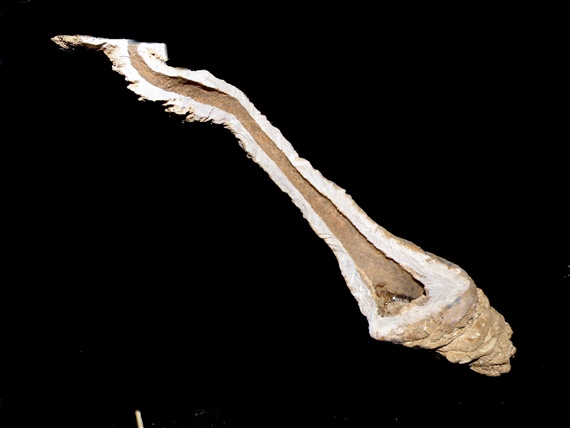
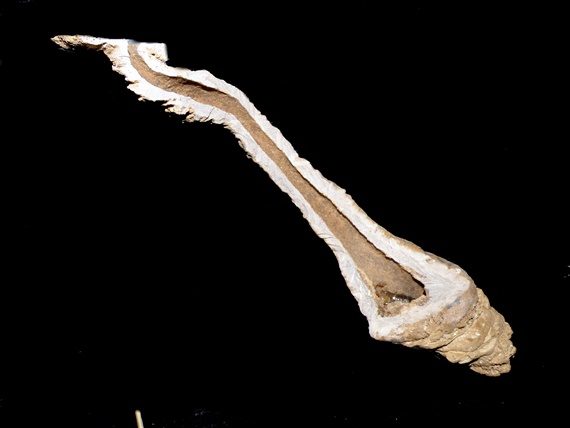
Ben-Gurion University of the Negev scientists have poured molten aluminum into a scorpion burrow and discovered that scorpion burrows have a platform on which to warm up before the evening hunt.
The UAE unveils plans to send the first Arab spaceship to Mars by 2021

Apart from a couple of monkeys from Iran, the Middle East has yet to send a serious mission to space. But Sheikh Mohammed bin Rashid Al Maktoum, the UAE vice president and ruler of Dubai, recently confirmed that this is about to change with news that the United Arab Emirates is planning to send a spaceship to Mars by 2021.
Zaha Hadid modernizes Islamic design with winning Heydar Aliyev in Azerbaijan
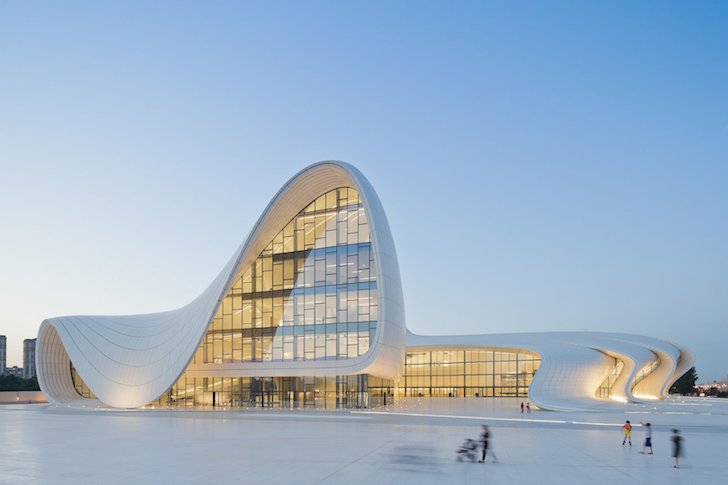
The London Design Museum bestowed upon Zaha Hadid the prestigious Design of the Year award for this incredible Heydar Aliyev Center in Azerbaijan, and there’s nothing green about it. But it does reinterpret fluid Islamic design in some interesting ways, and it really is a work of pure genius.

Project Jewel: Moshe Safdie designs a massive indoor bio-dome for Singapore
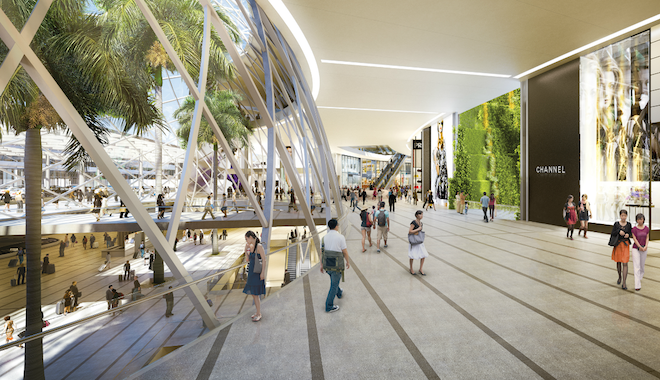
Nearly half a decade after his famous Habitat ’67, architect Moshe Safdie is still going strong. Born in Israel, Safdie strives to incorporate sustainability in his firm’s designs, but Project Jewel may be his most flamboyant effort yet. Hit the jump to learn more about this interesting airport development in Singapore.
Tentsile tents are suspended tree houses you can carry anywhere
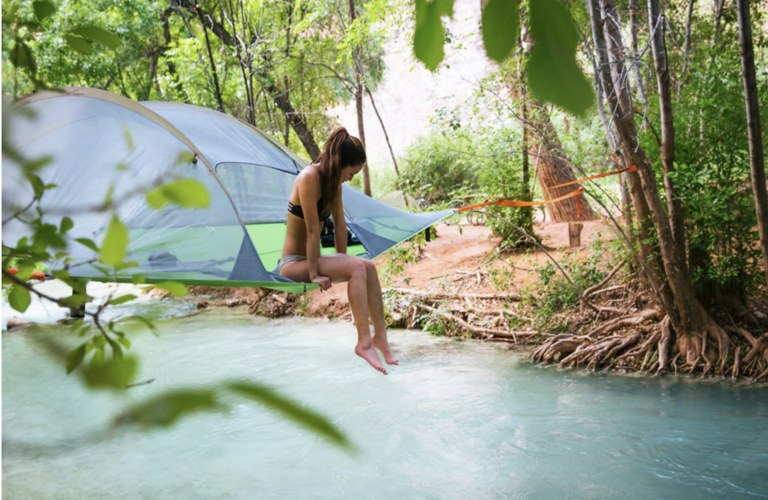

Here is a kind of happiness comes in the form of a treehouse you can take anywhere!
Originally invented in 2010 by Alex Shirley-Smith, the first tentsile treehouse tent exploded on the internet to such an extent that Shirley-Smith hired a new designer to work on several prototypes in 2012. Kirk Kirchev came up with the current design, which can be suspended four feet above the ground as long as there are three points at which the tent can be anchored.

Like a regular multi-person tent that can be packed up in a small bag and carried around, the tentsile offers ultimate portability.
Related: Collapsible refugee tents powered by the sun
But it’s different in that it offers a vantage point that most people won’t find in a regular tent, one that lends itself to thoughtful reflection, but also spares those who might be concerned about insects and snakes and other wildlife encounters.

Of course, anyone with fear of heights might not love this design, and there’s always the question – how the heck do you get in the tent? See this video for a rough guide to pitching a suspended tent. Also, note the company warns people not to exceed the maximum load of 880 pounds.
The $599 two person “portable treehouse tent” comes in a variety of colors and with a removable fly sheet. In addition to providing shelter for two, it can connect with other Tentsile Connect tents to create a “super camp” of three or more tents – like a communal treehouse gathering.
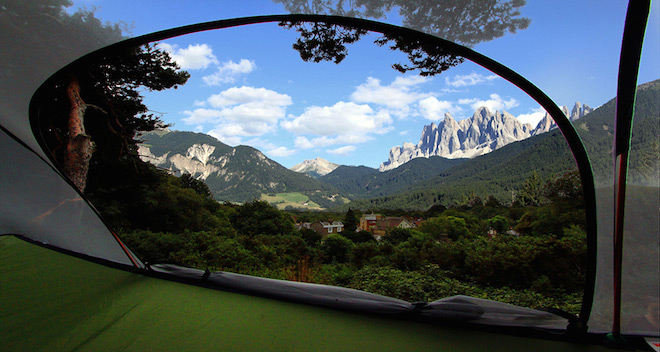
Tents can be shipped around the world for $70, so unlike so many of these neat designs, it should be available to people living in the Middle East and North Africa as well
Update: if you want a discount on a Tentsile tent use the code GREENPROPHET for 5% off your entire purchase.
:: Tentsile
Sunscreen isn’t enough against skin cancer – new research
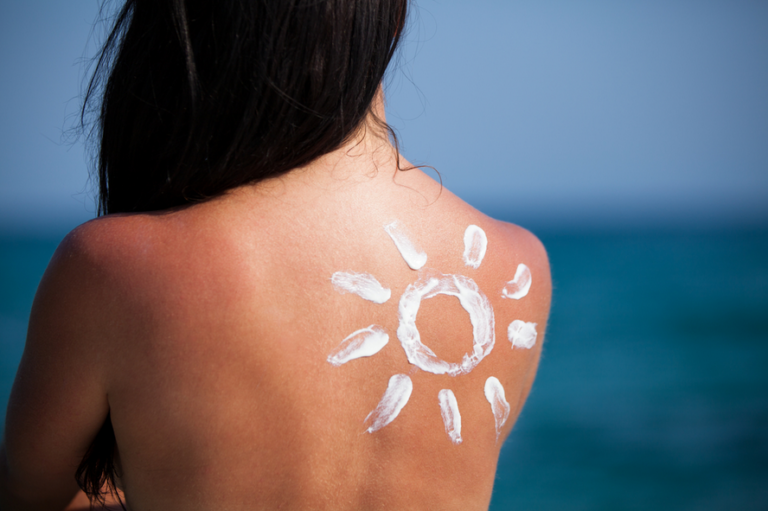
So you’ve made a batch of Green Prophet’s homemade organic sunscreen. And you’ve waxed your legs or chest hairs with our Arabian sugar wax. But home remedies are not enough to stave off bigger problems like skin cancer.
San Francisco’s plastic ban sends seismic wave around the world

Look West, Middle East – for a failsafe way to ween off one-use plastic bottles! Banning plastics is the best first step to eliminating this poisonous prodrome of modern civilization.
Last March, the San Francisco Board of Supervisors voted unanimously to pass a bottle-banning ordinance – quickly signed into law by Mayor Edwin M. Lee – prohibiting the sale of plastic water bottles on public property throughout this seismically-active city. The ban goes into effect in October 2014, the first of its kind in America: will it resonate around the world as a model in dealing with municipal waste?
“Where we have public spaces, in buildings, parks and other open space—these are places that we don’t want the sale or distribution of plastic water bottles,” said city official David Chiu who introduced the ordinance last year.
“San Francisco might have done it just a little bit to make every other American city look even worse,” wrote Eve Andrews in Grist.
Most US cities do pale against ‘Frisco. Did you know that television, Chinese fortune cookies and Irish Coffee were all invented in in the “City by the Bay”? Levi Strauss sewed the first pair of blue jeans there (1873). It’s the birthplace of the world’s first cable car (same year) – and the first public transit system run solely by electricity (1874). It’s where the United Nations was founded (1945), and its Human Rights Commission – formed in 1964 – has been at the forefront of the American civil rights movement. And San Francisco Bay is the largest estuary on America’s Pacific Coast.
That last fact in large part underpins the city’s environmental activism – and civic action. This bottle ban resulted from ten years of grassroots organizing. Residents will be encouraged to use reusable bottles, which will lower demand for waste collection and recycling, saving the city money and reducing strain on landfills. It also chokes the growing feed-stock of plastic pollution, and slowly re-educates the public on smarter ways to re-hydrate.
Twenty-five years ago, this topic was not even on the table. People drank from public water taps, flowing with free, safe, city water. While most major cities in America and Europe did offer public drinking fountains, maintenance of these systems has long been abandoned as people moved to purchased water. Moving back to that model reclaims the commons of water from corporate control – water is a resource that belongs to all of us.
It’s unlikely that the water-starved nations in the Middle East will invest in permanent public drinking fountains, but there are portable alternatives that serve the same purpose. The video below, created by Center for a New American Dream, explains the new law and shows one such water station in action.
[youtube]http://youtu.be/X2ZsAWspxng[/youtube]
Does your zip code lack the political resolve to ban plastic bottles outright? Individual action is simple and also effective. Use reusables. Because weening ourselves off one-off water bottles will afford the same ecological, fiscal and health benefits that San Francisco will be enjoying.
It’s a common sense approach that needs to be expanded to all plastic bottles, regardless of their contents.
NOMADD robots clean Saudi solar panels without using a drop of water
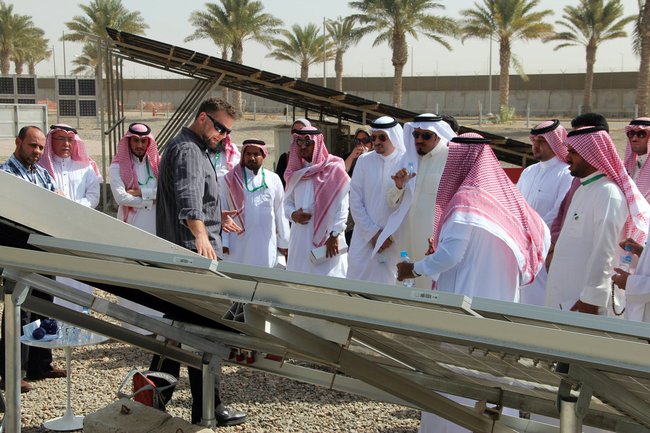
Saudi Arabia is a desert country with no freshwater resources. Every day the Saline Water Conversion Corporation (SWCC) produces more than three million cubic meters a day of potable water, which requires a great deal of precious energy, so every drop must be conserved. Cue NOMADD.
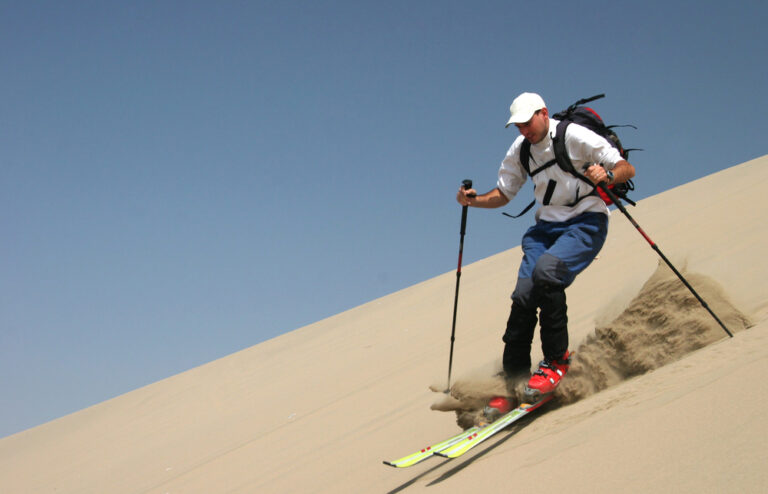
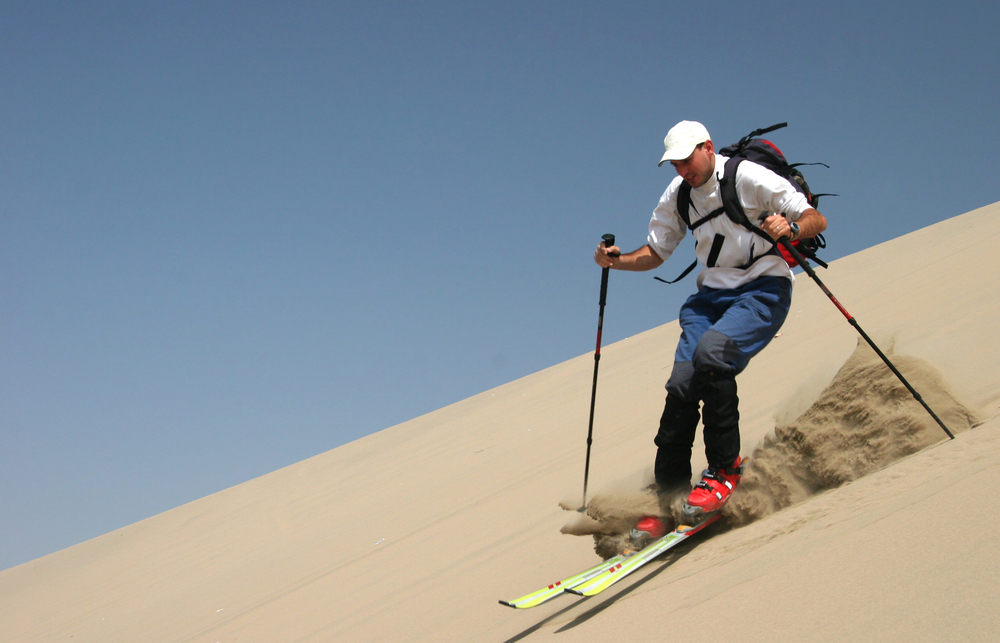
Dubai’s new air conditioned city to woo the wealthy elite

Sheikh Zayed Road in Dubai will soon play host to the world’s largest shopping mall – the gargantuan Mall of the World. Comprised of 48 million square feet of over-the-top retail, residential, and even medical services, the covered pedestrian city is expected to attract some 180 million visitors a year. I shudder at the thought.
“Smart herb garden” by Click & Grow will make you dumb
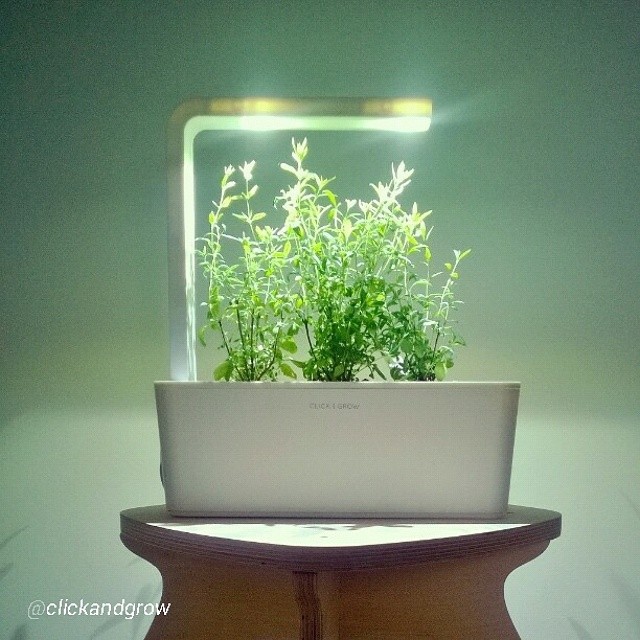
I get that a lot of people don’t have any experience growing food and that city people might not have garden space, but so called high tech gardening has gone one step too far with Click & Grow’s exorbitantly expensive “smart herb garden.”