“In the midst of uncertain time, renewable energy remains consistent and steadfast in its expansion,” said Francesco La Camera, IRENA’s Director-General. “A more decentralised energy system, with a growing share of renewables and more market players, is structurally more resilient.”
Health insurance is a regulated financial product. Insurers operate under binding contracts, overseen by state insurance commissioners, that legally obligate them to pay claims meeting policy terms. Policyholders who believe a covered claim was wrongfully denied have legal recourse through state regulatory channels.
The New Zealand Merino Company, now rebranded as Zentera, has quietly removed the phrase “world’s leading ethical wool brand” from its website, a notable change that comes after a disturbing investigation by PETA Asia-Pacific into the company’s ZQ-certified wool supply chain, PETA reports to Green Prophet.
Somehow vegetables with short seasons excite the imagination and appetite more sharply than produce that’s available all year around. Good Middle Eastern cooks have many recipes for delicate fava beans, and this turmeric-fragrant soup is one.
“In the midst of uncertain time, renewable energy remains consistent and steadfast in its expansion,” said Francesco La Camera, IRENA’s Director-General. “A more decentralised energy system, with a growing share of renewables and more market players, is structurally more resilient.”
Health insurance is a regulated financial product. Insurers operate under binding contracts, overseen by state insurance commissioners, that legally obligate them to pay claims meeting policy terms. Policyholders who believe a covered claim was wrongfully denied have legal recourse through state regulatory channels.
The New Zealand Merino Company, now rebranded as Zentera, has quietly removed the phrase “world’s leading ethical wool brand” from its website, a notable change that comes after a disturbing investigation by PETA Asia-Pacific into the company’s ZQ-certified wool supply chain, PETA reports to Green Prophet.
Somehow vegetables with short seasons excite the imagination and appetite more sharply than produce that’s available all year around. Good Middle Eastern cooks have many recipes for delicate fava beans, and this turmeric-fragrant soup is one.
“In the midst of uncertain time, renewable energy remains consistent and steadfast in its expansion,” said Francesco La Camera, IRENA’s Director-General. “A more decentralised energy system, with a growing share of renewables and more market players, is structurally more resilient.”
Health insurance is a regulated financial product. Insurers operate under binding contracts, overseen by state insurance commissioners, that legally obligate them to pay claims meeting policy terms. Policyholders who believe a covered claim was wrongfully denied have legal recourse through state regulatory channels.
The New Zealand Merino Company, now rebranded as Zentera, has quietly removed the phrase “world’s leading ethical wool brand” from its website, a notable change that comes after a disturbing investigation by PETA Asia-Pacific into the company’s ZQ-certified wool supply chain, PETA reports to Green Prophet.
Somehow vegetables with short seasons excite the imagination and appetite more sharply than produce that’s available all year around. Good Middle Eastern cooks have many recipes for delicate fava beans, and this turmeric-fragrant soup is one.
“In the midst of uncertain time, renewable energy remains consistent and steadfast in its expansion,” said Francesco La Camera, IRENA’s Director-General. “A more decentralised energy system, with a growing share of renewables and more market players, is structurally more resilient.”
Health insurance is a regulated financial product. Insurers operate under binding contracts, overseen by state insurance commissioners, that legally obligate them to pay claims meeting policy terms. Policyholders who believe a covered claim was wrongfully denied have legal recourse through state regulatory channels.
The New Zealand Merino Company, now rebranded as Zentera, has quietly removed the phrase “world’s leading ethical wool brand” from its website, a notable change that comes after a disturbing investigation by PETA Asia-Pacific into the company’s ZQ-certified wool supply chain, PETA reports to Green Prophet.
Somehow vegetables with short seasons excite the imagination and appetite more sharply than produce that’s available all year around. Good Middle Eastern cooks have many recipes for delicate fava beans, and this turmeric-fragrant soup is one.
“In the midst of uncertain time, renewable energy remains consistent and steadfast in its expansion,” said Francesco La Camera, IRENA’s Director-General. “A more decentralised energy system, with a growing share of renewables and more market players, is structurally more resilient.”
Health insurance is a regulated financial product. Insurers operate under binding contracts, overseen by state insurance commissioners, that legally obligate them to pay claims meeting policy terms. Policyholders who believe a covered claim was wrongfully denied have legal recourse through state regulatory channels.
The New Zealand Merino Company, now rebranded as Zentera, has quietly removed the phrase “world’s leading ethical wool brand” from its website, a notable change that comes after a disturbing investigation by PETA Asia-Pacific into the company’s ZQ-certified wool supply chain, PETA reports to Green Prophet.
Somehow vegetables with short seasons excite the imagination and appetite more sharply than produce that’s available all year around. Good Middle Eastern cooks have many recipes for delicate fava beans, and this turmeric-fragrant soup is one.
“In the midst of uncertain time, renewable energy remains consistent and steadfast in its expansion,” said Francesco La Camera, IRENA’s Director-General. “A more decentralised energy system, with a growing share of renewables and more market players, is structurally more resilient.”
Health insurance is a regulated financial product. Insurers operate under binding contracts, overseen by state insurance commissioners, that legally obligate them to pay claims meeting policy terms. Policyholders who believe a covered claim was wrongfully denied have legal recourse through state regulatory channels.
The New Zealand Merino Company, now rebranded as Zentera, has quietly removed the phrase “world’s leading ethical wool brand” from its website, a notable change that comes after a disturbing investigation by PETA Asia-Pacific into the company’s ZQ-certified wool supply chain, PETA reports to Green Prophet.
Somehow vegetables with short seasons excite the imagination and appetite more sharply than produce that’s available all year around. Good Middle Eastern cooks have many recipes for delicate fava beans, and this turmeric-fragrant soup is one.
“In the midst of uncertain time, renewable energy remains consistent and steadfast in its expansion,” said Francesco La Camera, IRENA’s Director-General. “A more decentralised energy system, with a growing share of renewables and more market players, is structurally more resilient.”
Health insurance is a regulated financial product. Insurers operate under binding contracts, overseen by state insurance commissioners, that legally obligate them to pay claims meeting policy terms. Policyholders who believe a covered claim was wrongfully denied have legal recourse through state regulatory channels.
The New Zealand Merino Company, now rebranded as Zentera, has quietly removed the phrase “world’s leading ethical wool brand” from its website, a notable change that comes after a disturbing investigation by PETA Asia-Pacific into the company’s ZQ-certified wool supply chain, PETA reports to Green Prophet.
Somehow vegetables with short seasons excite the imagination and appetite more sharply than produce that’s available all year around. Good Middle Eastern cooks have many recipes for delicate fava beans, and this turmeric-fragrant soup is one.
“In the midst of uncertain time, renewable energy remains consistent and steadfast in its expansion,” said Francesco La Camera, IRENA’s Director-General. “A more decentralised energy system, with a growing share of renewables and more market players, is structurally more resilient.”
Health insurance is a regulated financial product. Insurers operate under binding contracts, overseen by state insurance commissioners, that legally obligate them to pay claims meeting policy terms. Policyholders who believe a covered claim was wrongfully denied have legal recourse through state regulatory channels.
The New Zealand Merino Company, now rebranded as Zentera, has quietly removed the phrase “world’s leading ethical wool brand” from its website, a notable change that comes after a disturbing investigation by PETA Asia-Pacific into the company’s ZQ-certified wool supply chain, PETA reports to Green Prophet.
Somehow vegetables with short seasons excite the imagination and appetite more sharply than produce that’s available all year around. Good Middle Eastern cooks have many recipes for delicate fava beans, and this turmeric-fragrant soup is one.
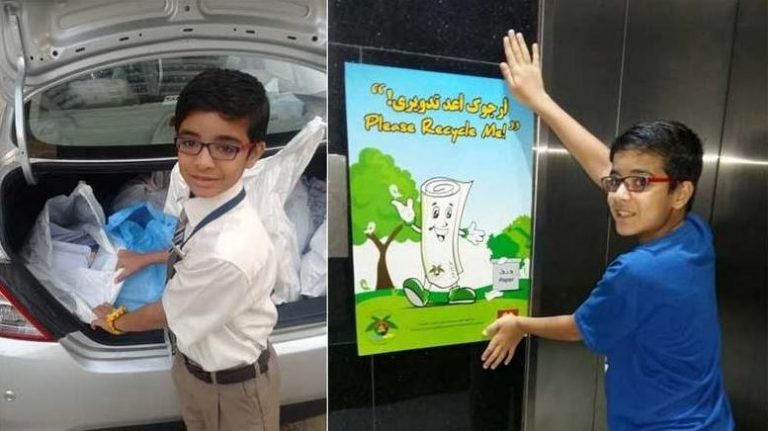
تعرفوا على يوغ شاه ذو التسع سنوات. الذي آذاه منظر القمامة على الأرض في دبي، فقرر أن يصنع صنيعا
في غضون أسبوعين، استطاع يوغ أن يجمع ما قدره 526 كيلوغرام من النفايات القابلة للتدوير – أو ما يعادل 18 ضعف وزنه
إهتمام الطفل ببيئته جاء مدعوما من مؤسسات أكبر منه بكثير، كالصندوق العالمي للطبيعة و مجموعة عمل الإمارات للبيئة، اللذان يتعاونان مع المدارس المحلية لا لتعليم النشئ عن الاستدامة فحسب، بل لتشجيعهم على العمل الفعال أيضا في الحفاظ على بيئة مجتمعهم
و يوغ، تلميذ الصف الخامس في مدرستنا العليا الخاصة في الورقاء في دبي، ليس بجديد على فعاليات الحفاظ على البيئة، فقد كان أن شارك من قبل في يوم الأرض و ساعة الأرض في المدينة. و لما تعرف على مشروع “التدوير في الحي” الذي تنظمه مجموعة عمل الإمارات للبيئة، تبنى المشروع على الفور و بكل اجتهاد و أخذ بتجنيد أهله و أصدقائة و جيرانه لمساعدته في جمع النفايات لتدويرها. و في غضون أسبوعين، كانت المهمة فعلا قد تمت، و قام بنقل الدفعة أخيرا إلى مقر المجموعة للتدوير
و في لقاء معه لجريدة خليج تايمز، قال يوغ: يجب علينا جميعا أن نعمل سوية لتوعية المجتمع لتصبح البيئة جزءا من اهتماماته
و توصف مجموعة عمل الإمارات للبيئة برنامجها بأنه يُوفر المنصة الضرورية لجميع الأفراد للقيام بواجبهم تجاه مجتمعهم و بيئته، و يُشجع الأطفال منذ الصغر على جمع البطاريات و الهواتف النقالة القديمة و الأوراق و البلاستيكيات و غيرها من النفايات القابلة للتدوير
Green Prophet was bowled over by the teen rapper whose environmentalism got him a ticket to COP21, now an even younger eco-warrior has gotten our attention. A nine year old Dubai boy, annoyed by streetside litter, decided to pick up some trash. A good deed, that. But it’s where he took that action that makes this child a stand-out for planetary stewardship.
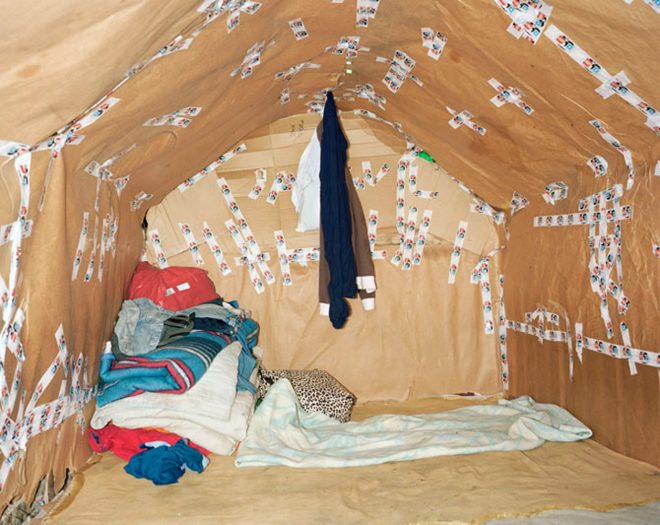
New York City’s Museum of Modern Art (MoMA) is hosting an exhibition on refugee shelters to kickstart dialogue on the design challenges caused by humanitarian crises. Entitled “Insecurities: Tracing Displacement and Shelter”, the show looks at emergency housing in contemporary crisis zones. It is the first time a major museum has explored the plight of the world’s homeless.
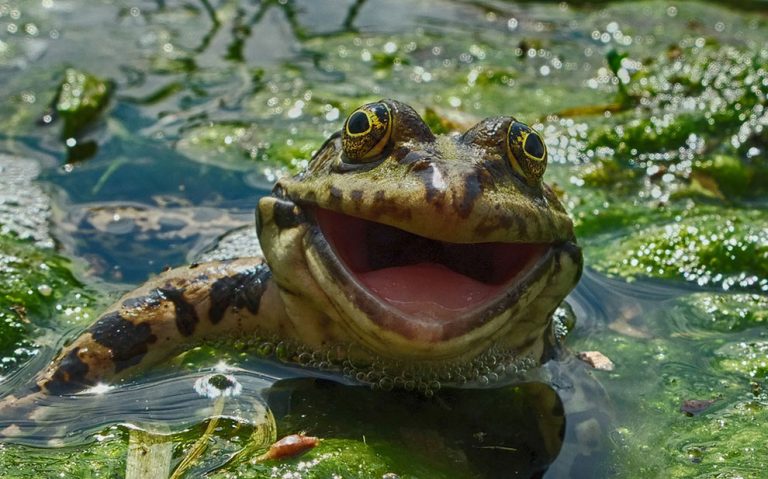
(Photo by Artyom Krivosheev/Barcroft Images/Comedy Wildlife Photography Awards 2016)
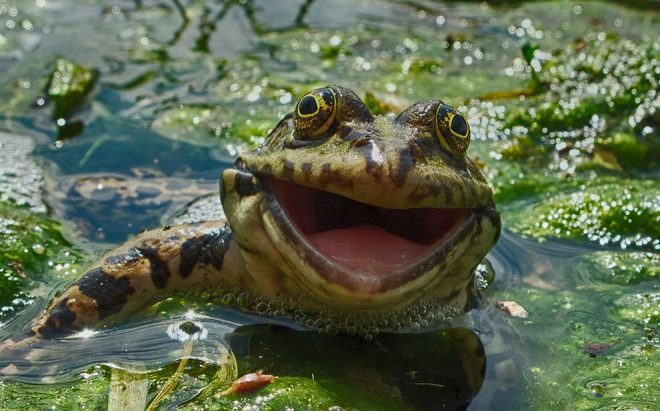
Anyone with a Facebook account knows people love pictures of adorable animals. Photographers Paul Joynson-Hicks and Tom Sullam are tapping into that animal magnetism to boost support of wildlife conservation. Their second annual Comedy Wildlife Photography Awards is inciting “conservation through competition”, helped by heaps of belly laughs, and the unbelievable images are real. (Green Prophet brings you a sampler, visit the awards website to see the full portfolio.)
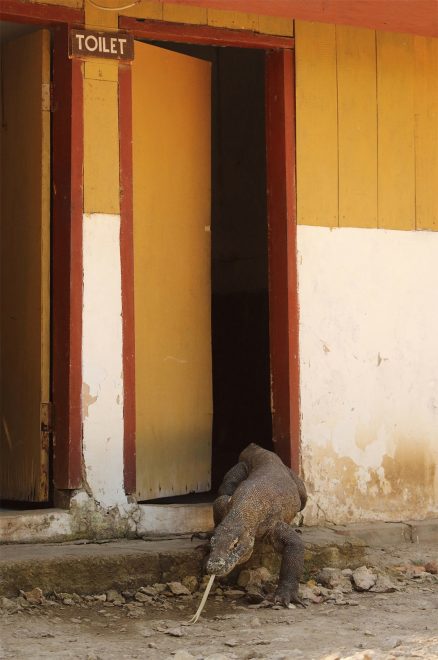
(Photo by Gil Gofer/Barcroft Images/Comedy Wildlife Photography Awards 2016)
It’s an upbeat photo competition about wildlife doing funny things that puts a high-beam on how much we humans truly love animals, while steering attention to how our choices put wildlife at risk. The organizers point out that nobody is perfect. We hop planes, drive cars, cook food, and use products that likely contribute to the warming of our planet. Not a stretch to see how this indirectly impacts earth’s animals, damaging habitat and affecting food chains.
(Photo by Carolin Tout/Barcroft Images/Comedy Wildlife Photography Awards 2016)
The competition gives everyone a chance to do a bit for conservation, in gentle yet persuasive ways. How? The images are infectious and scream to be shared. They might spark some chat about conservation, and lead self-starters to check out the competition’s chosen charity, Born Free.
(Photo by Angela Bohlke/Barcroft Images/Comedy Wildlife Photography Awards 2016)
This year’s competition featured six categories plus a special video-clip group, each focused on a specific genre – as example creatures of the air, and creatures of the sea. More than 2200 hilarious entries came in from around the world including a face-planting baby elephant, seemingly headless penguins, and a bear sprouting wings, The gorgeous images capture perfect comic timing and convey a powerful message that we must protect their subjects.
(Photo by Tom Stables/Barcroft Images/Comedy Wildlife Photography Awards 2016)
Judges revealed their shortlist of the 40 best photographs, you can see the full portfolio on the competition website. You can also sign up on that website to receive alerts on how and when to enter the 2017 competition. The winner will be announced by the end of October. Prizes include photography equipment from Nikon and a chance to join a one-week Kenyan photo-safari.
(Photo by Brigitta Moser/Barcroft Images/Comedy Wildlife Photography Awards 2016)
Joynson-Hicks and Sullam each have two young sons. They say they are “extremely keen that they can experience the wild world in the same way as we have and our parents have before us. For this to happen we all have to do something; nothing mad and crazy and life changing (although that would be awesome) but a little bit here and there.” And one thing is to visit the Born Free Foundation’s website to check out what they are doing and how you can help.
Born Free Foundation is an international wildlife charity founded by Virginia McKenna, Bill Travers and their eldest son following Bill and Virginia’s starring roles in the classic film Born Free. The Foundation promotes wild animal welfare and compassionate conservation, working to save animal lives, stop suffering, and protect rare species. They also work to end captive animal exploitation, phase out zoos and keep wildlife in the wild.
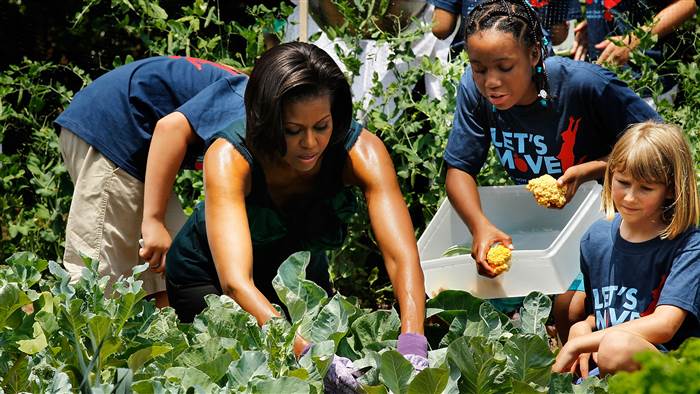
Michelle Obama has made America’s gardening great and she’s now laying down roots so the gardening tradition will continue even after her family leaves the White House this January. Obama created the garden in 2009, and made sure to expand it twice so it will be hard to plow under by the next family. She’s expanding and improving it so it will endure, along with the American values of gardening to discourage obesity, and get kids outdoors.
The garden started at 1100 square feet to more than double in size at 2800 square feet. It has walkways, wooden tables and benches. A stone reads: “White House Kitchen Garden, established in 2009 by First Lady Michelle Obama with the hopes of growing a healthier nation for our children.”
A new endowment by the seed and home gardening company, W. Atlee Burpee Company, and The Burpee Foundation will keep Obama’s dream alive. While there is no White House law that must keep the garden alive, Burpee’s latest $2.5 million donation will ensure that it is tended to and thrives into the future, as Michelle has intended as a legacy to her husband’s time in Office.
Burpee Seeds, officially W. Atlee Burpee & Co., is a seed company that was founded by Washington Atlee Burpee in 1876.
According to Venelin Dimitrov, a senior manager at Burpee, regardless of who moves into the White House, Michelle’s garden can live on: “The idea is to preserve the legacy left by First Lady Michelle Obama,” he tells Green Prophet.
Dimitrov, a specialist in flowers, helped create the special seed blends that were donated for distribution at U.S. national parks.
Honey bees are on a swift decline, and Monarch butterflies are now considered endangered. By encouraging people to plant flowering plants, we can ensure that pollinator food such as fruits and many vegetables that will continue to feed us into the future.
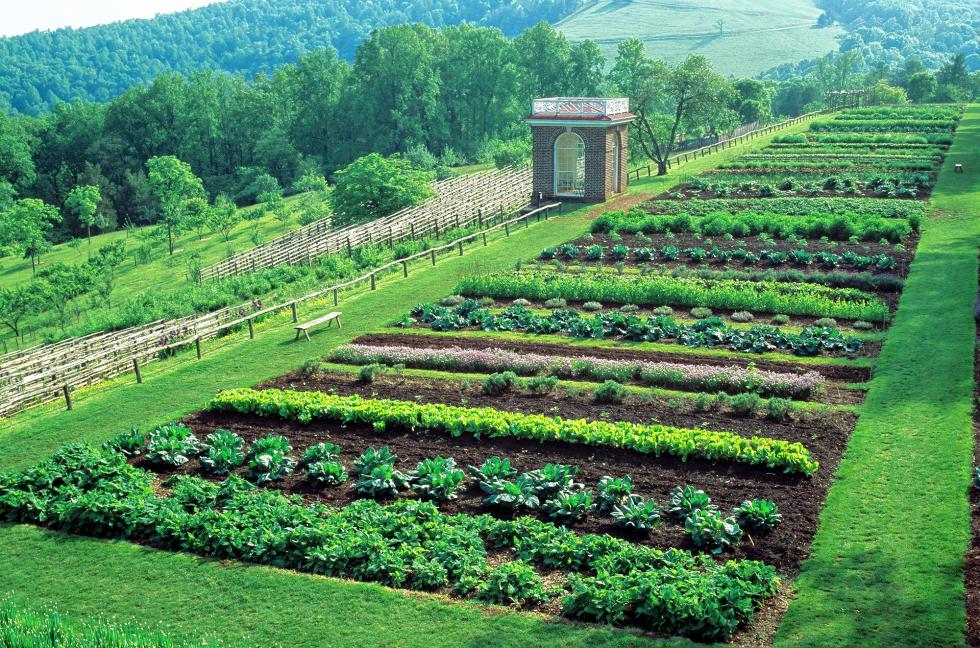
Dimitrov says that it’s also about historical preservation to have a garden in the White House: “Most of the Founding Fathers were farmers and gardeners and it’s a neat idea to have a garden in the White House similar to President Jefferson’s garden in Monticello” where he grew more than 300 varieties of plants.
Thomas Jefferson’s food garden at Monticello.
“If we had established it 100 years ago, every president could have left their mark. Now it has been started by Mrs. Obama and can be there for every Administration after the Obamas. It would be neat to see, 100 years from now, how the garden evolves,” he says.
The mission is to get people up, moving and gardening; but Dimitrov holds off giving us the list of what the White House Kitchen Garden is growing, saying we shouldn’t try to mimic what’s being grown there, since every region and state has different species and varieties that work best locally.
White House Garden, 2012. Planted: Mustard Greens, Dill seed, and five varieties of potatoes, including red Sangre, purple fingerlings from Peru called Purple Sion; Mountain Rose, Red Thumb and Canola Russet.
The point is that if our leaders set an example, the people will follow.
There is diabesity and obesity and “from a gardening point of view we would like to see people broaden their horizons by getting outdoors and growing plants.”
What’s exciting to grow? Dimitrov says that exotic fruits such as figs are becoming popular with Americans, as are jujubes and goji berries. There are lots of new fruit that are grown in tough climates around the world. These work well in the US as they are used to drought and do not require a lot of maintenance.
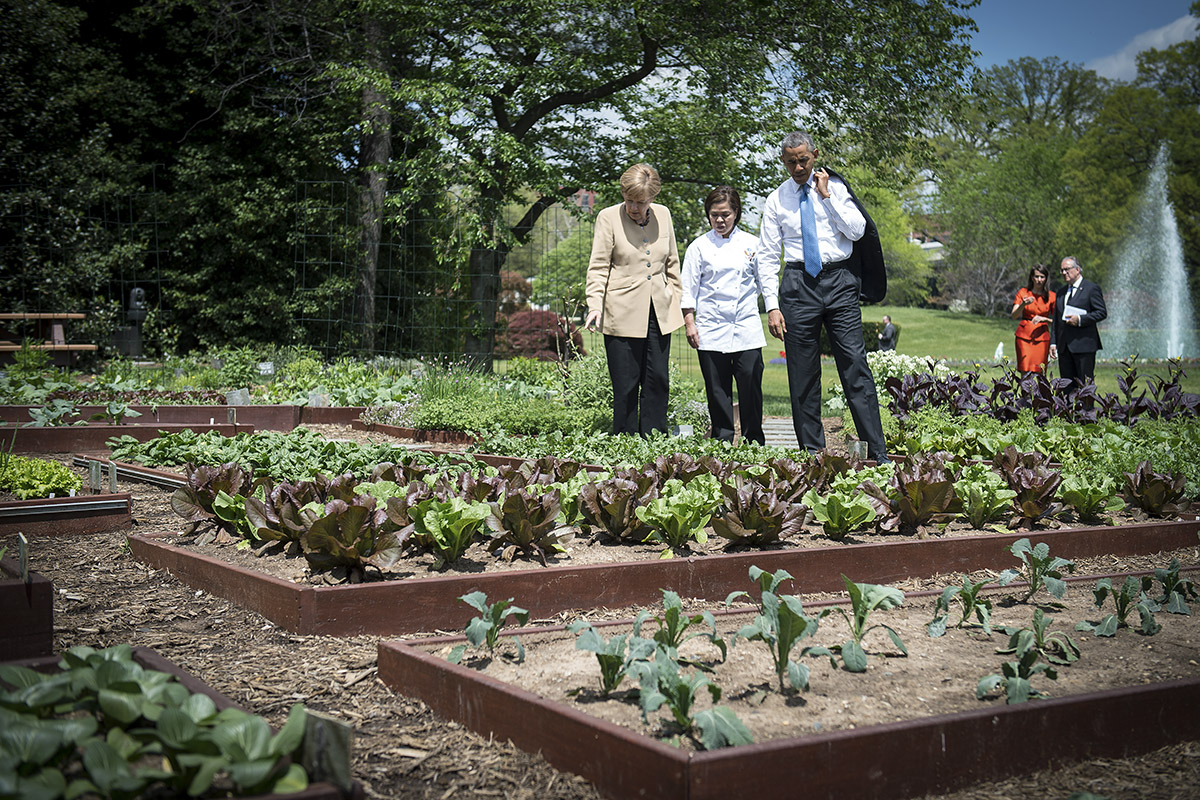
President Obama shows off the Kitchen Garden.
There are traditional vegetables that are high yield and low maintenance, such as cucumbers and melons. Urban farmers with little space should try their hands at vining plants such as peas, pole beans, and tomatoes.
Do garden Jujitsu
Dimitrov says: “It’s like garden Jujitsu. Use plans to fight the elements to your advantage. Use plants for shade if you are exposed to heat — there are excellent tomato species, such as ‘Heatwave II’.
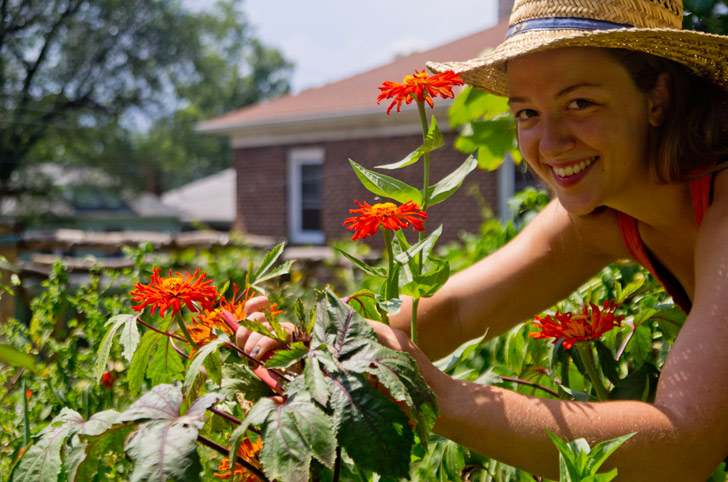
Urban Farm School teaches you how to grow food in your city.
“Morning Glory flowers provide plenty of shade, helping to cut down on energy bills. Even hyacinth bean; let them climb up, creating beauty to your porch, patio or roof, and an impact on your air conditioning use.”
Dimitrov says Burpee cultivates varieties of seeds that grow well in small spaces to give you great output with little requirements in terms of water and attention.
Want to know what to plant? “Bush bean, ‘Beananza’ in your balcony box, tomato, ‘Patio Princess’, cucumber, ‘Spacemaster’ or small okra, like ‘Baby Bubba’, may look tiny, but they can really bring a lot of food to the table,” Dimitrov adds.
Go to Burpee.com to cultivate your next meal and family project.
Local, real food (#realfood) is more than a rage. It’s the new everything in food. After decades of eating shipped-in waxy veggies, greens and fruits, consumers and chefs are demanding a new kind of food. Vegetables and fruits that are local, and full of flavor. We want food with high oil and vitamin content that looks out of this world. Food that is pesticide-free.
The problem with these demands is checking all the boxes. How in the world do you grow local, fresh, tasty and diverse foods in cities like New York City where good food is more than in demand, it’s a way of life?
Going big by growing small
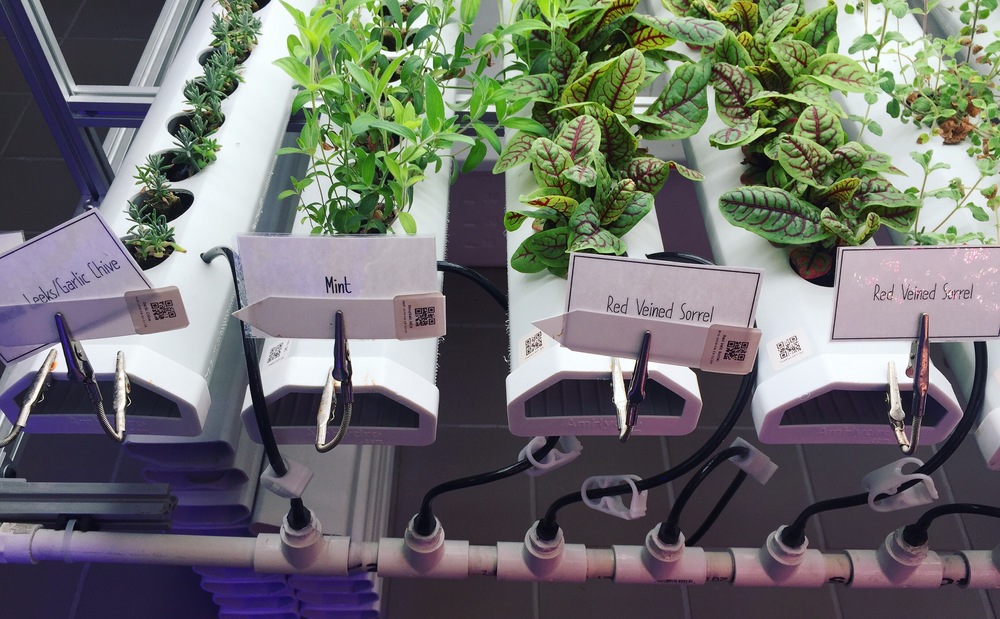
Farm.One a new urban farm startup located inside the Institute of Culinary Education in Manhattan, has a bold new idea. Instead of going “big” as its predecessors have done, this vertical farming company has done the opposite by growing small.
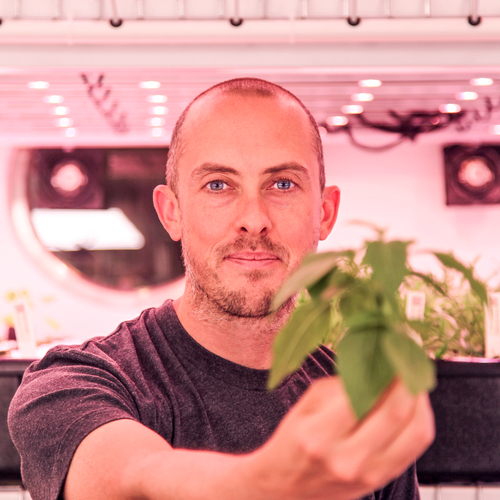
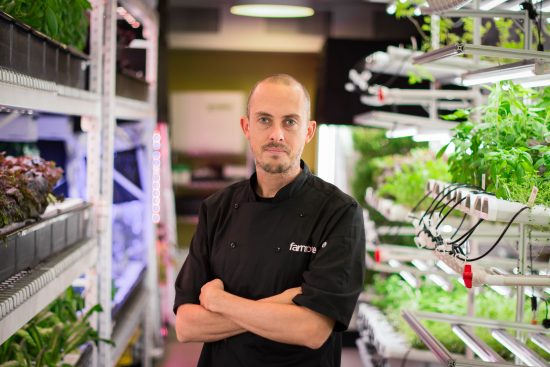
Farm.One CEO and founder Rob Laing (pictured below, and very top) came from the startup world “merry-go-round”. After founding a successful VC-backed startup, he wanted to change gears. While taking chefs classes in LA Laing discovered on outings to the farmer’s markets that new flavors are transitory. No chef in the world can build a menu around a herb, spice, flower or microgreen that has a season of only 2 weeks: Laing’s idea? Build chefs dream gardens near their restaurants so unique, fresh food can be available year round.
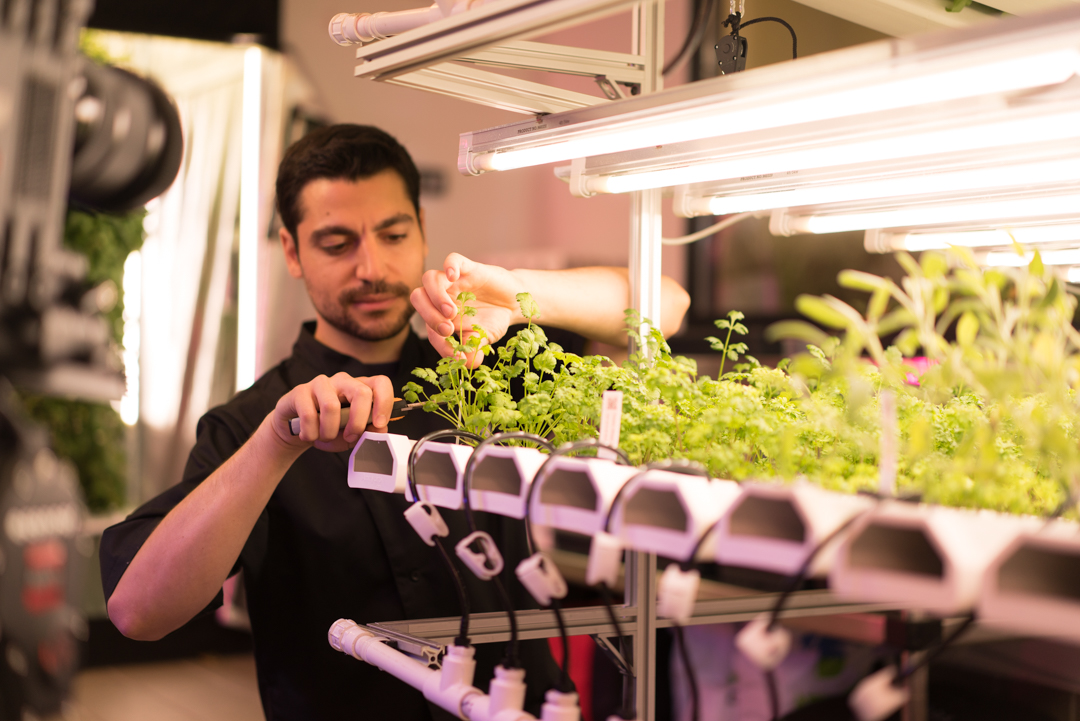
How do they do it? With technology: Farm.One uses a special space age cultivation technique called hydroponics to grow unusual fresh herbs and plants indoors, using highly controlled processes to perfect flavors and indulge what their local chef customers desire. The company is working with a dozen local restaurants already on private orders, and offers home chefs a weekly herb and flower discovery box for only $15 a week.
Hydroponics means growing plants on water, with added nutrients and lighting. It’s also called controlled environment agriculture, greenhouse ag, or vertical or urban farming. There are lots of ways you can do it, with larger farms like Brightfarms, Gotham Greens, Farmed Here, and Aerofarms gaining notoriety for their plant factories that grow monocrops like lettuce or spinach.
Farm.One takes another angle: “we want to grow interesting crops, stuff you can’t get anywhere else –- for chefs,” Laing says.
He explains: “If you’re a farmer and you’ve got something good like a unique herb that you grow for 2 weeks of the year, you can’t share it with chefs because they build menus around special ingredients and recipe development. Sometimes chefs take months perfecting a texture and flavor.
“New York has a crazy climate and then it’s hot. Its lack of local farmland and dense population means chefs end up buying basil from Israel, which is crazy. I decided that there could be an interesting niche. I don’t want to be the biggest and I don’t want to buy commodity crops.”
How does Farm.One work?
Like renting server space on a server farm: chefs work with Farm.One to determine what they want on the menu, and pay a set fee for regular deliveries, always within a hyper local 15-minute bike ride to their restaurant. Or direct orders can be placed via the website where 150 herbs, greens and flowers, some rare, can be grown to order.
Laing wants every chef in Manhattan to have a kitchen garden (like the White House!), but most “probably don’t have space or expertise on how to grow themselves. They can rent space with us and we will manage the garden for them,” he tells Green Prophet.
Yield and variety will be determined by the restaurant.
Chefs and partners visit the Manhattan farm, Farm.One
“Some chefs,” Laing notes, “want to have secrecy and I am happy to go down that route. We can keep it ninja for these chefs. We could grow something unique to them, in a particular size or in a particular flavor. And introduce new tastes to people, like wasabi arugula,” he points out.
If you want in on the new flavors, but are still an aspiring chef (at home) Farm.One also has a fresh herb subscription box which will provide you weekly flavors of pesticide-free herbs and greens –– among 150 varieties grown. All cycled to your Manhattan-based home.
While most of us don’t have a Manhattan zip code and can’t enjoy the benefits of Farm.One, we can be inspired and start growing our own at home. A trip to the local hydroponics shop for growing equipment and some heirloom seeds should satisfy some basic urges.
For more inspiration on what New York chefs want? Look to Farm.One’s catalog.
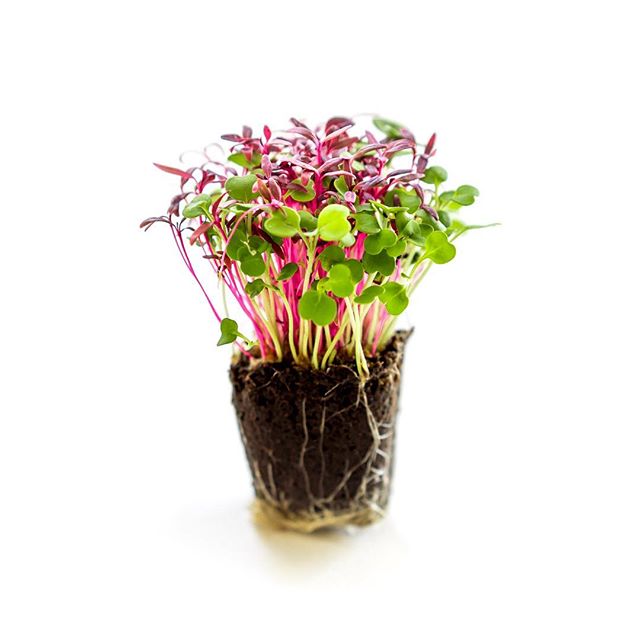
Laing’s top 7 pics of new herbs and plants for chefs to grow are:
1. Papalo – Central Mexican herb, used in sandwiches known as cemitas in central Mexico.
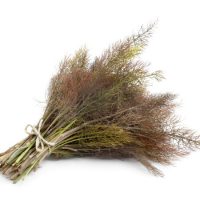
2. Bronze fennel – At a young age has a sweetness to it. Not rubbery or chewy.
3. Purple Ruffles Basil – Ruffled and jagged purple leaves, with a strong aroma of anise.
4. Nepitella – a Tuscan herb which has disappeared from a lot of recipes. Has beautiful tiny pink flowers.
5. Sheep’s sorrel – Sour and intriguing herb, very hard to find
6. Minutina (Erba Stella) – Italian salad leaf, shaped like grass but succulent and crunchy.
7. Pluto Basil – small, highly-fragrant leaves, perfect for garnish
بينما ما زال البوركيني يشغل بعض السلطات في فرنسا، جاء رد أمينة أحمدي و هيا الغانم معاكسا من قطر
أولى للألبسة الرياضية، هو اسم الشركة التي أنشأتاها أمينة و هيا لتوفير ما تحتاجهن النساء اللواتي يرغبن بممارسة الرياضة في الهواء الطلق، مع الحفاظ على عاداتهن التقليدية في الملبس. و جاء الإلهام للشريكتين و هما في صعود إلى قمة جبل كيليمينجارو، بعد أن أدركتا صعوبة التدريب في الخارج بملابس غير مخصصة لذلك
بعدها قررتا أن شركتهما ستُصمم و تنتج ألبسة رياضية عملية و فضفاضة – تتكون من أقمشة تسمح للجلد بالتنفس، و مضادة للمياه و سريعة الجفاف. و طبعا، شريطة أن تكون التصاميم متماهية مع ما تسلتزمه معتقداتهما من غطاء للرأس و الجسد. و بطبيعة الحال، لم تنسيا الفتاتين إضفاء لمسة فنية على تصاميمهما
و إذ بأولى. فقد بدأت الشركة حملة تمويل جماعي بهدف الوصول إلى مبلغ $15,000، و نجحت في جمع أكثر من $6,000 حتى هذه اللحظة
أما عن رؤية أولى، فهي ببساطة تشجيع نمط حياة أكثر صحية بين أولئك اللاواتي يرغبن بممارسة الرياضة في الخارج، دون أن يتخلين عن اختياراتهن في الملبس. و تؤمن أولى بأن كل امرأة قادرة على تحقيق أهدافها التي طالما بدت بعيدة، و أنها قادرة على تحدي -بل و تخطي- الصعوبات التي قد تواجهها – ملهمة بذلك جميع أفراد المجتمع من حولها
Amid news of France’s overturned ban of the full-body “burkini” swimsuit, Playboy and Women’s Running magazines featuring women in hijab for the first time the hijab is turning heads and making headlines. The hijab or face-covering for Muslim women needs to be comfortable and sport-relevant says Qatar-based founders of Oola Sportswear. They just launched an Indiegogo campaign that not only celebrates modest activewear such as comfortable head coverings and workout suites, but they bring much-needed athletic wear technology to the segment.
The Oola team launched a campaign Oola Sportswear: Activewear That’s Got You Covered on crowdfunding platform Indiegogo on Sunday morning (the start of the week in Qatar, where the team is based). With a goal of $15,000, the campaign offers elegant, functional, loose-fitting activewear and sports hijabs that finally make outdoor sports accessible to women who prefer coverage with their workout gear.
Most women’s sportswear is tight, short, low-cut, or designed in short-sleeved-only options. For women who value modesty out of personal values or religious practice — such as those of the Islamic, Orthodox Judaic, Coptic Christian, or other faiths — finding athletic wear that performs and comes in desired styles is a tiring hunt.
Good activewear, depending on the sport, is quick-drying, breathable, and/or water-repellent. Coming across attire that is made of suitable sports fabrics and enables a woman to stay covered fashionably in comfort is all too uncommon.
Experiencing this struggle themselves, Oola co-founders Haya Al Ghanim and Amina Ahmadi decided to design activewear that has all of the above. “While we were training for a Mount Kilimanjaro hike, we really wanted to train outside, but we were really struggling to find something to wear that was appropriate for training outdoors,” says co-founder Amina. “We knew at that point that we wanted to do something about it, but it was the experience of Kili itself that brought Oola to life. We made up our mind that we were going to go back home and do something about it.”
More about Oola Sportswear
Oola Sportswear is a modesty-inspired fashion brand that provides loose-fitting, contemporary activewear for women who prefer more coverage for outdoor activities. Our vision is to promote a healthy lifestyle by making outdoor sports accessible for our clients.
Oola believes that every woman possesses the strength to push boundaries, redefine limits, and overcome challenges. Equipped with the right tools, a woman can unlock her potential, achieving goals that may have seemed unreachable, enjoying experiences that seemed limited, and inspiring communities around them. Oola provides activewear that will enable women to push their fitness goals and challenge their limits. To plant a seed of empowerment is all it takes to lose one’s inhibitions. Oola is that seed.
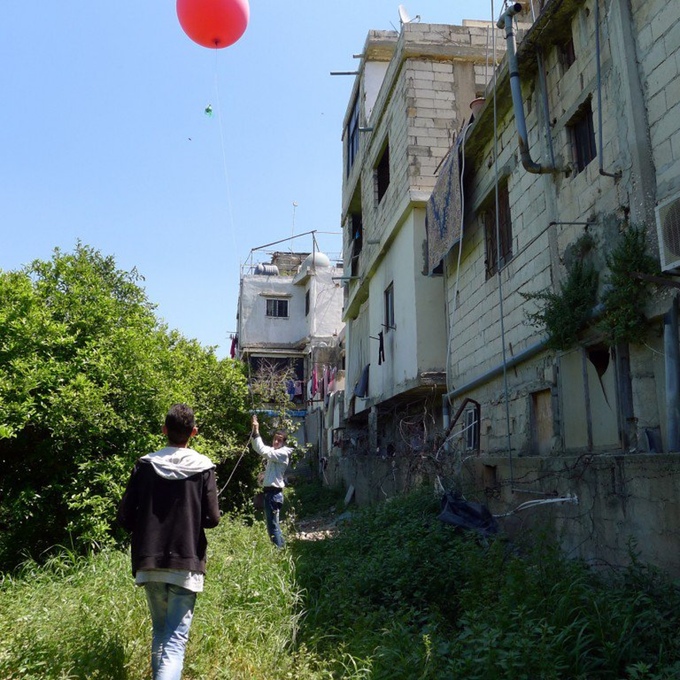
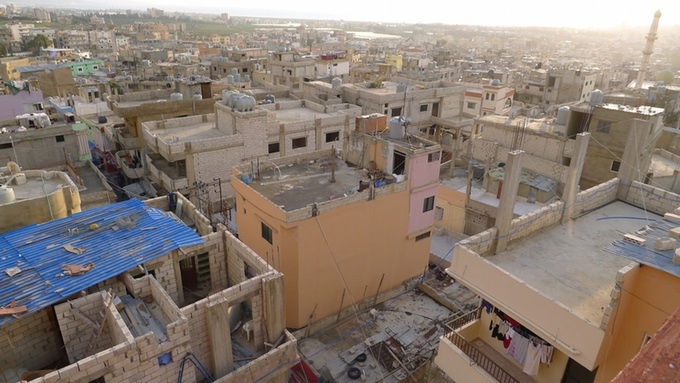
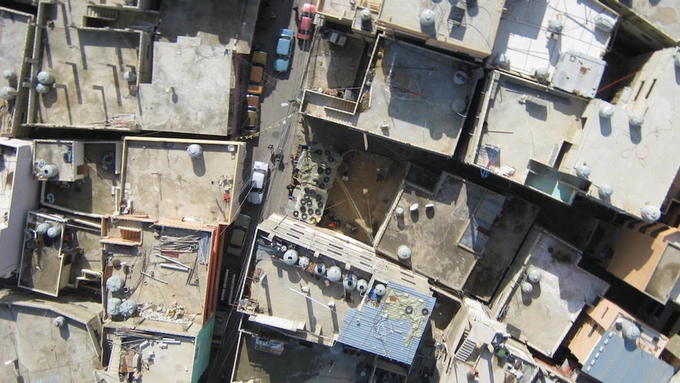
Palestinian refugees in Lebanon have been living in a concrete jungle for decades. Unlike the tents and temporary conditions of Syrian refugees in Jordan, Palestinian refugees in Lebanon have put down roots. More than 400,000 refugees live in a labyrinth of concrete structures, built one on top of the other.
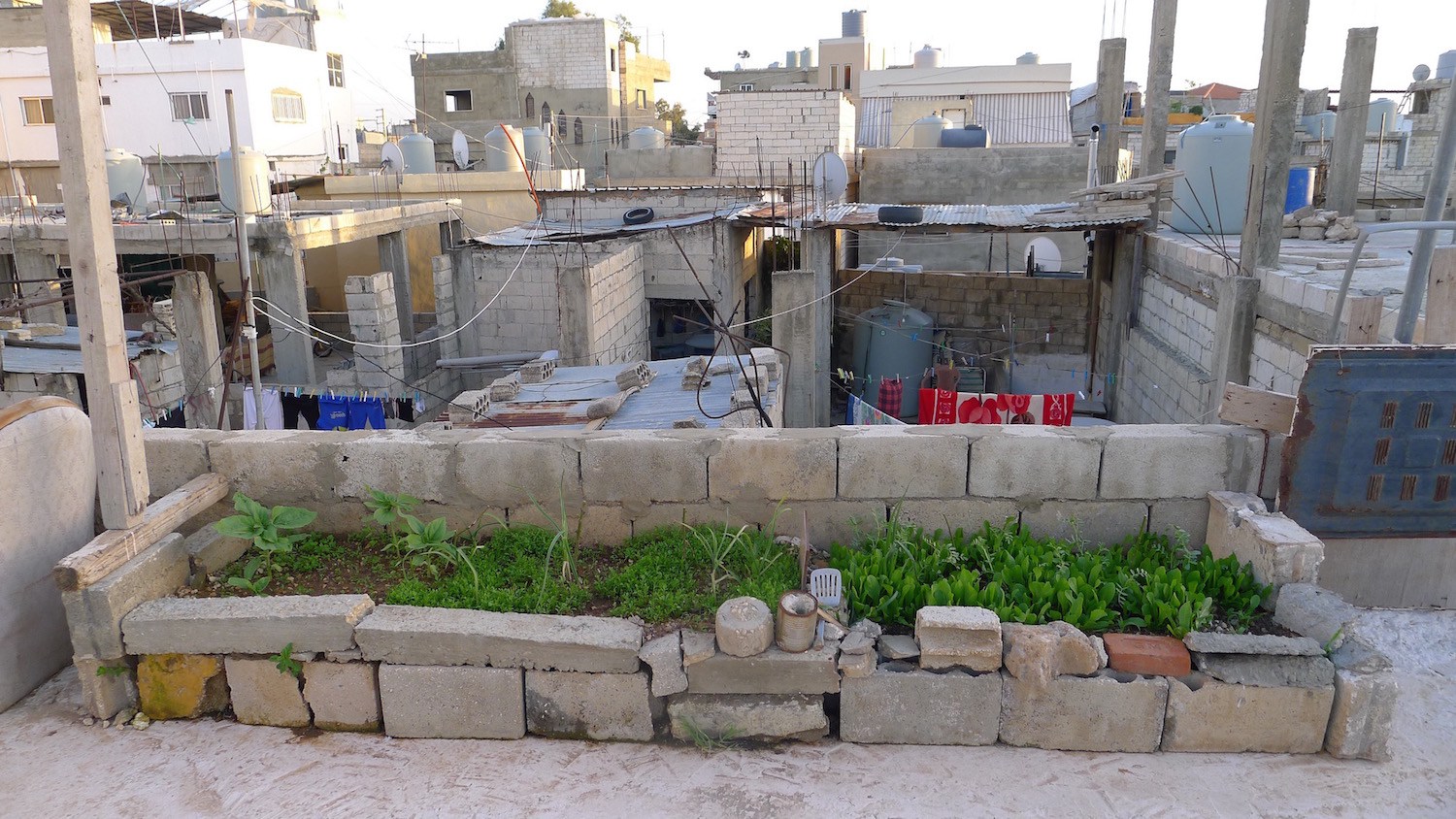
It’s a mess, but volunteers now plan on making some “green” sense out of the madness.
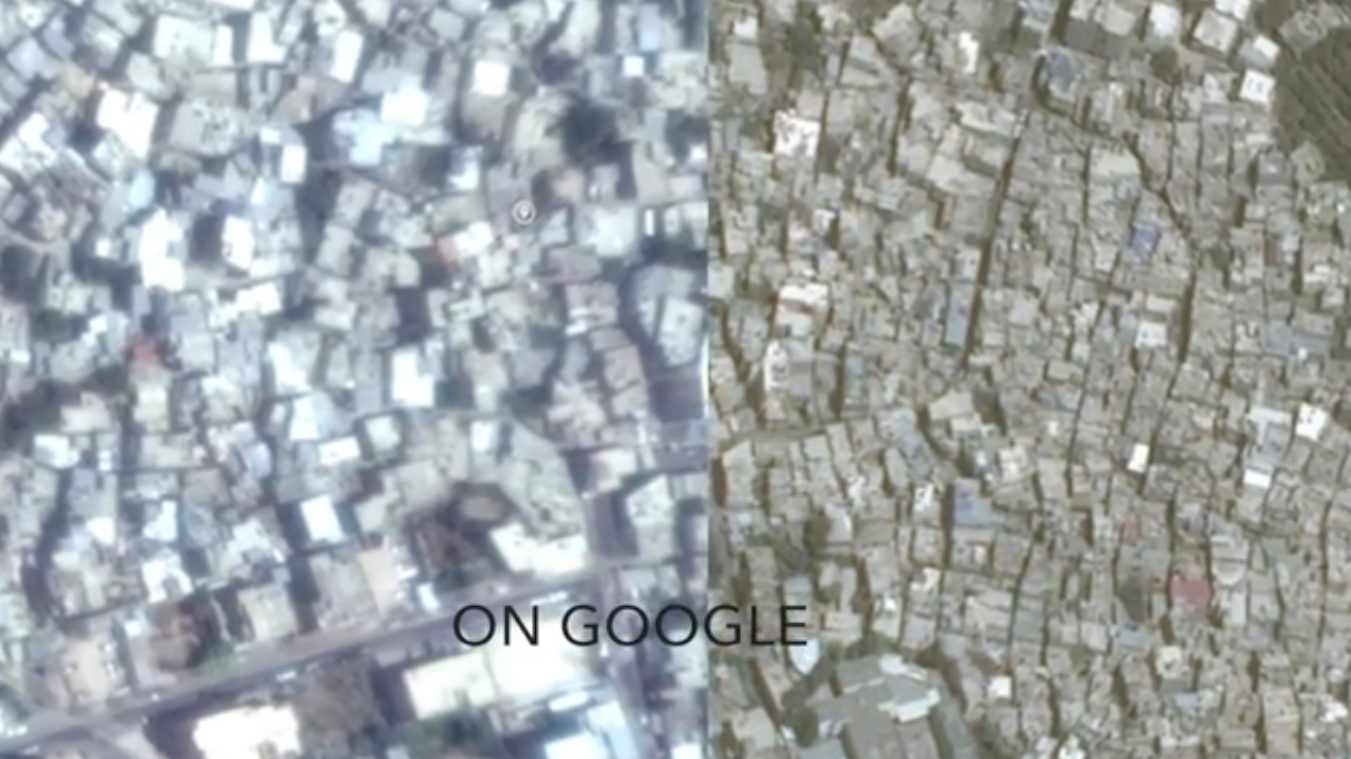
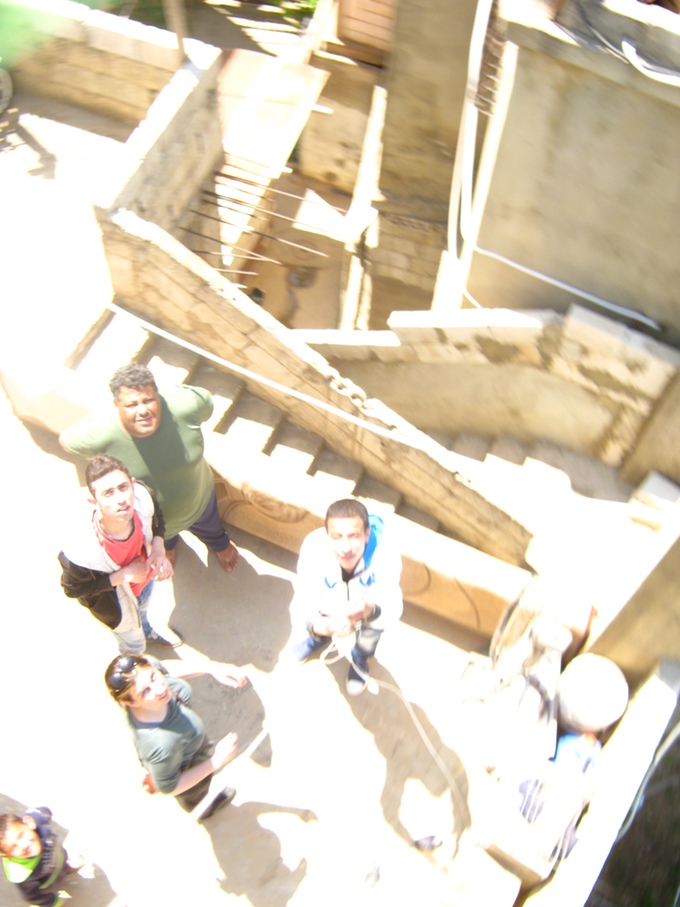
We’ve participated in balloon mapping projects in the West Bank. The notion goes like this: how can we save or better a situation or environment if we don’t know what’s there? A low-cost to build accurate maps is by sending weather balloons up above the city, with an always on camera taking photos from multiple directions. These images can later be sewn together to create a comprehensive map.
We take maps of our towns and cities for granted, and applications like Google Maps has made us more aware and curious about locations far away.
But such maps don’t provide the resolution needed to give answers like: where should we build an urban garden? A playground for children? Recycling centers? How is power and water distributed through the city, if at all?
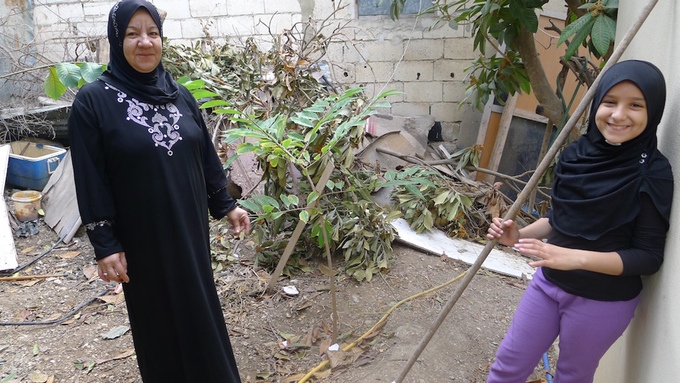
Mansell, who’s been connected to the refugees for 2 decades reasons that when the citizens can make where they live, they can analyse, improve, green, and take charge of their environment.
The Kickstarter campaign is looking to raise $12,500 for:
1. The completion and production of the map of the camp, building on several months of self-funded balloon-mapping that have already been carried out.
2. Funding the remaining transportation costs associated with bringing a few mappers to speak about this project at events in the United States.
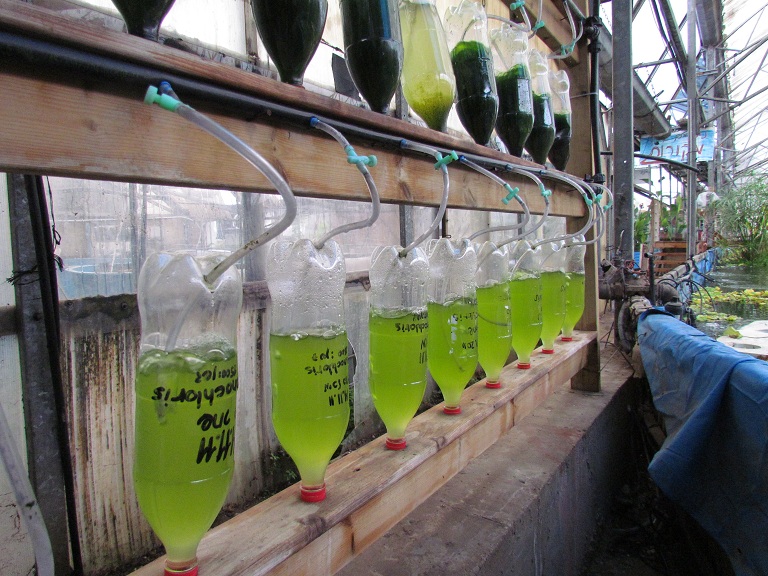
Researchers at Tel Aviv University have revealed how microalgae produce hydrogen, a clean fuel of the future, and suggest a possible mechanism to jumpstart mass production of this environmentally-friendly energy source. Their results have been published in back-to-back studies in Plant Physiology and Biotechnology for Biofuels.
The research was led by Dr. Iftach Yacoby, head of TAU’s renewable energy laboratory, and Rinat Semyatich, Haviva Eisenberg, Iddo Weiner and Oded Liran, his students at the School of Plant Sciences and Food Securityat TAU’s Faculty of Life Sciences.
Researchers in the past believed that algae only produce hydrogen in the course of a single microburst at dawn lasting just a few minutes. But Dr. Yacoby and his team used highly sensitive technology to discover that algaeproduce hydrogen from photosynthesis all day long. Armed with this discovery, the team harnessed genetic engineering to increase algae‘s production of this clean energy source 400 percent.
Increasing algae‘s output of hydrogen
Laboratory tests revealed that algae create hydrogen with the assistance of the enzyme hydrogenase, which breaks down when oxygen is present. The researchers discovered effective mechanisms to remove oxygen so hydrogenase can keep producing hydrogen.
“The discovery of the mechanisms makes it clear that algae have a huge underutilized potential for the production of hydrogen fuel,” said Dr. Yacoby. “The next question is how to beef up production for industrial purposes — to get the algae to overproduce the enzyme.”
Some 99% of the hydrogen produced in the US comes from natural gas. But the methods used to draw hydrogen from natural gas are toxic — and wasteful.
Answering the need for clean energy
“I grew up on a farm, dreaming of hydrogen,” said Dr. Yacoby. “Since the beginning of time, we have been using agriculture to make our own food. But when it comes to energy, we are still hunter-gatherers. Cultivating energy from agriculture is really the next revolution. There may be other ways to produce hydrogen, but this is the greenest and the only agricultural one.
“The world burns in just one year energy it took the earth over a million years to produce,” Dr. Yacoby continued. “We must stop being hunters and gatherers of energy. We must start producing clean energy — for our children and for our children’s children.”
Dr. Yacoby is now researching synthetic enzymes capable of increasing hydrogen production from microalgae to industrial levels.
Remember that quirky Yael Mer inflatable dress that could save your life when disaster strikes? These floating homes go to the next level: Hurricane Matthew is bearing down on the Caribbean. Would the damage be less devastating if you lived in a floating home? Perhaps, but you’ll have to serve up more than pretty renderings to lure me aboard.
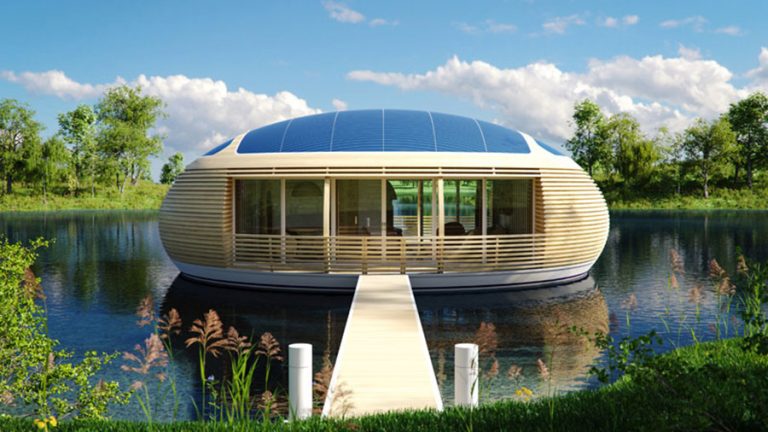
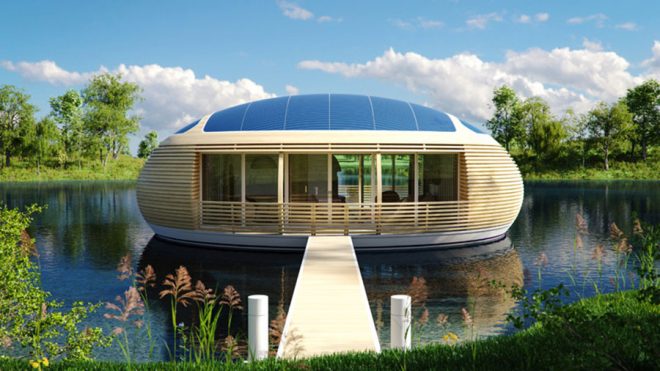
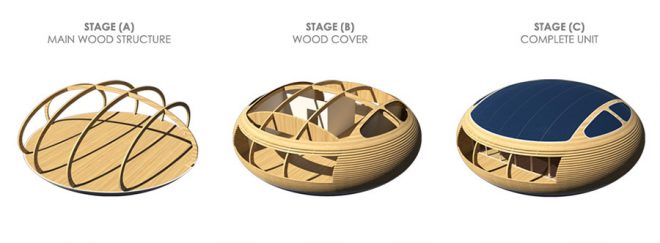
Italian architect Giancarlo Zema has designed an eco-friendly floating dwelling called the WaterNest 100. The 100 square meter units are made of up to 98% recycled materials including its aluminum frame and laminated timber cladding. Sixty square meters of rooftop photovoltaic panels provide about 4 kWp of clean electricity, enough to power the needs of a one-bedroom dwelling or office function.
The interior of WaterNest 100 can accommodate a bedroom, bathroom, living room, dining area and kitchen. It can also be configured as an exhibition space or workspace. Large windows and skylights provide ample daylighting, and open air balconies maximize waterfront views while also allowing for an efficient system of natural micro-ventilation, minimizing the need for mechanically conditioned air. So far so good, if this was This is the Architecture 101, the basics of decent residential design
The units are available through EcoFloLife, a London-based business specializing in the design and construction of eco-friendly floating homes. Their website states, “The world around us is becoming increasingly chaotic and conformist…ongoing climate changes and the resulting sea- and river-level rises force us to ponder on the eco-sustainability of our housing choices.” Fair enough, but how do these floating homes actually work?
The 12 meter diameter units can be positioned along rivers, lakes, bays, atolls and calm sea areas. The EcoFloLife catalogue provides top-design eco-friendly furnishings that complement the design and meet most contemporary needs.
The world around us is becoming increasingly chaotic and conformist, requiring fully eco-friendly and recyclable housing units, which allow us to live in complete independence and in harmony with nature, while respecting and admiring it. The ongoing climate changes and the resulting sea- and river-level rises force us to ponder on the eco-sustainability of our housing choices. EcoFloLife is committed on the topic of environmental sustainability with its floating and eco-friendly residential units.
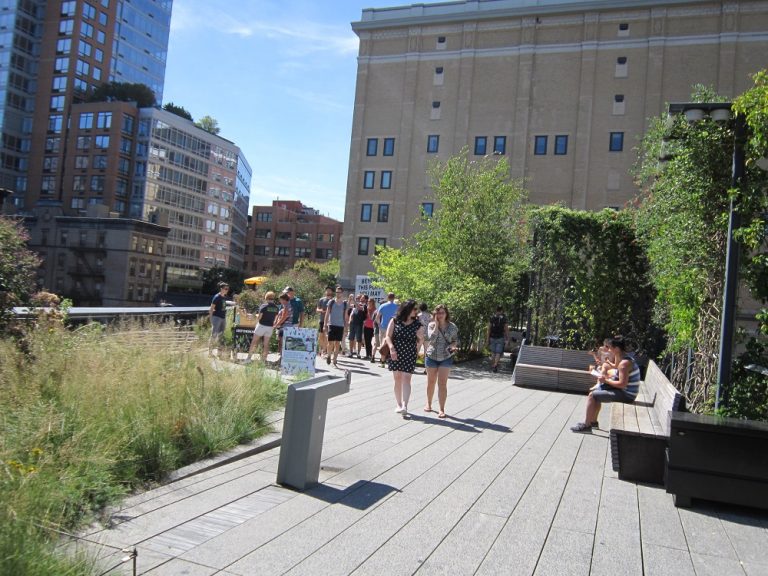
Gotham’s green foliage projects in large urban communities like New York City and Chicago, not only produce year around vegetables; but also help preserve vestiges of former wild pastoral glory.
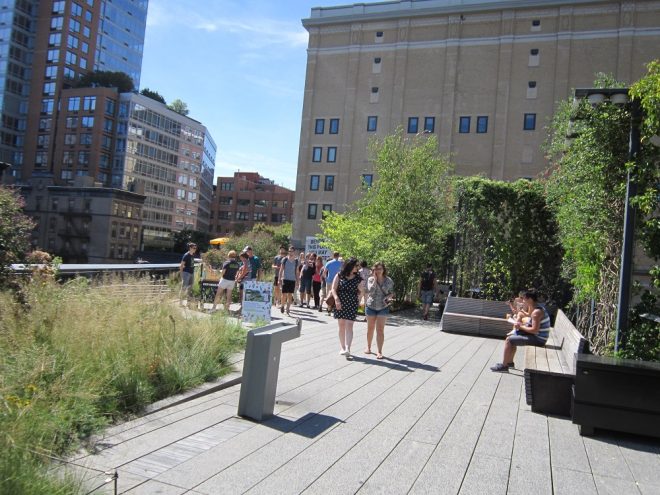
An excellent example of efforts made to put abandoned urban space to good use as a garden park is the High Line urban grasslands park in New York City’s Chelsea district. An abandoned above ground rail line has been converted into a public park and botanical garden, known locally as simply the “High Line”.
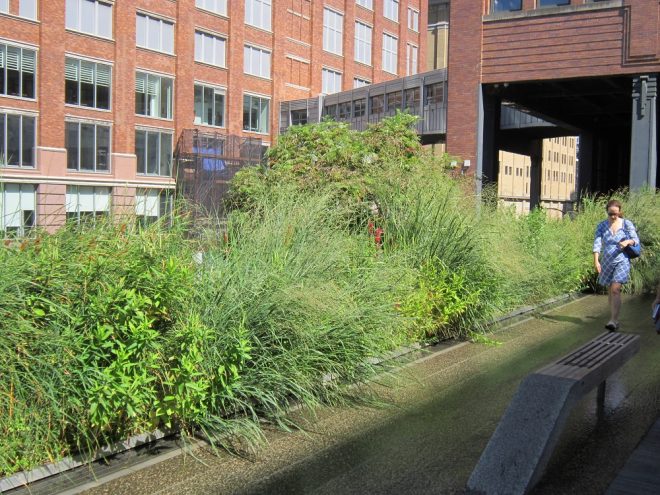
This green eco park stretches from West 12th and Ganesvoort Streets, all the way north to the Penn Central rail yards on West 34th Street. During a recent late summer visit to New York City, it was a pleasure to visit High Line and stroll along its long, winding route, interspersed with a multitude of trees, shrubs and prairie grassland plant species, many of which are nearly extinct in their native locales.
The various grasses, shrubs and other greenery planted there were indigenous to American prairies in states as far east as Ohio. Many of these prairie locations have long since disappeared, having been replaced by farmland and modern urbanization. For this reason, the idea of planting such greenery in the heart of America’s largest urban metropolis was conceived in the early 1990’s.
Walking through this modern day Garden of Eden, it’s easy to see that it offers something for everyone, including various art forms, food delights, scenic views of the Hudson River, pastoral greenery; and various views of New York City itself, especially the picturesque Chelsea neighborhood.
The High Line project is an excellent example of what can be done to utilize a now abandoned rail transportation structure, instead of tearing it down. Similar green projects are now being undertaken in other parts of the city; including the river port area and former warehouse districts. A Low Line project in Manhattan looks to create new food sources from space age technologies.
In the Middle East, urban greening and farming projects are nothing new. Urban Egyptians have been engaged in urban agriculture projects for years. Hydroponic greening goes all the way back to ancient Babylonians with their legendary Hanging Gardens of Babylon.
إذا كانت الحاجة هي أم الإختراع، فالتكنولوجيا هي (أبو) الإبتكار
إن كان في مجال المواصلات أو تبادل المعلومات أو صناعة الأغذية و الزراعات، فإن الهدف الأسمى للتكنولوجيا هو إيجاد حلول للمعضلات التي نواجهها في حياتنا عموما، أو تحسين العمليات القائمة حاليا في شتى المجالات
و لكن، عادة ما يكون ثمن هذه التكنولوجيا هو أثر بيئي سلبي، يصعب علينا التخلص منه، أو اتقاء شره القادم من شرق أو غرب، من سماء أو من بحر. مثالا صغيرا: يتسبب صنع جهاز آيفون واحد بانبعاث حوالي 60 كيلوجرام من ثاني أوكسيد الكربون أو ما يعادله من ملوثات
و طبعا، تحاول بعض الشركات العملاقة الحد من آثار عملياتها السلبية على البيئة، كشركة نايكي على سبيل المثال، و التي أثبتت فعالية التدوير على نطاق واسع من خلال برنامجها لإعادة تأهيل الأحذية المستعملة -أعزكم الله-، أو شركة 1&1 لاستضافة المواقع الإلكترونية و التي تُعد مراكز بياناتها من الأكثر كفاءة عالميا، إذ تمنع عملياتها تسلل 30,000 طن من انبعاثات ثاتي أوكسيد الكربون إلى الغلاف الجوي. حتى القطاع المالي له مواقفه التي تُحسب له، حيث خصص البنك الدولي مبلغ 16 مليار دولار في 2016 لتمويل مشاريع و برامج مكافحة تغيير المناخ
و لكن، للشركات الصغيرة و الناشئة أيضا نصيبها الطيب من جهود إصلاح ما يمكن إصلاحه بيئيا. إذ تسعى هذه الشركات بتقنياتها الجديدة و المبتكرة إلى إنتاج طاقة نظيفة و تقليل الأثر الكربوني السلبي و تنقية مصادر المياه، و ذلك على سبيل المثال طبعا، لا الحصر
و أذكر هنا ثلاث من هذه التقنيات لكل من الرياح و الهواء و الشمس
أولا: توربينات الرياح
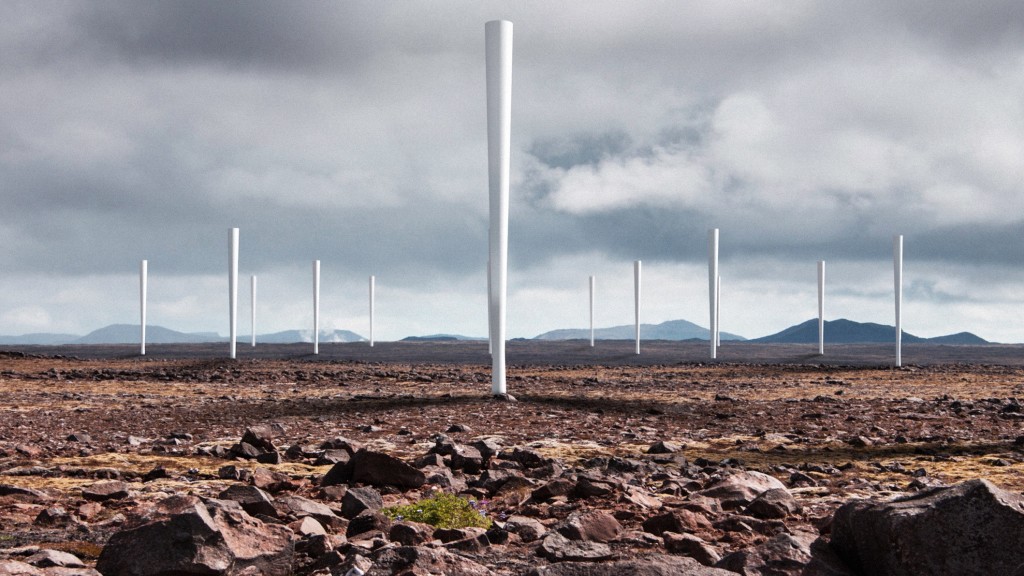
على الرغم من شعبيتها في إنتاج الطاقة المستدامة، لتوربينات الرياح سلبيات متأصلة لا يمكن التغاضي عنها، كحجمها الكبير و ضجيجها و تعطيلها لحركة بعض الطيور في الطبيعة. و لحل تلك المعضلة، ابتكرت شركة فورتكس بليدليس توربينات هوائية مستغنية عن الشفرات الضخمة التي تدور لتنتج الطاقة، و إنما تتم عملية الإنتاج عن طريق الذبذبات الناتجة عن هبوب الرياح في اتجاهها. و من المتوقع أن تخفض هذه التقنية الأثر الكربوني بنسبة %40 مقارنة بنظيراتها التقليدية
ثانيا: أبراج تنقية الهواء
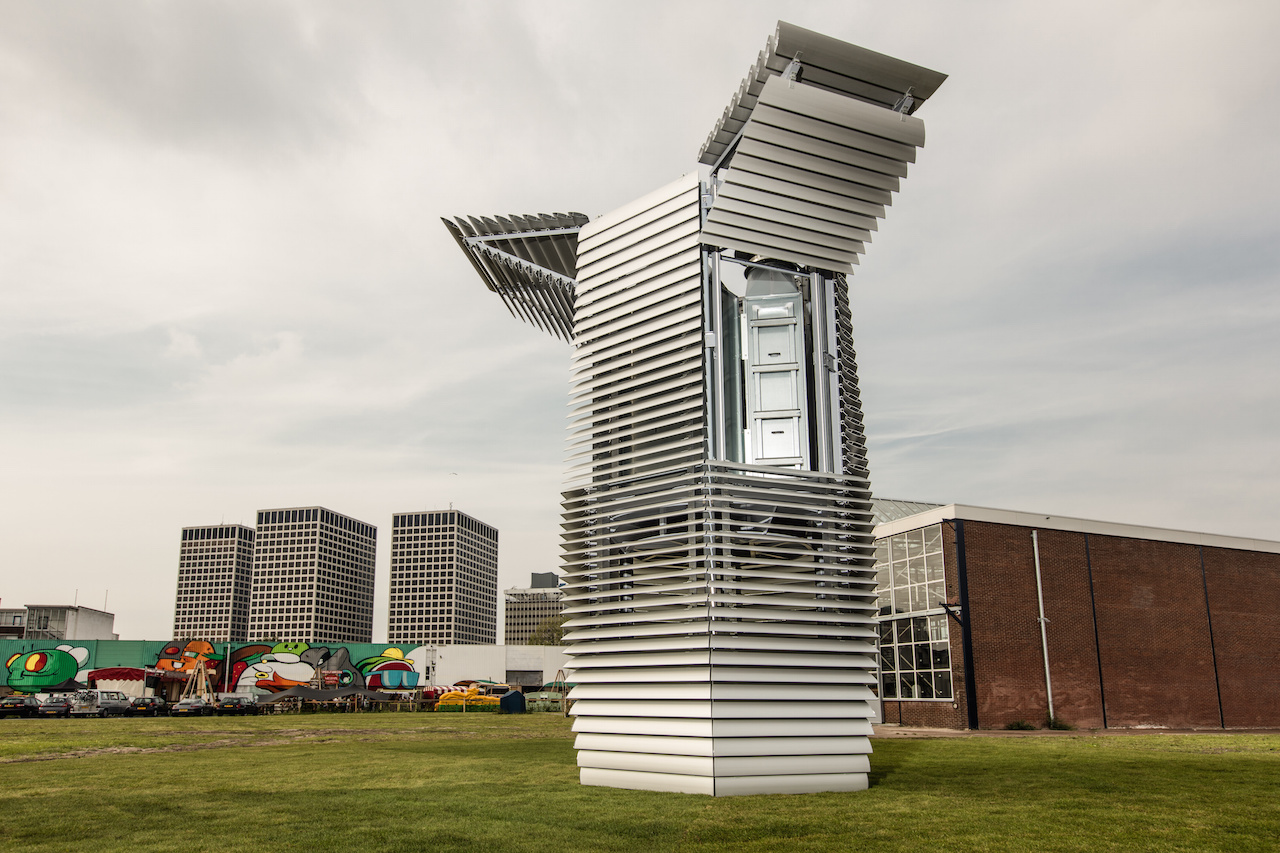
تعاني العديد من المدن من تلوث مزمن في هوائها، كبيكين في الصين و دلهي في الهند. و قد أدرك ذلك كل من دان روزجارد و بوب أورسيم و قاما بابتكار و تشييد برج يبلغ طوله 7 أمتار و يقوم بشفط الهواء الملوث من حوله و تنقيته و من ثم إعادته إلى الجو كيوم هبط نقيا على الأرض. باستطاعة هذا البرج أن يقوم بتنظيف 30,000 متر مكعب من الهواء في الساعة، و حاليا يحل البرج ضيفا على مدينة روتردام في هولندا
ثالثا: أسقف الطاقة الشمسية
منظر الألواح الشمسية أصبح مألوفا في جميع أنحاء العالم. و لكن إيلون ماسك، عبقري التقنيات المبتكرة، أسس شركة تدعى سولار سيتي تسعى إلى صناعة الأسقف المنزلية (أو المعمارية عموما) التي تنتج الطاقة من أشعة الشمس بذاتها و بدون الحاجة لتغطيتها بتلك الألواح الزرقاء. هذه التقنية، و بالشراكة مع تقنيات أخرى ابتكرها إيلون، ستسمح للبيوت بالتخلي التام عن الشبكة الكهربائية التي تمد المدن بالكهرباء حاليا
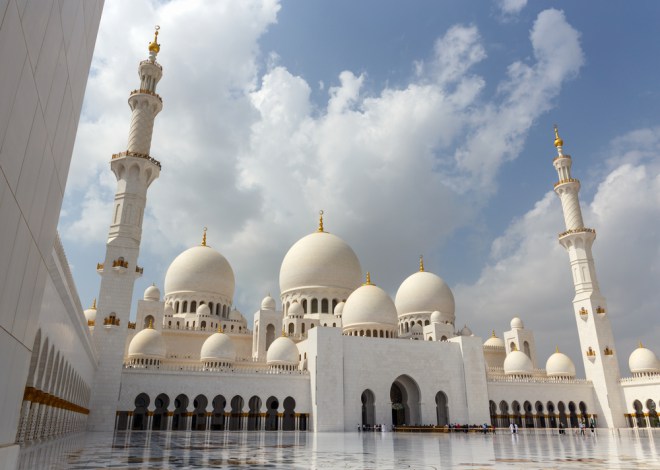
على الرغم من احتلالهما المركزين الأول و الثاني في الشرق الأوسط على مؤشر أركاديس للمدن المُستدامة للعام 2016، لا تزالا دبي و أبوظبي بعيدتين عن المراكز الأولى مقارنة بالمدن العالمية الأخرى. و طبعا، حلول دبي و أبوظبي في المركزين ال52 و ال58 على التوالي يعد إنجازا يُحسب لهما و مثالا يُحتذي به، و لكن لا يزال المجال مفتوحا للتحسين و التطوير في كلتا المدينتين، كما صرح بن خان، و هو مدير تطوير الزبائن لشركة أركاديس في الشرق الأوسط.
و قال خان تحديدا أن المدينتين تستهلكان كمية كبيرة من الطاقة و بالتالي لا تزال الانبعاثات الكربونية تتدفق بنسب عالية فيهما، و ذلك بسبب عوامل المناخ و ضخامة التطوير و الاعتماد على المحروقات التقليدية للطاقة. و أكد أن المدينتين هما في صدد إيجاد حلول لهذه الأسباب
و إذا ما نظرنا إلى كل مدينة على حدا، نرى دبي بمبانيها في خضم استعداداتها لاستضافة إكسبو 2020 و عرض ما تملك من تكنولوجيا و أفكار في مجالات الاستدامة المتعددة. عدى عن هدفها بإنتاج %5 من طاقتها من مصادر مستدامة بخلال العام 2030. ذلك بالإضافة الى المعايير الخضراء التي تفرضها على تشييد المباني الجديدة، كمساحات تخزين الدراجات و المواد العاكسة لأشعة الشمس و زراعة نباتات محلية. و يبقى السؤال، هل هذه الخطوات كافية لتحسين أداء الدولة ككل في مجال الاستدامة؟
يبقى أن ننظر إلى العاصمة أبوظبي للإجابة على السؤال، و خاصة من منظور مدينة مصدر الشهيرة، و التي احتاج بناؤها إلى أكثر من 10 سنوات بهدف جعلها مدينة متكاملة و خالية من الكربون في آن واحد. ففي الوقت الذي كانت على موعد مع 50,000 نسمة يملؤوها حياة في 2016 كما كان مُخطط لها، لا يتجاوز عدد سكان مدينة مصدر 500 نسمة اليوم، معظمهم من الطلاب و العاملين في معهد مصدر للعلوم و التكنولوجيا. و تعليقا على هذا الإخفاق، قال مدير التصميم في مصدر كريس وان لجريدة الجارديان البريطانية أنه لن يحاول أن يفرض كمية معينة من إنتاج الطاقة المستدامة بسبب أو بدون سبب من داخل أسوار المدينة، و أن مشروع ضخم كهذا يجب أن يأخذ مجراه و وقته ليكتمل. و أكد أن المدينة قطعت نصف المسافة حتى الآن في طريقها إلى الاستدامة الشاملة
و بالتأكيد، لن تتخلى أي من أبوظبي أو دبي عن أهدافهما في التسريع بعملية التحول إلى الاستدامة، خاصة في ظل تطور المدينتين المضطرد و تصدرهما مؤشرات المدن المستدامة في الشرق الأوسط. و تبقى التنافسية في التطوير الذكي الذي تنتهجه المدينتين، من تشييد حدائق صديقة للبيئة أو أنظمة مواصلات ذات كفاءة عالية على سبيل المثال، هي دافع في الاتجاه الصحيح لتحقيق ذلك الهدف المنشود عالميا
We thought we’d never get to say it, but car parking may be becoming dead. It’s already happening in China. It’s become kind of a cliché that there’s never enough parking spaces no matter where you go. We’ve all got anecdotes about circling car parks three or four times looking for a space to back that up, but statistics don’t seem to support that idea, and cities across the world are actually looking to reduce the amount of parking in an effort to go green and encourage people to try alternative modes of transport.
In the past, many municipalities have had minimum parking requirements for new developments or other laws that encourage the creation of spaces—in Japan, for example, motorists must prove that they have access to local parking just to own a car. But studies show many cities are using more space than necessary for public parking. Tippecanoe County, Indiana had more than two spaces per registered vehicle in 2010 and maybe that’s not surprising; people drive to and from work and they need places to keep their vehicles for hours at a time.
But this may actually create more congestion—drivers on the hunt for parking clog up urban roadways, adding time to their journeys and creating a lot of additional air pollution.
San Francisco has aimed to fight both these problems by eliminating unused parking spaces and using the room created for bike lanes and other public improvements to make alternative forms of transport more viable. By reducing spaces, you will inevitably reduce cars, leading to lower levels of pollution.
A big motivator for this change is a drive to reduce pollution. In Paris, which has suffered a number of instances of smog in the past few years, there have been a number of moves to improve air quality. Older models of cars with high emissions have been banned from the city, and for one Sunday a month the Avenue des Champs-Élysées, normally a major east-west thoroughfare terminating at the famous Arc de Triomphe, is kept free of cars. Around a third of the city was closed off to motor vehicles on the 25th of September this year, with exceptions made for buses and taxis, leading to noise levels dropping by half and air pollution being reduced by up to 40% in some areas through startups helping people find parking spots faster. This means less circling around looking for the cherished parking spot.
Cities like Tel Aviv have an enormous crisis with cars. As the people earn more in startup salaries from high-tech the premise of owning a car in the city becomes a liability. Where to park it if you need to leave for a few moments and then return? It can take you an hour to find a spot come free.
Seoul, South Korea has tried a similar experiment and both cities are looking to repeat them with increased scale and regularity. They are not the first to try making their cities car free but they might be the first to attempt making it more than an annual event, and this is an encouraging step for those who envision a future of clean and peaceful car free cities.
A lot of other cities around the world like Copenhagen and Norwich, England are even pedestrianizing shopping districts and high streets, some of which were once their main automotive access routes. This is also happening in Israel in cities like Jaffa.
But some places have also been trying less direct methods to reduce the number of cars on their streets. The London Congestion Charge Zone, introduced all the way back in 2003, and similar schemes in Durham, Milan, and Stockholm are all aimed at making traffic more manageable. Moves like this to lower car use also have the advantage of lowering oil dependency, contributing to falling prices on the commodities market, which have dropped by as much as 77.48% in the last five years according to trading platform IG.
Naturally, if there are fewer cars in cities we will require far less parking, which will hopefully lead to greener, more spacious cities we can all enjoy.

 Green Prophet was bowled over by the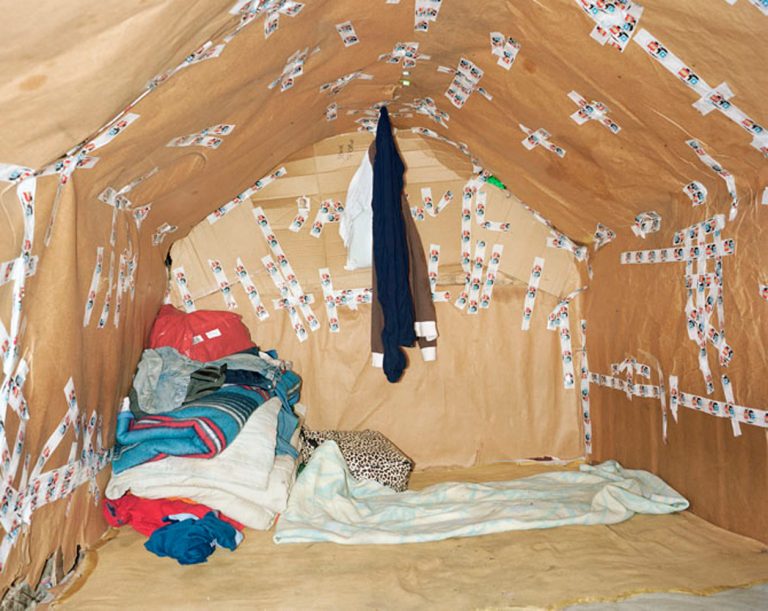











 3. Purple Ruffles Basil – Ruffled and jagged purple leaves, with a strong aroma of anise.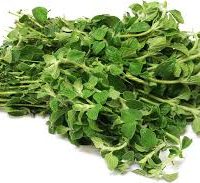
 5. Sheep’s sorrel – Sour and intriguing herb, very hard to find
 7. Pluto Basil – small, highly-fragrant leaves, perfect for garnish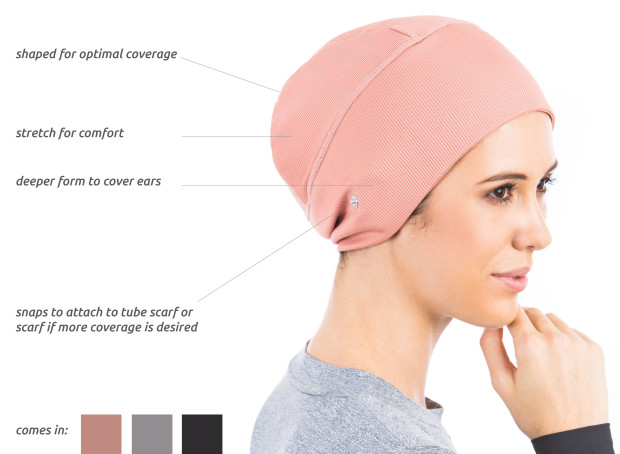





 Remember that quirky
 The units are available through EcoFloLife, a London-based business specializing in the design and construction of eco-friendly floating homes. Their website states, “The world around us is becoming increasingly chaotic and conformist…ongoing climate changes and the resulting sea- and river-level rises force us to ponder on the eco-sustainability of our housing choices.” Fair enough, but how do these floating homes actually work?