Home Blog Page 233

Why green credentials are essential in business

1

There is an often quoted study from 2007 that showed that at that time, 53% of people – or 1.1 billion consumers – strongly preferred to do business with companies with a reputation for being green. Now, we are a whole decade on from that study, and green matters have become more than just a preference for a lot of customers, but a demand. As evidence of the impact of climate change continues to gather, and more and more sustainable alternatives are on offer, companies can no longer see being green as a slight competitive advantage, but as something that could literally be the deciding factor on whether a customer walks away.

Increased Awareness and Increased Scepticism

One of the things that has made the mainstream consumer desire for green businesses clear is, ironically, the fact that companies now make far less of a fuss about their green credentials in their marketing. There was a trend a few years ago of all kinds of big corporations, from oil companies to banks, highlighting their ‘greenness’ in their ad campaigns. This was, of course, an attempt to win the hearts and minds of green consumers as a growing market, however it was overdone to the point where it actually began to make consumers more sceptical of the green claims made in advertising.

Because it is so easy for consumers to fact check online and find out more about what a company is actually doing towards sustainability, it no longer pays off to appear to be taking green matters seriously as a business – businesses have to actually be doing it. It is also no longer something that works as a unique selling point – customers simply expect a business to be doing it transparently.

Investors and Green Businesses

A failure to meet expectations about things like carbon emissions, recycling and sustainability may not just be off putting to consumers, but also to investors. Whether investors themselves have preferences about green policies or not, analysts can see the way consumer trends are going and that, in a choice between two equivalent businesses, the greener one will win out in today’s market. Additionally, thanks to online trading platforms like City Index, there are now more and more casual investors participating in the stock market – people who think the same way as general consumers.

Being Green Actually Reduces Overheads Long Term

All of this so far may make it sound like businesses have to conform on green issues simply because the market expects it, however there are actually some good benefits for businesses in going beyond doing the bare minimum that is legally required of them on sustainability. Being green in operations by, for example, having energy efficient premises, can save a business a lot of money no matter what their scale. Businesses which have to do things like light hundreds of retail branches will save an abundance of money by switching to LED lighting, and when you consider the costs of running and cooling, say, a server farm, it is clear that any savings in energy that can be brought about by being more efficient and green will translate very quickly into money.

It is interesting to see how green business has gone from being something niche to the norm, and hopefully, this will benefit everybody.

The best (eco) beaches in Israel

0

sewage, contaminated water, Israel, Tel Aviv, Mediterranean Sea

It’s summertime and the weather is fine, goes the odd song and after a heat wave this week, Israel remembers how amazing and simple it is to spend your days away at the beach. Beaches are great activities for kids, for teens, for parents. Bring a picnic or sit up at one of Israel’s beach bars, and you have a day, or even a week of fun. Of course you need to wear sunscreen and be mindful of sun exposure, but for that you can bring or rent a beach umbrella. Where to choose when Israel has so many beaches to offer? Even the City of Tel Aviv has about a dozen beaches to choose from, so we like to recommend the beaches with the Blue Flag.

The Blue Flag is an international symbol for environmental conservation at the beach. This designation is given to 21 beaches in Israel that have demonstrated eco-standards for their sandt and seaside boardwalks. Water cleanliness, wheelchair accessibility and trash management are all criteria for getting a Blue Flag. So if you see one blowing, you know stewards of that beach are adhering to strict standards that are tested twice a month. 

Some of the standards via Israel’s Ministry of Environment Protection include:

Environmental Education and Information

  1. Beach authorities run environmental educational activities for the community
  2. Information on the beach’s ecosystems is provided
  3. Information on services available on the beach is provided
  4. Beach rules are listed

Water Quality

  1. A minimum water quality standard is met
  2. Beach authorities test the water quality at least five times a season

Environmental Management

  1. Garbage is collected often, such that the coast is clean
  2. Recyling bins are located on the beach
  3. Rules prohibiting vehicles from the beach are enforced
  4. Sleeping on the beach is prohibited, unless it is specifically permitted
  5. Rules prohibiting entrance of animals to the beach area are enforced

Safety, Security, and Services

  1. Coastal facilities and life saving equipment are maintained
  2. A suitable number of lifeguards are on duty
  3. An action plan is prepared, in case of a severe case of pollution, such as an oil spill
  4. The beach is handicapped-accessible
  5. Clean drinking water is available

Blue Flags are awarded every year. Tel Aviv consistently gets a number of Blue Flags, usually at Metzitzim — Tel Aviv’s northernmost beach, and which also happens to be the city’s only man-made lagoon, where it’s safe for kids and dogs to come and jump in the water; and Tel Aviv’s Jerusalem Beach, which is great for walking to, but which is also wheelchair accessible and includes a workout spot for adults.

Haifa and Eilat tend to pick up a Blue Flag every year, including Dado Beach in Haifa which offers, beach couches, free WiFi services, lots of shade and a mile and a half of beach promenade.

"eilat underwater eco tourism"

Down in Eilat, which will get scorching hot is the Blue Flag Shchafim Beach, located along the promenade beside the Dan Hotel one of many Israel luxury hotels. It’s a magnet for international travellers and Israelis who jump on a plane from Tel Aviv for some low cost staycations.

The Dan Hotel in Eilat, while a large hotel chain, is a good place to stay since Eilat offers little in the way of boutique or eco hotels. A feature from Dan is great programs for kids, which keeps them happy while parents get to relax. This hotel has also made a commitment to sustainability with some projects and features such as:

  •  Thermal windows to reduce air conditioning costs. It get smoking hot in Eilat!
  • Heat recovery systems that use energy emitted from the air conditioning systems to heat swimming pools
  • Equilibrium pools in all their hotels to save energy and water

Arab Emirates wants to colonize Mars

Build a “mini city” on Mars? A project being conceived in the United Arab Emirates plans to construct a human settlement on the Red Planet within the next 100 years. These plans are a result of environmental studies made at Abu Dhabi’s on-going sustainable Masdar City environmental project which also studies the wrath of global warming and its effects on the Middle East. Will Mars be the Arab Gulf’s ticket out of an uninhabitable environment?

Related: California City to be rebranded as Mars City

The destruction of human habitat and global warming in the Arab world alone may make much of this region virtually uninhabitable by the end of the 21st century. The UAE’s Mars settlement project was launched recently by Dubai ruler Sheikh Mohammed bin Rashid Al Maktoum, who announced the “Mars 2017” project at the World Government Summit conference held in Dubai. He predicted there would be a sustainable human settlement on Mars within 100 years. The first steps for this venture would include a UAE launced Mars Hope probe, which will make extensive studies of the Martian topography and atmosphere in preparation for a human exploration voyage.

Exploring and settling the Red Planet has been the dream of scientists for years. Findings made by NASA’s Curiosity Rover Mars probe indicate the existence of water on Mars, mostly in the form of ice at the polar regions and underground.  There is even speculation that Mars may once have had oceans as much as a mile (1.6 km) deep, as well as a much warmer climate and denser atmosphere.

The presence of sufficient quantities of water would be essential for any sustainable human settlement there. The increasing depletion of water resources in the Arab World, especially the Gulf region, is said to be decreasing by more than 10% alone by the year 2050. This may be a prime reason why this seemingly far fetched project is being planned.

There is no limit to Man’s imagination as to what a future Martian city could look like, as shown in the photo below:

It is no easy task to take humans to Mars, however. A voyage there is estimated to take more than six to eight months, based on current models of space travel vehicles and propulsion. Perhaps it might be much better to make use of funds for such a project towards finding solutions for damage caused by global warming and habitat destruction on our own planet; instead of trying to settle a planet that by current studies to date indicate a much more inhospitable environment than Earth’s.

Meanwhile Mars City plans on building the first Mars prototype city in California, and will feed people using hydroponics. Check out the gala planned for LA next month.

Read more about damage caused to the Middle East by habitat destruction and global warming:

Dispatch from inside Masdar
Amazing “Atlas” tracks Arab world habitat destruction over time
The Wrath of Global Warming and the Middle East

Mars colony image illustrations by Richard Beasley 

Want to live on Mars? Gala dinner in LA unveils first opportunities to eat like a Martian

1

If you could move to Mars, what would your house look like? Would you eat from your local hydroponic Martian farm, drink wine from the Martian vineyard and eat meat cultured by vegetarian butchers?

Mars architect Vera Mulyani is building the first Mars City, on Earth, and is pretty sure your future home on Mars, with 40% less gravity, won’t be anything like what you own or rent on earth today: “With lower gravity, a house doesn’t have to have a door touching the ground,” she says.

And for food? These questions and more will be answered in Los Angeles on May 25, at the world’s first dinner for Mars. Grab a date, and take advantage of discount tickets, ($150 instead of $300 for Green Prophet readers, and $500 for VIP) as Mulyani lays the foundations for the first Martian city she is creating on Earth, in the Mojave Desert.

Her blueprint is smart: take a city that has a long time reputation as a “failed planned city”, bursting with potential, hidden natural treasures beneath it and Space enterprise all around it, and rebrand it into a city for Mars. The plan is to turn “the city that survived”, California City in the Mojave Desert, into the first Mars City prototype on Earth.

California City, unbuilt suburb

California City was built in the 1960s by real estate developer and sociology professor Nat Mendelsohn who purchased 80,000 acres of the Mojave Desert to build California’s next great city to rival Los Angeles. Complete with a 26-acre central park and lake, the idea didn’t take off. Though about 14,000 people live there today, crumbling paved roads and loss of potential is evident everywhere. The city needs a positive boost.

California City today: full of potential.

This is where Mulyani plans on building the first Mars City prototype, and then scale the idea to locations around the world. The new project will give a chance for real people to live in a habitat that could simulate Mars, while creating an educational and innovative environment for real progress to be made for our future on the Red Planet.

But before you buy your first condo on Mars, Mulyani’s event will let you get a taste of the future. An Evening on Mars she explains, was created for a few reasons: Once we live on Mars, we can’t only eat “potatoes and ketchup” like Matt Damon did in The Martian.

If people inhabit Mars, they will need to be aware of their food choices, and shape this future, Mulyani tells Green Prophet: “We will promote some of the food available for astronauts for the long duration of space travel to get to Mars, but also the long-term solutions needed for indoor farming in a region that is not very compatible with what we can eat.”

At the dinner, guests will get to sample future Martian food grown with hydroponics and some vegan Martian meat “made for astronauts who might miss a burger,” she says.

Mars Farm, Eddy hydroponics, grow food“Square Roots by Kimbal Musk, Herbivore Butcher, Eddy, Mars Farm and other pioneers have begun developing and popularizing this concept, through hydroponic and aquaponic gardens. We will savor this new variation of eating healthy as if we were on another planet!” says Mulyani.

Gray Bright will be the Space Master of Ceremony –– with hosts such as The Mayor of California City; General Pete Worden, the Executive Director for Stephen Hawking’s organization; Loretta Whitesides, the first astronaut client of Virgin Galactic; and Dave Bearden, General Manager, NASA & Civil Space Programs at The Aerospace Corporation.

gray bright

The aim is to attract investors and donors who share the vision of creating Mars City for the end goal, while benefiting the prototype and sustainability technology implementation on Earth.

Building Mars City will require some planning. The group will build temporary structures in the desert for science retreats, art festivals and a space fashion show already planned for 2018. Permanent structures will be built later, from 3D-printed sustainable smart homes to the Mars Research lab, which includes: the Museum of the Future, science retreats for summer camps and Stargazers’ Park.

Future residents to Mars City (on Earth) do not need to be scientists. In fact, Mulyani wants artists, kids, everyday people to be part of shaping the future.

And the big questions we want to know are, when Elon Musk’s group is enroute to Mars, what’s going to be waiting for them? How will Mulyani (pictured below,with friends) make it livable before then?

Making the Mojave Desert the first Mars City prototype. Very Mulyani is pictured far left. Next to her is the President of The Chamber of Commerce of California City (Alexia Svejda), Aman Chowdry (land owner, Blugill Solar), Andrew Allado (Credit line capital, financier).

“The first three things we will build will include a spaceport where rockets can land safely, refuel and then operate the robots to prepare the land and build shelter and a base for humans. Then I hope these robots will then build a photo booth, an instant O2 homebase with a ready-to-eat growing indoor garden, and a satellite connected phone cabin,” says Mulyani.

Rendering of Mars City on Earth by Séries and Séries

“We will have to come up with some technology where the humans are conducting their avatars which are designed robots, as if they live there already. I definitely don’t recommend humans go before a safe and entertaining environment is set up, tested and passed through safety checks by Aerospace Corp.,” she says.

But before we get there, dreaming and building will not be a waste, even if it takes another 100 years: “Mars, with all its natural challenges, gives us the discipline to think differently, survive differently and go beyond our comfortable habit to exist,” concludes Mulyani.

Spirulina gnocchis anyone?

Thinking about moving to Mars? Get a taste at An Evening on Mars
When: May 25th, 6:30 to 9:30 PM
Where: The Skirball Cultural Center, LA

Link here to buy a ticket. Use code MARSFRIEND50 for 50% OFF

How to Know if Becoming a Landlord is Right for You

0
The Wheeled House, Acrojou, tiny house on wheels, structures made with recycled materials, circus and thither hybrid, eco-themed theater, theater with a green conscious, green design, sustainable design
Want to rent your house on AirBnB? Be prepared.

Landlords have the opportunity of making profits off of real estate either as a side venture or as a career. If you are thinking of investing in real estate to rent, here are a few facets you should consider.

Marketing

Marketing is the first step in finding tenants. In order to create a solid marketing strategy, you may want to research the ads in your area. The most successful ads typically have in-depth details about the property itself, the area, and numerous photos. Take high-resolution photographs of your property from various angles, so prospective tenants can properly visualize the environment.

Sharifi House, nextoffice, tehran, Iran, Iranian architecture, transformer house, rotating house, rotating rooms, daylighting, energy efficiency, modular design, iranian architects
Renting your house means taking great photos.

Tenant Screening

Screening tenants is possibly the most critical part of being a landlord. Your tenants ultimately determine what the next year or years of your leasing relationship will be like. In order to screen a tenant properly you must first know what you are looking for. Typically, landlords look for tenants who show good character and responsibility. But how can you tell if that person is right for you property? Below are just a few things to look out for:

  • Credit Score. In order to secure a unit, a renter needs to have a good credit history. Their credit report shows their history and experience with creditors, which may give you a good idea as to whether they will be responsible enough to pay your rent. If, for example, they have poor credit due to a failure to pay on time, this is likely a candidate you want to screen out of the process. However, if they lack credit due to their age, you may consent to the tenant to have a cosigner.
  • Current Income. Whether or not you allow for cosigning, it is still important to know a tenant’s current income. Most landlords agree that the tenant must make three times the amount in rent, or if there are multiple tenants, to make a combined income three times the rent. This ensures that the tenant has a safety net should unexpected expenses occur during the month.
  • Eviction History. If your prospective tenant has a past eviction, this should signal a huge red flag for you. A prior eviction is an almost sure sign that they are going to neglect paying rent and possibly vandalize your property. Chances are, you probably have candidates in your lineup with evictions in their past.
  • Criminal History. Landlords differ on who and who they do not accept in regard to criminal history, and for good reason. Fortunately, you can get everything you need through a background check from a service like SmartMove. Typically, landlords have a cap on the number of committed crimes a tenant has accumulated. For example, a landlord may not accept a candidate who has committed more than two crimes in five years, and so on. The nature of the crime may determine this as well. Some states offer incentives to those who house convicts, so you may want to research this in your area.
  • For some landlords, referrals are not mandatory, however, they can be insightful. Candidates should preferably send referrals in a sealed envelope directly from the person who wrote it. Keep in mind that not all referrals are authentic, but it can yield significant insights into the person’s character.

Budgeting for Repair and Maintenance

Unless you are handy with a hammer and a screwdriver, you may need to have a maintenance worker on hand. Maintenance is just part of the job of a landlord, no matter how new or old your property is. Make the most of what you have by staying on top of your tenant’s needs, and fix any issues right away. Remember that it may be less expensive in the long run to invest money where it needs to be invested.


Mediating with Tenants

As a landlord, you are the CEO, CFO, and the HR department. There will be times when you have to deal with hiccups, such as a tenant calling you in desperation because their roommate left and won’t pay rent. You may also need to stay firm on the policies in your contract. This is never easy, but you must remember that you are the boss, and ultimately you have the power to enforce your contract and mediate a solution.

Know Your Goals

Becoming a landlord is an excellent opportunity to accumulate profits in the long-run. If you want to be a landlord, make sure you understand your financial and personal goals so you can optimize your career and lifestyle.

How to Go Green with Your Rental Property

0

etgar keret house bed

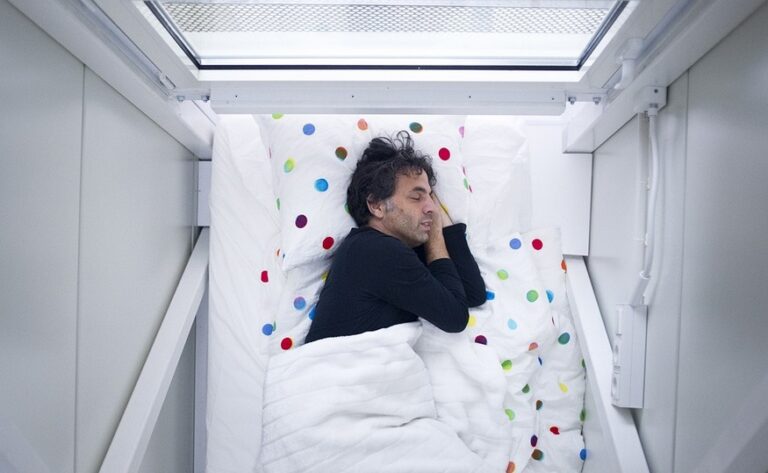
The guy sleeping above is Etgar Keret living in a tiny house wedged between buildings in Europe. The real estate market always seems to be on the rise.  A new generation of renters has emerged, and this generation desires different qualities in a rental property than those of the past. Modern tenants are looking for green properties that offer function and sustainability. They can see AirBnBs all over the world. They want the same, and something unique!

Millennials grew up more socially and environmentally conscious. They are more likely to focus on sustainable energy, decreased destruction of native habitats, and a decrease in waste. Here are just some of the ways you can go green with your rental property to entice this young population of tenants.

Pete Davis

Seal up Any Cracks or Holes

Have previous tenants complained of the cold? Does it seem that the heater can’t keep up with the demands of cold weather? The property could be losing heat through cracks or openings in walls, windows, and door frames. Your tenants will spend less money on heating and reduce energy usage if they don’t need to crank up the thermostat to stay warm. Inspect your property for any cracks that need sealing. If your property has an old front door, heat could be escaping through a loose or gapped door frame. You may consider installing new doors; some property owners install glass screen doors to serve as an extra protective layer.

Be sure to pay attention to any check any cracks in the ceiling, as heat tends to rise and can escape through the uppermost parts of your home. Improving sealing and insulation can require more than a do it yourself approach; consider using a PACE program from Renovate America.

PACE programs like this specialize in helping property owners access important energy efficient upgrades.

With financing and a network of contractors in one single spot, installing important insulation and sealing is made simple. No sweat off your brow, and a new enticing sustainable feature that can draw in tenants—it’s a double win.

Install a Low-Flow Toilet

Standard toilets account for almost 30% of all indoor water use. Imagine reducing your property’s water usage by about a third. Modern technology has seen an influx of low-flow toilets that use less water to flush waste. Many of these water efficient toilets offer two levers as well—one for flushing urine, and one for flushing hard waste. Your tenants will spend a lot less on their water bill, which is a huge plus for marketing your property.

Purchase an Energy Star Washing Machine

There are many ways to save water, and none as efficient as an Energy Star washing machine. If you install an Energy Star washing machine, you can save as much as 50% more water, when compared to a standard model. As in-unit laundry continues to be a top-desired amenity amongst renters, this investment could be more than worth the payoff.

Why stop at your water bill? Another way to be more eco-conscious when it comes to using energy is to consider lighting. Many people look for rental properties with smart lighting, as it not only minimises your carbon footprint and reduces energy bills, but can provide a sense of calmness to a room. More and more rental properties come with smart devices already installed, as property experts like RWinvest recognise the increase in demand, and like many others, are embracing this trend.

Check for a Leaky Faucet

It may seem minor, but if your property contains leaky faucets, indoors or out, your tenants may be wasting up to 180 showers worth of water per year. Leaky pipes or faucets left untreated can turn into a much more expensive problem if they have cracks or are rusty. Prevent future expenses by solving the issue while it is small and do your part in water conservation in one simple step.

Modify Your Garden

Curb appeal is important, but so is water conservation. If you live in a drought-prone area, then your garden cannot sustain certain plants unless you are willing to water them more often. Many homeowners waste hundreds of dollars every year by overwatering non-native plants in arid climates.

Do yourself and the environment a favor by re-landscaping your lawn for drought-resistance plants. You may be surprised—desert plants come in a variety of lush and vibrant colors that are sure to make your garden stand out. In addition, you will save hundreds or thousands of dollars every year depending on your yard’s size and maintenance needs.

Many states and localities offer rebates and incentives for property owners who make the switch to drought-tolerant landscaping. Check your local laws to see if you qualify for a rebate and keep in mind that the better your curb appeal, the more justified you are in charging higher rent prices.

Going green with your rental property is likely easier than you think. Incorporate these sustainable amenities and improve your rental income and property value.

6 great reads for Arab American Heritage Month

arab american literatureApril is Arab American Heritage Month, and here are six publications from a half dozen Arab American authors whose work is influencing the literary landscape of the USA, and beyond.

I’ve chosen one for each of the six Muslim-majority nations whose citizens are currently banned from entering the America.

Crack one open and learn some “alternative facts” about the Middle East. A published book will always be mightier than a presidential tweet.


arab american literature
1. The Book of Khalid by Lebanese-American Ameen Rihani is a reprint of the first Arab-American novel which dealt with religious conflict and the immigrant experience. This is the story of two Lebanese men who set off for adventure in 20th Century New York, only to return to Lebanon, their minds now saturated with Western political ideals.

The story later inspired Kahlil Gibran’s The Prophet, and includes illustrations by Gibran.

arab american literature2. Hiding in Plain Sight by Somali author Nuruddin Farah – called “the most important African novelist to emerge in the past twenty-five years” by The New York Review of Books – is a riveting saga about freedom and family, about liberty and obligation. Follow Bella, a photographer living in Rome, as she returns to Nairobi to care for the children of her murdered brother. Kirkus Reviews called it a “body of work worthy of a Nobel Prize.”

arab american literature

3. In the Country of Men by Libyan writer Hisham Matar takes us to his homeland circa 1979.  Meet nine-year-old Suleiman whose carefree Tripoli childhood is soon uprooted by politics and adult intrigue. It’s a stunning examination of the private fallout of current events told with keen insight and literary grace.

arab american literature4. The Tent by Egyptian Miral al-Tahawy is powerful, and disturbing.  Female characters fill the novel, linked by their subjegation to an often absent, patriarch and his brutal mother. Get up close and personal with these Bedouin, peasant women, and feel the weight of their tragic existence.

arab american literature5. Second Person Singular by Israeli Arab Sayed Kashua is a story of love and betrayal that poses the question: can a tiger ever change its spots? Kashua writes in Hebrew coveying emotional power and a sense of the absurd. Here he tackles people straddling two worlds in a psychological mystery set in a divided society.

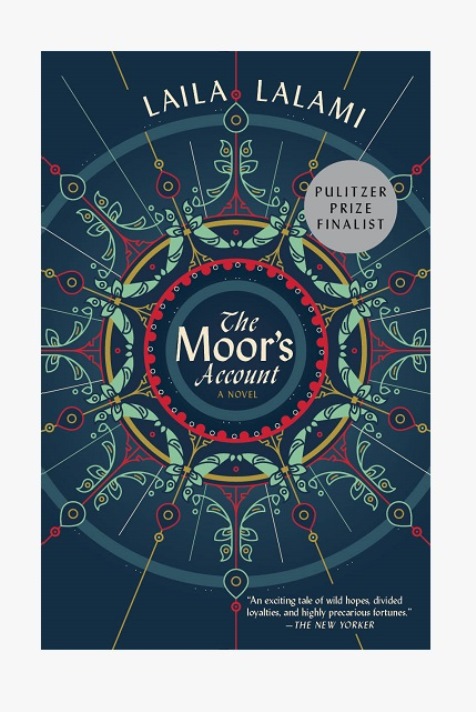
arab american literature6. The Moor’s Account by Moroccan author Laila Lalami is a fictional account of the first black explorer of America, Moroccan slave Mustafa al-Zamori, who sailed from the Spanish port of Sanlúcar de Barrameda in 1527 with the conquistador Pánfilo de Narváez, 600 men and 100 horses. Their aim was to claim what is now the Gulf Coast of the United States for the Spanish crown. Fate intervened, and the story – told by Mustafa – gives a fascinating narrative for this failed expedition.

World’s oldest windmills may stop in Nashtifan, Iran

1

Windmill apprentices wanted: Click-clack…click-clack, click-clack the rhythm echoes the heartbeat of the Persian desert wind. For more than one thousand years the people of Nashtifan, in northeastern Iran have heard this sound as they harnessed the “storm’s sting” wind that gave their village its name.
[youtube https://www.youtube.com/watch?v=3qqifEdqf5g]
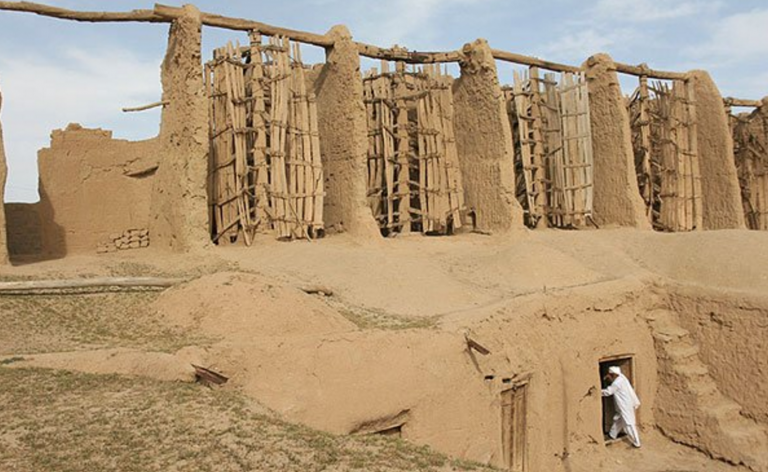
There are about 30 windmills in the desert near this sand-colored village in the Razavi Khorasan Province of northeastern Iran. Their wooden blades rotate on a vertical axis between high walls of red clay and straw. The 50 to 60 foot high machines make a familiar clatter, like a freight train on uneven track, a blend of urban industrial sounds and the natural whispers of wind in the desert. They serve the same purpose as the more familiar Dutch windmills, they turn a grindstone to turn grain into flour.

Nashtifan or nashtifun windmills in Iran, world's oldest windmills

But this relic of man’s first attempt to harness the wind for this purpose is a distant ancestor. It is thought to date back to this part of Persia sometime between 500 to 900 AD. One of the earliest records is the story of Pīrūz Nahāvandi who designed windmills and after complaining to Calif Umar of a high tax charged by his master, he promised to build a windmill for Umar, “By God, I will build this mill of which the world will talk.”

Nishatfun windmills in Iran

The world did talk of these mills. It wasn’t long before windmills spread from Persia into parts of Europe and Asia where they evolved into the more familiar horizontal axis design we see in everything from the wooden windmills that Don Quixote fought in La Mancha Spain to the 200 megawatts of offshore wind that Don Trump fought at his golf resort in Scotland.

There is a good reason for this design change. The flat vertical boards of the Nashtifan windmills are pushed by the wind on one side and unlike designs based on the Bernoulli principle, they can never move faster than the wind and they fight against the wind on the upwind side.

The Nashtifan windmills are neither modern nor efficient, but there is no shortage of wind in this part of Iran. So the mills were maintained and used by local people over centuries as an important part of their culture and history. Mohammad Etebari is the most recent keeper of the windmills.

But unfortunately he has not yet identified an apprentice to take over this centuries old tradition as he grows older. Watch the video and if you know any young person who lives near Nashtifan, ask if they will might take up this long tradition and continue this rhythmic sound in the desert.

The history of energy saving LEDs

0

LED lighting history
From the dawn of time, humans have needed light. The sun and fire were our first necessities for being able to scavenge for food during the daytime hours and to provide illumination in the dark nights. But as time progressed, the need for more than a simple flickering fire became necessary. This is where the history of lighting begins.

While lighting was regarded as only functional for hundreds of thousands of years, it is only in relatively recent years that decorative lighting has become popular. And the switch to this happened with the larger scale availability of light sources to the public that were safer than candles and the old gaslight.

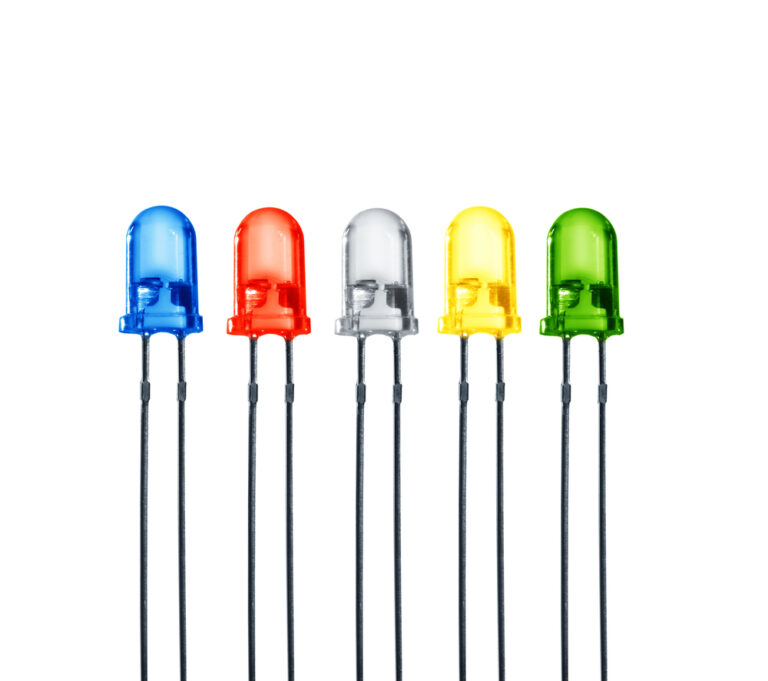
We credit the electric light bulb to Thomas Edison in 1878, but we forget that modern lighting emerged in 1802 with Humphry Davy’s carbon arc lamp. But once the discovery and more widespread use of electricity came to the forefront, there was a boom in lighting technology. The discovery of LED technology started in 1907 when Henry Joseph Round discovered that volts applied to carborundum crystal emitted a yellowish light, and this spiralled rapidly into the LED technology of today with usable LEDS in various colours.

For a more concise version of this history, Festive Lights have created a video that tells the story of how we came “Out of the Dark” – how lighting changed from something we needed to survive to something that can be decorative. A world without the LED technology of today would be entirely unrecognisable without energy saving bulbs, car headlights, LED TV screens and, of course, the iconic fairy Christmas lights.

6 strategies to manage a small business emergency

0

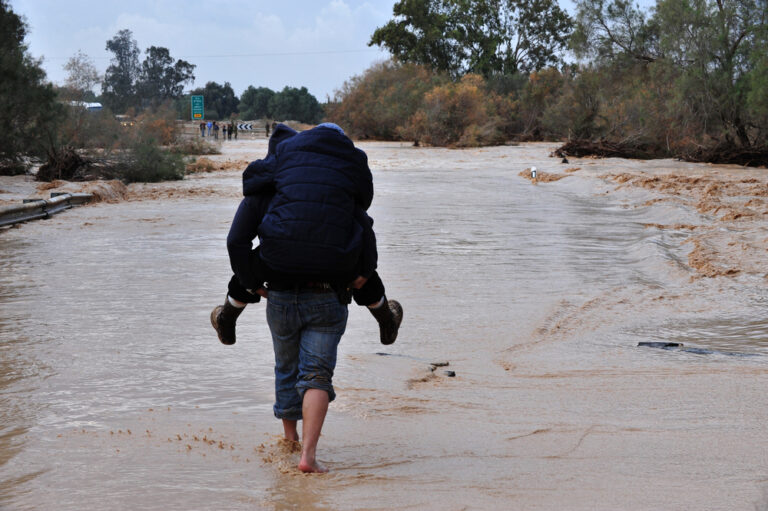
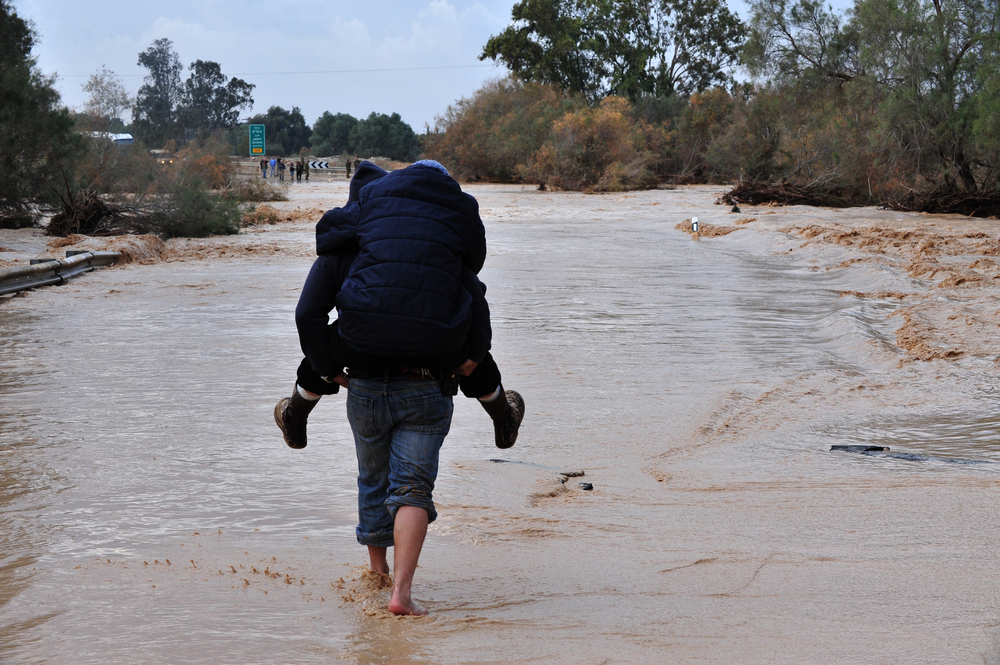
Israel flash flood

How do you deal with an emergency in your business? This is a question that almost all business owners face at some time or other as they struggle to grow their business. We’ve faced when building up Green Prophet over the years, and well we might all ai to have sustainable businesses, but if we can’t balance the ledger books, then we are not in business.

You could experience a financial emergency for any number of reasons: a risky deal falls through, a negative cash flow problem gets out of control, or a large client drops out all of a sudden.

Regardless of the reason, here are 5 steps you can take to get your business back on track:

1. Appraise the situation:

While your natural reaction might be to simply jump into action, sometimes taking the wrong action could make things worse. By taking a moment to sit down and think about the situation, you might come up with a simple solution. Perhaps, you could ask a family member a business friend, or a business partner to send you money via a bank transfer. If this is too slow because they live overseas, you could use an international money transfer. Or perhaps, there are certain assets—shares, for example– that you could liquidate.

By sitting down and thinking about things, you might find an ingenious way to quickly resolve the problem. Panicking won’t help you. Thinking will help you make the right choices. After thinking about the cause of the problem, you might surprise yourself with a plan of attack that directly addresses the root of the problem.

2. Rearrange your budget.

You may have the money you need to solve the problem, but not realize it. By taking a look at your budget, you might be able to postpone, eliminate, or renegotiate certain expenses to have more money available to resolve the financial emergency.

3. Renegotiate.

If the emergency is due to a contract gone awry, you could try to renegotiate terms. If your emergency is due to a creditor, you could ask to pay at a later date. If it’s due to a court case, you might be able to settle out of court. If it’s due to a client going to a competitor, you could renegotiate their contract to match the competitor’s price or services.

4. Get extra income.

There are many ways of getting some extra income. Here are 10 idea starters:

  • 1. Use your personal savings.
  • 2. Get an emergency loan from an alternative lender online.
  • 3. Use a credit card.
  • 4. Borrow small amounts from multiple sources.
  • 5. Liquidate some business assets.
  • 6. Borrow from your retirement account.
  • 7. Get more clients.
  • 8. Work longer hours to get more work done.
  • 9. Collect on any debts.
  • 10. Create new income streams

An immediate financial injection can make all the difference when you’re trying to stabilize your operations under pressure. Businesspeople from all over the Lion City are looking for a fast cash loan in Singapore with quick approval when facing sudden expenses or tight deadlines that can’t be postponed. Access to timely funds helps them keep projects on track without disrupting daily workflow. This kind of support can also reduce stress during periods of financial uncertainty.

5. Buy more time.

Sometimes the emergency might be resolved by paying for something at a later time. For instance, if you can’t pay the rent on your business property for the month, you could talk to the property managers to arrange ways that you could pay later in the month because you’ll have earned the money by then.

6. Ask for help

Your employees may be willing to help you out. You could, for example, ask them to take a temporary pay cut or work longer hours for the same pay and promise to make it up to them when the emergency is over

Learn from the Emergency

In business, every setback has a lesson to teach. After you’ve recovered from the emergency, take the time to evaluate how things should have been better handled in the future. If, say, your emergency was because your Microsoft Exchange server went down after a hurricane and backup tapes couldn’t restore it, then the lesson is to have a disaster recovery plan in place, like having a server in another location.

Besides learning how to do things better in the future, another takeaway is the importance of creating a rainy day fund. Quickbook explains how to create one for a business: “One of the first steps in creating an emergency fund is taking a close look at the particulars of your company, including its type and culture. While all businesses need to plan for the future, some industries face more significant risks in terms of lawsuits and legal actions. If you operate a medical practice or financial consulting firm, you probably need a larger rainy day fund than someone who runs a graphic design business.”

Desalinated water use in Israel causing alarming iodine deficiency in people

0

Israel touted for its national policy of reusing waste water and creating desalinated water for human consumption is now facing a health crisis, according to a new report: The first national iodine survey conducted in Israel has revealed a high burden of iodine deficiency among Israelis, posing a high risk of maternal and fetal hypothyroidism and impaired neurological development of the fetus in Israel. Some 85% of pregnant do not have enough iodine in their diet and 65% of all schoolchildren are lacking, and this will affect intellectual functioning of young children, stresses a new report,

The report was prepared by researchers from the Hebrew University of Jerusalem, the ETH Zurich in Switzerland, with support of the Iodine Global Network, and as such has obtained the first nationally representative data about iodine status in the Israeli population.

To do this, they collected pre-discard spot-urine samples, from 1,023 school-age children and 1,074 pregnant women, representing all regions and major sectors in Israel (Arab, Jewish secular and orthodox), during 2016 at the Maccabi Healthcare Services (MHS) central laboratory.

The International Child Development Steering Group has identified iodine deficiency (ID) as a key global risk factor for impaired child development, and the World Health Organization’s recommends routine monitoring of population-based data on urinary iodine every five years as a means of sustainable elimination of ID.

Yet Israel is among the few countries that have never performed a national iodine survey, and does not provide iodine prophylaxis, even though some of its population has suffered from ID in the past. Israel similarly lacks current data on the incidence and prevalence of thyroid disease.

The crisis is due to lack of a universal salt iodization program, and in light of the heavy national reliance on iodine-depleted desalinated seawater as drinking and irrigating water, the study’s results point to a major national public health problem. They found a high burden of iodine deficiency in the general population: 62% of school-age children and 85% of pregnant women fall below the WHO’s adequacy range.

The median urinary iodine concentration (UIC) among Israel’s pregnant women, only 61 micrograms iodine/liter and for school-age children, the median of 83 micrograms/liter suggest that the iodine status in Israel is amongst the lowest in the world. Iodine adequacy is defined by the WHO as a population median of 150-249 micrograms/liter for pregnant women and 100-199 micrograms/liter for school-age children.

Virtually no differences were seen between different ethnicities and regions of the country suggesting that low iodine status is widespread and universal throughout the country.

Adequate iodine intake is essential for thyroid function and human health throughout life. Even mild iodine deficiency might prevent children from attaining their full intellectual potential, and mild to moderate ID has been linked with decreased cognitive performance.

Iodine deficiency in utero and in early childhood impairs brain development, and severe iodine deficiency causes cretinism (physical malformation, dwarfism and mental retardation) and goiter (the enlargement of the thyroid gland).

According to the researchers, the high burden of iodine insufficiency in Israel is a serious public health and clinical concern. By comparison to data from other countries with a similar extent of deficiency, these data suggest that there is a high risk of maternal and fetal hypothyroidism and impaired neurological development of the fetus in Israel.

By extrapolation, given the rate of insufficiency in Israeli pregnant women, nearly all pregnant women and their children may be at risk, implying that the majority of the population could be unlikely to realize its full intellectual potential.

“The immediate implication of our findings is that we need to improve the public’s intake of iodine,” said Prof. Aron Troen, Principal Investigator at the Nutrition and Brain Health Laboratory, School of Nutrition Science, Hebrew University’s Robert H. Smith Faculty of Agriculture, Food and Environment. “It seems that as in most other countries, Israel’s food supply and our collective dietary habits do not ensure iodine sufficiency. Thus eliminating iodine deficiency and achieving optimal iodine status in Israel’s population will require a sustainable, government-regulated program of salt or food iodization.

The research findings were presented at The 46th Annual Meeting of the Israel Endocrine Society, which took place on March 20-21 in Ramat Gan, Israel.


Yaniv Ovadia, the doctoral student and registered dietitian who performed the study, said, “Individuals can improve their iodine status through increased consumption of iodine-rich foods such as milk, dairy and salt water fish. They can also replace regular table salt with iodized salt.”

However, only a small fraction of the salt sold in Israel is iodized, and it is sold at a much higher price than regular salt, although it does not need to be. The World Health Organization and Iodine Global Network encourage mandatory, universal salt iodization, including the all discretionary household salt.

However, some countries have effectively been able to increase their iodine intakes through the use of iodized salt in processed foods, including bread and condiments, and this may be considered in Israel.


Stunning images show life as an Egyptian limestone worker

Minya quarrymenAn Egyptian photographer has captured stunning scenes of the daily life of workers in the limestone quarries in southern Egypt. Toiling in a constant blizzard of white limestone dust, these men are employed in one of the most dangerous industries on earth. Had a hard day at work? Prepare to have your perspective snapped.

Woobi Play makes safe breathing “fun” for kids

0

children's healthA Singapore-based health-tech startup has designed an anti-pollution mask targeted for children as young as age six. Woobi Play is pliable and playful, with colorful HEPA-certified modular filters that can prevent 95% of dangerous airborne particulates from entering the wearer’s lungs. Welcome to a world where we incite our kids to breathe safely by making it a game. That this smartly designed device is necessary makes me want to weep. 

Lab grown meat is your future food

cultured meat chicken grown in a lab

Is test tube meat, grown in a laboratory, slated to become the future of food?  If proven to be grown from natural substances, and not genetically modified, lab grown meat products may become commercially viable enough to replace live animals and reduce animal slaughter; according to experiments now being carried out.

Although laboratory grown meat cells are not yet found in local supermarkets or as hamburger patties or chicken nuggets at fast food restaurants, the idea of growing meat from self-producing animal cells may wind up causing a revolution in the meat production industry. Following on the heels of successful laboratory growing of ground beef from animal cells, efforts by a couple of food companies, US based Memphis Meats and a Dutch company Mosa Meats, successful growing of chicken strips for food purposes has now become a reality.

The new lab grown chicken strips were grown in stainless steel vats and were successfully tested on a group of people, who said afterwards that they would eat the lab grown chicken product again.

It’s still prohibitively expensive to produce such meat, however, since the lab produced beef patties and meatballs cost around $!8,000 a pound (450g) and the new chicken strips around $9,000 a pound. The eventual savings to the environment, as well as less animal slaughter, will definitely weigh in, once the costs of producing such foods are reduced.

Producing lab grown or cultured chicken meat is considered to be a major achievement in the future of meat processing, due to so much chicken meat being consumed in Western countries. The average American eats more than 90 lbs (41kg) of chicken per year; and Israelis alone consume more than 36 kg per year or 76 lbs. It will still be awhile before lab grown chicken meat will be found common chicken nuggets; but Memphis Meats hopes to have it available for the mass market by 2021. Work in developing cultured meat in Israel is being undertaken by the Modern Agriculture Foundation.

There may be issues concerning cultured meat in that it can be grown faster if genetically modified. This possibility remains to be dealt with, however, as cultured meat is still a work in progress.

Read more on cultured or test-tube meat and GM meat:
Could test-tube meat be the future of food?
Coming soon: chicken meat without the slaughter
Genetically Modified Foods in Israel, Lots of it

Dubai launches pilotless taxis this July

0

Israel is celebrating about the $15 billion buyout of its startup Mobileye to Intel for driverless cars and buses, and Dubai is making its own inroads in driverless tech – from the future. This July the city will launch a fleet of flying taxis powered by electricity. The made-in-China driverless drones — called Ehang 184 will pick up passengers this summer.

“The 184 provides a viable solution to the many challenges the transportation industry faces in a safe and energy-efficient way,” said Ehang founder and CEO Huazhi Hu.

By 2030 Dubai wants one-quarter of all its journeys made by self-driving vehicles.

Drone taxi for Dubai

“This project supports Dubai’s government’s direction to become the smartest city in the world,” said H.E. Mattar Al Tayer, director general of RTA, the Dubai transportation authority.

Passengers pick where they want to go inside the vehicle, using a smart screen. The flying drone takes care of the rest.

The name 184 stands for one person, 8 propellers, 4 arms, and the passenger drone can cruise at about 80 miles an hour. All flights will be monitored by ground control.