
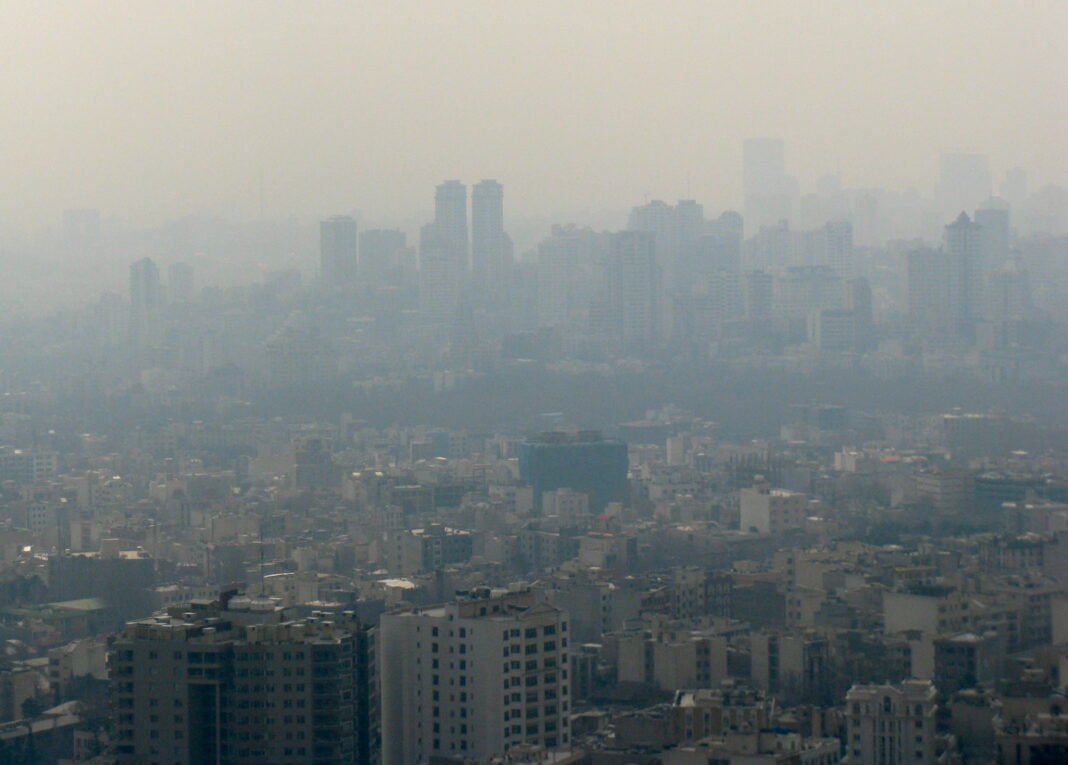
Tehran Residents Complain About Air Pollution and Water Quality

The biggest environmental concerns of the residents of Tehran are air pollution and water quality.

The public awareness of environmental problems is of great importance in today’s societies. It is somehow more important than the governmental privileges. In Iranian society, this awareness is in shadow of political, economic and social issues, which look more substantial to people. In a World Bank report, which were given out in 2007, the environmental awareness of the residents of Tehran were analyzed.

This report was provided three years ago but still can show the reality of the Iranian urban culture. It, as can be predicted, confirms that the first things that are important for people are the issues that directly affects on their lives. Politics is the main one. Also social and culture problems are important but the main factor that adjusts every thing is still politics.

According to the report, environment is not the priority of most of the people. Thirty percent of the respondents of the questionnaires (34 percent men and 29 percent women) think that the political problems are important or very important. This can be compared with the low percentage that was obtained from the same question about economic development, inflation, and environment.
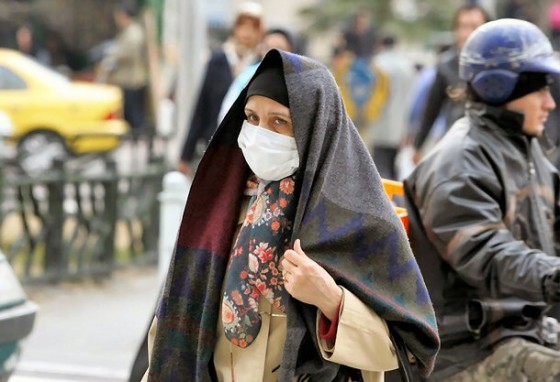
air pollution tehran, iran
Wearing a facemask against pollution (not Covid) in Tehran

Six percent think that economic development is important or very important (6.4 percent men and 5.3 percent women). Inflation is rated by 6.4 percent (5.8 percent of men and 6.5 percent of women). It seems that the respondents have rated the environmental issues as the least important problem. Only 4 percent have chosen important or very important for the environment (4.4 percent men and 3.3 percent women).

The worst part of the findings is that one third of the respondents (34 percent) believe that the environmental problems are not important at all and 53 percent do not have any opinion.

When the people are questioned more clearly about the problems, it becomes clear that they have some concerns about the environment. Air pollution and water quality are the biggest concerns of them. Some 62.3 percent of men and 61.3 percent of women believe that the water quality is worrying. Also 59.8 percent of men and 60.1 percent of women are worried about the air pollution produced by cars. Similarly the percentages for industrial pollutions are 41.5 for men and 47.1 for women. In the same way, 39.5 percent of men and 41.8 percent of women have declared great worry about the sound pollution.

Similar percentages are obtained from the survey about continuous reduction of green areas, disposal of industrial waste, and household garbage.

Other answers show that people are disappointed of the present situation of the urban environment. For example, just 8.7 percent of men and 10.5 of women strongly agree that “the environmental situation will be better in the future,” while 31.3 percent of men and 26.8 percent of women disagree.

The main bodies in the country that have the ability to improve the People’s responsibility about the environment are the public media, be it governmental or private. The present situation of the effects of the media like newspapers, TV, radio, books, internet, magazines, etc. are analyzed.

By the recent issues like the problems of Orumieh Lake in north-west Iran or the Iranian leopard, people have heard more of such news and have shown to be more conscious of the similar problems.

<!–[if !mso]> <! st1\:*{behavior:url(#ieooui) } –>

Public awareness of environmental problems is of great importance in today’s societies. It is somehow more important than the governmental privileges. In Iranian society, this awareness is in shadow of political, economic and social issues, which look more substantial to people.

In a World Bank report, which were given out in 2007 the environmental awareness of the residents of Tehran were analyzed. This report was provided three years ago but still can show the reality of the Iranian urban culture. It, as can be predicted, confirms that the first things that are important for people are the issues that directly affects on their lives. Politics is the main one. Also social and culture problems are important but the main factor that adjusts every thing is still politics.

According to the report, environment is not the priority of most of the people. 31 percent of the respondents of the questionnaires (34 percent men and 29 percent women) think that the political problems are important or very important. This can be compared with the low percentage that was obtained from the same question about economic development, inflation, and environment. 6 percent think that Economic development is important or very important (6.4 percent men and 5.3 percent women). Inflation is rated by 6.4 percent (5.8 percent of men and 6.5 percent of women). It seems that the respondents have rated the environmental issues as the least important problem. Only 4 percent have chosen important or very important for the environment (4.4 percent men and 3.3 percent women).

The worst part of the findings is that one third of the respondents (34 percent) believe that the environmental problems are not important at all and 53 percent do not have any opinion.

When the people are questioned more clearly about the problems, it becomes clear that they have some concerns about the environment. Air pollution and water quality are the biggest concerns of them. 62.3 percent of men and 61.3 percent of women believe that the water quality is worrying. Also 59.8 percent of men and 60.1 percent of women are worried about the air pollution produced by cars. Similarly the percentages for industrial pollutions are 41.5 for men and 47.1 for women. In the same way, 39.5 percent of men and 41.8 percent of women have declared great worry about the sound pollution.

Similar percentages are obtained from the survey about continuous reduction of green areas, disposal of industrial waste, and household garbage.

Other answers show that people are disappointed of the present situation of the urban environment. For example, just 8.7 percent of men and 10.5 of women strongly agree that “the environmental situation will be better in the future,” while 31.3 percent of men and 26.8 percent of women disagree.

The main bodies in the country that have the ability to improve the People’s responsibility about the environment are the public media, be it governmental or private. The present situation of the effects of the media like newspapers, TV, radio, books, internet, magazines, etc. are analyzed.

By the recent issues like the problems of Orumieh Lake in north-west Iran or the Iranian leopard, people have heard more of such news and have shown to be more conscious of the similar problems.

Mehrdad Parsipour
Mehrdad Parsipourhttp://www.greenprophet.com
Mehrdad Parsipour is an urban researcher who is based in Germany. He is originally from Iran and is interested in the traditional urbanism and architecture of Iran and Middle East. Mehrdad’s other research interests are western traditional urban development trends, Islamic cities, and sustainable urban forms, and finally the environment. Since 1997 he has been working in the field of civil engineering, and also urban and regional planning.

TRENDING

Who Narrates the Narrative at TEDx? Greenwashing in Iranian Architecture’s Spotlight

The TEDxOmid Architecture event in Tehran promised sustainability and social justice but revealed deep contradictions between its rhetoric and reality. This in-depth report exposes how Iran’s star architects—linked to commercial tower projects and weak environmental accountability—reflect a pattern of architectural greenwashing under the guise of “responsive design.”

Fine-particle pollution is now directly tied to Lewy body dementia

A new peer-reviewed study in Science connects long-term exposure to fine particulate matter (PM2.5) with higher risk of Lewy body dementia (LBD) in a dataset of 56.5 million US Medicare records, and backs it up with animal experiments that show PM2.5 triggers toxic α-synuclein clumps — the protein aggregates that define LBD. 

Iran’s water mafia and thirst for war leaves the country on brink of being dry

Iran’s Lake Urmia, once the Middle East’s largest saltwater lake, has shrunk by 90 percent due to mismanagement, dams, and drought. As Tehran pours billions into foreign conflicts, water activists face repression at home. The crisis mirrors Syria’s drought-driven unrest, showing how water scarcity can destabilize entire regions.

Next EU Parliament must crack down on lobbying from ecologically-toxic industries

With policymakers in Brussels steadily eroding the EU Green Deal ahead of next month’s European elections, governments, NGOs and scientists have joined forces to counter this short-sighted political point-scoring.

Iran’s morality police kill teen for not wearing hijab

The despotic enforcers of the "hijab law" have claimed another victim. In a mysterious incident reported a few weeks ago in international press, a young woman Armita Geravand, just 17 was injured on the Tehran Metro in Iran. She was in a coma for a few weeks and has since died.

Turning Your Energy Consultancy into an LLC: 4 Legal Steps for Founders in Texas

If you are starting a renewable energy business in Texas, learn how to start an LLC by the books.

Tracking the Impacts of a Hydroelectric Dam Along the Tigris River

For the next two months, I'll be taking a break from my usual Green Prophet posts to report on a transnational environmental issue: the Ilısu Dam currently under construction in Turkey, and the ways it will transform life along the Tigris River.

6 Payment Processors With the Fastest Onboarding for SMBs

Get your SMB up and running fast with these 6 payment processors. Compare the quickest onboarding options to start accepting customer payments without delay.

Qatar’s climate hypocrisy rides the London Underground

Qatar remains a master of doublethink—burning gas by the megaton while selling “sustainability” to a world desperate for clean air. Wake up from your slumber people.

How Quality of Hire Shapes Modern Recruitment

A 2024 survey by Deloitte found that 76% of talent leaders now consider long-term retention and workforce contribution among their most important hiring success metrics—far surpassing time-to-fill or cost-per-hire. As the expectations for new hires deepen, companies must also confront the inherent challenges in redefining and accurately measuring hiring quality.

8 Team-Building Exercises to Start the Week Off 

Team building to change the world! The best renewable energy companies are ones that function.

Thank you, LinkedIn — and what your Jobs on the Rise report means for sustainable careers

While “green jobs” aren’t always labeled as such, many of the fastest-growing roles are directly enabling the energy transition, climate resilience, and lower-carbon systems: Number one on their list is Artificial Intelligence engineers. But what does that mean? Vibe coding Claude? 

Somali pirates steal oil tankers

The pirates often stage their heists out of Somalia, a lawless country, with a weak central government that is grappling with a violent Islamist insurgency. Using speedboats that swarm the targets, the machine-gun-toting pirates take control of merchant ships and then hold the vessels, crew and cargo for ransom.

Related Articles

Popular Categories