37 Lions and Tigers Confiscated in Saudi Arabia

CITES, wild animals, Saudi Arabia, confiscated animals, illegal wildlife trade, ofir drierOfficials have confiscated 37 lions and tigers in Saudi Arabia, according to Arab News. The paper said that the National Commission for Wildlife Conservation and Development will be transferring the wild cats that had been illegally smuggled into the Kingdom over the last two years into facilities that comply with the Convention on International Trade in Endangered Species (CITES).

The move is likely to have resounding consequences not only in Saudi but throughout the Gulf region, where it is common to see men riding in cars with cheetahs and other wild animals, or walking them on a leash – violations that until now have eluded stiff penalties. (However, Dubai’s neighbor Ajman completely banned ownership of wild animals last year.)“These animals entered the country in violation of the Convention on International Trade in Endangered Species of Wild Fauna and Flora,” Ahmad Boug, general director of the National Wildlife Research Center was quoted as saying in a local newspaper.

He emphasized that it is illegal to buy or trade animals that are listed under the CITES convention, and should not be held in residential areas.

One person reportedly cut the claws of one lion, which Boug said is illegal (not to mention inhumane), and an increasing number of complaints have arisen about wild animals escaping from their captors.

“The municipality and police department should prevent this kind of danger and threat to citizens, after making sure, through the Ministry of Interior, that it entered the country in a legal way,” he added.

This remarkable adherence to CITES in Saudi Arabia comes after a disappointing day in Thailand, where conservation delegations have gathered for the 16th Conference of the Parties to re-evaluate the status of various endangered animals under the convention.

“The U.S. proposal to transfer polar bear (Ursus maritimus) from Appendix II to Appendix I was rejected this morning in Committee I of CITES CoP16 by CITES member countries by a vote of 38 support, 42 against, and 46 abstentions,” CITES reports.

“Trading our planet to extinction. 600 polar bears are killed and traded each year,” wrote Ofir Drori, an award-winning Israeli activist who has headed up one of the most successful anti-poaching organizations in Central and West Africa, on his Facebook page.

“You would think that stopping the trade in this endangered species would be a world consensus. But apparently most delegates think it’s a great idea and today the proposal to protect the polar bear was shot down.”

Similarly, “Burkina Faso and Kenya announced today the withdrawal of the proposal to amend the annotation for African elephant (Loxodonta africana) in the CITES Appendices,” despite an overwhelming increase in poaching for ivory that has led to the deaths of not only thousands of elephants but also people.

“The CITES UN convention is a big disappointment to many of us,” Drori wrote.

“With all the talks about the mega-crisis of elephants and rhinos poaching, governments are still talking freely about the trading ivory and greed is still in control.What else needs to happen so that CITES reintroduce the ban on ivory trade?”

While overall the CITES convention appears to be failing wildlife, it looks like Saudi Arabia has at last taken a stand against the culturally-acceptable practice of keeping wild animals as pets. That’s a good step.

Watch the CITES proceedings on a live webcast – if you like.

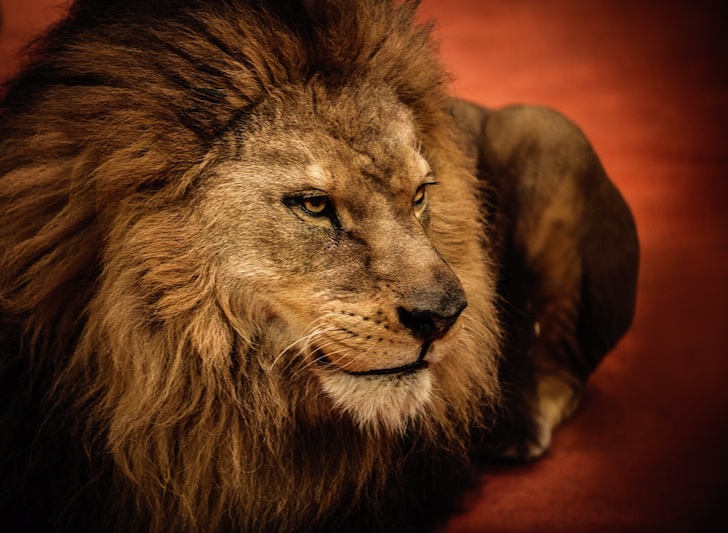
Image of male lion, Shutterstock
Tafline Laylin
Tafline Laylinhttp://www.greenprophet.com
As a tour leader who led “eco-friendly” camping trips throughout North America, Tafline soon realized that she was instead leaving behind a trail of gas fumes, plastic bottles and Pringles. In fact, wherever she traveled – whether it was Viet Nam or South Africa or England – it became clear how inefficiently the mandate to re-think our consumer culture is reaching the general public. Born in Iran, raised in South Africa and the United States, she currently splits her time between Africa and the Middle East. Tafline can be reached at tafline (at) greenprophet (dot) com.
1 COMMENT

Comments are closed.

Hot this week

How Renewable Energy is Revolutionizing the Way We Power Our World

Solar has become the star of the transition thanks to modular hardware and straightforward installation. It fits dense cities and remote towns alike. Many companies are turning to rooftop arrays and carport systems - and exploring commercial solar installation as a practical way to lock in future savings.

How does one start prepping?

Faced with an extreme winter storm this year, Americans wonder how to be prepared for catastrophe. Miriam has lived through wars in the Middle East - so she's prepared on giving you a guide to prepping.

Fishermen sue tire manufacturers on behalf of the salmon

A federal trial in San Francisco has brought US tire manufacturers, fishing groups, and environmental scientists into court over a chemical most drivers have never heard of — but which scientists say may be silently reshaping aquatic ecosystems.

Listening to Water: Tarek Atoui’s Next Work for Tate Modern

Born in Beirut, Lebanon in 1980 and now living in Paris, Atoui has spent years building instruments that don’t sit comfortably in concert halls. Many of them involve water, glass, and ceramics — materials that react to sound instead of simply producing it.

Leading Through a Dual-Energy Transition: Balancing Decarbonisation with Energy Security

Experience in one area of the energy industry isn't enough to guarantee readiness across all the others. That's where a structured program like an MBA in energy can come in. Today's advanced curricula explore energy economics, finance, policy, and strategic management alongside the technical subjects. And when pursuing an energy MBA online, professionals can skill up and retrain without having to step out of the labor market -- an important perk at a time when skilled professionals are already in short supply.

Topics

How Renewable Energy is Revolutionizing the Way We Power Our World

Solar has become the star of the transition thanks to modular hardware and straightforward installation. It fits dense cities and remote towns alike. Many companies are turning to rooftop arrays and carport systems - and exploring commercial solar installation as a practical way to lock in future savings.

How does one start prepping?

Faced with an extreme winter storm this year, Americans wonder how to be prepared for catastrophe. Miriam has lived through wars in the Middle East - so she's prepared on giving you a guide to prepping.

Fishermen sue tire manufacturers on behalf of the salmon

A federal trial in San Francisco has brought US tire manufacturers, fishing groups, and environmental scientists into court over a chemical most drivers have never heard of — but which scientists say may be silently reshaping aquatic ecosystems.

Listening to Water: Tarek Atoui’s Next Work for Tate Modern

Born in Beirut, Lebanon in 1980 and now living in Paris, Atoui has spent years building instruments that don’t sit comfortably in concert halls. Many of them involve water, glass, and ceramics — materials that react to sound instead of simply producing it.

Leading Through a Dual-Energy Transition: Balancing Decarbonisation with Energy Security

Experience in one area of the energy industry isn't enough to guarantee readiness across all the others. That's where a structured program like an MBA in energy can come in. Today's advanced curricula explore energy economics, finance, policy, and strategic management alongside the technical subjects. And when pursuing an energy MBA online, professionals can skill up and retrain without having to step out of the labor market -- an important perk at a time when skilled professionals are already in short supply.

From Green Energy to Healthy Societies: Why old systems thinking is becoming relevant again

Across the Middle East and North Africa, large investments are being made in green hydrogen, renewable energy, water infrastructure and sustainability. Most of these efforts are discussed in the context of climate change, decarbonization and economic diversification. That framing is important, but it may not capture their full value.

We saw peace – an interreligious encounter deep in our eyes

They came from Israel, Palestine, Jordan, Iraq, Yemen, Morocco, Tunisia, Lebanon, Egypt… There are Sunni Muslims, Shiite Muslims, Jews (Orthodox and Reform), Orthodox Christians, Coptic Christians, Protestant Christians, Druze, Baha'is, a Scientologist.

Can biochar reduce ‘Forever Chemicals’ in food if it’s used in farms?

Biochar is produced by heating organic material in a low-oxygen environment so it does not burn. This process, known as pyrolysis, transforms plant matter into a stable, carbon-rich material.

Related Articles

Popular Categories