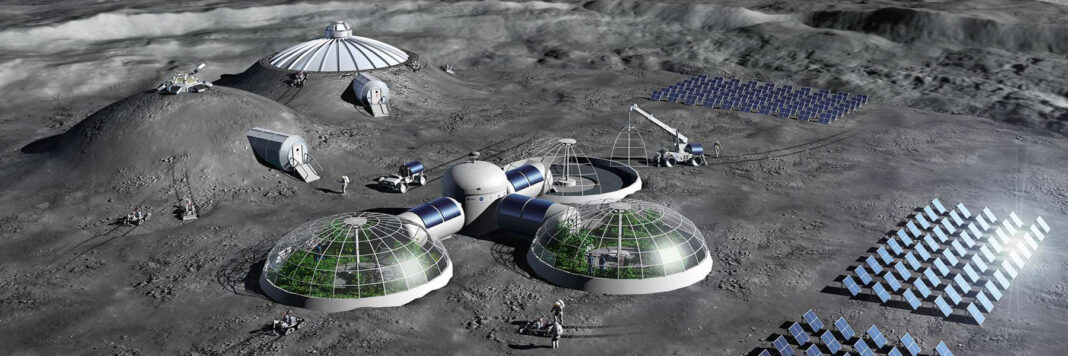

Elon Musk has made it clear. He’s going to inhabit Mars. But the first natural step, he says, will be the moon. We’ve reported on the moon base station. NASA knows that plants can grow on the moon. And countries like China and Russia have declared they will build cities there too using nuclear power. Stepping up to democratize the moon is an EU-funded company, Deep Space Energy, which has just raised more than $1 million USD as a seed fund to help it create energy generators on the moon. It’s a bid to strengthen the European sovereign space and defense industry and power Moon surface exploration.
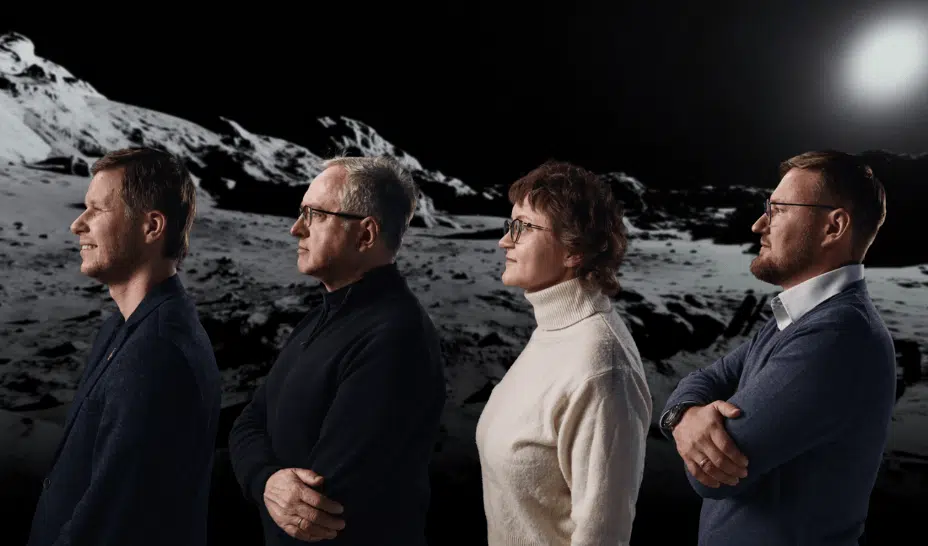
The researchers are from Latvia: “Our technology, which has already been validated in the laboratory, has several applications across the defence and space sectors.
“First, we’re developing an auxiliary energy source to enhance the resilience of strategic satellites. It provides the redundancy of satellite power systems by supplying backup power that does not depend on solar energy, making it crucial for high-value military reconnaissance assets,” says Mihails Ščepanskis, founder and CEO of the company.
Based in Riga, the company is developing a radioisotopic generator toward commercialisation. The electricity comes from nuclear decay — a nuclear process. And the equipment does not include a nuclear reactor which could explode.
The funding was made up of its €350k pre-Seed round led by Outlast Fund and Linas Sargautis, an angel investor and a former co-founder of NanoAvionics. The company also secured additional €580k in public contracts and grants by the European Space Agency (ESA), NATO DIANA, and the Latvian government. It’s not a huge sum of money for such an ambitious project but it’s a start.
European and American military and space technologies are what leads to new inventions in medicine, ecology and renewable energy.
Military spy satellites evolved into Earth-monitoring satellites that now track deforestation (Amazon, Congo), (see MIT using AI and imaging for trees in cities) they can monitor methane leaks and pollution; and satellites predict droughts and crop failures.
Military thermal imaging using infrared vision is now used to detect inflammation and vascular disease, it can screen for breast cancer and detect fevers at airports.
In the 2025–2026 period, EU-Startups has reported substantial capital flows into the European SpaceTech sector, primarily at Seed and Series A stage.
Germany’s Reflex Aerospace secured €50 million to scale sovereign satellite platforms, while France’s Infinite Orbits raised €40 million to expand in-orbit servicing capabilities. Also in France, Look Up attracted €50 million to grow its radar-based space surveillance network, and UNIVITY secured €31 million to accelerate development of a space-based 5G constellation.
In Germany, Marble Imaging raised €5.3 million to scale its very high resolution Earth observation satellites ahead of launch, while Spain’s Kreios Space secured €8 million to advance propulsion systems for very low Earth orbit. Italy’s Astradyne raised €2 million to commercialise ultralight solar panels, and Spain’s Orbital Paradigm closed a €1.5 million pre-Seed round to develop reusable space capsules.
Collectively, these rounds represent approximately €187 million in disclosed funding moving into European SpaceTech across adjacent segments including satellite infrastructure, propulsion, communications, servicing and observation.
Deep Space Energy says it will put a focus on energy resilience for satellites and lunar missions rather than platform deployment.
“As Europe is trying to become more independent, it is imperative to produce satellites with advanced capabilities on our own. Our technology provides an auxiliary energy source for satellites, which makes them more resilient to non-kinetic attacks and malfunctions,” Mihails adds.
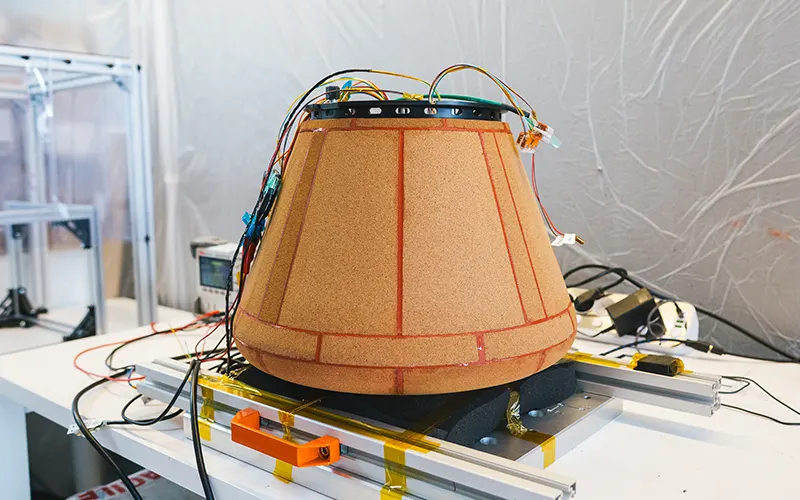
Founded in 2022, Deep Space Energy is developing a new radioisotope power generator for space that uses the heat produced by the nuclear self-decay of radioisotopes – materials extractable from waste of commercial nuclear reactors.
The product aims for applications in deep space science missions, lunar surface missions and high-value defense satellites. Their solution converts that heat into electric power, requiring 5 times less radioisotope fuel than a thermo-electric generator (RTG), currently used in space.
The company highlighted that its radioisotope-based energy generator is not designed for any kind of weapons. It will target high-value, dual-use satellites to increase their resilience and operational reliability. The primary focus is on satellites operating in Medium Earth Orbit (MEO), Geostationary Orbit (GEO) and Highly Elliptical Orbit (HEO), which are all critical for modern military reconnaissance and early-warning systems.
These satellites support a range of defence functions, from synthetic aperture radar (SAR)
satellites for detecting troop concentrations through clouds and foliage, to signal intelligence for intercepting communications and radio transmissions, as well as missile-launch detection, which is essential for anti-missile defense systems.
Egita Poļanska, partner at the lead investor Outlast Fund, shares: “Space energy tech has been stuck with certain limitations for decades, but we’re finally seeing the pieces come together for a real breakthrough – new materials, smarter power systems, and actual commercial demand for lunar operations.
“Deep Space Energy is building the infrastructure that will literally power the next chapter of space exploration and industry. As Europe ramps up its space ambitions, we need our own companies to lead in these foundational technologies. We’re thrilled to back this team and honestly pretty excited to have an actual moonshot in our portfolio, in the most literal sense possible.”
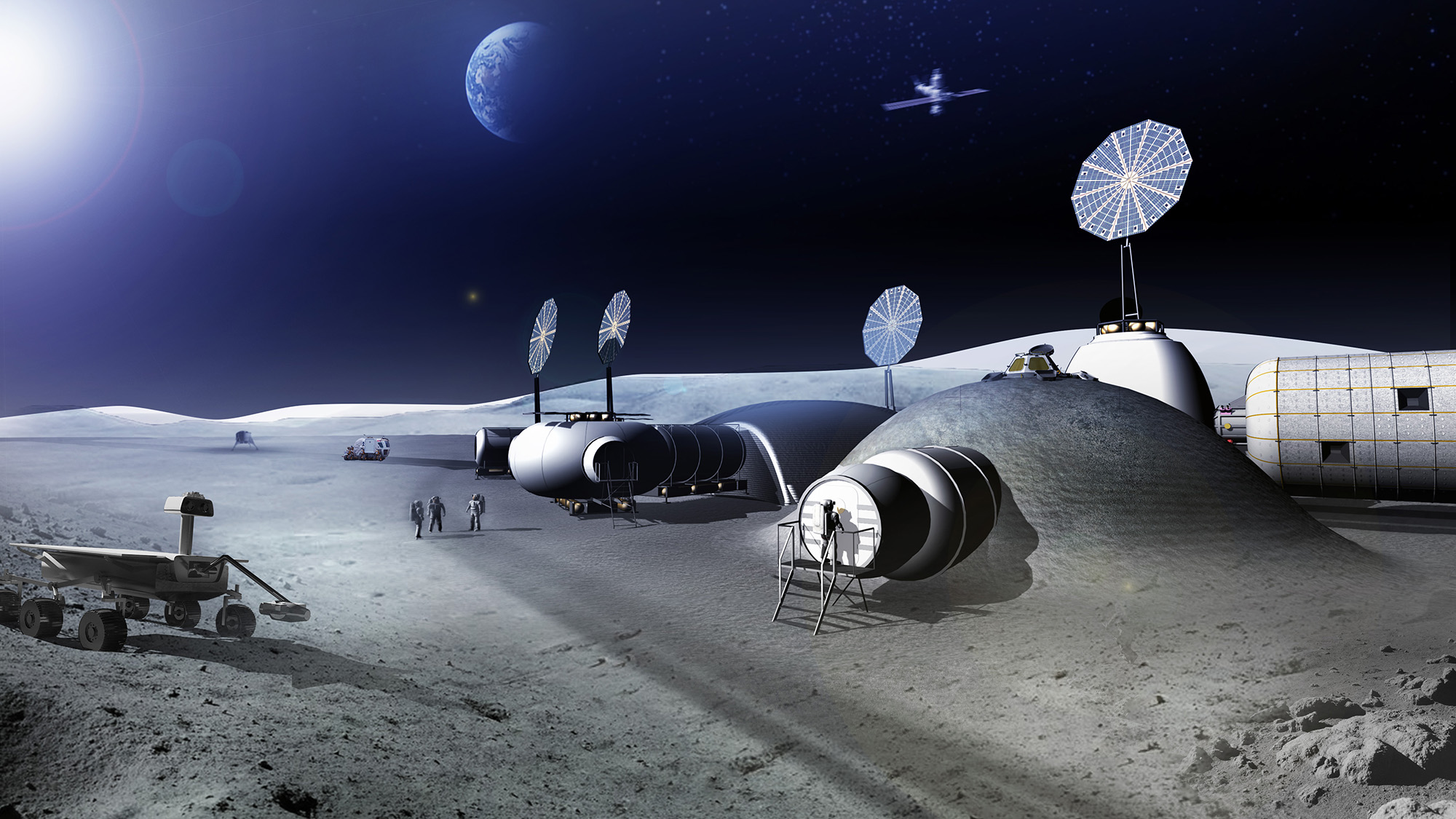
In the long term, the company aims to focus on the Moon economy. The radioisotope power generator looks to address critical energy challenges in the next phase of lunar exploration, including NASA and ESA’s Artemis, Argonaut and lunar rover programs, as well as the Moon Village framework led by the Moon Village Association. In particular, the technology is designed to support lunar night survival and operations in permanently shadowed regions, enabling extended scouting and prospecting missions.
On the Moon, where the temperatures at night drop below 150 degrees Celsius, and nights last for roughly 354 hours, moonrovers can’t rely on solar power.
The company’s technology requires approximately 2kg of Americium-241 fuel to generate 50W of power for a lunar rover, compared with around 10kg of radioisotope material needed by legacy RTG systems for comparable output. Given current projections that Americium-241 production capacity will reach around 10kg per year by the mid-2030s, this efficiency could enable lunar exploration missions to begin more than five years earlier and at up to five times the mission volume.
According to Ščepanskis, the company’s technology can significantly enhance the economics of moon rover missions by enabling them to last multiple day-night cycles up to a few years. The sole expenses of bringing payload to the Moon cost up to a million euros per kilogram; thus, by enhancing the lifetime of the rovers, the company helps to save hundreds of millions.